
I remember the first time I hosted a crucial team meeting in our cramped coworking space. Voices echoed off bare walls, and every cough or chair squeak felt magnified, turning what should have been a productive session into a frustration-filled ordeal. It hit me then—poor acoustics aren’t just an annoyance; they can sabotage your meetings, drain energy, and even hurt your professional image. The kicker? I had no budget for fancy soundproofing or consulting pros.
Fortunately, I discovered that with a bit of curiosity and resourcefulness, I could audit my office acoustics for cheap—spotting problem areas and experimenting with solutions myself. Today, I want to share the simple, cost-effective methods I used to assess and improve our space’s sound environment, which anyone can do without breaking the bank.
Why Acoustic Quality Matters More Than You Think
Good sound in your office isn’t just about comfort—it’s a cornerstone of productivity and professionalism. If you’ve ever been in a conference room where every word is muffled or where noise pollution makes it impossible to concentrate, you’ll know what I mean. According to a 2021 study by the World Green Building Council, poor acoustics can decrease employee productivity by up to 66% and increase stress levels—and this is data from a professional assessment, not just my personal experience.
Yet, many startups and small offices overlook acoustic issues until they become painfully obvious. Waiting till then not only worsens the problem but often makes it more expensive and complicated to fix. That’s why, early on, I made a mistake by assuming the sound quality was a lost cause—an unfair stereotype about cheap spaces or DIY fixes. Maybe you’ve felt the same? If so, you’re not alone, and I promise: effective improvements don’t need to be costly or complicated.
Now, let’s get into the practical steps I took—step-by-step—to identify and address acoustic pitfalls. Whether you’re in a shared coworking environment or a makeshift startup office, these tips can help you turn your space into a more focused, peaceful zone. Ready to cut through the noise? Let’s start with the basics of acoustical assessment.
Identify Hot Zones Where Sound Gets Trapped
Start by walking around your space during quiet hours and noting areas where sound echoes or seems louder. Think of your office as a musical instrument—you want every note to be clear. I once took a portable speaker and played a simple tone near the entrance and corners of our coworking space, noting where the sound lingers or dampens. This helped me spot problem spots like open corners or thin partitions that act like sound tunnels.
Use the Clap Test to Detect Echoes
Clap your hands loudly in different areas of the room. Listen for persistent echoes or dead spots. This quick test is like a medical check-up for your space’s acoustics. When I did this, I realized the corner by the window reflected sound sharply, causing zoom calls to echo. Mark such zones for targeted attention.
Measure Background Noise Levels
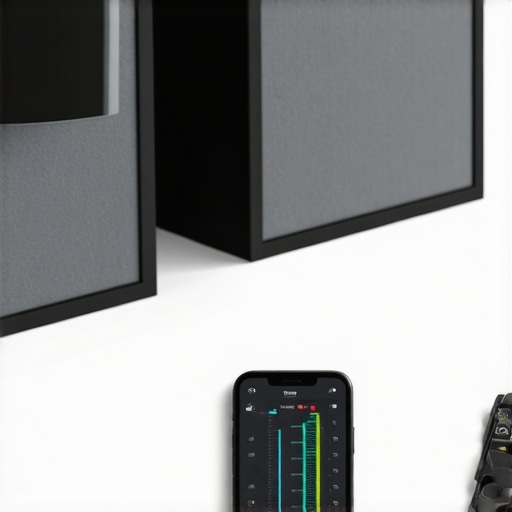
Get a smartphone app that measures decibel levels. Take readings during typical work hours. For example, my office’s background noise hovered around 55-60 dB—acceptable for casual conversations but problematic when meetings get technical. Higher readings indicated noisy zones needing intervention.
Pinpoint Sound Leaks and Weak Spots
Next, listen for sound leaks—such as from the break room or shared walls—by playing music or speaking softly near suspected areas. Good analogies: consider your office as a drum; leaks are like holes that distort the sound. I discovered that a loose panel near the corridor was acting as a sound bridge, amplifying hallway noise into conference calls.
Experiment with Cost-Effective Solutions
Once identified, implement simple fixes: adding rugs in echo-prone zones, attaching fabric to walls, or repositioning furniture to block sound pathways. I once stuffed a pile of blankets behind a problematic corner, which noticeably reduced echo during calls. Think of these like tuning a musical instrument—small adjustments create harmony.
Utilize Existing Resources for Sound Absorption
Repurpose office items: bookshelves filled with books or files can absorb sound, as can plants placed strategically. I placed a tall bookshelf against the echoing wall, which significantly improved audio clarity. This cost-effective approach transforms everyday items into acoustic allies.
Create a Sound Map of Your Office
Draw a simple plan marking problem spots and experimented solutions. Keep notes on what worked and what didn’t. Over time, I built a mental map—like a GPS for sound—guiding me on where to add what in future improvements.
Leverage Online and Community Resources
Join forums or local tech groups to exchange tips. Many coworking spaces offer acoustic audits or community advice. Remember, just like in networking, sharing insights amplifies your options. Check out helpful guides on [how to maximize productivity in conference rooms](https://coworkingcentral.com/how-to-maximize-productivity-in-your-startups-conference-rooms-by-0245-pm) for additional insights.
Many assume that the key to successful meetings lies in high-end technology or expansive, luxury-designed conference rooms. However, in my experience, the real nuance often overlooked is how the **cultural and behavioral expectations** within these spaces impact productivity and connection. Contrary to popular belief, investing solely in impressive physical setups without fostering a mindset of openness and adaptability can backfire. This oversight leads to an illusion of professionalism that doesn’t translate into genuine collaboration.
For example, managers often focus on maximizing room capacity or installing state-of-the-art AV equipment, thinking these are the cornerstones of effective meetings. Yet, studies show that **meeting effectiveness correlates strongly with psychological safety and clarity of purpose**—elements that are far more nuanced than mere infrastructure. An advanced mistake many make is neglecting the **ambient environment and team dynamics**, which are critical for open dialogue. For instance, overlooking the importance of **room ‘intimacy’ and physical proximity** can stifle honest conversations, no matter how flashy your setup appears.
Another common myth revolves around the idea that **more technology equals better meetings**. While tools like video conferencing and smart whiteboards are valuable, they often become distractions if not integrated thoughtfully. Overreliance on tech can create a paradox: a room filled with gadgets but lacking the human touch, leading to disengagement and superficial interactions.
Consider the trap of **assuming size equates to productivity**. Many startups allocate large conference rooms with high-end furnishings, expecting to impress clients and motivate teams. Yet, **research by Harvard Business Review indicates that smaller, well-designed spaces encourage more active participation and idea exchange**. Oversized rooms can dilute attention and foster a sense of anonymity, reducing accountability and engagement.
Furthermore, I’ve observed a recurring mistake in coworking environments: neglecting the importance of **acoustics and privacy**. Even in highly modern spaces, poor sound design can turn a productive work environment into a constant battle with noise, hampering focus and confidentiality. An excellent example is the false confidence in open layouts—many believe they promote spontaneous collaboration, but **without strategic acoustic planning, they often lead to distractions instead**
So, before you pour resources into upgrading your conference rooms or renovating your coworking spaces, ask yourself: are you truly cultivating the right environment and culture? Enhancing physical spaces is only part of the equation; **behavioral norms and expectations matter just as much**. For a deeper look into how innovative spaces can foster creativity, check out [innovative meeting rooms that boost startup creativity](https://coworkingcentral.com/innovative-meeting-rooms-that-boost-startup-creativity).
Remember, creating effective meeting environments isn’t about doing what everyone else does but understanding the subtle human factors involved. By doing so, you avoid the trap of superficial improvements and set your team up for genuine collaboration and success.
Have you ever fallen into this trap? Let me know in the comments.Running effective meetings and maintaining the quality of your coworking or conference space requires reliable tools tailored to your needs. One of the investments I swear by is **Logitech’s Brio Ultra HD Webcam**, which offers crisp video quality and excellent low-light performance—crucial for clear remote communication. Pair it with **Blue Yeti Microphone** to ensure your audio is professional and free of echoes, helping remote participants feel as present as those in the room.
For scheduling and resource management, **Calendly** streamlines booking processes. I personally use it to prevent double bookings and to set buffer times between meetings, reducing overlaps and chaos. Additionally, **Universal Whiteboard App Miro** has transformed our remote brainstorming sessions, enabling real-time collaboration with seamless integration into our workflows.
To enhance sound control, I’ve found **
What I Wish I Knew When Starting Out
One of the most profound lessons I learned wasn’t about fancy equipment but about paying close attention to the environment. I used to overlook minor echoes and noise leaks, dismissing them as insignificant. But these small quirks grew into major obstacles, hampering meetings and dampening team morale. The key takeaway? Every space has its unique acoustic fingerprint, and recognizing this early can save you time and money down the line.
Secondly, I realized that simple, resourceful solutions often outperform costly fixes. Stuffing blankets behind a wall, repurposing bookshelves as sound absorbers, or repositioning furniture made a noticeable difference without digging into our limited budget. It’s about thinking creatively and observing carefully.
Lastly, I learned that acoustic comfort isn’t just technical—it’s deeply human. Spaces that feel calm and controlled foster focus and collaboration. Ignoring acoustics sends a subtle message to your team: that their comfort isn’t a priority. Remember, investing in your environment signals respect for their well-being and productivity.