

I vividly remember the day I realized our makeshift conference corner wasn’t cutting it anymore. It was during a crucial investor pitch—a high-stakes moment—and the creaky folding table, paired with an overstuffed chair, made me feel like I was trying to hide our startup’s ambitions behind cheap furniture. That discomfort echoed not just in my mind but in the way our message was received. It hit me: the physical space we choose can either amplify our vision or dampen it.
Why Flexible Spaces Are Game-Changing for Growing Businesses
In my experience, the right flex space isn’t just about saving a few bucks on rent; it’s about creating an environment that scales with your ambitions. When I first dipped my toes into the world of coworking and shared offices, I was skeptical. Would these spaces truly support my team’s growth? Or would they be just a temporary fix that hampers our professionalism?
Here’s the truth: many startups stumble early on by underestimating the importance of adaptable, well-designed environments. A survey by Coworking Central highlights that 65% of early-stage companies find flex spaces to be vital in their scaling strategy because they foster agility, networking, and a professional image—all without the long-term commitments of traditional leases.
But it’s not just about appearances. The real benefit lies in how these spaces boost productivity and innovation—elements critical for any startup aiming to break through. I’ve seen teams flourish when they transition from the confines of home offices to vibrant, designed environments tailored to a company’s evolving needs.
Have you faced frustrations with your current setup that seem to bottleneck your growth? If so, you’re not alone. Many founders learn this lesson the hard way. Early mistakes often stem from choosing spaces that don’t adapt as their team scales, leading to unnecessary disruptions and hidden costs.
In our upcoming discussion, I’ll share practical insights on how to select and leverage flex spaces that truly support your business’s growth. Because the space you choose today can be the launchpad for tomorrow’s success.
Know Your Growth Path Before Booking
Immediately after deciding to move into a flex space, I learned to map our projected growth. For my team of five, I initially leased a small office, but within six months, our headcount doubled. Rushing into a larger space without a clear plan can drain resources and cause disruption. To prevent this, create a detailed forecast of your team’s expansion to select a space that scales with your needs, avoiding premature moves that could hinder productivity.
Assess Space Flexibility and Layout
During my first visit to a coworking hub, I specifically checked how easily the space could adjust to different team sizes and project needs. Look for modular layouts that allow you to reconfigure rooms or add workstations without hefty renovations. Remember, a flexible layout is like a Swiss Army knife—adaptability is key for startups evolving quickly.
Prioritize Location and Neighborhood Vibes
I realized that proximity to clients and industry hubs accelerates networking during a late afternoon coffee run. Choose a location that aligns with your strategic goals—be it proximity to their target markets or easy access for remote or hybrid teams. The right neighborhood can be your secret weapon for building local presence and attracting talent, as discussed in our guide on the importance of selecting a space that matches your company values.
Test the Technology Infrastructure
On a busy Monday, I booked a short trial in a conference room that was touted for its connectivity. During the trial, I checked Wi-Fi speed, power outlets, and AV capabilities. A reliable tech setup is non-negotiable—poor connectivity stalls meetings and hampers client presentations. Always verify these essentials before signing the lease—poor infrastructure can cause ongoing headaches and lower team morale.
Evaluate the Community and Networking Opportunities
One of the best decisions I made was choosing spaces that promote interaction beyond just desks. Attend open house events or workshops to meet other founders and freelancers—these interactions often lead to collaborations. Spaces with active communities, as explained in our article on unlocking networking opportunities at top coworking environments, can catalyze growth and innovation for your startup.
Negotiate Terms with Intent
When I was ready to commit, I approached negotiations with flexibility on lease length, amenities, and renewal options. Remember, leases are part of your operational toolkit—aim to secure terms that allow your startup to pivot without penalty. For specific strategies, consult our detailed guide on negotiating shorter leases that fit your startup’s cycle, which can save you from costly constraints down the road.
Plan the Transition with Care
Moving in was messy—I overlooked some logistics, resulting in a week of chaos. I learned to plan the move meticulously: schedule furniture delivery outside peak days, inform team members early, and draft a checklist of setup priorities. Proper planning minimizes downtime, keeps team momentum, and ensures your new space energizes rather than disrupts.
Enhance Your Space with Purposeful Design
My first office was functional but uninspiring. Later, I invested in creating zones for deep work, collaboration, and relaxation, which transformed our culture. Design matters; a well-crafted space boosts morale and sparks creativity. For ideas on transforming meeting rooms into collaboration hubs, check out our insights into innovative coworking environments, which show how a thoughtful layout fosters team synergy.
When it comes to startup environments and coworking spaces, many believe that a well-equipped meeting room is simply a matter of having high-end tech and a spacious table. However, this overlooks a crucial nuance—the true value of a meeting space lies not just in its hardware but in how it fosters genuine collaboration and strategic alignment.
Are Meeting Rooms Really Designed for Effective Innovation?
Contrary to popular belief, the most advanced conference rooms often underperform because they neglect the human element. For example, a room filled with state-of-the-art gadgets might still stifle creativity if it lacks intentional design that encourages open dialogue. According to a study by Harvard Business Review, physical environments that promote psychological safety significantly boost team productivity and idea flow. Thus, equipping a space with blackboards, movable furniture, and natural light can outperform a room just boasting the latest audiovisual systems.
Another common myth is that larger, more formal conference rooms are always better for startup meetings. In fact, overly formal settings can create barriers—making team members or clients feel intimidated rather than engaged. Instead, startups thrive in spaces that are flexible, inviting, and adaptable to spontaneous brainstorming sessions. This is why many innovative coworking spaces invest in transforming traditional meeting rooms into dynamic collaboration hubs, as explored in our article on creative coworking spaces.
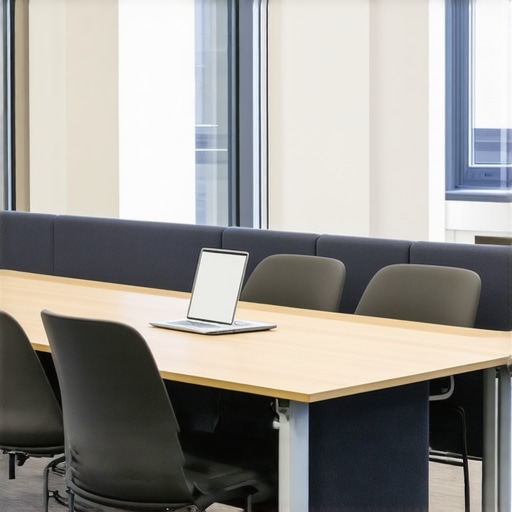
Beware of the trap of prioritizing quantity over quality. Stockpiling multiple meeting rooms to accommodate every possible scenario might seem efficient, but it often leads to underuse and wasted resources. The smarter approach is to design multifunctional spaces that can be easily reconfigured, allowing your team to pivot quickly as needs evolve. Remember, a flexible environment not only saves costs but also inspires innovation, which is vital for startup success.
Furthermore, many underestimate the importance of the environment’s acoustics and privacy. Open-plan coworking areas are excellent for community-building but can be detrimental during sensitive discussions or strategic planning. Incorporating soundproof booths or dedicated quiet zones enables confidential conversations and deep focus—factors that can make or break important negotiations or product meetings. You can learn more about optimizing meeting room productivity in startup settings.
Finally, the misconception that high-tech equipment guarantees effective meetings often leads to neglecting facilitation skills. No matter how advanced the room, if the facilitator lacks the skills to manage discussions, technology can’t compensate. Investing in training your team to leverage the space effectively is just as critical as the space itself. So, ask yourself—are you focusing too much on the room and too little on the people and process?
Do these insights resonate with your experiences? Have you ever fallen into this trap? Let me know in the comments to continue the conversation on optimizing coworking and startup environments for real success.Maintaining your coworking or conference room environment isn’t a one-and-done task; it requires deliberate, consistent effort to ensure spaces stay functional, inspiring, and scalable. From tools that streamline your upkeep to habits that prolong the lifespan of your setup, I’ve found effective strategies that keep our spaces operational and inviting. Regular inspections are foundational—scheduling bi-weekly walkthroughs to spot wear and tear helps address issues before they escalate. I personally use UpKeep, a maintenance management software, to log and assign upkeep tasks seamlessly, ensuring nothing gets overlooked. For tech-heavy rooms, I implement a quarterly deep cleaning of hardware components like projectors, microphones, and Wi-Fi routers to prevent performance drops. Connecting with reliable vendors for quick repair services means downtime is minimal, preserving your team’s productivity. Predictive maintenance, especially for HVAC and lighting, is gaining traction—using IoT sensors to monitor usage patterns allows for preemptive action, lowering costs and reducing surprises. As the trend in coworking evolves, future-proofing your maintenance strategy will involve integrating AI-based monitoring that can automatically detect malfunctions and order repairs proactively.
How do I maintain meeting room quality over time?
To sustain your environment, establish a routine check-and-repair schedule documented within tools like coworking policy guidelines. Consistent upkeep prevents small issues from turning into costly repairs and keeps your space inviting for clients and team members alike. Additionally, investing in modular furniture and removable panels, as discussed in our creative coworking article, makes repairs and upgrades more manageable, extending the life of your setup. For an advanced tip, explore IoT sensors tailored for office environments—these can alert you to issues like irregular temperature variations or equipment overheating, providing a layer of automated maintenance that keeps your spaces running smoothly. Over time, this approach minimizes disruptions and maintains a professional atmosphere that boosts confidence among tenants and visitors alike.
The Hidden Lessons I Learned About Meeting Rooms and Startup Growth
One of the most profound realizations in my entrepreneurial journey was how much the physical environment impacts strategic decisions and team dynamics. Early on, I underestimated the subtle power that a thoughtfully chosen meeting space—or lack thereof—could wield over investor impressions, creativity, and even day-to-day morale. Recognizing this transformed my approach from reactive to intentional, teaching me that your workspace is more than just a backdrop—it’s a strategic asset. For example, I once chose a conference room based solely on cost, only to discover it stifled discussion and dampened enthusiasm. That lesson in space selection fundamentally changed how I view environment design, confirming that investing in well-planned spaces pays dividends in trust, innovation, and agility.