
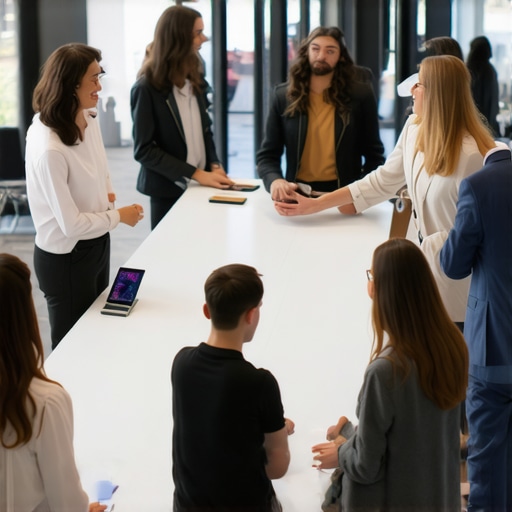
I vividly remember my first startup event—walking into a crowded room, feeling like an outsider among a sea of strangers. Despite the enthusiasm buzzing in the air, I struggled to find meaningful connections. That lightbulb moment hit me hard: in environments where you’re supposed to network, I was mostly just observing, not truly connecting. It became clear that the typical approach of handing out business cards and waiting for a miracle wasn’t enough. This realization sparked my quest to find more effective, genuine ways to meet co-founders locally.
Why Local Events Are Still the Goldmine for Co-Founder Connections
For many entrepreneurs, especially those just starting out, local events hold untapped potential. They’re not just about free coffee or casual chats—they’re strategic opportunities to forge serious partnerships. Coming from a background where initial missteps included attending large, impersonal mixers, I learned that quality trumps quantity every time. A study from the Harvard Business Review highlights that in-person meetings still account for over 70% of successful business relationships, despite the rise of digital communication. This underscores the importance of attending events where meaningful interactions can happen.
So, why should you invest your limited time and energy into these local gatherings? Because they offer a tangible, face-to-face platform to showcase your passion, gauge potential partners’ commitment, and build trust—things far harder to do over a screen. If you’ve ever felt frustrated with online networking efforts that lead nowhere, you’re not alone. Many entrepreneurs underestimate the power of physical presence and authentic conversations.
Are you tired of feeling like you’re shouting into the void at networking meetups? Have you faced the challenge of turning casual acquaintances into serious co-founders? You’re about to discover my seven favorite ways to turn local events into fertile ground for startup partnerships. But first, let’s address a common doubt that might be holding you back.
Is Networking at Local Events Really Worth the Hype?
I understand the skepticism—it’s easy to dismiss these gatherings as superficial or time-consuming. Early in my journey, I made the mistake of thinking that attending every event without a clear strategy would lead to fruitful connections. It wasn’t until I focused on quality interactions and targeted events that I saw real results. Remember, not every event is worth your time, but with the right approach, the right opportunities will emerge. Curious how to identify those golden chances? Let’s dive in.
Get Comfortable with Your Local Startup Scene
Start by immersing yourself in your community. Attend meetups, workshops, and seminars where entrepreneurs gather. Use platforms like [Coworking Central](https://coworkingcentral.com/why-networking-is-easier-when-you-share-a-communal-kitchen) to discover spaces that foster collaboration. Visiting these places regularly helps you understand the ecosystem and identify genuine co-founder prospects.
Choose the Right Venues That Promote Genuine Interactions
Select environments that encourage face-to-face conversations. Co-working spaces with flexible meeting rooms, such as those highlighted in [creative coworking articles](https://coworkingcentral.com/creative-coworking-transforming-meeting-rooms-into-collaboration-hubs-at-0455-pm), facilitate spontaneous meetings. Schedule your visits during events or open days when the space is buzzing with entrepreneurs eager to connect.
Pre-Plan Your Approach and Goals
Before attending an event, clarify what you’re looking for—whether it’s technical expertise, funding support, or product validation. Approach potential co-founders with specific topics in mind. For example, during a casual chat in a coworking lounge, I once initiated a conversation about shared challenges in customer acquisition, which led to a productive future collaboration.
Master the Art of Micro-Interactions
Engage in brief, meaningful conversations instead of long monologues. Ask open-ended questions like, “What problem are you passionate about solving?” or “How do you see your startup evolving in this environment?” These quick exchanges build rapport and can pave the way for deeper connections.
Proactively Exchange Contact Details and Schedule Follow-Ups
Never assume the connection will develop passively. During a networking event at a coworking hub, I made sure to exchange contact info and suggested a coffee meeting. Follow-up within 24 hours reaffirms your interest and keeps the momentum going. Use tools like Calendly or LinkedIn to streamline scheduling.
Leverage Conference Rooms and Meeting Spaces Effectively
Once initial contact is established, transition to more focused discussions in meeting rooms designed for collaboration. Places with adaptive tech and creative setups, such as featured in [meeting room trends](https://coworkingcentral.com/innovative-meeting-rooms-that-boost-startup-creativity), help foster trust and openness. Reserving these spaces in advance ensures privacy and a professional environment for serious talks.
Create Opportunities for Casual and Formal Interactions
Balance between informal meetups—like coffee breaks—and structured meetings. Casual settings make it easier to discuss risks and vision, while formal meetings in well-equipped conference rooms solidify the partnership structure. Maximizing both types of interactions accelerates relationship-building.
Utilize Local Events to Showcase Your Passion
Share your startup story candidly, whether during a panel or a round-table discussion. Your enthusiasm can attract like-minded founders. Remember, authenticity resonates more than pitch decks—think of these moments as opportunities to plant seeds for future co-founder relationships.
Engaging actively with your local startup ecosystem and approaching every event with a clear plan transforms casual meetups into fertile ground for finding the right co-founders. The key lies in preparation, intentionality, and leveraging the right spaces for quality conversations, much like turning a standard conference room into a hub of innovation. For further insights on optimizing your meeting environments, explore [how to choose the perfect conference room](https://coworkingcentral.com/how-to-choose-the-perfect-conference-room-for-business-success) and [the future of conference rooms in startup ecosystems](https://coworkingcentral.com/the-future-of-conference-rooms-in-startup-ecosystems).Many entrepreneurs believe that selecting a stylish meeting room or a trendy coworking space is enough to ignite creativity and facilitate collaboration. However, in my experience, there’s a hidden nuance often overlooked: the true purpose and design of these spaces greatly influence their effectiveness.
Are We Misjudging the Power of a Meeting Room’s Environment?
Contrary to popular belief, not all conference rooms promote productivity. A common myth is that adding high-tech gadgets or spacious layouts automatically boosts engagement. In reality, the layout, acoustics, and lighting play pivotal roles in how well your team communicates and innovates. For example, a study from Harvard Business Review emphasizes that physical factors in the environment can influence cognitive function and worker satisfaction, especially in startup settings. Many startups fall into the trap of investing heavily in the aesthetics of their meeting rooms, thinking that this will inspire their team, but neglect the importance of functional design tailored to their specific needs.
Another mistake is treating coworking spaces as mere addresses rather than strategic hubs. Entrepreneurs often choose spaces based on location perks or price points, but overlook how the community and layout impact collaboration. For instance, open-plan layouts might seem appealing, but can lead to increased noise and distractions, hindering deep focus sessions necessary for critical startup discussions. An insightful resource on this topic points out that creating designated quiet zones within a coworking environment can dramatically improve productivity and team cohesion.
Furthermore, many entrepreneurs underestimate the importance of technological adequacy in meeting rooms. Relying on outdated AV equipment or poor Wi-Fi can cause delays, frustration, and missed opportunities during pitches or team debates. Ensuring your conference room has reliable, high-speed internet and modern presentation tools isn’t just about comfort—it’s about safeguarding your startup’s professionalism and efficiency.
Beyond design and technology, the mindset around meeting spaces needs reevaluation. Often, teams default to scheduling lengthy meetings, assuming more time equals better outcomes. However, concise, purpose-driven sessions are usually more effective. Study after study shows that shorter, well-structured meetings boost decision-making and maintain energy levels more effectively.
In conclusion, the true impact of meeting rooms and coworking spaces lies in their intentional design and strategic utilization. The focus should be on creating environments that enhance specific needs—whether for brainstorming, deep work, or formal presentations—rather than assuming that more space or higher-end decor alone will solve productivity hurdles. Want to learn how to maximize your space’s potential? Check out [how to maximize productivity in your startup’s conference rooms](https://coworkingcentral.com/how-to-maximize-productivity-in-your-startups-conference-rooms-by-0245-pm) or explore innovative [meeting room designs that foster collaboration](https://coworkingcentral.com/creative-coworking-transforming-meeting-rooms-into-collaboration-hubs-at-0455-pm).
Have you ever fallen into this trap? Let me know in the comments.Maintaining an efficient and inspiring meeting environment requires more than just choosing the right space; it hinges on the tools and methods that support seamless collaboration. Personally, I rely on a combination of hardware and software designed to streamline both planning and execution. For instance, I swear by the Logitech MeetUp camera system because of its wide-angle lens and excellent audio pickup, which ensure everyone, whether in a small conference room or a coworking space, remains engaged and heard. Paired with a dedicated 4K projector like the Epson PowerLite series, I find presentations are more engaging, which boosts team focus.
On the software front, my go-to is Miro for collaborative whiteboarding, especially when brainstorming with remote team members in a shared space. Its real-time updates and infinite canvas foster creativity that might be stifled in traditional, static meetings. Additionally, I use Calendly to coordinate booking meeting rooms efficiently without endless email threads, saving valuable time.
To keep everything running smoothly over time, I perform routine technical checkups—testing internet speed with Speedtest, verifying that all AV equipment is updated and functional before scheduled meetings, and ensuring meeting rooms are properly cleaned and organized. Having a dedicated IT support contact (via [contact us](https://coworkingcentral.com/contact-us-2)) readily available minimizes disruptions and unplanned downtimes.
Prediction-wise, the future lies in integrated, smart meeting environments. Think AI-enhanced booking systems that suggest optimal times, or IoT devices that measure room occupancy and air quality to optimize comfort and productivity.
**How do I maintain my meeting tools over time?** Regular calibration of hardware, updates of software, and routine feedback from users are key—much like maintaining a high-performance vehicle. Don’t just set and forget; actively monitor and adjust your toolkit.
For example, investing in a high-quality microphone like the Shure MV88+ can dramatically improve sound clarity during virtual collaborations. I recommend trying this out to experience how premium audio elevates your meetings’ professionalism and engagement. Want to explore how to design your meeting spaces for consistent productivity? Check out [how to design a meeting room for actual collaboration](https://coworkingcentral.com/how-to-design-a-meeting-room-for-actual-collaboration-not-just-lectures). Remember, the right tools combined with active maintenance are your best allies in keeping meetings effective and your team motivated.Reflecting on my journey with startup spaces, I realize that the true power of a well-designed conference room goes far beyond aesthetics. One lightbulb moment was discovering how environment shapes team dynamics—an environment tailored for collaboration can accelerate innovation, while a poorly configured space might stifle creativity. Investing in thoughtful layout and tech isn’t just about appearances; it’s about fostering the culture that propels your startup forward. For instance, integrating flexible seating arrangements and reliable high-speed Wi-Fi transforms a mundane room into an innovation hub. These subtle yet impactful choices create an atmosphere where ideas flourish and teamwork thrives, proving that the right meeting environment is an engine of growth that many overlook.