
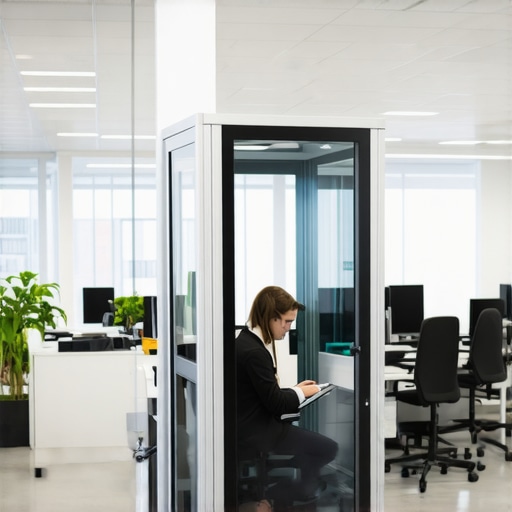
I remember the exact moment I realized how much noise in our open office was destroying productivity—it was during a team call when my coworker’s loud ringtone interrupted a critical client presentation. That jarring sound shattered the focus in ways words never could. At that instant, I knew something had to change. If you’ve ever found yourself desperately trying to concentrate while the hustle and bustle of a busy workspace pulls your attention in a hundred directions, you’re not alone. The chaos isn’t just frustrating—it affects your work quality, mental clarity, and even the morale of your team.
Finding Quiet Amidst the Clamor—A Personal Journey
Our startup’s growth brought us into a vibrant shared space filled with energy and collaboration. But it also meant occasional shouting, ringing phones, and the constant hum of activity. For a while, I tried to duct tape solutions—headphones, schedule adjustments, tricky room reservations—but nothing truly addressed the core problem: the lack of sound privacy. Over time, I observed that quick, informal calls often spilled into shared areas, disturbing colleagues and stunting spontaneous conversations.
Research shows that noise pollution in open-office environments can decrease productivity by up to 66% (source: Harvard Business Review). That was a wake-up call. I realized we needed a dedicated solution—something that would give team members a sanctuary for sensitive calls or focused work without the hassle of booking complicated rooms or negotiating noisy spaces. That’s when I started exploring affordable, effective soundproof phone booths. Since then, our workflow has transformed—meetings are more private, distractions fewer, and overall morale much higher.
Is Investing in Soundproof Booths Actually Worth the Hype?
Initially, I was skeptical about whether soundproof booths could truly deliver on their promises—particularly in a tight budget. I made the mistake early on of assuming they would be a costly luxury when, in reality, many options are designed to integrate seamlessly into existing setups while providing measurable benefits.
The key lies in understanding your specific needs and choosing the right booth to match your environment. Whether you’re running a startup, managing a co-working space, or scaling an office, these booths can create an oasis of calm in a sea of activity. Plus, with the increased demand for flexible workspaces, many providers now offer innovative solutions that combine soundproofing with stylish design.
If you’ve faced constant background noise interfering with important calls or team meetings, perhaps it’s time to consider whether a soundproof phone booth could be your game-changer. Curious about the different options available? I recommend checking out some of the latest designs that blend functionality with aesthetics, like those discussed in [this article about transforming meeting rooms into collaboration hubs](https://coworkingcentral.com/creative-coworking-transforming-meeting-rooms-into-collaboration-hubs-at-0455-pm). It could be the first step toward reclaiming your workspace serenity.
In the next section, I’ll guide you through how to assess your space and select the perfect soundproof solution that fits your unique needs—and budget. Ready to bring peace to your bustling office? Let’s dive in.
Assess Your Office Space and Needs
Start by mapping out your workspace. Identify high-traffic zones where noise disrupts focus—think of it as spotting the ‘hot zones’ in a battlefield. During my own office overhaul, I sat with a floor plan and marked spots with sticky notes to visualize where soundproof booths would make the most impact. This approach helped me prioritize areas for installation, saving time and budget.
Determine Usage Frequency and Duration
Consider how often team members need quiet spaces. Is it for daily calls, occasional meetings, or emergency focus sessions? For my team, we realized that daily remote client calls required dedicated booths, which guided us to pick models with quick access and easy operation. Understanding your frequency needs ensures you select a booth that aligns with actual usage.
Evaluate Acoustic Requirements and Budget
Estimate the level of soundproofing necessary. Are you dealing with faint background chatter or loud machinery? For our startup, we experienced that even moderate noise reductions significantly boosted call quality. Budget-wise, affordable options like modular or portable booths provided the best balance between cost and effectiveness, allowing us to upgrade later if needed.
Research and Compare Features
Look for key features: sound insulation ratings, ventilation, size, and ease of assembly. During my search, I used online reviews and supplier specifications to shortlist models. For instance, I prioritized booths with ventilation fans that wouldn’t cause noise during calls—saving us from future frustrations.
Test Before Committing
Whenever possible, visit showrooms or request demos. I arranged a visit to a local supplier, bringing my team to test-fit models in our office. This hands-on experience revealed ergonomic issues and allowed us to assess ease of use, proving invaluable before making a purchase.
Check Compatibility with Office Aesthetics
Ensure the booth complements your office design. An incompatible style can diminish your brand image and team comfort. I chose sleek, modern designs for our space, which seamlessly integrated with our branding and contributed to a cohesive environment.
Review Vendor Reliability and Support
Select reputable vendors with solid customer support. I reached out to several suppliers, noting their responsiveness and willingness to assist with installation. A reliable partner ensures smooth setup and long-term satisfaction, preventing headaches down the line.
Leverage Internal Resources and Feedback
Engage your team in the decision process. Their insights on preferred features or locations can lead to better adoption rates. For our team, involving everyone in the selection process fostered a sense of ownership and increased usage of the booths.
Plan the Installation Carefully
Coordinate with office infrastructure, considering electrical outlets, wiring, and space layout. During installation, I supervised to ensure the booths were positioned in high-impact areas, maximizing their utility without obstructing workflow. Proper planning minimizes disruption and optimizes soundproofing performance.
Many founders assume that choosing a conference room or coworking space is straightforward—pick a location, book a time, and go. However, beneath this surface lies a critical misconception: the belief that all spaces are created equal and that their mere existence guarantees productivity or professionalism. In reality, this oversimplification can be a costly mistake, impacting not just daily operations but long-term growth. Let’s dig deeper into some nuanced pitfalls and common myths that can trip up even seasoned entrepreneurs.
One pervasive myth is that larger or more upscale spaces automatically translate to better outcomes. The truth is, a premium location with fancy furniture might impress visitors but doesn’t ensure effective collaboration or focus. Success hinges on how well the environment aligns with your team’s specific needs. For example, a startup that relies heavily on spontaneous brainstorming should prioritize flexible, open areas over traditional conference rooms. Overlooking this can lead to underutilized spaces or environments that hinder creativity.
Another overlooked nuance involves acoustic design. Many assume that simply adding soundproof panels or white noise machines solves noise issues in open environments. While helpful, this approach often neglects the importance of room shape and furniture layout in sound dynamics. Poor acoustics can cause distractions, reduce meeting effectiveness, and even damage your reputation in client meetings. A study by Harvard Business Review emphasizes that poor sound quality can decrease productivity by up to 66%, underscoring the importance of thoughtful acoustic planning.
Beware the trap of underestimating technological integration. Some entrepreneurs think that a space equipped with basic Wi-Fi and a projector suffices. But with remote clients, virtual team members, and digital collaboration tools, seamless tech integration becomes essential. An overlooked mistake is assuming that all spaces are tech-ready; failure to assess this can result in frustrating delays and unprofessional impressions.
Furthermore, many startups miss checking the long-term flexibility of their space investments. Spaces that are ideal today might not scale with your growth. For example, a small meeting room might suffice initially but could become restrictive as your team expands or as your need for different types of spaces evolves. Planning for flexibility can save disruptive moves and renegotiations down the line.
For startups, the environment also acts as an extension of your brand. A common mistake is ignoring the visual identity and ambiance of the space. A sterile, uninspiring environment might dampen enthusiasm or creativity, whereas spaces tailored to your brand can energize your team and impress clients.
Thinking about these nuances before committing can set you apart from competitors who rely on generic solutions. I advise startups to consider factors like acoustic design, technological readiness, adaptability, and branding when evaluating spaces. For more insights on setting up impactful meeting environments, check out [this guide on choosing the perfect conference room](https://coworkingcentral.com/how-to-choose-the-perfect-conference-room-for-business-success) and [transforming meeting rooms into innovation hubs](https://coworkingcentral.com/innovative-meeting-rooms-that-boost-startup-creativity).
Have you ever fallen into this trap? Let me know in the comments.Maintaining your conference rooms and coworking spaces requires a combination of quality equipment, streamlined processes, and proactive oversight. I personally rely on a mix of high-quality hardware and cloud-based management tools to ensure everything runs smoothly day after day. For instance, investing in durable audiovisual equipment like Logitech’s Rally Series ensures crisp video and audio during meetings, reducing downtime caused by technical glitches. Pair this with a cloud-based room booking system—such as Robin—allows team members to reserve spaces effortlessly, avoiding overlaps and double bookings. Regularly scheduled maintenance checks are vital; I schedule bi-weekly audits of all tech gear, including checking cables, replacing worn-out furniture, and updating software firmware, to prevent unexpected failures. Long-term results hinge on building a maintenance culture where staff are encouraged to report issues immediately. Furthermore, integrating IoT sensors can help monitor room occupancy, temperature, and equipment status remotely, alerting you to potential problems before they escalate. Predictions for the future include smarter spaces that self-diagnose issues and optimize energy use, making maintenance even more efficient.
How do I keep my startup’s spaces in top shape over time?
Establishing a routine for regular inspections and leveraging automation tools will save you headaches down the line. Don’t hesitate to explore advanced solutions like IoT integrations—they’re the next step in keeping your coworking environment seamless and professional. For a detailed guide on choosing reliable maintenance tools, visit this resource. If you’re ready to implement these strategies, start by trialing an inventory management app today to streamline your maintenance workflow and set your spaces up for long-term success.
Over the years, my biggest revelation has been that real success in startup environments hinges on thrifting your space investments with tactical precision. I learned this the hard way—mistaking flashy, high-end furniture for productivity catalysts—only to realize that thoughtful placement and purpose-driven design yield far better ROI. Now, I see us as space strategists, aligning every square inch with our core goals.
What Secrets Do the Top Startup Hubs Keep Close? Little known ergonomic hacks and acoustic arrangements turn modest spaces into innovation havens. I once stuck soundproofing panels behind a sleek bookshelf—seems simple, but it changed our team’s focus remarkably. Tiny tweaks like that distinguish slackers from high performers.
Another lesson I’ve internalized: adaptability isn’t a bonus—it’s a necessity. We repurposed our informal lounge into a mini-collaboration zone when new project scopes emerged, proving flexibility fosters agility. For startups, space should evolve as product pipelines and team size shift. Static environments choke growth.
How to Decode the Hidden Value in Your Office Layouts
Instead of simply measuring square footage, I assess potential energy flows, natural light paths, and interaction hotspots. I found that aligning high-collaboration areas near entry points encourages spontaneous cross-pollination, sparking creativity on days when motivation dips. This strategic thinking extracts maximum productivity from minimal real estate.
From my journey, I’ve seen that investing in multi-purpose furniture and movable dividers multiplies usability—the kind of flexibility crucial in lean startups. It’s about creating a dynamic workspace, one that adapts seamlessly to shifting priorities without endless remodeling budgets.
Tools That Turn Space Planning Into a Competitive Edge
- SketchUp: A 3D modeling tool that helps visualize layouts before committing physically, saving costs and avoiding missteps.
- Futurice’s Office Optimization Guide: An insightful manual that combines ergonomic insights with space psychology, influencing my own design decisions.
- HqO App: An operational platform that streamlines booking, maintenance, and visitor management—making your space work smarter and your team happier.
- Learn more about maximizing conference room productivity to turn your environment into an innovation magnet.
Shape Your Space, Shape Your Destiny
Creating a workspace that fuels your startup’s growth feels daunting at first—like threading a needle with a frayed string. But remember, every adjustment, no matter how small, sets you closer to a space that promotes focus, inspiration, and agility. Your environment isn’t just where your business lives; it’s the secret weapon propelling you forward. Don’t settle for off-the-shelf solutions—design it with purpose, and watch your startup thrive.
What’s one space change you’ve been hesitant to try but believe could transform your team’s productivity? Share your thoughts below!