

I remember sitting in a sleek, glass-walled conference room three years ago, staring at a monthly invoice that made my eyes water. We were a team of three, yet I was paying for an “executive” package that included 24/7 access we didn’t use and printing credits we never touched. I was so caught up in the startup success secrets of choosing the perfect conference room that I forgot to look at the bottom line. It was a classic rookie mistake: I valued the “vibe” over the actual ROI. Today, I am going to share the exact tactics I have used since then to slash my overhead, and how you can do the same without losing your favorite desk near the window. I want to help you stop overpaying for square footage you never use and start treating your workspace like the flexible asset it was meant to be.
The all-inclusive myth is draining your bank account
My biggest blunder early on was signing a contract without reading the fine print because I was too intimidated to speak up. I thought that the real cost of a desk in the heart of downtown was set in stone. It is not. I recently realized that many of these hubs bundle services you will never need—like premium mail handling or “free” gym memberships—just to justify a higher price point. If you are not careful, you will find that the all-inclusive membership is usually a trap designed to pad their margins. Since then, I have learned to ask for a “stripped-down” rate. Have you ever felt like you were paying for a lifestyle you did not actually have time to live?
Does asking for a discount make me look like a struggling founder?
This is the number one fear I hear from people in my network. They worry that if they negotiate, the community manager will think their startup is failing. In reality, the opposite is true. Sophisticated founders know their numbers. According to a report by CBRE, the flexible office market is becoming increasingly competitive, with providers more willing than ever to offer concessions to keep high-quality tenants. Negotiating shows you are a savvy operator who values the true ROI of a premium coworking membership rather than someone who just throws money at problems.
Leverage the empty desks you see every morning
Walk around your space. Do you see clusters of empty desks on Tuesdays or Thursdays? That is your leverage. Most spaces would rather have a committed member at a 15% discount than an empty seat earning zero. I used this exact logic to move from a hot-desk setup to a dedicated spot for half the advertised price. I simply pointed out the vacancy rate and offered a 12-month commitment in exchange for a lower monthly rate. Before you sign your next renewal, you should learn to spot a bad coworking community by how rigid they are with their pricing; if they won’t budge even when the room is half-empty, it might be time to move on.
Strip the luxury extras to find your base rate
Think of your coworking membership like a gym subscription. Most people pay for the sauna, the pool, and the yoga classes, but they only ever use the treadmill. Coworking spaces operate on the same psychology. They bundle community events and wellness rooms into your fee. Last year, I challenged my provider on their premium tier. I told them I did not need the local business directory listing or the monthly mixer credits. By stripping it back to just the desk and the internet, I dropped my bill by 18 percent. This is the logic of choosing a flex office over a 5-year lease; you are not just paying for space, you are paying for the ability to shed what you do not use. Have you ever audited exactly what you are getting for that monthly invoice?
Scale your headcount with day passes first
The fastest way to burn through seed capital is renting a six-person office when you only have three full-time employees. We made this mistake during our first growth spurt. I felt the pressure to look established, so I signed for a suite. Half the desks sat empty for three days a week because our developers preferred working from home. If I could go back, I would have stuck to a smaller footprint and used day passes only for those mid-week surges. It is about keeping your fixed costs low while maintaining the physical anchor your team needs without paying for ghost desks. #IMAGE_PLACE_HOLDER_B#
Master the art of the short term lease
Do not be afraid to ask for a six-month commitment instead of a year. In the startup world, twelve months is an eternity. If your space is pushing for a long-term contract, remind them that your growth is unpredictable. I have found that the art of the short-term lease for fast-moving startups is all about trading a slightly higher monthly rate for the massive savings of not being stuck in a space you have outgrown. It is better to pay a tiny bit more per month now than to be stuck with a massive monthly bill for an office that is too small six months from now when you need to hire more talent.
Test the tech before you trust the space
Nothing kills a deal faster than a loading wheel during a high-stakes pitch. I once sat in a beautifully designed room with velvet chairs and expensive candles, but the Wi-Fi was clocking in at 2 Mbps. It was a disaster. Before you commit to a new hub, you must test the wi-fi speed before you book that venue. Take a laptop, sit in the furthest corner from the router, and run a speed test. If it is slow, no amount of free coffee will make up for the lost productivity. High-speed, redundant internet is a non-negotiable utility, not a perk you should be grateful for.
Protect your calls from the common area chaos
Open plans are great for collaboration but a nightmare for high-stakes sales. If you are constantly shushing people or taking calls in the hallway, you are losing money and professionalism. I used to think renting a private room every time I had a lead was the only way, but many spaces offer phone booths for free. Make sure you understand why your sales calls need a private phone booth and verify that your potential space has enough of them to accommodate the floor. If you are paying for a desk but cannot take a call without an extra booking fee, that cheap desk suddenly becomes very expensive. You should also look at how to maximize productivity in your startups conference rooms by only using them for team syncs, not solo calls that could be handled elsewhere.
Let’s dig deeper into a nuance that most founders overlook while they are chasing the aesthetic of a ‘modern’ workspace. There is a common belief that high visibility equals high transparency, leading every new hub to install floor-to-ceiling glass. In my experience, this is the ultimate ‘fishbowl’ trap. When you are trying to close a pivot-defining deal, the last thing you need is the distraction of a community manager restocking the snack bar in your peripheral vision.
Stop obsessing over glass walls and fishbowls
Everyone says that open, airy glass rooms foster a culture of openness, but the reality is often the opposite. A landmark study by Harvard researchers Ethan Bernstein and Stephen Turban found that when companies moved to open-plan offices with high visibility, face-to-face interaction actually dropped by roughly 70 percent. People feel watched, so they turtle up. This is exactly why your startup needs a real door, not just a glass wall. I have seen more breakthroughs happen in a windowless, ‘boring’ room with soundproofing than in a designer glass box where everyone is pretending to be busy because they are on display.

Can a “cool” meeting room actually sabotage your next funding round?
I have fallen into the trap of booking the most ‘innovative’ looking room for a VC pitch, thinking it made us look like we belonged in the future. The ‘oops’ factor here is that sophisticated investors often see over-the-top, tech-heavy conference rooms as a sign of wasteful overhead rather than success. They want to see that you understand why investors prefer meeting in professional settings that prioritize privacy and clear communication over neon lights and bean bags. If the tech in the room takes five minutes to set up, you have already lost the momentum of your opening hook.
Choose the right table shape to fix your power dynamics
Another hidden nuance is the furniture itself. Most people grab whatever room is available, but why your meeting room layout is killing participation often comes down to the table. A long rectangular table creates a clear head-of-the-table hierarchy which can stifle your developers during a brainstorm. I started specifically seeking out spaces that understand the hidden psychology of circular meeting tables because they flatten the hierarchy and encourage honest feedback. Before your next big team session, you should how to vet a conference room for client-facing speed and layout to ensure the environment isn’t working against your goals. Have you ever fallen into this trap? Let me know in the comments.
Invest in audio gear that saves your reputation
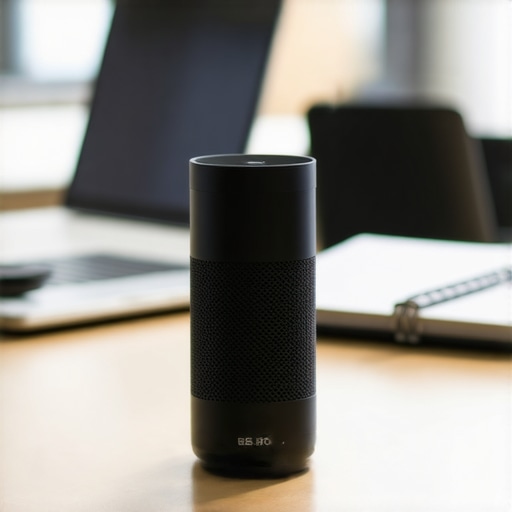
I have sat through enough ‘Can you hear me now?’ moments to realize that relying on the built-in microphone of a generic conference room is a gamble you will eventually lose. When we were pitching a major Series A, the room’s echo was so bad the lead investor literally asked if we were calling from a bathroom. That was the day I started carrying a portable conference speaker. According to technical documentation from Poly on their NoiseBlockAI technology, environmental sounds can distract participants for up to twenty percent of a meeting’s duration and significantly reduce cognitive focus. This is exactly why I recommend bringing your own hardware to how to stop your team from hating hybrid meetings. If the space doesn’t have acoustic panels, your $200 portable mic is the only thing standing between a closed deal and a ‘we’ll get back to you.’ You need to know how to deal with technical glitches during a remote board call before they happen, and that starts with owning the input quality.
How do I maintain consistent meeting quality as my team grows?
Maintenance isn’t just about cleaning the whiteboard; it is about the digital hygiene of your remote presence. As we scaled, I realized that why endpoint protection services matter more when your team is hybrid is the most overlooked part of ‘office’ maintenance. Every time a team member connects to a new coworking Wi-Fi, they are a potential security leak. I maintain our standards by enforcing a ‘hardened laptop’ policy and using dedicated VPNs, ensuring that our trade secrets stay private even in the busiest common areas. We also do a ‘tech audit’ every first Monday of the month. We test the speed of the rooms we’ve booked for the month ahead and adjust our reservations if the bandwidth isn’t holding up to our standards for how to maximize productivity in your startups conference rooms. This proactive approach prevents the ‘death by a thousand cuts’ that usually happens when a team gets too comfortable with a mediocre setup.
The office as a broadcast studio
Looking ahead, the trend is moving away from just ‘space’ and toward ‘production value.’ I predict that the future of conference rooms in startup ecosystems will see hubs transforming into mini-broadcast studios. We are already seeing innovative meeting rooms that boost startup creativity by including ring lights, sound-dampening curtains, and high-definition PTZ cameras as standard features rather than expensive add-ons. This shift is why I am so adamant that you why you shouldn’t sign a lease for your first 10 employees yet; the physical tech requirements are evolving too fast for a 5-year commitment. You want to be able to jump to the space that installs the latest holographic or spatial audio tech the moment it becomes the industry standard for high-stakes demos. Try this: next time you’re on a space tour, ask the community manager for their router’s ‘uptime’ report for the last thirty days. A savvy manager will have it; a lazy one will give you a blank stare. That stare is your cue to walk away before your next pitch fails.
The Hardest Lessons I Paid for with My Own Seed Money
Looking back at my first few years, I realize I spent way too much time worrying about whether my space looked like a “real company” and not enough time checking if it actually functioned like one. Here is what I know now: culture isn’t built in a breakroom with a ping-pong table; it is built when your team has the quiet they need to actually do their jobs. One of the biggest mistakes you can make is ignoring the 7 red flags to watch for during a space tour, specifically looking for hidden fees that aren’t mentioned in the brochure. Also, I learned the hard way that you should always have a plan for how to handle a sensitive hr meeting in a shared space before you need to have one. Privacy is a commodity in the flex world, so you have to be the one to protect it. Over the years, I’ve seen that the most resilient founders are those who treat their office as a tool, not a trophy.
The Tools That Saved My Professional Sanity
I don’t leave home without a few key items that turn any “hot desk” into a high-performance office. First, I use a high-quality portable conference speaker because the built-in mics in most rental rooms are unreliable. Second, I always carry a travel router to create my own secure network layer. If you are worried about the visuals, I highly recommend checking out the exact lighting setup for professional video pitches—it is a game-changer for remote investor calls where you need to look your best. Lastly, before I sign anything, I use a strict legal checklist to ensure I know how to spot a predatory lease before you sign. These small investments in gear and knowledge have saved me thousands in potential mistakes and lost productivity.
Your Workspace Should Be Your Secret Weapon
In the end, the place where you build your dream shouldn’t be a source of stress or a drain on your capital. It should be a flexible asset that evolves as fast as your product does. As you look toward the future of conference rooms in startup ecosystems, remember that you have the power to negotiate and the freedom to move. Focus on how to choose an office that supports your scaling speed, and do not let anyone tell you that a long-term lease is the only sign of a serious business. Your revenue and your team’s happiness are the only metrics that matter. Have you ever felt pressured into a long-term office lease before you were truly ready? Let me know your experience in the comments below!