
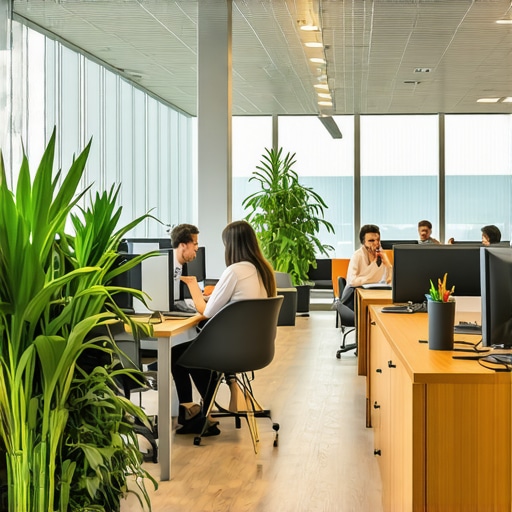
I remember the moment clearly—sitting in a cramped, fluorescent-lit conference room, surrounded by maze-like cubicles, feeling more like a hamster on a wheel than a creative professional. The dull beige walls, endless rows of identical desks, and the constant hum of background chatter made it impossible to focus or feel inspired. That realization hit me hard: I was stuck in an office space that stifled rather than stimulated my creativity.
Why Your Office Environment Could Be Holding Back Your Startup
It’s astonishing but true—studies have shown that our physical environment significantly impacts productivity, mood, and even innovation. A report from Steelcase highlights that employees who work in well-designed, inspiring spaces are up to 17% more productive than those in traditional, uninspiring offices. Yet, many startups and small teams default to traditional office layouts or neglect the importance of a space that fosters collaboration and creativity.
When I first started my business, I made a crucial mistake: I chose a budget office with standard cubicles, thinking it was good enough. I didn’t realize how much that environment was undermining my team’s enthusiasm and our ability to think outside the box. Looking back, I see that selecting a workspace that doesn’t feel like a cubicle farm was the turning point for us—once we moved into a more inspiring, flexible environment, our creativity and engagement soared.
So, how do you find an office space that sparks innovation rather than frustration? Today, I’m here to share the insights and practical steps that helped me transform our working environment. From evaluating space options to understanding what features foster a dynamic atmosphere, this guide will walk you through everything you need to know.
Ready to leave the dull office behind? Let’s dive into the first steps toward discovering a workspace that truly energizes your team.
Is Choosing a Unique Office Space Really Worth the Extra Effort?
One of the biggest doubts I had early on was whether investing time and resources into finding a less traditional office space was truly justified. I feared it would be more hassle than it was worth. But I learned the hard way—cutting corners on workspace quality can cost your startup more in lost innovation and employee satisfaction. For example, opting for a standard leasing contract without considering alternative coworking options or creative spaces often results in a dull environment that hampers motivation.
If you’ve ever wondered whether it’s worth the effort to seek out a workspace that stands out from the crowd, you’re not alone. The truth is, a well-chosen office can be a strategic asset, boosting your company’s culture and helping you attract top talent. If you’re curious about how to identify the right environment, check out how coworking spaces can unlock opportunities for startups through vibrant, collaborative atmospheres to foster connections and ideas—more than what a traditional office can offer.
Moving beyond the usual office options can seem daunting initially, but the long-term benefits for your team’s energy and creativity are invaluable. Now, let’s explore how to distinguish spaces that inspire from those that drain.
Assess Your Current Workspace with a Critical Eye
Begin by objectively evaluating your current office layout. Take note of elements that stifle creativity, such as overcrowded desks, poor lighting, or monotonous decor. I once spent a afternoon walking through our office, pinning sticky notes on areas needing change. This visual audit revealed that our conference rooms lacked inspiring visuals and were poorly acoustically treated, leading to muffled calls and disengagement. Document these issues to prioritize improvements who will make the biggest impact.
Identify and Invest in Key Environment Features
Focus on amenities that encourage collaboration and creativity. Consider adjustable lighting to control glare, plush seating for informal brainstorms, or writable surfaces for spontaneous ideation. I once repurposed a whiteboard wall in our shared space, which quickly became a magnet for creative sketching and notes—transforming a dull wall into a dynamic collaboration hub. These small upgrades can make a significant difference in daily enthusiasm and problem-solving pace.
Choose Flexible Conference Rooms for Different Needs
Not all meetings are created equal. For strategic sessions, opt for rooms that promote openness—think circular tables and natural light. For sensitive or focused discussions, smaller, soundproofed rooms work best. I learned this firsthand during a pivotal investor call when we moved from a standard conference room to a dedicated soundproof suite featured in this resource. The clarity and professionalism boosted our confidence and secured the deal.
Leverage Coworking Spaces When Necessary
If your current environment isn’t cutting it, consider coworking spaces for temporary or regular use. These spaces often feature innovative design, vibrant atmospheres, and ample networking opportunities. I recently rented a hot desk at a coworking hub and found that its energetic vibe sparked new ideas I hadn’t encountered in our usual office. Visiting these environments can connect you with communities that fuel your startup’s growth.
Optimize Your Meeting Schedules and Room Bookings
Efficient meetings are vital. Limit meeting durations to 15-30 minutes with clear agendas. Use software that prevents double-bookings and streamlines scheduling—tools reviewed in this article. During a hectic week, I implemented strict booking policies, which reduced wasted time and improved team focus. Remember, a well-managed conference room system keeps your momentum high and prevents organizational chaos.
Create an Atmosphere That Sparks Creativity
Incorporate elements like inspiring artwork, flexible seating, or plants. I remember transforming our dull white walls into a mural space where team members added sketches—an improvised project that fostered ownership and pride. Small clever touches promote an environment where innovative ideas flourish and early-stage startups can truly thrive.
Many entrepreneurs and managers believe that investing in high-tech, stylish conference rooms or trendy coworking spaces automatically translates into higher productivity and better team dynamics. However, *let’s dig deeper* into this common misconception. The truth is, most people overlook nuanced pitfalls that can undermine even the most cutting-edge setups. For instance, focusing solely on aesthetics without considering acoustic design can cause chaotic meetings; a study from the Harvard Business Review highlights that noise distractions reduce meeting effectiveness by up to 30%. **Avoid the trap of equating high-end decor with functionality**—what truly matters is how the space supports your team’s communication and focus.
Another widespread myth is that larger meeting rooms are always better. In reality, spaciousness can lead to a lack of intimacy and engagement, diluting the quality of discussions. Smaller, well-designed rooms promote more active participation. Moreover, the *hidden trap* lies in choosing spaces that aren’t adaptable; rigid layouts hinder spontaneous collaboration. The real differentiator is flexible environments that can morph from private huddles to open brainstorming zones, as seen in innovative coworking environments analyzed in this resource.
There’s also the misconception that investing in the most advanced tech gadgets guarantees smoother meetings. While tools like high-quality cameras and microphones are essential, overestimating their impact can lead to neglecting core issues like room layout or participant engagement. For example, a state-of-the-art video system won’t solve the problem if participants don’t have clear sightlines or if the room’s acoustics cause echoes—an often-overlooked issue that hampers remote collaboration. A detailed analysis in this article emphasizes that technology must be complemented with thoughtful space design.
What about coworking spaces? Many assume they are ideal for every startup, but in fact, **the real advantage lies in curated environments** that align with your team’s culture and needs. Rented hot desks in generic hubs might increase exposure but can also introduce distractions. The *hidden nuance* is selectively choosing coworking environments that promote community and focus—spaces with dedicated zones for deep work and private calls are often overlooked yet vital for productivity. As I discuss in this post, strategic selection is key.
Last but not least, don’t ignore the importance of consistent evaluation. Spaces that worked well during your startup’s initial phase might become barriers as you scale. Regularly reassess your environment to identify subtle flaws—like poor lighting or insufficient breakout zones—that might not be obvious at first glance. This ongoing process ensures your workspace evolves with your needs, avoiding costly mistakes down the line.
In summary, the *most overlooked aspect* is that well-designed conference rooms and coworking spaces are not just about looks or tech—they are about creating an environment that nurtures effective communication, adaptability, and focus. Recognize these nuances before making your next space decision. Have you ever fallen into this trap? Let me know in the comments.Maintaining an efficient and productive workspace requires the right tools and consistent routines. For startups aiming to stay agile, integrating technology that streamlines scheduling, enhances communication, and optimizes space usage is crucial. I personally rely on **Robin**, a smart room scheduling software. It connects directly with our calendar system, ensuring that room bookings are automatic, conflict-free, and visible to all team members. This minimizes the friction of manual reservations and prevents double-bookings, which can cause embarrassment and delays.
For virtual collaboration, I highly recommend **Miro** — a digital whiteboard platform that replaces physical whiteboards. We use it extensively during brainstorming sessions, especially when we’re spread across different locations. Its real-time editing and vast library of templates empower our team to visualize ideas quickly and effectively. Trust me, transitioning to digital whiteboards was transformative; it kept our creative momentum alive even during remote work phases.
In terms of maintaining long-term results, regular review sessions are key. I schedule bi-weekly ‘space health checks’ where we evaluate our environment and tools. During these sessions, I ask: Are our conference rooms still meeting our needs? Is the Wi-Fi reliable? Could our lighting be better for video calls? These quick audits prevent small issues from becoming costly or frustrating over time. If you’re looking for a comprehensive way to manage this, **iLobby** offers visitor management and space booking analytics that help optimize your environment continuously.
Looking ahead, I believe the trend will shift toward more intelligent, data-driven workspace management tools that adapt to your team’s evolving workflows. Companies like **Nook** are developing AI-powered solutions that learn from your booking patterns to suggest optimal room configurations automatically. Incorporating predictive analytics into your workspace management can give your startup a competitive edge, enabling proactive adjustments rather than reactive fixes.
How do I maintain consistency in the workspace over time? The secret lies in routine audits combined with smart automation. For example, I set reminders to review our booking systems monthly and update equipment as needed. This practice ensures that our environment remains conducive to productivity, not a hindrance. Implementing such regular routines fosters a culture of continual improvement and prevents stagnation.
Finally, don’t forget the importance of feedback loops. Encourage your team to report issues with space or tools immediately via dedicated channels. Acting swiftly on this feedback keeps the environment aligned with your team’s needs, maintaining high morale and efficiency. To streamline communication, I often use Slack integrations that notify us of any booking conflicts or technical glitches, creating a real-time oversight that’s invaluable for dynamic startup environments.
Ready to elevate your workspace management? Try setting up automated room reservations with Robin and schedule quarterly environment reviews. This small adjustment can lead to significant improvements in daily operations. For tailored advice or to explore how these tools can be customized for your space, consider reaching out through our contact page. Taking proactive steps now will pave the way for smoother operations as your startup scales.
Lessons That Changed My Approach to Conference Room Design
One of my biggest revelations was realizing that the smallest tweak—a colorful poster or a flexible whiteboard—could spark a flood of ideas. I used to believe larger investments were necessary, but I learned that intentional, thoughtful touches often have the greatest impact. Another lightbulb moment was understanding that environmental consistency fosters trust; if your conference room looks professional and inviting, your clients and team immediately sense stability and ambition. Finally, I discovered that adaptability beats perfection—spaces that can be rearranged for different needs make a startup environment resilient and dynamic, enabling rapid pivots and spontaneous collaborations.
Tools That Became My Startup Environment Essentials
After experimenting with many options, a few tools stood out for enhancing our workspace. Our contact management platform streamlined visitor flow and room bookings, saving us valuable time. Vibrant coworking spaces fostered serendipitous meetings that led to partnerships. To maintain meeting effectiveness, I swear by smart room booking software that prevents conflicts and poorly scheduled sessions. Lastly, creative environments with adaptable furniture and decor encourage spontaneous ideation—these are the game-changers for startup growth.
Embrace the Journey to a Workspace That Inspires Action
Your office environment isn’t just a backdrop; it’s a vital partner in your startup’s success. By intentionally curating a space that promotes collaboration, flexibility, and inspiration, you’re setting the stage for innovation to flourish. Remember, the process of improving your conference rooms and coworking spaces is ongoing—stay curious, be adaptable, and pursue environments that energize your team. Your next breakthrough could be just a room change away. What small design upgrade are you excited to try next in your workspace? Share your ideas below and let’s grow together!