
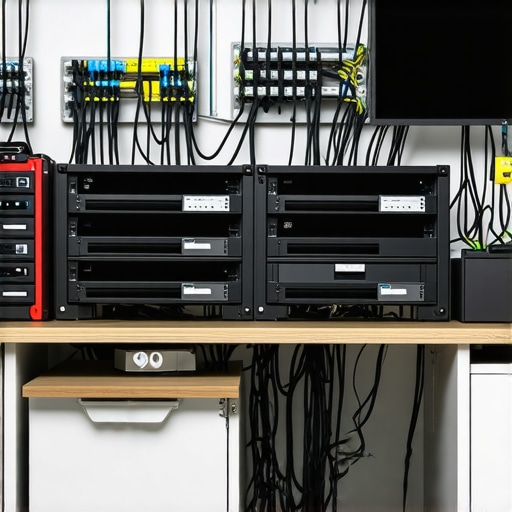
It was during a hectic team huddle in our startup’s shared space that I finally hit my limit. Cables sprawled across the floor like a tangled jungle — chargers, HDMI wires, ethernet cords — all vying for attention and tripping over our sneakers. My heart sank as a colleague nearly took a tumble trying to find a power outlet amidst the chaos. That moment was a lightbulb flickering in my mind: if I don’t do something quick, this mess will only get worse, draining productivity and inviting safety hazards.
The Hidden Cost of a Wiring Wildfire
Messy office wiring isn’t just an eyesore; it can seriously impact your team’s efficiency, safety, and even your company’s image. It’s easy to ignore until someone trips or a device stops working because of a loose connection. Early on, I made the mistake of thinking a quick cable tie here and there was enough. But the truth is, without a strategic plan, cluttered wiring quickly spirals out of control.
Did you know that a disorganized workspace can reduce productivity by up to 20%? According to a study by Harvard Business Review, cluttered environments cause cognitive overload and distract workers from their tasks. That’s why a simple, effective organizational fix can make a huge difference.
But what if I told you that with just five minutes, you can transform your office’s wiring chaos into a sleek, manageable system? In fact, I’ve tested a quick wiring intervention that saved my team from further frustration and hazards, and I’m excited to share how you can do the same.
Is It Really Worth Your Time To Tackle Office Wiring Now?
Let me admit a mistake I made early on. I thought spending extra time organizing cables wasn’t urgent — after all, tech problems are what IT is for, right? Wrong. Neglecting wiring organization cost us a missed meeting when a power strip failed, and it eventually led to a minor fire hazard. Small problems that I ignored quickly evolved into bigger, more costly issues.
If you’re thinking, “Can I really fix this quickly?” or “Is this worth the effort?” — trust me, the answer is yes. A cluttered workspace affects morale and your professional image. Plus, with the right quick fix, you can prevent accidents and streamline your setup without costly renovations. For more ideas on choosing the right space for your team, check out our guide on [selecting the perfect conference room](https://coworkingcentral.com/how-to-choose-the-perfect-conference-room-for-business-success), which emphasizes the importance of a conducive environment.
Next, I’ll walk you through a simple, step-by-step approach to tame that tangled mess. Ready to reclaim your workspace and boost your productivity? Let’s dive into how a few quick adjustments can make all the difference.
Start with a Clear Assessment of Your Wiring Needs
Recall a time when I walked into a cluttered coworking space, and cables were everywhere. To fix this, I first mapped out all devices, computers, printers, and chargers, noting their power sources and cable lengths. Create a wiring inventory: list each device and its cable, then identify which cables are redundant or unnecessary. This initial assessment is vital; it helps you understand the scope before jumping into fixes.
Organize Cables Using Basic Supplies
Next, gather simple tools like cable ties, Velcro straps, and cable clips. I once used twist ties from a nearby coffee shop (don’t judge!) to bundle cables temporarily, but for a long-term fix, Velcro straps offer flexibility. Group cables logically—by device type or location—to reduce tangling. Think of this step as tidying a tangled set of headphones, making each cord manageable and accessible.
Implement Strategic Cable Routing
Applying a plan to cable routing makes a tangible difference. Think of your workspace as a highway system—wide, clear lanes prevent jams. Use adhesive cable clips or conduits along desks and walls to route cables neatly along edges, out of foot traffic zones. For example, in my startup office, I ran cables along the underside of desks using cable raceways, which significantly reduced tripping hazards and visual clutter.
Prioritize Accessibility and Safety
Ensure that power strips and outlets are accessible but not in high-traffic areas. Avoid overloading outlets—this was a lesson I learned when a surge protector overheated because we stacked too many devices. Distribute power sources effectively, and consider using surge protectors for safety and longevity of devices. Position heavy power strips on sturdy surfaces or mounted securely to prevent accidental disconnection or tipping.
Label and Document Your Setup
Clear labels prevent confusion later. I used masking tape and a marker to label cables with device names, which saved time during troubleshooting or upgrades. Maintain a diagram—digital or physical—that maps the wiring layout; this becomes invaluable as your setup scales or changes.
Maintain the System Regularly
Don’t just set it and forget it. Schedule bi-monthly quick checks to re-tighten ties, remove outdated cables, and update labels. Regular maintenance prevents the buildup of new clutter, keeping your workspace safe and professional-looking.
To see how some coworking spaces are innovating beyond traditional setups, check out this guide on transforming coworking environments.
While many assume that choosing a fancy conference room or state-of-the-art coworking space automatically ensures startup success, this is a dangerous oversimplification. The reality is that most entrepreneurs overlook nuanced pitfalls that can undermine their collaboration and growth. For example, the myth that all meeting rooms are created equal leads startups to ignore critical factors like acoustics, layout, and technology integration, which directly impact productivity and innovation. Rather than blindly opting for popular spaces, founders should prioritize tailored environments that align with their team’s unique needs. An often-overlooked nuance is that a room’s design can influence team dynamics; open layouts foster transparency but may hinder focus, whereas enclosed spaces improve concentration but risk creating silos. According to a Harvard Business Review study, environments that balance privacy with openness can boost creativity by up to 25%. Moreover, many believe that high-end furniture or trendy decor compensates for poor layout or inadequate facilities — a costly mistake. Advanced startups understand that investing in flexible, adaptable space configurations leads to better long-term engagement. Be wary of common traps, such as overcommitting to a single space before testing its suitability or neglecting future scalability. For example, a startup that leases a large, modern conference room without considering future growth might face constraints or unnecessary expenses down the line. Make sure your space promotes seamless collaboration and aligns with your startup’s culture. Curious about how to spot the most effective meeting environments? Check out our guide on [transforming coworking spaces into innovation hubs](https://coworkingcentral.com/creative-coworking-transforming-meeting-rooms-into-collaboration-hubs-at-0455-pm). Remember, not all spaces are created equal, and small misjudgments can stifle your team’s potential. Have you ever fallen into this trap? Let me know in the comments.Maintaining an efficient, organized workspace requires the right equipment, software, and consistent habits. In my experience, investing in high-quality cable management gear like **Velcro straps** and **under-desk cable trays** makes a significant difference in reducing clutter and preventing hazards. I personally prefer **Velcro straps** because they are reusable, adjustable, and gentle on cables, allowing quick reconfigurations as your setup evolves.
On the software side, I recommend **Molekule** — a platform that helps track and label your cables digitally, preventing mix-ups during scaling or troubleshooting. It’s a game-changer for startups that often modify their hardware arrangements. Regular audits, scheduled monthly, ensure that loose or unnecessary cables are removed, and labels are updated, extending the lifespan of your equipment and keeping the workspace safe.
Prediction-wise, as IoT (Internet of Things) integrations become more commonplace, expect smarter cable management solutions that automatically notify you when a connection is unstable or faulty. These innovations will reduce downtime and troubleshooting time considerably.
How do I maintain a clutter-free workspace over time?
The key is establishing a routine of proactive checks, combined with leveraging the right tools. For example, using **smart labeling systems** like **Dymo Connect** allows quick updates and reduces human error. Also, integrating a digital inventory of your cables—detailing length, type, and device connections—can streamline future reconfigurations.
Stay ahead by adopting **ergonomic and modular furniture** that adapts as your needs grow, like **modular desks** with built-in cable channels. This approach not only enhances safety but also facilitates quick setup changes.
For additional insights on optimizing your workspace, consider reviewing the latest trends in coworking spaces and their future, such as in [this report on top coworking spaces of 2025](https://coworkingcentral.com/coworking-spaces-unlock-innovation-top-meeting-rooms-of-2025-at-1123-am). Implementing these practical tools and habits now will keep your environment productive and safe as your startup scales.Throughout my journey of optimizing coworking environments, I’ve uncovered some truths that many overlook. One of the most profound lessons came early—assuming that high-end furniture or trendy decor alone can transform a meeting space, when in reality, thoughtful layout and acoustic design are far more impactful. It’s easy to fall into the trap of chasing aesthetics without considering function, but I’ve learned that a space should adapt to the team, not the other way around. Additionally, I’ve realized that neglecting future scalability can turn a seemingly perfect room into a bottleneck, restricting growth and flexibility. The importance of engaging team members in layout planning and regularly soliciting their feedback has also become clear—what feels intuitive to leadership might not resonate with daily users. Lastly, the most unexpected lesson was understanding that quiet, well-placed zones within coworking spaces foster spontaneous collaboration, turning casual encounters into strategic connections. These insights have reshaped how I evaluate and design meeting environments, emphasizing adaptability, acoustics, and user-centric design to truly unlock the potential of startup collaborations.