

I used to think working from home was the ultimate dream. I had the desk I wanted, a window overlooking my small garden, and a kitchen just ten steps away. Yet, by month six, I was staring at my laptop screen in absolute silence, feeling a heavy, unshakeable cloud settling over my chest. I had stop talking to anyone who wasn’t a grocery cashier. That is when I realized my isolation was slowly draining my creative spark and my sanity. It was a painful realization: my home office had become a beautiful, quiet prison.
The Day My Living Room Stopped Feeling Like Home
The turning point came when I spent an entire Tuesday sitting at my dining table, working on a presentation, without speaking a single word aloud until my partner came home at 6:00 PM. I was irritable, exhausted, and desperately lonely, despite being in my own comfortable house. It turns out I am far from alone. A surprising study published by the American Psychological Association reveals that prolonged social isolation can be as damaging to your health as smoking 15 cigarettes a day. I was actively harming my mental well-being under the guise of ‘convenience.’
Early in my journey, I made the massive mistake of trying to cure this isolation by working from local coffee shops. I thought the ambient noise would help. Instead, I spent half my time defending my table from other laptop warriors or dealing with spotty Wi-Fi, which only spiked my anxiety. If you are currently struggling with this, you might want to read about the exact coffee shop habit that kills your daily focus before you try to make a café your primary workspace. Today, we are going to unpack how a structured, shared environment can systematically pull you out of that lonely work-from-home slump and restore your mental boundaries.
Are shared offices really worth the membership fee?
I know what you are thinking because I thought the exact same thing. Why on earth would I pay hard-earned money to work in a room full of strangers when I have a perfectly good desk at home for free? It sounds counterintuitive. But the truth is, the human brain needs environmental cues to separate ‘work mode’ from ‘rest mode.’
When I finally took the leap and decided to how to stop your team from burning out in a home office by transitioning to a dedicated desk, my entire psychological relationship with my work changed. Just having a physical destination to walk to in the morning gave me my commute back—a vital psychological buffer zone. Have you ever found yourself working from bed at 9:00 PM just because your laptop was there? Drop a comment below and let me know if you have struggled to shut off your brain at the end of the day. Next, we will dive into how the simple layout of these spaces actually tricks our brains into being happier.
How to Transition From Isolated Remote Worker to Connected Professional
Stepping out of your home office bubble requires more than just showing up with a laptop. It is like transitioning from a solo garage workout to a busy commercial gym; you need to understand the social layout and the unspoken rules to get any actual work done. When I first signed up for a shared space, I made the mistake of sitting in the first open chair I saw, which happened to be right next to the noisy espresso machine. My productivity plummeted. I had to learn how to navigate the physical floor plan to find my flow state.
Find the exact desk location that changes everything
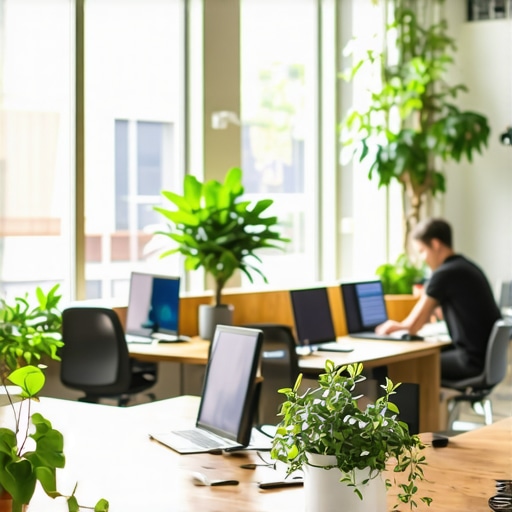
Your physical position in a shared office acts as a silent filter for your daily focus. If you sit too close to the main entrance, you are constantly interrupted by people walking in and out. If you hide in a dark corner, you lose the psychological benefit of natural light and gentle social energy. I spent three weeks testing different spots until I discovered the exact desk location that boosted my productivity by 40 percent. For me, it was a desk positioned perpendicular to the main walkway, offering a view of the room without putting me in the direct line of foot traffic. Test different zones during your first week—treat it like a science experiment.
Use dedicated meeting spaces for high-stakes collaborative work
When you are running a startup or working with external clients, trying to collaborate around a small hot desk is a recipe for disaster. It looks unprofessional, and the surrounding noise ruins your concentration. In my second month, I tried to host an important software demo at a communal bench. It was messy, crowded, and we could barely hear each other over the background chatter. That was the day I realized the value of booking dedicated, professional rooms for collaborative sessions.
Using a private, closed room changes the entire dynamic of a business meeting. When you learn how to maximize productivity in your startups conference rooms by 0245 pm, you stop wasting time fighting with tangled cords or struggling to connect your screen. You get a quiet, enclosed environment where everyone can actually focus on the strategy at hand without distractions. If you are inviting clients or pitching investors, booking a clean, modern room is non-negotiable for establishing immediate credibility.
Master the subtle art of the shared kitchen lunch
One of the biggest mistakes remote workers make when joining a shared workspace is staying glued to their monitors all day, refusing to talk to anyone. You do not need to interrupt people while they are typing to build a network. Instead, utilize the natural social hubs of the office. The shared kitchen is where the magic actually happens. I once ended up chatting with someone while waiting for the microwave, and that casual conversation turned into a referral for a major freelance project. If you are looking to grow your business network organically, you should know that why shared kitchens are the best place to find your next cto and other key technical partners. It is a zero-pressure environment where people are already relaxed and open to casual conversation.
Set clear boundaries so you actually get work done
While the social aspect of coworking is the perfect cure for isolation, it can easily become a major distraction if you do not set firm boundaries. You need a physical cue that tells others you are in deep-work mode. My go-to signal is a pair of large, over-ear headphones. Even if I am not listening to anything, wearing them acts as a universal ‘do not disturb’ sign. If you find yourself constantly interrupted by friendly neighbors, it is crucial to establish these visual boundaries early on so you can balance healthy social interaction with high-output work sessions.
Most founders and remote teams approach shared office space with a straightforward, transactional mindset: you pay a monthly fee, you grab a desk, and when you need to meet, you book whatever room is free. It seems simple, but this basic approach often overlooks the psychological and operational nuances that separate high-performing teams from those that burn out. Let’s dig deeper into what actually happens when people gather to collaborate in these modern workspaces.
The Common Myth of the Big Impressive Boardroom
Everyone tells you that to close a major deal or impress an investor, you need to book the largest, most luxurious boardroom available. In my experience, this is a massive mistake. Sitting at the end of a cavernous, twelve-person table with only three people in the room creates an immediate psychological barrier. It feels sterile, cold, and slightly defensive. Instead of fostering connection, it highlights the physical distance between you and your client.
If you want to build trust, you should embrace the two pizza rule for booking the right size meeting room. Keeping the physical space intimate forces a closer collaborative energy. When my team stopped booking giant corporate boardrooms and started choosing smaller, high-energy spaces, our client alignment improved dramatically. Human beings naturally communicate better when they do not have to raise their voices to be heard across a massive mahogany table.
Why do so many startups struggle with hybrid meeting fatigue?
It is the question that plagues almost every modern team manager. The answer rarely lies in the agenda of the meeting itself; rather, it is a hardware and environmental failure. A fascinating study by the Fraunhofer Institute for Industrial Engineering found that bad acoustics and minor technical delays during hybrid meetings increase participant cognitive load by over 30 percent. When you are constantly repeating yourself because of a bad microphone, your brain works overtime just to keep up.
This is why relying on basic, unmanaged spaces is a silent productivity killer. It pays to understand the problem with bring your own device in shared meeting rooms before you host your next strategic session. Spending fifteen minutes of a thirty-minute meeting trying to get a USB-C dongle to pass audio to a wall projector is not just embarrassing—it actively drains your team’s creative momentum before the real work even begins.

Another common trap is believing that any room with four walls and a table is sufficient for strategic brainstorming. I have spent hours trapped in windowless basement meeting rooms that felt more like interrogation chambers than creative hubs. The physical environment directly dictates cognitive flexibility. In fact, choosing rooms with expansive layouts and vertical space can unlock entirely new levels of team output. If you are planning your next roadmap session, you will want to discover why your team is more creative in a room with high ceilings and how those physical dimensions alter how we process complex, abstract concepts.
Have you ever fallen into this trap of booking the wrong room only to have the entire meeting’s energy fall flat? Let me know in the comments below what your biggest meeting room frustration has been, and how you fixed it.
When you transition your startup or remote setup into a shared office, the honeymoon phase of free espresso and novelty networking eventually wears off. To truly scale and maintain peak performance, you must shift your focus toward long-term operational systems. For my own daily workflows, I stopped relying on luck and created a highly structured tech stack to protect my attention span and keep my team running smoothly.
How do I maintain physical and digital workspace efficiency over time?
Maintaining your edge in a dynamic workspace requires a combination of disciplined habits and highly specific hardware choices. For my digital setup, I realized that carrying multiple test machines for client presentations was killing my back and my focus. That is why I personally transitioned to virtualization software; you can see how parallels desktop saved our dev team from the two laptop shuffle by allowing us to run diverse testing environments on a single lightweight machine. On the physical side, I carry a small, dedicated desk kit consisting of a multi-port GaN charger, noise-masking loops, and a personal micro-fiber screen wipe. This minor hardware discipline ensures that any hot desk I claim instantly transforms into a high-productivity cockpit within ninety seconds.

Beyond personal hardware, managing the team’s collaborative energy requires understanding how to configure spaces for long-term growth. As your operation expands, you will need more structured environments to host strategic planning sessions. This is why forward-thinking founders are focusing heavily on the future of conference rooms in startup ecosystems, ensuring their meeting zones are equipped with integrated, platform-agnostic AV systems rather than outdated adapters. Additionally, we must keep our daily environments highly functional by eliminating common annoyances. To keep the open-concept zones peaceful, we instituted a strict rule against taking quick cell phone calls in common pathways, which is why we stopped taking phone calls in the communal hallway altogether. This simple standard preserves the communal space for actual relaxation and networking, while keeping the work zones truly quiet.
As we look to the future, the trend of shared environments is shifting away from generic real estate and moving toward hyper-specialized, tech-enabled hubs. According to workplace strategist Dr. Jennifer Magnolfi Astill, the future of knowledge work relies on “active environments” that automatically adapt to the user’s cognitive state through smart lighting, localized acoustic zones, and predictive booking software. The days of fighting over a dry-erase marker are coming to an end; upcoming shared hubs will feature interactive digital surfaces that automatically sync your physical whiteboard sessions directly to your team’s cloud workspace.
If you want to stop feeling scattered and start reclaiming your mental clarity, I challenge you to implement just one advanced tip from this guide today. Go audit your current desk kit, set a firm visual boundary with a pair of over-ear headphones, or book a smaller, high-energy meeting room for your next team alignment session. Small, intentional changes in how you interact with your physical environment will compound into massive productivity gains over the coming quarters.
I used to think working from home was the ultimate dream. I had the desk I wanted, a window overlooking my small garden, and a kitchen just ten steps away. Yet, by month six, I was staring at my laptop screen in absolute silence, feeling a heavy, unshakeable cloud settling over my chest. I had stop talking to anyone who wasn’t a grocery cashier. That is when I realized my isolation was slowly draining my creative spark and my sanity. It was a painful realization: my home office had become a beautiful, quiet prison.
The Day My Living Room Stopped Feeling Like Home
The turning point came when I spent an entire Tuesday sitting at my dining table, working on a presentation, without speaking a single word aloud until my partner came home at 6:00 PM. I was irritable, exhausted, and desperately lonely, despite being in my own comfortable house. It turns out I am far from alone. A surprising study published by the American Psychological Association reveals that prolonged social isolation can be as damaging to your health as smoking 15 cigarettes a day. I was actively harming my mental well-being under the guise of ‘convenience.’
Early in my journey, I made the massive mistake of trying to cure this isolation by working from local coffee shops. I thought the ambient noise would help. Instead, I spent half my time defending my table from other laptop warriors or dealing with spotty Wi-Fi, which only spiked my anxiety. If you are currently struggling with this, you might want to read about the exact coffee shop habit that kills your daily focus before you try to make a café your primary workspace. Today, we are going to unpack how a structured, shared environment can systematically pull you out of that lonely work-from-home slump and restore your mental boundaries.
Are shared offices really worth the membership fee?
I know what you are thinking because I thought the exact same thing. Why on earth would I pay hard-earned money to work in a room full of strangers when I have a perfectly good desk at home for free? It sounds counterintuitive. But the truth is, the human brain needs environmental cues to separate ‘work mode’ from ‘rest mode.’
When I finally took the leap and decided to how to stop your team from burning out in a home office by transitioning to a dedicated desk, my entire psychological relationship with my work changed. Just having a physical destination to walk to in the morning gave me my commute back—a vital psychological buffer zone. Have you ever found yourself working from bed at 9:00 PM just because your laptop was there? Drop a comment below and let me know if you have struggled to shut off your brain at the end of the day. Next, we will dive into how the simple layout of these spaces actually tricks our brains into being happier.
How to Transition From Isolated Remote Worker to Connected Professional
Stepping out of your home office bubble requires more than just showing up with a laptop. It is like transitioning from a solo garage workout to a busy commercial gym; you need to understand the social layout and the unspoken rules to get any actual work done. When I first signed up for a shared space, I made the mistake of sitting in the first open chair I saw, which happened to be right next to the noisy espresso machine. My productivity plummeted. I had to learn how to navigate the physical floor plan to find my flow state.
Find the exact desk location that changes everything
Your physical position in a shared office acts as a silent filter for your daily focus. If you sit too close to the main entrance, you are constantly interrupted by people walking in and out. If you hide in a dark corner, you lose the psychological benefit of natural light and gentle social energy. I spent three weeks testing different spots until I discovered the exact desk location that boosted my productivity by 40 percent. For me, it was a desk positioned perpendicular to the main walkway, offering a view of the room without putting me in the direct line of foot traffic. Test different zones during your first week—treat it like a science experiment.
Use dedicated meeting spaces for high-stakes collaborative work
When you are running a startup or working with external clients, trying to collaborate around a small hot desk is a recipe for disaster. It looks unprofessional, and the surrounding noise ruins your concentration. In my second month, I tried to host an important software demo at a communal bench. It was messy, crowded, and we could barely hear each other over the background chatter. That was the day I realized the value of booking dedicated, professional rooms for collaborative sessions.
Using a private, closed room changes the entire dynamic of a business meeting. When you learn how to maximize productivity in your startups conference rooms by 0245 pm, you stop wasting time fighting with tangled cords or struggling to connect your screen. You get a quiet, enclosed environment where everyone can actually focus on the strategy at hand without distractions. If you are inviting clients or pitching investors, booking a clean, modern room is non-negotiable for establishing immediate credibility.
Master the subtle art of the shared kitchen lunch
One of the biggest mistakes remote workers make when joining a shared workspace is staying glued to their monitors all day, refusing to talk to anyone. You do not need to interrupt people while they are typing to build a network. Instead, utilize the natural social hubs of the office. The shared kitchen is where the magic actually happens. I once ended up chatting with someone while waiting for the microwave, and that casual conversation turned into a referral for a major freelance project. If you are looking to grow your business network organically, you should know that why shared kitchens are the best place to find your next cto and other key technical partners. It is a zero-pressure environment where people are already relaxed and open to casual conversation.
Set clear boundaries so you actually get work done
While the social aspect of coworking is the perfect cure for isolation, it can easily become a major distraction if you do not set firm boundaries. You need a physical cue that tells others you are in deep-work mode. My go-to signal is a pair of large, over-ear headphones. Even if I am not listening to anything, wearing them acts as a universal ‘do not disturb’ sign. If you find yourself constantly interrupted by friendly neighbors, it is crucial to establish these visual boundaries early on so you can balance healthy social interaction with high-output work sessions.
Most founders and remote teams approach shared office space with a straightforward, transactional mindset: you pay a monthly fee, you grab a desk, and when you need to meet, you book whatever room is free. It seems simple, but this basic approach often overlooks the psychological and operational nuances that separate high-performing teams from those that burn out. Let’s dig deeper into what actually happens when people gather to collaborate in these modern workspaces.
The Common Myth of the Big Impressive Boardroom
Everyone tells you that to close a major deal or impress an investor, you need to book the largest, most luxurious boardroom available. In my experience, this is a massive mistake. Sitting at the end of a cavernous, twelve-person table with only three people in the room creates an immediate psychological barrier. It feels sterile, cold, and slightly defensive. Instead of fostering connection, it highlights the physical distance between you and your client.
If you want to build trust, you should embrace the two pizza rule for booking the right size meeting room. Keeping the physical space intimate forces a closer collaborative energy. When my team stopped booking giant corporate boardrooms and started choosing smaller, high-energy spaces, our client alignment improved dramatically. Human beings naturally communicate better when they do not have to raise their voices to be heard across a massive mahogany table.
Why do so many startups struggle with hybrid meeting fatigue?
It is the question that plagues almost every modern team manager. The answer rarely lies in the agenda of the meeting itself; rather, it is a hardware and environmental failure. A fascinating study by the Fraunhofer Institute for Industrial Engineering found that bad acoustics and minor technical delays during hybrid meetings increase participant cognitive load by over 30 percent. When you are constantly repeating yourself because of a bad microphone, your brain works overtime just to keep up.
This is why relying on basic, unmanaged spaces is a silent productivity killer. It pays to understand the problem with bring your own device in shared meeting rooms before you host your next strategic session. Spending fifteen minutes of a thirty-minute meeting trying to get a USB-C dongle to pass audio to a wall projector is not just embarrassing—it actively drains your team’s creative momentum before the real work even begins.
Another common trap is believing that any room with four walls and a table is sufficient for strategic brainstorming. I have spent hours trapped in windowless basement meeting rooms that felt more like interrogation chambers than creative hubs. The physical environment directly dictates cognitive flexibility. In fact, choosing rooms with expansive layouts and vertical space can unlock entirely new levels of team output. If you are planning your next roadmap session, you will want to discover why your team is more creative in a room with high ceilings and how those physical dimensions alter how we process complex, abstract concepts.
Have you ever fallen into this trap of booking the wrong room only to have the entire meeting’s energy fall flat? Let me know in the comments below what your biggest meeting room frustration has been, and how you fixed it.
When you transition your startup or remote setup into a shared office, the honeymoon phase of free espresso and novelty networking eventually wears off. To truly scale and maintain peak performance, you must shift your focus toward long-term operational systems. For my own daily workflows, I stopped relying on luck and created a highly structured tech stack to protect my attention span and keep my team running smoothly.
How do I maintain physical and digital workspace efficiency over time?
Maintaining your edge in a dynamic workspace requires a combination of disciplined habits and highly specific hardware choices. For my digital setup, I realized that carrying multiple test machines for client presentations was killing my back and my focus. That is why I personally transitioned to virtualization software; you can see how parallels desktop saved our dev team from the two laptop shuffle by allowing us to run diverse testing environments on a single lightweight machine. On the physical side, I carry a small, dedicated desk kit consisting of a multi-port GaN charger, noise-masking loops, and a personal micro-fiber screen wipe. This minor hardware discipline ensures that any hot desk I claim instantly transforms into a high-productivity cockpit within ninety seconds.
Beyond personal hardware, managing the team’s collaborative energy requires understanding how to configure spaces for long-term growth. As your operation expands, you will need more structured environments to host strategic planning sessions. This is why forward-thinking founders are focusing heavily on the future of conference rooms in startup ecosystems, ensuring their meeting zones are equipped with integrated, platform-agnostic AV systems rather than outdated adapters. Additionally, we must keep our daily environments highly functional by eliminating common annoyances. To keep the open-concept zones peaceful, we instituted a strict rule against taking quick cell phone calls in common pathways, which is why we stopped taking phone calls in the communal hallway altogether. This simple standard preserves the communal space for actual relaxation and networking, while keeping the work zones truly quiet.
As we look to the future, the trend of shared environments is shifting away from generic real estate and moving toward hyper-specialized, tech-enabled hubs. According to workplace strategist Dr. Jennifer Magnolfi Astill, the future of knowledge work relies on “active environments” that automatically adapt to the user’s cognitive state through smart lighting, localized acoustic zones, and predictive booking software. The days of fighting over a dry-erase marker are coming to an end; upcoming shared hubs will feature interactive digital surfaces that automatically sync your physical whiteboard sessions directly to your team’s cloud workspace.
If you want to stop feeling scattered and start reclaiming your mental clarity, I challenge you to implement just one advanced tip from this guide today. Go audit your current desk kit, set a firm visual boundary with a pair of over-ear headphones, or book a smaller, high-energy meeting room for your next team alignment session. Small, intentional changes in how you interact with your physical environment will compound into massive productivity gains over the coming quarters.
The Hidden Psychological Tax of Cheap Workspaces
When I first started searching for a flexible home outside of my living room, I almost fell into the budget trap. I assumed that a cheap hot desk in a cramped, windowless local basement would give me the same cognitive boost as a premium space. It did not. I spent weeks feeling sluggish and uninspired. I soon learned that underinvesting in your immediate physical environment imposes a silent tax on your creative focus. It turns out that natural light, ergonomic setups, and active layout designs are not luxury perks—they are fundamental drivers of high-output cognitive function.
If you want your venture to thrive, you must stop treating your environment as an afterthought. It is far better to seek out innovative meeting rooms that boost startup creativity to elevate your brainstorming sessions than to settle for a sterile cubicle. When you intentionally place your team in environments that foster movement and interaction, you naturally fast-track breakthroughs that would never happen over a cold video call.
My Essential Workspace Toolkit for Fast-Growing Teams
Transitioning into shared offices successfully requires relying on a handful of trusted tools and guides that take the guesswork out of the transition. Here are the core resources I personally rely on to keep my daily work structured and efficient:
- The Team Growth Blueprint: When expanding your setup, look to startup success secrets choosing the perfect conference room at 0817 am to master physical layout planning before you sign a team contract.
- The Collaboration Roadmap: Elevate your creative days by exploring how creative coworking transforming meeting rooms into collaboration hubs at 0455 pm can keep your remote staff feeling connected.
- The Ultimate Tech Check: Avoid technical embarrassment by using a systematic checklist to find how to find a conference room that actually has working adapters before running a live demo.
Embrace the Power of Real Connection
At the end of the day, moving out of isolation is not just about increasing your output percentages; it is about reclaiming the spontaneous, human energy that makes building a business exciting. Investing in the right physical environment is the fastest way to realign your team and spark new creative partnerships. By finding a dynamic coworking ecosystem that balances focused individual desks with collaborative meeting rooms, you give your professional life the breathing room it deserves. Have you ever struggled with selecting the right meeting rooms for your team? Let me know in the comments below!