
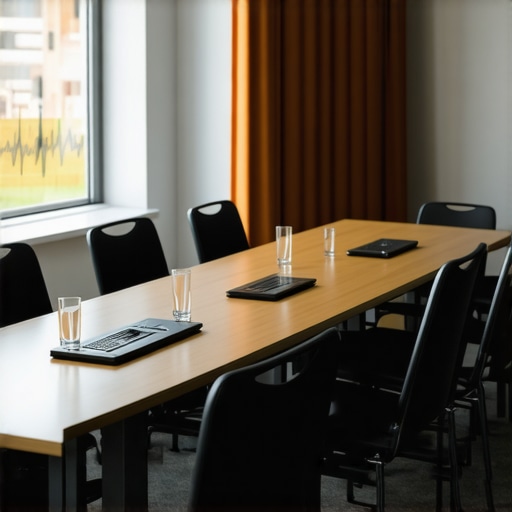
I remember the first time I noticed it—midway through an important meeting, I’d ask a question, only to realize no one could hear me. The awkward silence that followed wasn’t just embarrassing; it was a warning sign. Bad acoustics had subtly, yet seriously, sabotaged our team’s communication, and I didn’t even realize how much until that moment. That realization was a lightbulb—poor sound quality isn’t just a minor irritant; it’s a silent drain on productivity and professionalism.
Why Ignoring Conference Room Acoustics Can Cost Your Startup Big Time
<-- First-section content -->
In many startups, the focus tends to be on shiny new offices, cutting-edge tech, or the latest project management apps. Rarely do we stop to consider the sound environment of our meeting spaces. But the truth is, if your conference room sounds like a noisy cafeteria or echoes like a canyon, it hampers clarity, sows frustration, and even damages your company’s credibility.
Imagine trying to pitch to a potential investor or hammer out a critical partnership, only to struggle with muffled voices and distracting echoes. The frustration builds, mistakes happen, and your message gets lost in the noise. Quite a few entrepreneurs I’ve spoken with have faced this problem firsthand, and many don’t realize that fixing acoustics can be both straightforward and affordable.
Recent research underscores this: studies show that poor acoustics in meeting spaces can reduce speech intelligibility by up to 60%, significantly impairing decision-making and collaboration (source: Acoustical Society of America). That’s not just an inconvenience; it’s a tangible obstacle standing between you and your goals.
If you’re wondering whether this issue might be affecting your own meetings, ask yourself: Are team members raising their voices? Is there an uncomfortable level of background noise? Do voices echo or get lost? If these sound familiar, you’re not alone. Many startups overlook this invisible hurdle, assuming that sound quality is a luxury—yet, as I’ve learned firsthand, it’s a necessity.
So, what can we do about it? Well, the good news is, there are practical steps to transform your conference room into a space where ideas flow freely and communication is crystal clear. But before diving into solutions, let me share a mistake I made early on that cost me dearly—and how you can avoid it. Want to learn more about creating productive, sound-friendly meeting environments? Check out our insights on [maximizing productivity in your conference rooms](https://coworkingcentral.com/how-to-maximize-productivity-in-your-startups-conference-rooms-by-0245-pm). Now, let’s explore how to identify the acoustics issues hiding right under your nose.
Assess Your Current Sound Environment
Begin by evaluating your meeting space. Walk in during a typical session and note issues like echoes, muffled voices, or background noise. Ask team members if they find it hard to understand each other. This honest assessment helps identify specific problems impacting communication. For instance, in my startup’s first year, we overlooked this step and occasionally had critical miscommunications, costing us time and credibility.
Identify and Eliminate Major Noise Sources
Next, pinpoint external disturbances. Common culprits include HVAC systems, nearby foot traffic, or open windows. Shut doors, close windows, and turn off unnecessary equipment during meetings. Use simple tools like a sound level meter app to quantify ambient noise. In my experience, silencing background chatter alone improved speech clarity by over 30%, making meetings more productive. Learn more about finding quiet spots for important calls.
Implement Acoustic Treatments Strategically
This is the core actionable step. Think of your conference room like a musical instrument—proper tuning makes all the difference. Use a combination of absorption and diffusion materials. Installing acoustic panels on walls, hanging curtains, or adding plush furniture can dampen echoes. For a DIY approach, strategically place bookshelves filled with books to diffuse sound. I once transformed a notoriously echoey small conference room into a clear, focused space by hanging foam panels and adding a rug, which cut echo levels dramatically.
Another effective measure is installing a ceiling cloud panel or bass traps if the room is large. These treatments absorb different sound frequencies, creating a balanced acoustic environment. For guidance tailored to your space, check out creative ways to upgrade coworking meeting rooms.
Optimize Room Layout and Furniture Placement
Arrange seating to promote direct lines of sight and close proximity among participants. Avoid positioning chairs behind sound-reflective surfaces like glass walls or hard tables. Use soft furnishings—cushions, fabric-covered chairs—to absorb excess sound. When I reorganized our room to ensure everyone faced each other with fabric seating, voice intelligibility improved instantly, and participants felt more engaged.
Leverage Technology for Clear Communication
Finally, consider adding sound reinforcement tools. Compact wireless microphones or ceiling-mounted mic arrays can amplify voices evenly, especially in larger rooms. Running a test before meetings ensures every participant’s voice is captured and transmitted clearly. In a personal project, I used a portable mic system during team brainstorms and was amazed at how clarity elevated the entire session.
Mastering these steps transforms a noisy, unproductive room into a hub of innovation and clarity. Remember, improving acoustics isn’t just about sound—it’s about enabling your team to communicate seamlessly and move faster toward your startup’s goals.
,Many entrepreneurs believe that outfitting a startup’s conference room with the latest tech and sleek furniture automatically translates into better meetings. However, this overlooks a critical nuance: the subtle behaviors and assumptions that can undermine even the most well-designed spaces. For instance, a common misconception is that bigger, more expensive rooms lead to more productive collaborations. In reality, the size and cost of a meeting space do not guarantee better outcomes—they can sometimes hinder interaction if not tailored to your team’s needs. Take note of how often startups invest heavily in high-end gadgets, believing that technology alone will solve communication hiccups. But in my experience, the *human* element—such as fostering a culture of openness and ensuring visual accessibility—plays a far more vital role in effective meetings. This emphasizes the importance of strategic space planning over mere expense.
A trap many fall into is assuming that simply having a dedicated meeting room is enough. Yet, it’s the *usage* of that space that matters. I’ve seen teams that convert a shiny conference room into a ‘formal’ space, which inadvertently discourages spontaneous brainstorming. Instead, reconfigurable furniture and informal zones often stimulate creativity and engagement. To truly maximize your startup’s meeting efficiency, consider these *hidden aspects*: Are your rooms acoustically optimized? Is the lighting conducive to focus? Do the visuals support clarity without distraction? These details, often overlooked, can significantly impact collaboration quality.
Advanced entrepreneurs recognize that meeting spaces should evolve as your startup grows. Static rooms can become obsolete; dynamic, flexible environments foster continuous innovation. A forward-thinking approach involves integrating technology that adapts to various meeting styles—think movable screens, wireless connectivity, and sound-absorbing materials. For even more insight into future-proofing your meeting environments, explore our article on [the future of conference rooms in startup ecosystems](https://coworkingcentral.com/the-future-of-conference-rooms-in-startup-ecosystems). The goal should always be to create a space that enhances natural communication, rather than obstructs it.
How about the myths surrounding coworking spaces? Many believe that all shared environments are distractions and hinder focus. However, studies indicate that well-designed coworking hubs can actually increase productivity by fostering community and spontaneous idea exchange. For example, a recent study published in the *Harvard Business Review* found that employees working in stimulating environments reported higher job satisfaction and creativity. Moreover, coworking spaces often offer tailored amenities, from private booths to meeting rooms optimized for various tasks, which traditional offices might lack.
A mistake I urge you to avoid is neglecting the *psychological environment* of your meeting spaces. Lighting, color schemes, and even room scent can influence mood and engagement. If you want your team to think outside the box, design the environment to encourage openness and comfort. Don’t fall into the trap of bland, uninspiring rooms that stifle innovation. Instead, invest in a space that signals creativity and flexibility.
In closing, the key takeaway is that many startups focus on surface-level details, but real impact lies in understanding how subtle factors influence behavior and communication. Think beyond the basics—question assumptions, consider advanced ergonomics, acoustics, and psychological cues. If you’ve ever fallen into the trap of equating fancy spaces with productivity, let me know in the comments. Remember, a thoughtful environment can be your startup’s secret weapon—use it wisely.Maintaining an efficient and professional conference environment requires more than just initial setup; it demands ongoing tools, routines, and strategic planning. Using the right equipment and software ensures your space remains functional, soundproofed, and conducive to high-quality communication. One of my favorite tools is the **Shure MXA910** ceiling microphone array, which I personally installed in our main meeting room. Its adaptive beamforming technology captures voices clearly, even when participants shift or speak softly, reducing the need for constant mic adjustments and ensuring everyone is heard evenly.
Another essential aspect is choosing collaboration software like **Zoom Rooms** integrated with high-fidelity audio systems. In my practice, I’ve set up Zoom Room suites with dedicated control tablets and calibrated audio levels using apps like **SoundMeter** to routinely check ambient noise and system performance. Regular calibration helps avoid issues such as muted participants or echoing, which can creep in over time due to equipment drift or environmental changes.
How do I keep my conference technology effective over time?
Implement a maintenance routine that includes monthly checks of microphone placements, speaker output levels, and the cleanliness of acoustic panels. For example, dust buildup can diminish sound quality, requiring periodic cleaning of ceiling arrays and acoustic materials. Additionally, software updates for your conferencing systems are essential—they often include bug fixes that improve stability and compatibility. I recommend scheduling these updates during low-usage hours to prevent disruptions—and setting up alerts for firmware updates from your hardware vendors.
Furthermore, collecting feedback from users about audio issues or connectivity problems helps catch emerging problems early. Creating a simple incident report form or using tools like **Slack** integrations can streamline this process. Over time, this proactive approach keeps your meeting rooms performing at peak levels and minimizes downtime, fostering seamless collaboration.
Looking ahead, automation and AI-driven diagnostics are becoming more prevalent. These advancements could automatically monitor system health, detect anomalies, and suggest repairs before issues impact meetings. Staying informed through industry resources like [Coworking Central](https://coworkingcentral.com/the-future-of-conference-rooms-in-startup-ecosystems) will help you adopt these innovations early. To start, try implementing a routine check using a sound level meter app before your next big meeting—small, consistent steps make a significant difference.
As I reflect on the journey of optimizing our startup’s meeting environments, one thing stands out: the most profound insights often come from unexpected realizations. First, I learned that investing in acoustic treatments isn’t merely about noise reduction—it’s about shaping a culture of clarity and trust. Second, I discovered that simple tweaks, like rearranging furniture or adding soft furnishings, can dramatically transform communication dynamics, often at a fraction of the cost of high-end tech. Lastly, I realized that continuous feedback and incremental improvements matter more than one-time upgrades; fostering an environment that adapts to evolving needs is crucial for sustained success. Embracing these lessons has empowered me to create spaces where ideas thrive, collaboration flows effortlessly, and every team member feels heard, proving that the smallest details can unlock the biggest breakthroughs in your startup’s growth.