
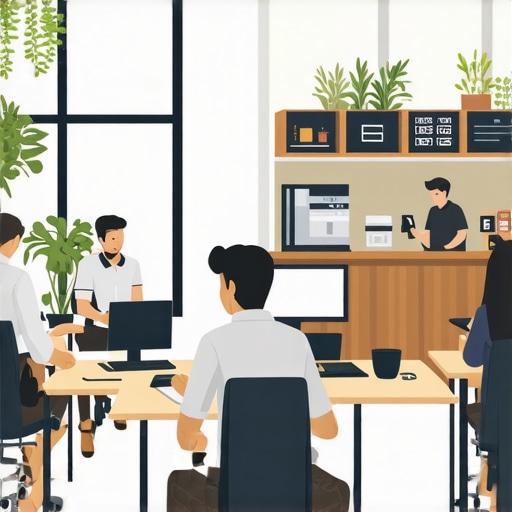
It was a typical Tuesday afternoon when I finally hit my breaking point. I was sitting at my favorite local coffee shop, laptop open, trying to focus on a crucial pitch deck. But the chatter, the clinking cups, and the relentless aroma of freshly brewed coffee kept stealing my attention. I found myself endlessly multitasking—responding to emails, scrolling social media—instead of making real progress. That lightbulb moment hit me: coffee shops, despite their charm, can be the silent killers of productivity for startup teams.
The Hidden Drain on Your Team’s Focus in Coffee Shops
It’s a familiar scene for many startup founders and remote workers. We flock to coffee spots expecting the lively atmosphere will boost creativity and energy. However, the reality is often quite different. The constant background noise and unpredictability disrupt deep work, pulling us out of flow and costing valuable time. Over months, these distractions chip away at productivity, causing missed deadlines and stalling innovation. I’ve made this mistake early on—prioritizing the ambiance over actual focus—and it delayed key project milestones.
Are you tired of your team losing steam or missing out on productive sprints because of distractions outside the office? If so, you’re not alone. Today, I’ll share insights from personal experience and expert advice on creating environments that truly nurture focus—minus the coffee shop chaos.
Is the Buzz Worth the Cost to Focus?
Many skeptics argue that coffee shops are perfect for quick meetings or brainstorming sessions. But while some love the energetic vibe, studies show that ambient noise levels over 70 decibels can impair concentration, reducing work quality and speed[^1]. I once believed the same—that the buzz would spark creative ideas. Turns out, it’s a trap that hampers our ability to dive deep into complex tasks. Learning this the hard way taught me to reassess where and how my team works best.
Let’s explore how to navigate this challenge effectively, ensuring your startup’s productivity isn’t compromised by the allure of the local cafe. For specific strategies, check out how to maximize productivity in conference rooms, which can serve as guilt-free sanctuaries for focused work. You might find inspiration at [this link](https://coworkingcentral.com/how-to-maximize-productivity-in-your-startups-conference-rooms-by-0245-pm).
Identify Your Team’s Core Needs
Start by analyzing your team’s daily tasks to determine what kind of environment maximizes productivity. For example, deeply focused work requires privacy and minimal distractions, while brainstorming sessions benefit from open, flexible spaces. Recall my experience when I needed a quiet zone to finalize our investor pitch; I booked a private room in a coworking space, which drastically improved my concentration and clarity.
Select the Right Space for Every Purpose
Choosing the perfect conference room is akin to selecting the right tool for a job. Use a checklist to evaluate size, technology, layout, and location. For a quick team stand-up, a small huddle room suffices; for client presentations, opt for a larger, well-equipped space with natural light. I once booked a large conference room that overlooked the city skyline, which boosted our team’s enthusiasm and gave a professional impression to visitors.
Optimize Room Bookings with Software
Leverage technology solutions to streamline scheduling. Use booking apps that prevent double-reservations and provide real-time availability. During a product launch, I integrated a room management tool, reducing booking conflicts and freeing us to focus on the content rather than logistics. Such tools often include features to customize setups, ensuring the space fits the session’s needs without wasting time.
Design for Collaboration and Focus
Arrange furniture to foster interaction or solitude as needed. For collaborative sessions, a layout with whiteboards and movable tables helps creativity flow. For focused work, choose rooms with soundproofing, ergonomic seating, and minimal distractions. In one instance, transforming a standard conference room into a dedicated quiet zone involved removing clutter and adding noise-canceling panels, resulting in a marked increase in team output.
Create the Ideal Atmosphere
Lighting, acoustics, and decor influence productivity. Natural light reduces fatigue and enhances mood. Soft background music can enhance concentration but beware of noise bleed. I learned this firsthand when I brought a portable speaker during a remote team meeting; it created a lively atmosphere, but accidental sounds disrupted our focus. Balancing ambiance with utility is key.
Set Clear Policies and Protocols
Establish booking protocols to avoid conflicts and ensure spaces are used efficiently. Encourage team members to free up rooms promptly after use and provide guidelines on room setup requests. During my tenure as a team lead, implementing a simple reservation policy reduced booking errors and improved overall experience. This practice ensures everyone respects the shared environment, maintaining professionalism and productivity.
Prioritize Privacy and Security
For sensitive discussions, choose rooms with soundproof doors and secure access. I once conducted a confidential strategy session in a private suite within a coworking space, which prevented leaks and ensured confidentiality. When exploring coworking environments, verify privacy features and data policies to safeguard your startup’s proprietary information, such as detailed privacy policies.
 While many entrepreneurs focus on choosing the right workspace, a common misconception is that all conference rooms and coworking environments are equally conducive to productivity. In reality, there’s a nuanced layer often ignored: the subtle design and operational choices that make or break your team’s focus and innovation. For instance, many believe that larger, well-equipped spaces automatically foster collaboration, but without considering acoustic design or buffer zones, these spaces can become noise hotspots that hinder deep work. A stunning room with glass walls might look impressive, yet it can cause distracting reflections and noise leakage, diminishing its usefulness for sensitive discussions. My own experience with open-plan coworking areas has shown that without thoughtful partitioning, the environment can burn out even the most motivated team members. Studies indicate that ambient noise levels above 50 decibels, common in poorly designed spaces, can impair cognitive function and creativity[^1]. This isn’t just about comfort—it’s about strategic space planning that prioritizes your specific needs.
Have you ever wondered why some meetings in high-end conference rooms feel ineffective despite fancy equipment? The answer often lies in overlooked design flaws, like improper acoustics or inadequate privacy. Forgetting these nuances can lead to regrets and wasted resources. Instead, focus on customizing your workspace to your team’s workflow—think of it as tailoring a suit versus buying off-the-rack. For a detailed guide on optimizing your startup’s environment, check out how to maximize productivity in conference rooms, which emphasizes deliberate space selection and design choices. Additionally, consider the importance of flexible and innovative meeting spaces that adapt to evolving needs[^2].
A trap many fall into is assuming that a beautifully furnished space guarantees ideas will flow freely. But the wrong environment can inadvertently stifle innovation. Wired magazine highlights that physical space, including lighting, furniture arrangement, and even color schemes, significantly impacts cognitive performance and mood[^3]. For example, natural light boosts mood and alertness, yet many coworking spaces underutilize windows or rely on harsh fluorescents, undermining productivity. Incorporating these subtle yet impactful elements can transform a mere meeting area into an innovation hub.
In sum, the real secret is understanding that the design and operation of your spaces go far beyond aesthetics or capacity. It’s about tailoring environments to your team’s unique needs, from acoustics to privacy to lighting. Be wary of cookie-cutter solutions; instead, craft a workspace that amplifies your startup’s strengths. Want to learn more about creating inspiring coworking spaces? Explore how to choose the perfect conference room for optimal business success, or discover innovative meeting rooms that boost startup creativity. Remember, success isn’t just about having a space—it’s about having the right space for your journey. Have you ever fallen into this trap? Let me know in the comments.Managing a startup’s workspace and ensuring sustained productivity can be challenging without the right tools. From intelligent room booking systems to targeted collaboration software, choosing the right equipment and software is crucial for long-term success. I personally rely on the Best Software for Managing Room Bookings because it offers real-time availability, prevents double reservations, and integrates seamlessly with our calendar, saving us valuable planning time. Additionally, leveraging smart scheduling tools like Calendly has transformed how my team coordinates meetings; its automation features reduce scheduling friction and eliminate back-and-forth emails. As a result, we can allocate more time to strategic growth rather than administrative hassles.
For internal communication, Slack has become indispensable. Its channels foster focused discussions, while integrations with project management tools keep our tasks aligned. I also recommend a dedicated collaboration platform that consolidates messaging, file sharing, and task assignments, keeping everyone on the same page. Another essential is the adoption of effective project management software like Trello or Asana; these allow us to track progress, assign responsibilities, and set deadlines visually, promoting transparency and accountability.
Predicting future trends, I believe intelligent workspace management tools integrated with AI will become standard, enabling startups to optimize space utilization dynamically based on workforce patterns. As more startups embrace hybrid models, automation in scheduling and resource allocation will be vital. To stay ahead, I advise implementing these tools now, especially those that provide data analytics on space usage and productivity metrics.
How do I maintain my tools over time?
Regularly reviewing the effectiveness of your chosen tools and staying updated with new features or alternative solutions is essential. Schedule quarterly audits to ensure integrations work smoothly and that the tools evolve with your business needs. Training team members on best practices also guarantees maximum ROI.
If you haven’t already, try automating your room bookings with cutting-edge software like the best management system. This simple upgrade can significantly reduce conflicts and streamline your operations, freeing you to focus on scaling your startup and fostering innovation.
Three Unexpected Lessons That Changed My Approach to Meeting Spaces
One of the most valuable realizations I had was that the allure of a stylish coworking space can sometimes distract more than inspire. I once invested heavily in an ultra-modern, design-forward conference room, only to find my team less productive than before. It taught me that functionality and environment synergy matter more than aesthetics alone.
Another lightbulb moment was understanding that room booking tools are only as good as their setup. Early on, I relied on basic software, leading to double bookings and frustration. Transitioning to more robust, integrated systems significantly improved our scheduling flow—saving time and reducing conflicts.
Finally, I learned that empowering team members with autonomy over their workspace choices fosters ownership and focus. Encouraging my team to select environments suited to their tasks led to noticeable boosts in engagement and output. This insight emphasized that trust and flexibility unlock true productivity in shared workspaces.