

I vividly remember a time during a bustling startup conference when I had merely five minutes to impress investors, yet I felt my heart pounding and my words stumbling over each other. That lightbulb moment revealed something crucial: in a room full of talented entrepreneurs, capturing attention quickly isn’t just helpful—it’s essential.
The Challenge of Standing Out Quickly in a Saturated Environment
Ever since those nerve-wracking encounters, I’ve been obsessed with perfecting the art of the five-minute pitch—a skill that can make or break opportunities in the competitive startup ecosystem. Today, I want to share what I’ve learned about delivering a compelling, memorable pitch even when your time is limited and your audience’s attention span wanes. Are you tired of feeling like you’re talking but not truly connecting? Believe me, I’ve been there. Let’s explore how to craft and deliver a pitch that not only gets listened to but also remembered.
Is the Hype About a Short Pitch Really Just Marketing Buzz?
Early on, I made the mistake of overloading my pitches with technical jargon, assuming that depth equated to credibility. But I quickly learned that clarity and impact matter more. As sales and marketing guru Seth Godin emphasizes, “The biggest risk is not taking any risks.” This applies especially to pitches—brevity requires precision, and missteps can leave a lasting negative impression. If you’ve faced similar struggles, you’re not alone, and the good news is that with the right approach, you can turn the crowded room challenge into your advantage. In the following sections, we’ll uncover practical strategies to nail your five-minute pitch, ensuring you leave a lasting impression every single time.
Nail Your Core Message in Record Time
Begin by distilling your startup’s value proposition into a single, compelling sentence—think of it as your elevator pitch condensed to 30 seconds. During a live pitch at a coworking space, I once struggled to fit my complex business idea into this framework. After drafting and practicing multiple times, I realized that clarity beats technical jargon every time. Keep it simple, memorable, and aligned with your audience’s interests. Next, craft a story that relates to your audience’s pain points, making your pitch emotionally resonant. When I explained my app’s purpose as solving a real-world problem I faced daily, the investors leaned in closer, visibly engaged. Use visuals wisely—charts, images, or a quick demo—to reinforce your message without overwhelming. In a shared office environment, visual aids can turn a mundane presentation into an engaging experience, so leverage the amenities available to you. 
Visual representation of the startup’s core value or product in action to captivate your audience.
Many entrepreneurs and startups fall into common misconceptions about meeting rooms and coworking spaces, believing they are all created equal or that investing in premium amenities guarantees success. However, the reality is far more nuanced and requires a deeper understanding to avoid costly pitfalls. One widespread myth is that bigger or more luxurious meeting rooms automatically lead to better outcomes. In truth, the effectiveness of a space depends heavily on its purpose and how well it aligns with your team’s workflow; for instance, a recent study by Harvard Business Review emphasizes that natural light and flexible layouts significantly enhance productivity and creativity in shared environments, challenging the assumption that size alone matters.
What advanced entrepreneurs get wrong about the acoustics and privacy in coworking spaces?
A surprising oversight is underestimating the importance of acoustic design and privacy features in meeting rooms. Many startups choose spaces based on location or price, neglecting soundproofing and layout, which can lead to distraction, decreased confidentiality, and ultimately, compromised discussions or pitches. According to a report by the International Facility Management Association, poor acoustic quality in shared spaces can reduce employee productivity by up to 25%. Don’t fall into the trap of assuming open-plan layouts foster collaboration without considering the acoustic implications; instead, prioritize spaces with soundproof partitions or dedicated quiet zones. Also, be aware that a space’s technological infrastructure, such as reliable high-speed internet and integrated AV equipment, often gets overlooked but critically impacts meeting effectiveness and professional presentations. For instance, seamless connectivity and AV support can transform a mundane pitch into a captivating storytelling session, especially during remote or hybrid meetings. Make sure to verify these aspects before finalizing your choice—click here to explore how to maximize productivity in your conference rooms.
Investing time in understanding these subtle factors can be the difference between a space that stifles your team’s creativity and one that propels your startup forward. Remember, a thoughtfully chosen environment promotes engagement, confidentiality, and a professional image that attracts investors and clients alike. Want to learn more about navigating this complex landscape? Check out how top coworking spaces are unlocking innovation and fostering collaboration.
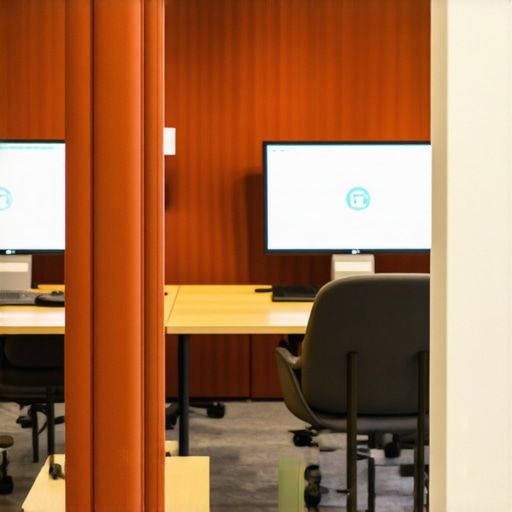
Illustration showing advanced acoustic treatment features and privacy setups in modern coworking spaces, highlighting key design elements that improve meeting effectiveness.
Maintaining an effective workspace requires more than just choosing the right furniture or leasing the perfect conference room. It involves a combination of reliable tools, proactive maintenance routines, and strategic planning to ensure your coworking space or startup’s meeting environments stay pristine and fully functional over time. I personally rely on a suite of hardware and software to keep everything running smoothly, starting with universal docking stations like the CalDigit TS4, which consolidates multiple device connections—saving time and reducing desk clutter. For software, I swear by scheduling tools like Calendly integrated with room booking systems, which prevent double-bookings and streamline the reservation process. Regularly updating and testing AV equipment, including projectors and microphones, also prevents last-minute tech failures that could derail important meetings. Predicting where these trends are headed, I believe we’d see an increased move toward IoT-enabled spaces—where sensors can automatically detect when equipment needs maintenance or when the room conditions aren’t optimal, as detailed by industry expert TechCrunch. To stay ahead, I recommend setting up a maintenance checklist that includes monthly hardware audits and software updates, ensuring all systems are current and functioning well.
How do I keep my meeting spaces in top shape over time?
Establishing a routine preventative maintenance schedule is key. Schedule quarterly inspections of technical gear, clean audio-visual devices to remove dust, and update software firmware to patch vulnerabilities. Partnering with local tech service providers can help with prompt repairs, reducing downtime. Additionally, monitoring room usage patterns through analytics can inform you about peak times when equipment needs additional support or upgrades, as explored in a deep dive by this recent report. Implementing automated alerts for equipment malfunctions ensures rapid response and minimizes disruptions. Finally, investing in resilient hardware—like backup internet routers and uninterruptible power supplies—can safeguard meetings against common technical hiccups. Trying a proactive approach like scheduled preventative checks and leveraging IoT tech can drastically reduce unexpected failures, fostering trust and professionalism in your workspace. Remember, the goal is to create an environment where tech mishaps are the exception, not the rule. If you haven’t explored integration with IoT sensors yet, now’s a great time to start—see how forward-thinking coworking spaces are managing future-proof environments. Want tailored suggestions on the most reliable equipment for your setup? Reach out to [Coworking Central’s contact page](https://coworkingcentral.com/contact-us) and discover how to optimize your conference room operations.
After navigating countless startup pitches and coworking room setups, I learned that the true secret isn’t just about choosing the right space or perfecting your pitch—it’s about understanding the nuanced interplay between environment, communication, and perception. These lessons haven’t just shaped my approach—they’ve become my guiding principles for fostering success in dynamic, shared workspaces. Remember, the real advantage lies in how you leverage subtle details—like optimizing acoustics or crafting emotionally resonant stories—to make every second count. Embrace these insights, experiment boldly, and watch your startup’s presence transform from overlooked to unforgettable in any coworking environment. If you’re ready to elevate your space strategy, check out how top coworking spaces are unlocking innovation to stay ahead of the curve.