
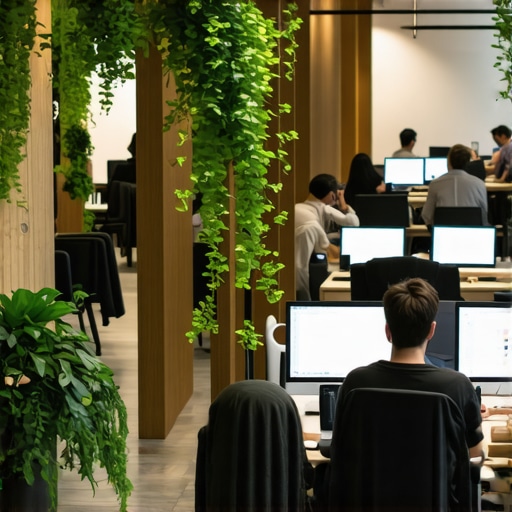
I remember the exact moment it hit me—sitting in a bustling coworking space, desperately trying to focus on a tight deadline, only to be interrupted by the ceaseless chatter and ringing phones nearby. That horrible realization that I couldn’t find a single spot to think clearly made me feel both frustrated and a little defeated. It dawned on me how essential that rare, quiet corner is—not just for a peaceful mind, but for productivity, creativity, and even professionalism.
Why Quiet Corners Can Save Your Day in a Coworking Hub
Imagine this: your most critical client call, an intense brainstorming session, or a delicate negotiation—all happening in a space that’s more a hive of distraction than a sanctuary of focus. It’s painfully common in coworking environments, especially when the space teems with energetic entrepreneurs, remote workers, and startups vying for table space.
But here’s the thing—these spaces are designed to foster collaboration, networking, and innovation. Yet, ironically, the very openness can sabotage your ability to concentrate. If you’ve ever felt that tug of frustration when trying to find a quiet spot, you’re not alone. Trust me, early in my journey, I made a classic mistake: I assumed that all coworking spaces are created equal when it comes to privacy and quiet. That mistake cost me valuable time and brainpower.
According to a 2022 report from the Harvard Business Review, having dedicated, soundproof areas for focused work not only boosts individual productivity but also enhances overall team performance. Yet, many coworking spaces overlook this vital feature, leaving members scrambling for corners that offer genuine peace.
So, what’s the secret? How can you consistently find a nook that shields you from noise, distractions, and the chaos of busy hubs? That’s exactly what I’ll be sharing—tips, tricks, and insider knowledge—so you can carve out your personal oasis in the bustling coworking jungle.
Ready to discover the most effective ways to pinpoint and secure your quiet retreat? Let’s dive into the practical strategies that transformed my workdays from stressful sprints into serene, productive sessions.
Identify Your Peak Focus Times and Space Patterns
Start by observing when coworking spaces are less crowded—early mornings or late evenings often offer quieter environments. On your first visit, bring a small notebook to note ambient noise levels, table availability, and the type of distractions present. I once arrived at a popular hub at 7 am, noticed fewer people, snagged a corner table, and completed a crucial client report without interruption. Observing these patterns helps you plan your visits strategically.
Scout Multiple Locations Regularly
Don’t settle for just one spot. Visit several coworking hubs to understand their natural quiet zones. Think of each space as a different jungle—some have hidden clearings, others are thick with noise. During one reconnaissance trip, I found that a nearby library’s designated quiet room was perfect for high-stakes calls, but during peak hours, the noise from the cafeteria spilled in—alerting me to plan calls during off-peak hours there. Use a checklist to compare each environment’s suitability for focus.
Leverage Technology to Identify Quiet Spots in Real Time
Use apps or community platforms where members share real-time updates about space conditions. Some coworking apps display noise levels, occupancy counts, or even allow booking in advance of quiet zones. I joined a Slack community of local coworking members, where I received alerts about quieter hours and unoccupied private nooks, allowing me to plan my solo deep work sessions better. This proactive approach consistently saved me from wasted hours searching for a suitable spot.
Utilize Physical Cues to Find or Create Your Sanctuary
Once inside, look for physical features indicating a potential quiet zone: isolated corners, windowless rooms, or areas with soft furnishings. If none are clearly designated, create your own by positioning yourself away from entrances, communal kitchen sounds, or high-traffic pathways. During a stressful project, I moved my desk to a windowless nook behind some shelves. Although unrecognized as a dedicated quiet spot, it became my fortress of focus. Think of space as a wild animal—you need to read its signs and sometimes carve out your own safe haven.
Establish Routine Visit Patterns
Consistency helps your mind associate certain times and spots with focus. Schedule your deep work sessions during off-peak hours in your chosen spots. I committed to mornings at a specific coworking hub on Tuesdays and Thursdays; over time, my brain recognized these as focus periods, making it easier to settle in quickly. Regularity transforms a good spot into your personal productivity retreat.
Negotiate or Reserve Prime Quiet Zones
If possible, book or negotiate exclusive access to quiet rooms or dedicated zones. Some coworking spaces offer memberships that include private offices or soundproof booths. I once paid a premium to reserve a private conference pod during busy weeks, which paid off when I needed to finalize a pitch presentation. International coworking providers often have flexible arrangements for such needs—check out options on dedicated platforms or through direct contact via the contact page.
Fine-Tune Your Approach Based on Experience
Regular reflection on what works and what doesn’t sharpens your strategy. Keep a log of your success spots, times, and preparation techniques. Over several weeks, I tracked my most productive sessions and gradually optimized my routine, ensuring I minimized distractions. This ongoing refinement makes quiet corners second nature, turning them from lucky finds into dependable assets for your workflow.
Many assume that selecting a conference room or meeting space is simply about size or location, but this overlooks critical nuances that can make or break your startup’s success. A common myth is that bigger rooms or high-end tech automatically guarantee productivity; reality paints a different picture. Oversized rooms often lead to disengagement and a sense of emptiness that hampers focus, while poorly equipped spaces can hinder smooth collaboration—a trap many startups fall into. Advanced founders understand that the room’s *ambiance*, *acoustic design*, and *layout* influence team dynamics more profoundly than mere features. For instance, poor acoustics can cause fatigue and miscommunication, especially in long meetings. According to a study published in the Journal of Environmental Psychology, uncontrollable noise levels significantly impact concentration and decision-making processes. Therefore, investing in soundproofing and strategic furniture placement becomes essential. Moreover, many overlook the importance of room **flexibility** — the ability to adapt the space for different activities like brainstorming, client presentations, or deep work—often leading to suboptimal outcomes. An additional overlooked aspect is the **privacy** factor; glass walls or open layouts might seem modern, but they threaten confidentiality and induce self-censorship among team members. Also, many startup teams neglect the significance of **location within the space**; positioning high-focus activities away from noisy communal areas can drastically improve output. Lastly, be wary of the assumption that all shared or coworking offices are homogeneous; *not all spaces are created equal*, and some are intentionally designed with nuanced features like adjustable lighting, calming colors, or dedicated quiet zones, which are documented to foster better productivity.
How can I assess a conference room’s true capacity to support high-stakes meetings?
Consider not just the number of seats but also the room’s **acoustics**, **lighting**, **privacy**, and **flexibility**. For a comprehensive evaluation, explore resources like the [guide on choosing the perfect conference room for business success](https://coworkingcentral.com/how-to-choose-the-perfect-conference-room-for-business-success). Recognize that investing in thoughtfully designed meeting spaces—bivouacking in the right environment—can accelerate your startup journey. And remember, a well-chosen room isn’t just a backdrop, but a strategic asset. Curious about transforming meeting rooms into high-impact collaboration hubs? Check out [these innovative spaces](https://coworkingcentral.com/creative-coworking-transforming-meeting-rooms-into-collaboration-hubs-at-0455-pm) for inspiration. Have you ever fallen into this trap? Let me know in the comments.Maintaining an efficient and adaptive workspace requires the right combination of technology, organization, and proactive strategies. As startups grow and meet their evolving needs, leveraging the right tools ensures long-term productivity and a scalable environment. One critical aspect is implementing reliable communication platforms. I personally rely on Zoom Pro coupled with Otter.ai for live transcription during meetings, which reduces misunderstandings and saves review time. This setup ensures high-quality audio and real-time captioning, even in noisy coworking spaces, and has been instrumental during remote collaborations.
Beyond communication, having a networking toolkit is invaluable. I recommend using LinkedIn Premium for targeted outreach and Calendly for scheduling within your team and clients. These tools automate and streamline engagement, freeing up your time for strategic growth.
For workspace organization, I swear by Trello combined with Notion. Trello’s visual boards help track daily tasks and project milestones, while Notion serves as an all-in-one knowledge base, documentation, and resource hub. Regularly updating these platforms keeps everyone aligned and minimizes confusion, especially when coordinating across different time zones or locations.
Additionally, monitoring your space’s acoustics and physical environment is vital. I use RoomMe Noise Monitor, an innovative device that measures sound levels and sends alerts if noise exceeds preset thresholds. This way, I can quickly adjust or relocate to maintain focus during critical calls.
Looking ahead, I see the integration of AI-powered workspace management systems becoming the next big leap. These tools will automatically assess space utilization, suggest optimal room bookings, and even adjust environmental controls based on user preferences. For now, I encourage you to implement one advanced tip: start using smart booking tools like dynamic reservation platforms. They dramatically reduce conflicts and ensure you have the right space when needed.
How do I maintain these tools and techniques over time? Regularly review and update your systems—schedule quarterly audits to assess effectiveness, gather feedback from your team, and stay updated on new features or emerging solutions. This proactive approach guarantees your workspace remains efficient and ready for scalability. For example, integrating new AI-driven scheduling platforms can optimize your space usage further, paving the way for a resilient, future-proof environment.
What I Wish I Knew About Quiet Spots Before Starting
One surprising lesson was that not all quiet corners are created equal; sometimes, the most secluded-looking spot turned out to be noisy due to poor acoustics or faulty insulation. I also learned that flexibility in your approach—moving around, testing different spots—can be more effective than obsessively searching for the “perfect” place. Lastly, I discovered that investing time in understanding space patterns, like off-peak hours, offers a significant advantage, turning chaos into calm when you need to focus the most.
Tools That Keep Me Ahead in Finding Peace
Over time, I’ve relied on several tools that revolutionized my focus sessions. Apps like 525 [QuietSpace](https://coworkingcentral.com/unlock-networking-opportunities-in-top-coworking-environments) help identify low-noise times in coworking hubs. Community platforms such as Slack groups where members share real-time updates about quiet zones have become invaluable for planning. For organizing, I trust Trello and Notion to set routines and track productive locations, which turns focused work into a habit rather than a challenge. These tools enable me to maximize every quiet corner, ensuring consistent productivity regardless of the space’s hustle.
Your Next Move Starts Now
Finding your ideal quiet corner isna9 in a bustling coworking space isna9 is more than luck; ita9s about strategy, observation, and the right tools. Embrace the process, experiment with different spots, and leverage technology to optimize your environment. Remember, your productivity isn’t just about the space—ita9s about your ability to adapt and harness your environment actively. Step into your next workday with confidence, knowing that the quiet corner you choose can be your secret weapon for success. The future of productive coworking spaces depends on how well you master your focus zones—are you ready to claim yours? Let’s share your experience—what’s your favorite hidden quiet spot in a coworking hub? Drop a comment below!