
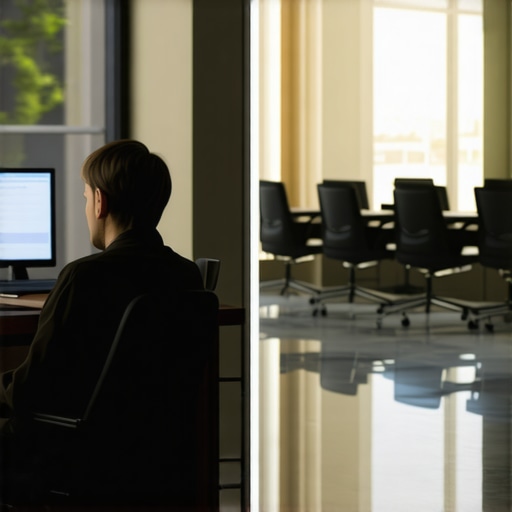
I was sitting in my kitchen last Monday at 9:02 AM, staring at a Zoom gallery that looked more like a grid of digital tombstones than a thriving startup. No one was laughing. No one was even unmuting. The silence was heavy, and it hit me: the ‘Monday Blues’ have evolved into a full-blown ‘Monday Disconnect.’ My team wasn’t just tired; they were drifting apart. I realized that my early attempt at ditching the home office for a month didn’t actually solve the problem of cultural decay. It was a visceral realization that flexibility, without a plan for connection, is just a fancy word for isolation. Does your Monday morning meeting feel like you’re pulling teeth with a pair of rusty pliers, or is it just me? Today, I want to share how I stopped the rot and rebuilt that missing spark, even when half the team is wearing pajamas in a different time zone.
Stop Letting the Monday Slump Tear Your Culture Apart
The transition from a quiet weekend to a chaotic digital workspace creates a cognitive load that most of us aren’t equipped to handle without a bit of help. Early in my journey, I made a massive mistake: I thought Slack could replace the physical energy of a room. I spent three months running a high-stakes pivot entirely via text, and we lost a month of progress because I couldn’t see the subtle cues of frustration that only show up in person. That is why I’m now a firm believer that why your startup needs a physical presence in the city isn’t just about real estate; it’s about psychological safety. According to research from the MIT Sloan Management Review, teams that lack shared physical rituals are significantly more likely to report feelings of isolation and decreased trust. We often forget the hidden value of the casual coffee machine chat, which acts as a social lubricant for the week ahead.
Is it actually worth the hype to force everyone back on Mondays?
You might be skeptical. I was too. I worried that requiring a Monday meetup would feel like ‘corporate micromanagement.’ But the truth is, the disconnect happens because we’ve lost the ‘anchor’ of the work week. To fix this, I started looking into innovative meeting rooms that boost startup creativity to make the commute actually feel worth it. If you’re seeing why your teams productivity drops after two pm specifically on the first day of the week, it’s a sign that the weekend-to-work bridge is broken. I’ve found that using the checklist for hosting a flawless hybrid workshop can bridge that gap by making remote players feel just as present as those in the room. We are going to dive into the practical steps of creating a ‘Monday Anchor’ that doesn’t feel like a chore.
Build an Anchor That People Actually Want to Attend
Establishing a ‘Monday Anchor’ isn’t about mandatory attendance for the sake of it; it is about creating a gravity well that pulls the team back into a shared reality. I learned this the hard way when I tried to host our first post-pandemic kickoff in a windowless basement that felt more like a tech prison than a creative hub. The energy was flat, and everyone spent the whole time looking at their watches. To fix this, I realized you have to treat your meeting environment like a product you are selling to your team.
Sunlight is More Effective Than an Espresso Shot
If you want people to engage, you have to find a space that doesn’t sap their soul. I now prioritize finding a meeting room with decent natural light because the biological impact on focus is undeniable. When we moved our Monday syncs from a cramped internal office to a space with floor-to-ceiling windows, the volume of the conversation literally doubled. It turns out that how to find a meeting room that actually has natural light is the single most important checklist item for a founder. If your team feels like they are in a dungeon, they will act like prisoners.
Kill the Hierarchy with the Right Table
Most startup ‘boardrooms’ are designed for a CEO to lecture a staff. That is a culture killer. I started looking into the hidden psychology of circular meeting tables and realized that a rectangle creates a ‘head of the table’ dynamic that silences the quietest (and often smartest) voices in the room. When we shifted to a round setup in innovative meeting rooms that boost startup creativity, the barrier between ‘management’ and ‘execution’ vanished. It’s a small tweak, but why your meeting room layout is killing participation usually boils down to these subtle physical cues of power.
Make the Zoom Screen Feel Like a Seat at the Table
For the hybrid folks, nothing is worse than being a giant floating head on a wall that no one looks at. To bridge the gap, I started using the checklist for a glitch-free hybrid board meeting. This means positioning the camera at eye level and ensuring we have a dedicated ‘remote advocate’ in the room whose only job is to watch for the unmuting icon on the screen. Last month, we had a major technical failure, and knowing how to handle a server crash from a temporary desk saved our brainstorm. We keep the digital and physical feeds perfectly synced so that how to host a developer workshop without the lag becomes a standard part of our operations.
Avoid the Mid-Afternoon Social Burnout
The final piece of the ‘how’ is managing the transition out of the meeting. If you keep everyone locked in a room until they are starving, they will associate the culture with discomfort. I make sure we exit the high-intensity phase before the 2 PM crash. I’ve seen why your teams productivity drops after two pm firsthand, and pushing through it is a fool’s errand. Instead, we pivot to low-stakes socialization or individual deep work. This is where the hidden value of the casual coffee machine chat really pays off; it lets the team decompress and bond without a formal agenda.
Stop Buying the ‘Startup Vibe’ and Start Buying Privacy
Most founders think that a pool table and a beer tap define a modern culture, but the truth is, does your office actually need a pool table if your team is too burnt out to use it? I’ve seen countless startups fall for why the all-inclusive membership is usually a trap. You pay a premium for amenities that look great on a tour but distract from the core mission. In my experience, the biggest ‘oops’ is prioritizing aesthetic over acoustics. If you can hear the neighboring startup’s sales calls, you aren’t in a collaboration hub; you’re in a high-priced distraction. That’s why the acoustic secrets of high-end conference rooms are more important than the brand of coffee in the lobby.
Why your startup needs a real door, not just a glass wall?
We’ve been sold the lie that ‘transparency’ means glass walls. While it looks sleek, why your startup needs a real door, not just a glass wall comes down to the ‘Hawthorne Effect’—people act differently when they feel watched. A study by researchers Ethan Bernstein and Stephen Turban found that shifting to open, transparent offices actually caused face-to-face interaction to drop by 70%, as employees retreated into their headphones to find a sense of privacy. For high-stakes work, why privacy is the new luxury in coworking is a lesson you don’t want to learn during a pivot.
The Tech-Heavy Trap That Silently Kills Your Velocity
I once spent two thousand dollars on a ‘smart’ boardroom for a day, only to spend the first twenty-five minutes of a board meeting trying to get the proprietary dongles to recognize a MacBook. This is the problem with tech-heavy meeting rooms that nobody knows how to use. Complexity is the enemy of momentum. If your team needs an IT degree just to share a screen, you’ve failed at how to maximize productivity in your startups conference rooms by 0245 pm. I’ve transitioned to looking for spaces that offer ‘dumb’ tech—reliable HDMI cables and high-speed fiber—rather than over-engineered IoT systems that fail at the first sign of a software update. What to do when the office wi-fi goes down mid-pitch should be a contingency plan, not a daily reality. Have you ever fallen into this trap where the fancy tech actually made you less productive? Let me know in the comments.
Forget the Built-In Tech and Bring Your Own Reliability
After that twenty-minute struggle with the boardroom dongle I mentioned earlier, I stopped relying on the house equipment altogether. Now, my ‘survival kit’ is the only reason our meetings start on time. I’ve found that the checklist for your first office space search should really include a section on how many analog ports are actually accessible. I carry a dedicated 4K webcam and a Jabra Speak 710 in my bag because the echo from a built-in laptop mic is a productivity killer. If you want to know how to facilitate a workshop that doesn’t feel like a chore, it starts with everyone actually being able to hear the remote participants without that haunting digital feedback. I’ve seen too many founders fail because they didn’t think how to host a developer workshop without the lag was a hardware problem; it is.
Scale Your Footprint Without Drowning in Monthly Debt
As we grew, the pressure to sign a five-year lease for a massive floor was intense. We resisted. Instead, we leaned into the idea that why small satellite offices are beating the mega-headquarters is about agility, not just cost. By using a hub-and-spoke model, our team can access coworking spaces unlock innovation top meeting rooms of 2025 at 1123 am near where they actually live. This drastically reduces commute burnout. I’ve found that the art of the short-term lease for fast-moving startups is the only way to stay liquid while keeping a professional face.
How do I maintain this cultural momentum over the long haul?
The biggest threat to your culture as you scale isn’t the distance; it’s the security and consistency of the digital experience. This is where most people get lazy. According to cybersecurity expert Mikko Hyppönen, the ‘smart’ devices in shared environments are often the weakest link in your corporate armor. That is why I tell my team that why endpoint protection services matter more when your team is hybrid is a non-negotiable expense. You can’t control the coworking Wi-Fi, but you can control your own encryption. We also regularly look toward the future of conference rooms in startup ecosystems to see if VR or better spatial audio can solve the ‘Zoom fatigue’ we all feel. My advanced tip for you this week: stop using the free Wi-Fi at the hub for anything sensitive and invest in a dedicated hardware VPN for your team. It’s a small friction that prevents a massive disaster.
The Hard Truths I Learned Rebuilding Our Monday Momentum
After a year of trial and error, I realized that you cannot engineer a spark through a screen. One of the most unexpected shifts happened when I stopped looking for ‘cool’ and started looking for ‘connection.’ It turns out that why your next big hire might come from a coworking lobby is often down to the organic energy of a shared space rather than a LinkedIn algorithm. I also learned that you have to be ruthless about your environment; learning how to tell if a coworking space is just a glorified library saved us thousands in wasted memberships where we weren’t allowed to actually talk. Finally, remember that the goal isn’t just to be in the same room, but to be in the same headspace. If the vibe is off, no amount of ‘startup culture’ can fix it.
The Tools and Guides That Saved My Sanity
If you are looking for a place to start, I swear by a few non-negotiables. First, read up on the business case for a month-to-month office lease; it will keep you from making the same long-term commitment mistakes I did early on. Second, invest in a high-quality portable microphone and camera—never rely on the built-in tech of a rental. Third, I highly recommend evaluating the true roi of a premium coworking membership before you jump for the cheapest option. A few extra dollars for better acoustics and faster internet pays for itself in avoided frustration by noon on Monday. I also suggest checking out ‘The Culture Code’ by Daniel Coyle if you want to understand the science behind why these physical rituals matter so much.
Your Blueprint for a Better Week Starts Now
Building a culture that people actually want to show up for is a marathon, not a sprint. It requires you to be intentional about where you gather and how you interact. Don’t be afraid to experiment with your setup until it feels right. By applying these startup success secrets choosing the perfect conference room at 0817 am, you can turn those dreaded Monday mornings into the highlight of your team’s week. You have the tools, you have the strategy, and now you have the permission to ditch the status quo and build something that actually works for your people. Keep pushing, keep connecting, and let’s make work feel like it matters again.
Have you ever found a specific meeting ritual or room layout that completely changed your team’s energy? Let me know in the comments below.