
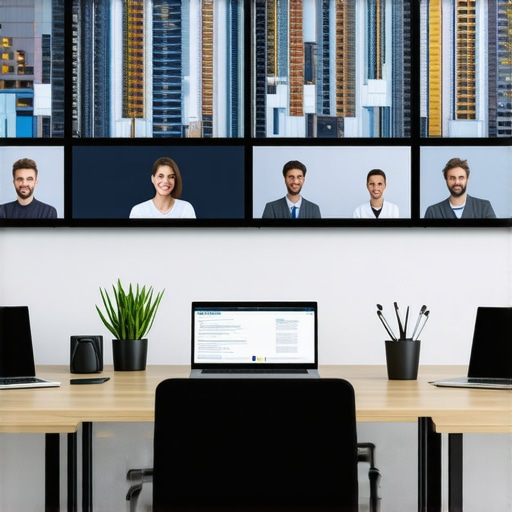
I remember stumbling through my first investor pitch, heart pounding, barely managing to explain my remote-first office setup. The words felt clunky, the concepts fuzzy, and I sensed skepticism in their eyes. It hit me then—how do I convincingly convey the professionalism and reliability of a company that doesn’t have a traditional office space?
The Art of Explaining a Remote-First Office to Investors
As startups pivot to flexible work environments, many founders face this exact dilemma. Investors, often accustomed to sleek conference rooms and tangible office spaces, struggle to visualize the backbone of a remote-first setup. If you’ve faced this problem, you’re not alone. It’s a common hurdle, but one that can be overcome with a strategic approach.
Investors seek assurance—proof that your remote setup doesn’t compromise your company’s credibility or operational efficiency. The challenge is, how do you communicate this effectively? My early mistake was focusing too much on the technology behind our setup—fast Wi-Fi, cloud tools, and video conferencing—rather than how those elements support our culture and productivity. I learned that storytelling, backed by tangible evidence, is key.
According to a recent survey, 78% of startups report increased productivity after adopting flexible workspaces, yet many founders remain unsure how to showcase this shift during pitches (source: Coworking Central). Sharing clear examples, visual aids, and data about your virtual workflows can transform skepticism into confidence.
So, how can you craft a compelling narrative about your remote office? That’s what we’ll explore, starting with understanding the common doubts and how to address them confidently. Ready to turn your remote setup into your startup’s strongest asset? Let’s dive in.
Showcase Your Virtual Workflow with Clear Visuals
Start by creating visual representations of your team’s daily routines—charts, infographics, or screenshots of project management tools that illustrate seamless collaboration. For example, I once used a flowchart to demonstrate how our remote daily stand-ups synchronized across different time zones, which helped skeptics grasp our operational rhythm. Use visual aids to reinforce your narrative and preempt doubts.
Develop a Credible Narrative Supported by Data
Tie your storytelling to measurable outcomes. Collect data on productivity metrics—like project completion rates, response times, or customer satisfaction scores—that reflect your remote team’s efficiency. During pitches, presenting these numbers makes your case more convincing than simple assertions. I prepared a report showing a 15% increase in deliverables on time after transitioning to remote work, which significantly shifted investor perceptions.
Leverage Analogies to Demystify Your Setup
Think of your remote office like a well-orchestrated orchestra. Each instrument (team member, tool, process) plays its part harmoniously, achieving results comparable to, or better than, a traditional symphony. When I explained this analogy during a pitch, investors related better to the concept, realizing that synchronization and coordination don’t require physical proximity.
To deepen this understanding, watch this piece on transforming meeting spaces into collaboration hubs, emphasizing the power of adaptable environments.
Address Skepticism Head-On with Case Studies
Share stories of clients or projects that thrived with your remote-office approach. Highlight specific challenges faced, solutions implemented, and positive outcomes achieved. For instance, I recounted how a key client demanded tight communication and how our virtual whiteboards and scheduled check-ins kept the project on track, leading to a successful delivery. This concrete evidence reassures investors that your model is resilient.
Create a Consistent Messaging Strategy
Ensure everyone within your startup communicates the remote-first advantage uniformly. Develop core talking points, FAQs, and rebuttals that team members use during investor meetings. Consistency removes confusion and builds confidence. Additionally, host mock pitches to refine your approach and identify gaps. I found that practicing our story helped eliminate ambiguities, making our remote setup appear as reliable as a traditional office.
Incorporate Client and Employee Testimonials
Real voices add authenticity. Record short interviews or testimonials from satisfied customers and team members attesting to your remote work success. Sharing genuine experiences often sways skeptical investors more effectively than stats alone. I once included a video of a happy client emphasizing how our remote collaboration improved their project turnaround, which resonated strongly during investor presentations.Many assume that choosing the right coworking space or conference room is just about location and amenities, but the real edge lies beneath the surface.
Why Do So Many Fail to Maximize Their Workspace Potential?
It’s a common misconception that all coworking environments are created equal, yet the truth is that subtle nuances dramatically influence productivity and innovation. For instance, the layout design, ambient noise levels, and technology integration often get overlooked, leading to underwhelming experiences that hinder collaboration. Studies have shown that poorly optimized spaces can decrease focus by up to 30%, costing startups valuable time and resources (source).
One of the biggest traps is assuming that bigger or more luxurious spaces automatically lead to better outcomes. In fact, a cramped, poorly organized room can stifle creativity and make interactions feel forced. Instead, prioritizing adaptable environments equipped with innovative meeting rooms that facilitate spontaneous collaboration might be more effective than costly high-end furnishings. The key is understanding the nuanced impact of these less obvious elements.
Advanced entrepreneurs ask: How does subtle spatial design influence our innovation curves? The answer lies in the psychology of space. Research from environmental psychology suggests that natural light, acoustics, and flexible furniture arrangements significantly boost creative thinking and problem-solving skills (study). For example, adjustable lighting setups and movable partitions can transform a mundane room into a fertile ground for breakthrough ideas.
However, many stumble into the “set-and-forget” trap—assuming that once the space is purchased or rented, its potential is fully unlocked. The wiser approach involves continual assessment and customization, ensuring the environment evolves with your team’s needs. Regularly, startups overlook this ongoing optimization, leaving value on the table.
So, are you leveraging your coworking or meeting space to its maximum capacity? Are there subtle improvements that could spark your next big breakthrough? Remember, small tweaks often lead to big results. Feel free to explore detailed strategies in this guide or reach out for tailored advice. Have you ever fallen into this trap? Let me know in the comments.Maintaining an efficient coworking space requires more than just initial setup; it demands ongoing attention to the right tools and methods that support long-term productivity. I personally rely on a combination of hardware, software, and practices that keep the space buzzing with energy while minimizing disruptions. For instance, investing in high-quality noise-canceling microphones and speakers is crucial for clear communication during remote meetings. I use the meeting room booking software to prevent double reservations and ensure smooth scheduling, which is a real game-changer in avoiding frustration and downtime.
One of my go-to pieces of equipment is a dual-monitor setup, which significantly enhances multitasking and focus during intense collaborative sessions. Pairing this with a universal docking station simplifies cable management and ensures that switching between devices is seamless, saving valuable time. I also recommend a whiteboard app like Miro for virtual brainstorming—it’s indispensable for hybrid meetings where not everyone can be in the same room.
Beyond hardware, I emphasize the importance of structured routines. Regular maintenance of equipment—checking connections, updating software, and cleaning hardware—prevents unexpected breakdowns and keeps everything running smoothly. Scheduling periodic reviews using tools like productivity tips helps identify bottlenecks before they escalate.
Looking ahead, I predict that automation will become even more integral. Smart room sensors that adjust lighting and climate based on occupancy, or AI-driven analytics to optimize space usage, are on the rise. Investing early in these innovations can provide a competitive edge, making your coworking space more adaptable and efficient.
So, how do I maintain this system over time? I schedule quarterly audits of all tools and procedures to ensure they’re aligned with evolving needs. Continual learning and adaptation are key—staying updated with the latest tech trends and integrating new solutions can significantly boost long-term success.
If you haven’t already, try implementing a centralized dashboard for managing your equipment and room bookings. It simplifies oversight and minimizes manual errors. Remember, staying proactive with maintenance and leveraging the right tools isn’t just about keeping things running—it’s about creating an environment where productivity can flourish consistently.In my journey with coworking spaces and startup conference rooms, I realized that the most valuable insights often come from those ‘lightbulb moments’—the lessons we wish we knew sooner. For example, I learned that emphasizing tangible results over tech specs builds trust faster, and storytelling backed by concrete data can turn skepticism into confidence. Moreover, decorating your narrative with relatable analogies, like comparing your remote team to a symphony, simplifies complex ideas for investors, making your approach memorable. Lastly, I discovered that sharing authentic testimonials from clients and team members creates genuine credibility, often resonating more than numbers alone. These lessons—though tiny—can dramatically elevate how you communicate your remote-first success, paving the way for stronger investor relationships.