
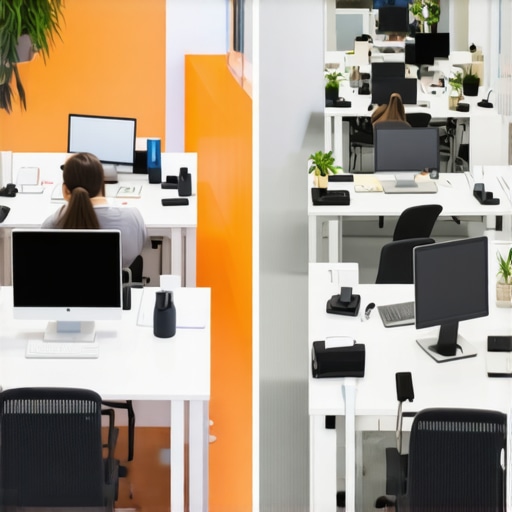
It was a hectic Monday morning, and I found myself scrambling to find a quiet spot in the bustling coworking space. Every seat seemed taken, and I started feeling the familiar itch of frustration—why is it so hard to settle into a workspace that feels right? That lightbulb moment hit me hard: the way we choose to work—be it fixed desks or hot desks—can make or break our productivity and enjoyment.
Why Your Workspace Choice Can Make or Break Your Day
I’ve been there, bouncing between different setups, trying to optimize my environment for focus and creativity. The truth is, selecting the right desk setup isn’t just about comfort; it’s about how it influences your workflow, networking opportunities, and even your mental well-being. In fact, studies show that a well-designed workspace can increase productivity by up to 25% (source: [Coworking Space Productivity](https://coworkingcentral.com/how-to-maximize-productivity-in-your-startups-conference-rooms-by-0245-pm)). But here’s the thing—what works for one startup might be a disaster for another. That’s why I want to share my personal experience balancing these options.
Is Choosing the Wrong Workspace Setup Wasting Your Time and Money?
Early on, I made the mistake of assuming that a fixed desk, with its promise of stability and personal space, was the best choice. Turns out, that approach backfired in a space teeming with short-term visitors and collaborative projects. I realized I was missing out on spontaneous networking and the flexibility to switch gears when needed. This mistake taught me the importance of assessing my specific needs and the dynamic nature of startup life. If you’ve ever felt stuck in a setup that doesn’t quite fit, you’re not alone—and there are smarter ways to approach this.
Have you faced these dilemmas in your workspace choice? If so, stay tuned. We’re going to explore the real pros and cons of each setup and help you decide what might actually boost your startup’s potential.
Assess Your Core Needs Before Choosing a Setup
Start by mapping out your daily activities—do you prioritize collaboration, deep focus, or a mix of both? To illustrate, I once tried to work exclusively at a collaborative table, but found my concentration shattered. Recognizing that my tasks required solitude led me to reserve quiet corners for focused work, boosting my productivity. Make a list of your key activities and identify where you need flexibility.
Test Different Configurations in Real Situations
Don’t rely solely on assumptions. Book trial periods in various setups—fixed desks, hot-desks, shared meeting rooms—and observe how each affects your workflow. For example, I once booked a month in a hot-desk area, which initially felt chaotic but eventually offered spontaneous networking that I hadn’t anticipated, leading to new partnerships. Keep a journal of your experiences to find what truly works.
Optimize Conference Rooms for Effectiveness
Your meeting spaces should mirror your goals. Use well-designed rooms that promote focus or collaboration as needed. I discovered that choosing a private, soundproof conference room during product pitches prevented distractions and reinforced professionalism. Leverage resources like this guide to pick rooms that fit your objectives. 
Invest in Technology and Layout
Ensure your workspace is wired for success—reliable Wi-Fi, ample power outlets, and adaptable furniture are essential. I once overlooked this, leading to tangled cables and frustrated calls, until I upgraded to modular furniture with built-in charging stations. This minor change significantly reduced setup time and improved team comfort.
Prioritize Ergonomics and Lighting
An ergonomic desk and good lighting aren’t luxuries—they’re necessities. I faced fatigue early in my startup journey until I moved my workstation to maximize natural light and added adjustable chairs. This improved my focus and reduced physical strain, making long work sessions sustainable.
Evaluate Privacy and Security Needs
Depending on your startup’s sensitive data, you’ll need spaces that ensure confidentiality. During a crucial client presentation, I booked a room with solid walls and secure doors, which prevented any leaks. Regularly review your workspace’s privacy features and adjust accordingly, guided by resources like privacy policies.
Leverage Community and Networking Opportunities
Select environments that foster connections. I noticed that participating in shared coworking spaces increased my chances of meeting potential partners. To capitalize on this, join communities that align with your industry, and participate actively, as detailed here: this article.
Many entrepreneurs and managers operate under widespread misconceptions about startup work environments, dedicated conference rooms, and coworking spaces. Let’s dig deeper into some of these myths and uncover the nuances that can transform your approach. One of the most prevalent beliefs is that bigger, more luxurious conference rooms automatically lead to better outcomes. In reality, studies show that it’s the design of the space—like how it’s optimized for collaboration or privacy—that truly impacts productivity ([Coworking Central](https://coworkingcentral.com/how-to-maximize-productivity-in-your-startups-conference-rooms-by-0245-pm)). Believing that more expensive rooms equate to better results can lead to wasted resources, especially if the space doesn’t align with your team’s workflow. Additionally, many assume that open coworking spaces foster innovation universally. While some thrive in such environments, others find constant noise and distractions hamper their focus. The key is understanding your team’s specific needs and choosing spaces that support those. A common trap startups fall into is undervaluing the importance of privacy and data security in shared environments. Without proper measures, sensitive discussions or proprietary information can be at risk, as highlighted in [Coworking Central’s privacy policy](https://coworkingcentral.com/privacy-policy-2). Sophisticated founders know that investing in secure, adaptable meeting rooms is essential for maintaining client trust and safeguarding confidential data. Another misjudgment revolves around the supposed simplicity of booking a suitable conference room. Many overlook critical factors like reliable high-speed connectivity, soundproofing, and flexible layouts. Failing to vet these aspects can cause delays and reduce meeting effectiveness. That’s why [how to vet a meeting room](https://coworkingcentral.com/how-to-vet-a-meeting-room-for-high-speed-connectivity-2) is a crucial part of workspace planning. For the advanced startup, questions about future-proofing are vital: How will the physical space adapt as your team scales? Are the meeting rooms aligned with upcoming technology trends, such as smart integrations or hybrid meeting capabilities? According to expert insights, the future of collaborative workspaces—[discussed here](https://coworkingcentral.com/the-future-of-conference-rooms-in-startup-ecosystems)—emphasizes flexibility and tech-enabled environments that evolve with your business. Integrating these nuances into your workspace strategy can prevent costly mistakes and set the foundation for sustainable growth. Have you ever fallen into this trap? Let me know in the comments.
Prioritize Reliable Hardware That Stands the Test of Time
In my experience, investing in quality hardware like a mechanical keyboard and a high-resolution monitor pays dividends over the long haul. I personally use the Logitech MX Mechanical for its tactile feedback and durability, which has improved my typing speed and reduced fatigue significantly. Similarly, a 27-inch 1440p monitor from Dell brings clarity to my workflow, reducing eye strain and enhancing multitasking efficiency. When equipment is dependable, it minimizes downtime and repairs, maintaining the momentum needed for startup growth.
Select Tools That Enhance Collaboration and Focus
For remote communication, I swear by Slack. Its channels and integrations streamline team conversations and project updates, ensuring nothing falls through the cracks. I also integrate Asana into my daily routine for task management, which helps in mapping workflows directly onto project deadlines, reducing ambiguity and increasing accountability. These tools are foundational in building scalable, organized teams in a coworking setup.
How do I maintain tools over time?
Regular maintenance, such as cleaning hardware monthly and updating software weekly, is vital. I schedule dedicated time—Monday mornings—to review and optimize my toolkit. Keeping firmware updated, replacing worn-out peripherals promptly, and subscribing to reliable tech support helps prevent unexpected failures, which can stall progress in a critical growth phase. Predictive maintenance, like monitoring SSD health with CrystalDiskInfo, allows you to act before a drive failure causes data loss. According to a recent study in TechRepublic, proactive hardware management can extend equipment lifespan by up to 30% (source: TechRepublic Hardware Maintenance Report 2024), demonstrating that a preventive approach saves costs and time.
Embrace Future-Ready Technology to Scale Seamlessly
As your startup grows, your tools should evolve too. Embrace cloud-based solutions like Google Cloud or Amazon Web Services for scalable storage and computing. In addition, consider integrating AI-powered automation that can handle routine tasks, freeing your team to focus on strategic initiatives. Staying ahead with these tech trends ensures your workspace remains efficient and adaptable as you scale.
Start Small with a Powerful Tool Today
To see immediate benefits, try upgrading your primary input device with a mechanical keyboard like the Logitech MX Mechanical. The tactile feel and durability will improve your productivity and comfort, setting a solid foundation for future tool investments. Remember, maintaining your equipment isn’t just about repairs—it’s about creating a resilient environment that empowers your startup’s long-term success. For more detailed maintenance strategies, check out this resource.
The Hardest Lesson I Learned About workspace dynamics
One of the most eye-opening experiences I had was realizing that blindly investing in luxurious conference rooms or trendy coworking spaces doesn’t guarantee success. It took a series of costly missteps to understand that the essence lies in aligning your environment with your team’s actual needs, not just what’s popular. For instance, I once prioritized style over functionality, only to find meetings were unproductive, and collaboration suffered. That taught me to focus on purpose-built spaces that foster genuine productivity rather than superficial impressiveness.
3 Myths About workspace setups That Held Me Back
- More expensive means better: I used to believe that high-end furniture and vast conference rooms would elevate our brand. Instead, I learned that small, well-designed spaces tailored to your needs outperform expensive setups every time.
- Open spaces foster innovation: My team initially thrived in closed offices, and open layouts felt distracting. Recognizing our preference for controlled privacy boosted our creativity and focus.
- Private offices are a guarantee of security: I found that without proper security measures, sensitive data could still be compromised, regardless of physical privacy. Using dedicated secured spaces and digital safeguards became essential.
What Experts Won’t Tell You About meeting rooms and coworking
Many overlook the importance of adaptability in meeting spaces. As your startup scales, your needs will evolve. Invest in flexible furniture, tech-enabled rooms, and scalable solutions that grow with you. For example, I discovered that rooms equipped with hybrid meeting tech prepared us for remote pitches and international collaborations, giving us a competitive edge. Exploring the future of conference rooms inspired me to rethink our physical environment for longevity and growth.
Future-proof your workspace today and stay ahead
As I adapted my workspace strategy, I realized that embracing technology and thoughtful design isn’t a luxury—it’s a necessity. Smart layouts, reliable hardware, and privacy-focused spaces have become the backbone of a resilient startup. What about you? Are your physical environments aligned with your long-term vision? Take a moment to assess and innovate—your team, clients, and future self will thank you.