

I sat there, clutching my lukewarm coffee, staring at a room full of strangers. I’d just moved my three-person team into a trendy downtown hub, convinced that a cool desk and high-speed Wi-fi were all we needed to finally “make it.” But for the first two weeks, we were just three people working in a very expensive room with other strangers. I made the classic rookie mistake of thinking the person at the front desk was just there to sign for packages and fix the printer. I couldn’t have been more wrong. It wasn’t until I actually sat down with the community manager that our trajectory changed. They weren’t just “staff”—they were the connective tissue of the entire ecosystem.
They Are the Connective Tissue You Didn’t Know You Needed
In those early days, I treated my workspace like a hotel. I’d walk in, go to my desk, and leave. I was completely missing the truth about community managers in coworking spaces and the value they actually bring to a growing business. When I finally opened up about our struggle to find a local beta tester, the manager didn’t just point to a bulletin board. She reached into her mental Rolodex and connected us with two other founders in the building. That one intro saved us weeks of cold-calling. The modern office isn’t just about furniture anymore; it’s about social capital. Research published in the Harvard Business Review highlights that workers in coworking spaces report levels of thriving that are significantly higher than those in traditional offices, largely because they feel part of a social collective. But that community doesn’t happen by accident. It’s curated. If you want to get the most value out of your coworking membership, you have to stop seeing these professionals as administrative support and start seeing them as strategic partners.
Is a Vibe Curator actually worth the extra monthly fee?
I know what you’re thinking because I thought it too: “I’m here to work, not to make friends.” You might worry that a community-focused environment is just a distraction from your deep-work sprints. But here’s the reality I learned the hard way: isolation is the ultimate productivity killer for a startup. A great manager knows when to leave you alone and when to nudge you toward a conversation that could change your company’s future. They ensure that your startup creates a better first impression when you bring clients in, not just because the floors are clean, but because the energy in the room feels alive and professional. Have you ever felt like you were just a number in a big, impersonal office building, even if the coffee was free? I’d love to hear if you’ve had that lightbulb moment where a simple introduction changed everything for your business.
The transition from a passive tenant to an active member happens the moment you treat the front desk as a gateway rather than a gatekeeper. To actually move the needle, you need a system for how you interact with the environment around you. It starts with a tactical approach to the people running the show. Each month, I make it a point to give our community manager a ‘status update’ that has nothing to do with my rent. I tell them who we are looking to hire, what software we are struggling with, and even which investors we are trying to reach. This isn’t just chatting; it’s providing them with the data they need to help you. One Tuesday, I mentioned we were struggling with a specific API integration. By Thursday, I was having lunch with a senior developer from the suite across the hall who had solved that exact problem three months prior. If you want to replicate this, you have to master the founders guide to networking without the awkwardness and stop waiting for people to come to you.
Turn Your Conference Room into a High-Stakes Stage
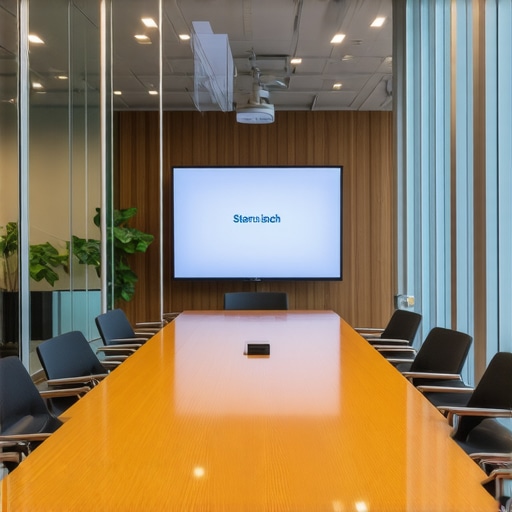
Most startups treat their room bookings like a utility—somewhere to sit while they talk. That is a massive waste of capital. When we had our first seed-round presentation, I realized that why your startup pitch is falling flat in a coffee shop is often down to the lack of control over the environment. We stopped booking the smallest, cheapest room and started selecting spaces based on the psychological impact of the layout. For a board meeting, you want the ‘authority’ of a long table; for a creative brainstorm, you need the energy of a standing-height desk or a room with writable walls. You should be looking for startup success secrets choosing the perfect conference room to match the tone of the conversation. I once hosted a product demo in a standard white-walled room and it felt like a dental appointment. The next week, I moved it to a space with warm lighting and leather chairs, and the feedback from the same client was night and day. The environment dictates the mood before you even open your mouth.
Make Your First Impression Count Without Saying a Word
Your workspace is a physical extension of your brand’s pitch deck. If you are bringing a high-value client into a space that feels chaotic or temporary, they will subconsciously associate that instability with your product. This is specifically why why your seed round pitch needs a professional backdrop. I remember a specific instance where a potential partner walked in and immediately commented on the ‘energy’ of the floor. It wasn’t about the furniture; it was about the fact that the community manager greeted them by name because I had sent a quick heads-up email ten minutes prior. That small bridge between the manager and my guest made us look like a twenty-person operation when we were actually just two guys and a laptop. You are paying for the infrastructure, so use every inch of it to look bigger than you are. Stop just occupying space and start transforming meeting rooms into collaboration hubs that actually drive revenue.
But here is the nuanced truth: most founders over-invest in the wrong kind of ‘professionalism.’ We think we need the room with the most complex dongles and integrated tablets, but in reality, the problem with tech-heavy meeting rooms that nobody knows how to use is that they create ‘tech friction’ that derails high-stakes moments. I’ve seen million-dollar pitches stall because the founder spent ten minutes trying to sync a laptop to a proprietary screen-sharing system. You’re better off with a simple HDMI cable and a room that doesn’t echo like a cavern. Understanding the acoustic secrets of high-end conference rooms is far more valuable than a 4K resolution screen. If your voice sounds thin or hollow, your authority follows suit.
Is Your Open-Plan Layout Secretly Driving Your Best Talent Away?
It’s a common trap to assume that ‘community’ means being visible 24/7. However, research by the Leesman Index suggests that ‘planned spontaneity’—the ability to choose when to be seen—is the real driver of workplace satisfaction. If you haven’t mastered how to handle a loud phone talker in a shared space, your deep work will suffer, and so will your team’s morale. This is the downside of hot-desking that nobody talks about: the constant cognitive load of re-adjusting to a new environment every day. You need to balance the social ‘collision’ areas with dedicated focus zones.
Another subtle mistake is ignoring the biology of your team. We often prioritize the ‘vibe’ over basic human needs. I’ve spent months wondering why my developers were sluggish by 3 PM until I realized we were booking rooms without windows. Learning how to find a meeting room that actually has natural light isn’t just about aesthetics; a study from the Journal of Clinical Sleep Medicine found that employees in offices with windows received 173% more white light exposure during work hours and slept an average of 46 minutes more per night. Better sleep equals a faster startup. 
Finally, don’t fall for the allure of ‘free’ perks if they come at the cost of your brand. The truth about those ultra-cheap office memberships is that they often lack the private infrastructure needed for growth. You think you’re saving money, but the real cost of a free coffee meeting or a low-rent desk is the loss of credibility when you need to have a confidential conversation. To truly scale, you must know how to maximize productivity in your startups conference rooms by treating them as strategic tools, not just furniture. Have you ever fallen into this trap? Let me know in the comments.
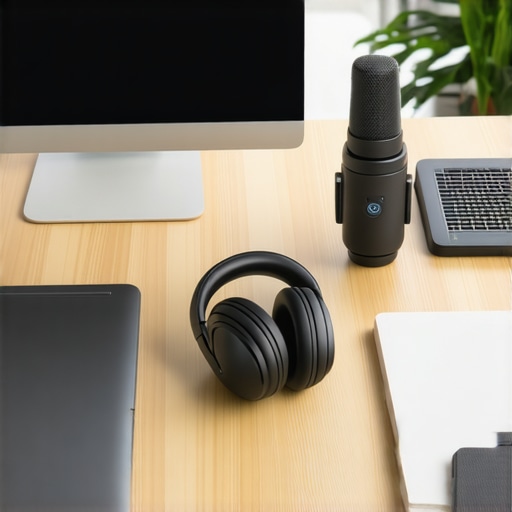
Avoiding those traps is just the baseline. To truly excel, you need a digital and physical ‘survival kit’ that makes you indifferent to wherever you happen to be sitting that day. I’ve realized that my productivity isn’t tied to a specific desk, but to the reliability of my stack. For any founder working in a high-density environment, endpoint security is non-negotiable. According to the National Institute of Standards and Technology (NIST), the ‘bring-your-own-network’ reality of hybrid work is one of the largest attack vectors for small businesses today. This is why endpoint protection services matter more when your team is hybrid than ever before. I personally use a dedicated VPN and hardware-level encryption because you never know who is sniffing packets in the lounge while you are focused on a spreadsheet. I also carry a Shure MV7 microphone in my bag; it’s a broadcast-grade tool that filters out the clinking of coffee cups and the chatter of ‘the perpetual talker’ two desks over, ensuring I sound like I’m in a soundproof studio even when I’m in a bustling hub.
Stop Fighting the Booking Software
One of the most overlooked friction points in scaling a startup is the administrative overhead of managing space. If your team is wasting twenty minutes a day just trying to find an available desk, you are bleeding money. I’ve found that why your meeting room booking software is making people angry is usually due to a lack of real-time visibility. We solved this by using a dedicated tablet mount outside our main suite that syncs with our shared calendar. No more awkward ‘Is this room taken?’ knocks. If you’re planning something more technical, like a live-coding session or a sprint, you have to be even more proactive. You need to learn how to host a developer workshop without the lag by requesting a hardlined ethernet connection from the building’s IT team 24 hours in advance. Never trust the guest Wi-Fi with a live demo.
How do I maintain a high-performance culture in a shared space?
Maintenance isn’t just about cleaning your desk; it’s about preserving the mental boundaries of your team. As we grew from three people to eight, I faced a hard choice: do we sign a five-year traditional lease or stay flexible? We chose the latter by negotiating expansion rights. We learned how to scale your office space without breaking the lease by moving into internal ‘swing spaces’ offered by our provider. Eventually, our need for total privacy led us to a different setup, and the logic behind why we moved our engineering team to a private suite was simple: culture is built on shared focus. You can’t build a cohesive engineering culture if your lead dev is constantly being distracted by a nearby startup celebrating a funding round with a ping-pong tournament.
The Shift Toward Hyper-Personalized Workspaces
Looking ahead, the trend is moving away from generic ‘one-size-fits-all’ desks toward spaces that adapt to your biology. We are already seeing the future of conference rooms in startup ecosystems shifting toward AI-integrated environments that auto-adjust lighting based on the time of day and use biometric sensors to optimize air quality. The days of the ‘windowless box’ are numbered. To stay ahead, start treating your workspace as a variable you can optimize, not a fixed cost you have to endure. Try this today: Audit your next three meeting room bookings. If the tech setup caused more than five minutes of delay, switch to a lower-tech, higher-reliability room next time. Consistency always beats complexity in a high-stakes pitch.
The Brutal Lessons I Learned While Scaling in Public
Looking back, the most expensive mistakes I made had nothing to do with rent and everything to do with mindset. I initially underestimated how much why the kitchen is the most important part of your office—it’s the place where organic partnerships are born over an espresso. I also learned that why you shouldnt sign a lease for your first 10 employees is about more than just overhead; it’s about maintaining the agility to scale up or down without a legal battle. Another lightbulb moment was realizing that why your local barista is your best networking asset; they see everyone who enters the building and can often give you the inside scoop on which companies are hiring or looking for partners. Finally, always have the checklist for a glitch-free hybrid board meeting ready to go, because your reputation depends on the tech working perfectly every single time.
The Gear That Keeps My Team Sane and Secure
You cannot simply walk into a shared space and hope for the best; you need a toolkit that guarantees consistency. I personally rely on the checklist for your first office space search every time we scout a new satellite location to ensure the ‘vibe’ matches our culture. To navigate the social complexities, I recommend reading up on the etiquette of the office fridge in a shared workspace to avoid the small frictions that drain your energy. For high-stakes growth, I constantly refine the secret to a pitch deck that gets past the first meeting, ensuring our physical presence in the room backs up our digital claims. Lastly, I never go into a pitch without a backup plan for connectivity; knowing what to do when the office wi-fi goes down mid-pitch has saved a dozen deals for us over the years.
Your Startup Deserves More Than Just a Desk
The journey from a solo founder to a team leader is messy, but your environment acts as a force multiplier. Don’t just settle for a seat; look for a place that challenges your standards and elevates your output. Your coworking membership should be more than a monthly expense—it should be the soil where your biggest ideas take root. It’s time to stop surviving your workspace and start using it as a weapon for growth. Build the culture you want by choosing the space that reflects it. What is the one ‘deal-breaker’ feature you look for before booking a new meeting room? Let me know in the comments below!