
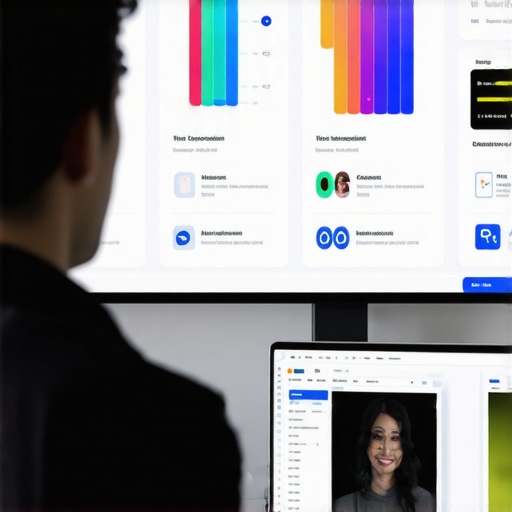
It was a typical Tuesday morning when I found myself in a cramped startup office, desperately trying to present my pitch deck on a laptop that looked blurry and uninspiring. The room was filled with tension—our team had been working tirelessly, and I was eager to impress potential investors. But as I huddled around the small screen, I realized something startling: my pitch was losing its edge. The vibrant graphics, the sleek design—I couldn’t replicate that impact on such a tiny display. That lightbulb moment revealed a painful truth that many entrepreneurs overlook: **your presentation’s visual power is heavily influenced by the display size**.
The Hidden Power of Screen Size in Presenting Your Startup
Ever felt frustrated when your perfectly crafted pitch falters during a crucial investor meeting? You’re not alone. Many founders don’t realize that the screen size significantly affects how their content is perceived. A forty-inch or larger display can make your visuals pop, making complex data more digestible and your storytelling more compelling. Conversely, viewing your pitch on a standard laptop can diminish its impact, leaving your ideas sounding less innovative than they truly are.
This disparity can be a game-changer, especially in high-stakes scenarios like startup funding or strategic partnerships. I discovered this firsthand when I experimented with different presentation setups. On a large screen, my deck’s color vibrancy and clarity showcased our product’s true potential. But on a small laptop, it looked dull and unremarkable. That difference was enough to make or break a deal.
So, what’s the solution? We’ll dive into how to make your pitch look stunning on any display, ensuring your startup leaves a lasting impression. But first, let’s address a common skeptic’s concern.
Are Big Screens Really That Important for Startup Pitches?
Absolutely. A study from TechCrunch highlighted that visual presentation quality can influence investor opinions by up to 70%. If your visuals don’t stand out, your message might get lost. Early on, I made the mistake of relying solely on my laptop’s tiny screen to prepare and deliver pitches, assuming the content was enough. That oversight cost me credibility and opportunities.
Now, I always advocate for showing your pitch on a large, clear display whenever possible—whether it’s a dedicated conference room or a shared coworking space. Don’t underestimate how much visual clarity can elevate your storytelling.
Stay with me, because the next steps will help you optimize every aspect of your presentation setup, ensuring your startup’s message is as captivating as it deserves to be. Wondering how to choose the perfect space for your next big pitch? Check out [this guide](https://coworkingcentral.com/how-to-choose-the-perfect-conference-room-for-business-success) for actionable tips.
Choose the Right Space and Equipment
Start by selecting a conference room that aligns with your startup’s goals. Opt for spaces with natural lighting and minimal distractions, which can boost your team’s focus and confidence. When booking, ensure the room is equipped with high-quality display technology—think large screens or projectors—that can showcase your visuals vividly. During a startup showcase, I once switched from a small, cramped meeting room to a spacious coworking lounge with a giant wall-mounted monitor. The difference in visual clarity was night and day, and it made my pitch much more compelling.
Optimize Your Visuals for Larger Displays
Design your presentation with scalability in mind. Use high-resolution images and minimal text to prevent pixelation and clutter on big screens. Remember, what looks fine on your laptop may be lost or blurry on a 70-inch display. When preparing, I always test my slides on a similar large-screen setup—sometimes borrowing a coworking space’s AV equipment—to catch issues early. This step ensures your graphics pop, and your message remains clear and impactful.
Set Up with Precision and Clarity
Arrive early to get comfortable with the room’s technology. Connect your device, and run a quick preview. Use high-quality HDMI or wireless presentation tools compatible with the room’s setup. Clear audio is as crucial as visuals—consider using external microphones if the space is large or noisy. For my last pitch in a coworking hub, I experimented with different positioning of my laptop and projector, adjusting angles until I achieved optimal visuals and sound. These small tweaks significantly enhanced audience engagement.
Manage the Environment for Focus
Controlling lighting and acoustics is vital. Dim the lights around the display to make visuals stand out, but avoid complete darkness which can disconnect you from your audience. Use blinds or curtains to reduce glare, and consider portable sound absorbents if the room echoes. During a time-sensitive investor meeting, I brought along a portable noise-canceling microphone to cut out background chatter, allowing me to speak clearly and confidently. Such attention to environment amplifies your presentation’s professionalism and persuasion.
Leverage Technology and Connectivity
Ensure reliable internet access and backup plans—like offline copies of your slides. Use collaboration tools to share real-time data or visuals if needed. When demoing a product, I once experienced Wi-Fi failure in a coworking space. I quickly switched to a cellular hotspot, avoiding delays and maintaining momentum. Having the right tech setup prevents small glitches from disrupting your narrative and keeps your focus on convincing your audience.
Practice and Refine Your Setup
Rehearse in the actual space or a similar environment. Pay attention to projection angles, lighting, and sound. Make adjustments to your seating or standing position to engage everyone effectively. During a trial run in a coworking lounge, I noticed my visuals weren’t as visible from the back. I repositioned myself and upgraded my display settings, which resulted in better visibility and audience response during the real pitch. Continuous refinement ensures every presentation leaves a lasting impression.
Many entrepreneurs assume that picking any available conference room or coworking space will do the trick for startup meetings. However, overlooking the subtleties can derail your efforts. A prevalent misconception is that all meeting rooms are created equal, leading startups to underestimate the importance of tailored environments for specific needs. For example, a space with poor acoustics or inadequate lighting can kill focus and creativity, diminishing the impact of your presentations.
Additionally, many believe that technology equipment is a minor detail—think again. Skimping on reliable AV setups or Wi-Fi can cause embarrassing delays and distract your team during critical pitches. Often, startups settle for generic spaces assuming cost savings outweigh the benefits of specialized environments designed to foster innovation.
Is Your Choice of Meeting Space Limiting Your Startup’s Potential?
Research by Harvard Business Review indicates that the physical environment significantly influences team performance and decision-making quality. In fact, a study revealed that 65% of startup founders who invest in purpose-built meeting rooms report higher engagement and better outcomes. This suggests that strategic space selection is not just about convenience but a vital component of your growth strategy.
Another common pitfall is reserving spaces without considering future scalability. A small, cozy room might seem adequate initially, but as your team expands, it can become a bottleneck—potentially hindering collaboration and innovation. To avoid this, evaluate your space needs not just for today but for the next 12 to 24 months.
Furthermore, the myth persists that off-the-shelf coworking options always suffice. Yet, many such environments are overcrowded or lack privacy, making it difficult to conduct confidential discussions or high-stakes negotiations. Exploring specialized coworking environments that focus on startup needs can unlock new opportunities for success. For instance, spaces with dedicated innovation zones or quiet zones can elevate your meetings from mundane to transformative.
Do you know the hidden factors that make or break your startup meetings? From acoustics to layout design, understanding these nuances can provide a competitive edge. Mistakes like ignoring space acoustics or underestimating the importance of seamless technology setup are common but avoidable. Learn more about how innovative [meeting rooms boost startup creativity](https://coworkingcentral.com/innovative-meeting-rooms-that-boost-startup-creativity) and consider how selecting the right environment can accelerate your growth.
Finally, be cautious about choosing spaces that don’t align with your brand identity or team culture—they can subconsciously influence motivation and perception. Ensure your workspace reflects your startup’s values and fosters the right mindset. Need expert advice on picking the perfect environment? Don’t hesitate to [reach out](https://coworkingcentral.com/contact-us) and discover tailored solutions that support your journey.Maintaining a seamless conference room and coworking setup is crucial for startups aiming for long-term growth. To achieve this, I rely on a combination of hardware, software, and consistent procedures that ensure everything functions optimally. Among my top choices is the Logitech MeetUp for video conferencing. Its integrated speakerphone and wide-angle lens make remote meetings feel almost in-person, which is vital for boosting team cohesion. I personally test all equipment before meetings, so I know it will perform under pressure. For managing schedules and room reservations, I recommend using Calendly integrated with your workspace booking system, making scheduling effortless and conflict-free. For internal communication, Slack remains indispensable—its channel organization helps keep ongoing conversations and project updates fluid. I avoid the chaos of disparate tools by establishing routine check-ins and quick tech audits before key sessions, ensuring issues are caught early. As we look ahead, trend predictions suggest AI-powered room management systems will become standard, anticipating user needs and adjusting lighting or temperature automatically, further reducing disruptions.
How do I maintain productivity tools over time?
To keep tools effective, I schedule monthly audits—testing equipment, updating software, and training staff on new features. Keeping a maintenance checklist, like the one detailed in [this comprehensive guide](https://coworkingcentral.com/how-to-maximize-productivity-in-your-startups-conference-rooms-by-0245-pm), helps prevent downtime and preserves the professional environment necessary for startup success. I challenge you to implement a quarterly tech review in your workspace; it’ll pay dividends in operational efficiency. Remember, your tools are only as good as your commitment to their upkeep.
Reflecting on my journey, I realize that every successful startup pitch is as much about environment and presentation finesse as it is about the business idea itself. The key lesson I learned is that optimizing your visual setup isn’t a one-time task but a continuous process of refinement—testing, adapting, and elevating your presentation environment to match your aspirations.
Lessons Hidden in My Early Struggles
- Size Matters More Than You Think: The difference between a compelling pitch and a forgettable one often hinges on the display’s size and quality. Never underestimate how much a large, high-resolution screen can transform your storytelling.
- Environment Shapes Perception: The acoustics, lighting, and layout of your meeting space influence confidence and engagement more than you might imagine. Investing in the right space and setup pays dividends in credibility and clarity.
- Preparation Is an Ongoing Journey: Rehearsing in the actual environment, testing tech, and adjusting your positioning continually enhances your delivery. A tech hiccup or poor lighting can undermine even the most brilliant ideas.
- Technology Should Be Your Ally: Reliable AV equipment, fast internet, and backup plans are non-negotiable. Regular audits and staying ahead with smart tools can make or break your pitch success.
- Every Detail Counts: Even small tweaks—such as adjusting your seating angle for better engagement or managing ambient noise—contribute significantly to the overall impact.
Tools and Resources I Swear By
- Guides on optimizing conference room productivity: Essential for understanding how space influences startup growth.
- Innovative meeting room ideas: Inspires how to transform ordinary spaces into innovation hubs.
- Tech considerations for high-stakes meetings: Ensures your setup doesn’t become a barrier to success.
- Choosing the right conference room: A cornerstone for impactful presentations.
Ready to Elevate Your Startup Game?
Remember, the secret isn’t just in the content of your pitch but in the environment that showcases your vision. Every successful entrepreneur I know pays close attention to their presentation settings—making sure every detail aligns with their brand and ambitions. Take the time to evaluate your spaces, invest in quality tech, and practice in the actual environment. Your startup’s story deserves to be told in a setting that amplifies its potential.
What’s the biggest challenge you’ve faced in creating the right presentation environment? Share below—I’d love to hear your experiences and insights!