
The Day I Realized My Office Was a Wall
I was sitting in my own executive chair, surrounded by my degrees and my favorite motivational posters, wondering why my lead developer was staring at his shoes instead of telling me the truth about our failing sprint. I thought I was the ‘cool boss.’ I had the open-door policy and the fancy coffee. But that room—my room—was a fortress. It wasn’t until we literally stepped outside and sat in a local coworking lounge that the floodgates finally opened. I realized then that the physical environment acts as a silent gatekeeper to honesty. I actually wrote a bit about why we moved our board meetings to a neutral space after that specific disaster, and the results were immediate and frankly, a bit humbling. It turns out, my team didn’t hate my ideas; they just felt like they were trespassing in my brain when they were in my office.
Is This Just an Expensive Way to Get Out of the House?
You might be thinking that renting a professional suite is just a fancy excuse for a change of scenery. It’s not. When you are in your own office, you have the ‘home-court advantage,’ and while that sounds great for sports, it is often toxic for genuine feedback. Your team is constantly scanning for social cues that tell them to stay in line. Early on, I made the massive mistake of thinking that why your seed round pitch needs a professional backdrop applied to every single internal meeting too. I surrounded us with high-status symbols, thinking it would inspire them. It didn’t. It silenced them. Today, we are going to look at how choosing the right external environment can dismantle those invisible hierarchies and get your team talking again. Have you ever felt like your team was holding back just because they were standing in your territory? It’s a lonely feeling for a founder, but it is entirely fixable.
Breaking the Invisible Power Dynamic
Neutral spaces, like those found in modern coworking hubs, act as a psychological ‘leveler’ that removes the baggage of the daily grind. Research in the Journal of Environmental Psychology suggests that the physical ownership of a space significantly influences the assertiveness of participants; essentially, guests are significantly less likely to challenge the ‘host’ in their own domain. By moving to a third-party location, you are telling your team that the ideas matter more than the floor plan. [IMAGE_PLACEHOLDER] It is about more than just aesthetics. Whether you are learning how to prep for a high-stakes board meeting or just doing a weekly sync, the location sets the tone for the entire conversation. I have found that the hidden psychology of circular meeting tables in a shared environment creates a much more collaborative vibe than a rectangular ‘head of the table’ setup. If you want the truth, you have to go where the truth feels safe to live. It’s worth checking out these startup success secrets for choosing the perfect conference room to see how to pick a spot that actually encourages people to speak up without fear of stepping on the boss’s toes.
Look for Visual Cues of Collaboration
When you enter a potential space, don’t just look at the price tag. Look at the surfaces. If the walls aren’t meant to be written on and the chairs are bolted to the floor, you are in a lecture hall, not a collaboration hub. I’ve found that innovative meeting rooms that boost startup creativity usually have modular furniture that can be moved at a moment’s notice. I remember a session where we literally pushed all the tables to the corners and sat on the floor. The shift in body language was instant. When you remove the physical obstacles of ‘office life,’ the mental obstacles follow suit. It is about finding how to choose the perfect conference room for business success by prioritizing flexibility over formality.
I also learned the hard way that ‘open’ doesn’t always mean ‘productive.’ I once tried to host a ‘deep dive’ in a room that was basically a glass box in the middle of a high-traffic lobby. Every time someone walked past, my lead developer would lose his train of thought. It was a disaster. Since then, I’ve learned that how to find quiet zones in a busy urban coworking hub is the first step in my ‘neutral ground’ playbook. Privacy isn’t just about secrets; it is about the focus required to actually be honest without feeling like the whole world is watching your dirty laundry.
Kill the Head of the Table Mentality
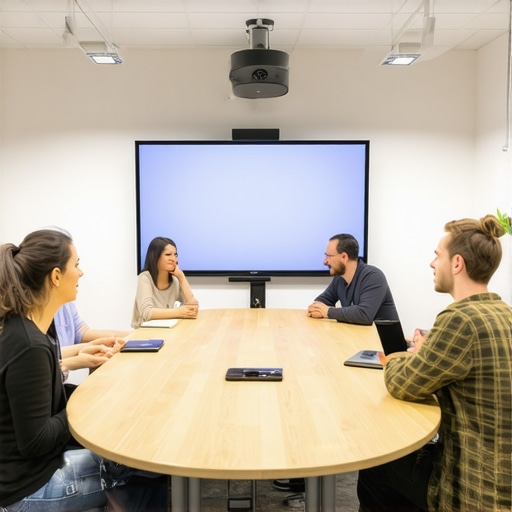
The most dangerous chair in the world is the one at the head of a long rectangular table. It screams ‘I am the decider.’ To fix this, I look for circular setups. I once spent forty minutes trying to get a straight answer out of my marketing lead in our old boardroom. We moved to a shared hub with a round table, and the answer came out in five minutes. Why? Because we were no longer in a hierarchy; we were in a circle. You need to know how to maximize productivity in your startups conference rooms by deliberately choosing layouts that equalize everyone’s visual ‘weight.’  If you are the boss, sit in the most ‘average’ chair in the room. It sounds like a small thing, but it is a powerful signal that your title stays at the door.
Don’t Let the Tech Kill Your Momentum
Nothing kills a breakthrough faster than a ‘Source Not Found’ error on a flat-screen TV. I’ve seen some of the best debates die a slow death because the HDMI cable didn’t work. This is where the problem with tech-heavy meeting rooms that nobody knows how to use becomes a real-world liability. To execute this correctly, arrive ten minutes early. Test the dongles. Ensure the Wi-Fi doesn’t drop when three people start screen-sharing. If you are running a mix of remote and local talent, you will need the checklist for a glitch-free hybrid board meeting to ensure the technology is invisible. When the tech works perfectly, the room disappears, and the conversation takes center stage. This is key when learning how to facilitate a workshop that doesnt feel like a chore—if people are fighting the hardware, they aren’t fighting for your next big feature.
The Myth of the Creative Chaos
Everyone told me that if I wanted a ‘disruptive’ startup, I needed a workspace that looked like a playground. We spent thousands on beanbags and a custom graffiti wall, thinking it would spark genius. It didn’t. In fact, it did the opposite. A common misconception is that ‘creative’ equals ‘unstructured.’ In my experience, real innovation happens when you have a high-functioning environment that removes all the cognitive load. This is why creative coworking transforming meeting rooms into collaboration hubs works so much better than a quirky home office; it provides the structure that allows the mind to wander. When you are in a managed space, you aren’t worrying about the plumbing or the trash; you are worrying about your churn rate. It’s about professionalizing your focus, not just your floor plan.
The Aesthetic Trap That Costs You Real Talent
I’ve seen it a hundred times: a founder rents a gorgeous glass-walled conference room because it looks amazing in a pitch deck. But then, they realize they can’t discuss a pivot or a sensitive HR issue because everyone in the lobby can lip-read their frustration. This is the ‘Oops’ factor of modern office design. We often prioritize transparency over psychological safety. A study published in the Journal of Corporate Real Estate highlights that while open designs are meant to foster collaboration, they often lead to a ‘transparency paradox’ where employees actually communicate less because they feel constantly observed. Today, why privacy is the new luxury in coworking is becoming the standard for high-performing teams. If you want the truth from your engineers, you need a room where they aren’t performing for an audience.
Does Your Choice of Venue Tell a Story You Didn’t Mean to Write?
When you are trying to figure out how to create a professional image for a tiny startup, every detail is a signal. I once took a potential lead investor to a ‘trendy’ spot that was so loud we had to shout over a barista. I thought it made us look busy and ‘in demand.’ To the investor, it just looked like I didn’t value his time or our confidentiality. It’s a nuance many founders miss: the environment you choose is a proxy for how you handle your business. If you choose a space with the acoustic secrets of high-end conference rooms, you are signaling that you value precision and clarity. It isn’t just about ‘looking big’; it’s about looking capable. If you’re struggling to be taken seriously, look at the four walls around you. Do they say ‘amateur hour’ or ‘future unicorn’?
Don’t Ignore the Proximity Effect
Another advanced mistake is thinking that any quiet room will do. You have to consider the ‘vibe’ of the building itself. If you are a fintech startup but you are meeting in a space dominated by lifestyle influencers, the energy is going to feel off-kilter. This is why unlocking networking opportunities in top coworking environments is about more than just the desk you rent; it’s about the accidental conversations in the hallway. I’ve found that why your next big hire might come from a coworking lobby is a real phenomenon, but only if you are in a space that matches your industry’s professional DNA. Choosing a room is a strategic decision that affects your hiring, your funding, and your team’s mental health. Have you ever fallen into this trap of choosing style over substance? Let me know in the comments.
Stop Fighting the Dongle and Start Solving Problems
After a year of jumping from one coworking hub to another, I realized that the best spaces are the ones where I don’t have to think about the space at all. The invisible infrastructure is what keeps a startup from grinding to a halt. I’ve become incredibly picky about my tech stack. For instance, I always check if a space uses reliable management tools because why your meeting room booking software is making people angry usually boils down to a lack of real-time syncing. If I can’t book a room from my phone while walking to the kitchen, the friction is already too high. For our internal hardware, I’ve stopped relying on whatever ‘smart’ TV is on the wall and started carrying a portable Jabra PanaCast. According to Jabra’s technical specifications, their 180-degree field of view is essential in the smaller meeting rooms found in coworking hubs to ensure that every person, even those sitting at the very edge of the table, is visible to remote participants. This prevents ‘huddle room ghosting’ and ensures our remote devs feel like they are actually in the room, which is a core part of the checklist for a glitch-free hybrid board meeting.
How do I keep the momentum high as we scale?
Maintenance isn’t just about cleaning the whiteboards; it’s about auditing your environment as your team grows. What worked for three people in a hot-desking area will fail miserably when you hit seven employees. I’ve found that the transition needs to be surgical. You have to know how to turn a one-day desk rental into a tax write-off while you are small, but as you scale, you need to look at the checklist for moving your team into their first private suite. We personally use a ‘vibe check’ every quarter where I ask the team if the current layout still serves our focus. If we are doing more deep-coding sprints, we move toward quiet zones. If we are in a heavy sales cycle, we move closer to the communal energy of the hub. This flexibility is the only way to stay lean without burning out your talent in a cramped, noisy environment.
The Future is About Frictionless Flexing
I predict that the next five years will see the ‘static office’ become a niche relic for only the most traditional industries. We are moving toward ‘AI-aware’ rooms that automatically adjust lighting and acoustics based on the type of meeting you’ve booked. I’m already seeing hints of this in the future of conference rooms in startup ecosystems, where sensors can detect if a room is being used for a brainstorm or a high-stakes pitch and change the ambient noise cancellation accordingly. The long-term result of this isn’t just better meetings; it’s a higher ‘velocity of truth.’ When the environment is perfect, you stop performing and start producing. My challenge to you: For your next high-stakes strategy session, don’t just book ‘any’ room. Book a space specifically designed for collaboration, bring a 180-degree camera, and sit in the ‘average’ chair. See how much faster you reach a decision when the room isn’t fighting you.
Hard Truths About Shared Walls
Looking back at my first startup, I realized that the environment wasn’t just ‘background noise’—it was the loudest person in the room. I spent thousands on ‘vibe’ and ignored function, leading to some very expensive silence from my team. Here are a few things I learned the hard way:
- Hierarchy is built into the furniture: If you sit in a leather chair while your intern sits on a stool, you aren’t having a collaboration; you’re holding court. Neutral spaces force a physical reset.
- Transparency requires physical safety: People won’t tell you the project is failing if they think the entire floor is eavesdropping. This is why privacy is the new luxury in coworking today and why I prioritize thick walls over glass aesthetics.
- Convenience is a trap: Meeting in your own office because it is ‘easier’ often means you are settling for a stale environment that kills creativity. I now understand the real cost of a free coffee meeting is often a lack of focus and unprofessional results.
The Gear That Keeps My Team Sane
If you are ready to step out of your comfort zone, you don’t need a massive budget, but you do need a system. I always start with the checklist for evaluating a new coworking space to ensure we aren’t walking into another glass-walled distraction. I personally trust Jabra for our audio-visual needs; their equipment is robust enough to handle the varied acoustics of shared hubs. Beyond the room itself, I keep our ‘go-bag’ ready with a high-quality huddle camera and a reliable mobile hotspot. I have also found that practicing the art of the five-minute elevator pitch in the lobby keeps our team sharp and reminds us that every interaction in these hubs is an opportunity to grow our network.
Build a Culture Not Just a Cubicle
Your team deserves a space where their voices carry more weight than your title. Moving to a professional, neutral environment isn’t about running away from your office; it’s about running toward a more honest version of your company. It is the fastest way to prove why your startup needs a better first impression—not just for investors, but for the talented people building the product with you every day. Go find that round table, sit in the most average chair you can find, and see what happens when the invisible walls finally come down. [IMAGE_PLACEHOLDER_E] Have you ever noticed your team becomes significantly more honest the moment you leave the executive office? I would love to hear about your best ‘neutral ground’ breakthroughs in the comments below.