

I spent three years trapped in a “premium” innovation suite that felt more like a high-security server room than a place to build a business. I remember one specific Tuesday—I was trying to lead a brainstorm session, but my team looked like they were waiting for a medical diagnosis under those harsh, blue-tinted LED panels. We had all the gadgets, but zero soul. I realized then that my startup was suffocating in a space designed by people who clearly haven’t spent eight hours a day inside a cubicle farm. If you have ever felt your soul slowly leaving your body during a three-hour strategy session in a room with no windows, you know exactly what I am talking about. Have you ever felt like your office was more of a cage than a cradle for your ideas?
Stop settling for rooms that feel like padded cells
Early on, I made the classic mistake of thinking that as long as the Wi-Fi was fast and the chairs were ergonomic, the environment did not matter. I signed a long-term lease on a “modern” office that turned out to be a windowless office nightmare. My team’s productivity did not just dip; it cratered. We were literally paying to be miserable. Today, I am going to show you how to vet a space so you never end up in a tech-heavy meeting room that nobody actually knows how to use or feels comfortable in. We are going to prioritize human comfort over shiny gadgets.
Is a “vibey” workspace just an expensive distraction?
You might be thinking that you just need a desk and a plug, and that you do not need a waterfall or a beanbag chair. I get the skepticism. But the data does not lie. According to a study by the American Society of Interior Designers, physical workplace design is one of the top three factors, alongside salary and benefits, that affects job performance and satisfaction. It is not about the perks; it is about the impact of office design on your team’s mental health. When you choose an office space that doesn’t feel like a cubicle farm, you are not buying a “cool factor”—you are buying cognitive bandwidth. I have spent months hunting for innovative meeting rooms that boost startup creativity without making everyone feel like they are in a sci-fi movie from the 90s. The secret is looking for meeting rooms with decent natural light and layouts that encourage actual conversation. Let’s look at the specific red flags you should run from so your team can actually enjoy the grind again.I learned the hard way that you cannot trust a floor plan or a glossy brochure. I once dragged a potential lead into a ‘premium’ suite only to discover the walls were paper-thin. Every time the person in the next room laughed, my client flinched. That taught me that before you sign anything, you need to conduct a literal ‘stress test’ of the environment. If you are starting out, following the checklist for your first office space search is essential to avoid these rookie errors. Here is exactly how I vet a space now to ensure it is actually a catalyst for work rather than a distraction.
Audit the environment like a forensic investigator
Listen for the invisible productivity killers
Acoustics are the most underrated feature of any workspace. If you can hear a pen drop in the hallway, your private strategy session isn’t private. I always bring a small Bluetooth speaker to a tour, pop it in a room, and walk outside. If the sound bleeds through, I walk away. Exploring the acoustic secrets of high-end conference rooms is something most sales reps won’t mention, but it matters when you are discussing sensitive equity deals. You need a space where you can speak freely without worrying about the startup next door eavesdropping on your pivot. When you vet a conference room for client-facing speed, the soundproofing is just as vital as the megabits per second.
Demand tech that requires zero explanation
If a meeting room requires a fifteen-minute tutorial from an IT guy named Gary, it is a failure. I remember trying to host a board meeting where we spent the first twenty minutes just trying to get the HDMI to sync with the ‘smart’ wall. It was humiliating. Now, I look for ‘plug-and-play’ simplicity. If I cannot get a screen share working in under thirty seconds, the room is a liability. It is better to have a reliable TV and a whiteboard than a glitchy holographic display. Knowing how to prep for a high-stakes board meeting starts with ensuring the hardware does not betray you at the finish line.#IMAGE_PLACE_HOLDER_B#
Hunt for the natural light sweet spot
We are not mushrooms; we should not work in the dark. I have seen teams lose their edge simply because they spent eight hours under flickering fluorescents. When I am touring, I specifically look for meeting rooms with decent natural light because it directly impacts cognitive load. If the only available rooms feel like dungeons, your team will subconsciously avoid them. Look for windows that face the street or a courtyard. It sounds like a ‘vibe’ thing, but it is actually about how to maximize productivity in your startup’s conference rooms before the afternoon slump hits.
Evaluate the kitchen and common areas
You can tell everything about a coworking community by the state of its coffee machine. Is it a place where people actually talk, or is it a ghost town? I always check the kitchen because that is where the real networking happens. It is the social heart of the building. In fact, understanding why the kitchen is the most important part of your office becomes obvious once you realize how many partnerships start over a shared toaster. If the common area feels cold and clinical, the culture will likely follow suit. You want a space that helps you facilitate a workshop that doesn’t feel like a chore, and that energy starts in the shared spaces, not just the private desks.People often assume that more features equal more value. But here is the contrarian truth: the most productive meeting rooms I have ever used were almost aggressively analog. Everyone tells you to hunt for the latest gadgets, but in reality, a stack of sticky notes and a massive, clean whiteboard beat a laggy touchscreen every single time. I have seen too many founders waste the first ten minutes of a pitch fumbling with a ‘smart’ interface. In fact, research by the Nielsen Norman Group on interaction cost suggests that complex systems actually paralyze decision-making and drain cognitive resources before the real work begins. You want a space that facilitates a flow state, not one that forces you to act as an impromptu IT technician. This is exactly why transforming meeting rooms into collaboration hubs requires a ‘less is more’ mindset. If you are preparing for a high-stakes moment, follow the checklist for a glitch-free hybrid board meeting and prioritize reliability over flash.
Does your board meeting really need a $10,000 smart board?
Not if it slows you down. The most common ‘oops’ factor I see with new founders is falling for the ‘all-inclusive’ pitch. They see the beer taps and the meditation pods and sign a premium lease without realizing why the all-inclusive membership is usually a trap. You end up subsidizing luxuries you will never use while your actual work environment suffers from poor soundproofing or insufficient power outlets. I have learned that a neutral meeting space leads to more honest feedback because it removes the ego from the room and allows the team to focus on the problem, not the prestige of the surroundings.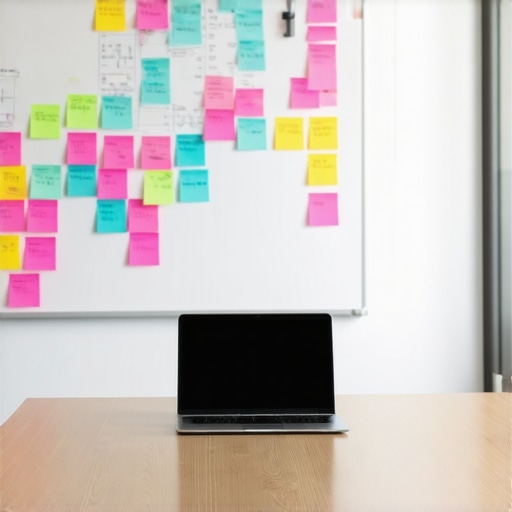 Another hidden nuance is the psychological impact of glass walls. We love the aesthetic of transparency, but for deep work, privacy is the new luxury in coworking. If your team feels like they are on display in a goldfish bowl, they will subconsciously avoid taking the creative risks necessary for a breakthrough. To truly maximize productivity in your startup’s conference rooms, you need to balance that ‘open’ energy with acoustic and visual shields that protect your intellectual property and your team’s focus. Have you ever fallen into the trap of choosing a ‘cool’ office that actually made work harder? Let me know in the comments.
Keep your gear from failing when it matters most
It is one thing to find a room; it is another to keep it from becoming a tech graveyard. I have seen beautiful suites turn into storage closets because the five-thousand-dollar camera system broke and nobody knew how to fix it. My personal rule for startup success secrets regarding hardware is simple: redundancy is your best friend. I never rely on just the built-in microphone of a smart board. I always keep a Jabra Speak 710 in my bag as a backup. Why? Because the acoustics of even the most innovative meeting rooms that boost startup creativity can vary wildly depending on how many people are in the room. If you are transitioning from a solo founder to a team office, do not just buy the flashiest equipment. Buy the stuff that has a ‘reset’ button that actually works. I follow the AVIXA Image System Contrast Ratio (ISCR) standards to ensure that our displays are actually readable from the back of the room, rather than just looking ‘good enough’ to the eye. If the contrast is off, your team will experience eye strain before the first hour is up.
Scaling your space without breaking your budget or your lease
As your team grows, your needs will shift from ‘anywhere with a table’ to ‘we need a war room.’ I have found that you need to be careful with how you scale your office space without breaking the lease. The secret is modularity. Instead of one massive 20-person board room that sits empty 90% of the time, look for spaces that offer multiple smaller rooms that can be booked on-demand. This is how you maximize productivity in your startup’s conference rooms—by matching the room size to the actual meeting size. When your team is spread out, remember that why endpoint protection services matter more when your team is hybrid becomes a daily reality, especially when using public or shared Wi-Fi in coworking hubs. 
How do I keep my meeting rooms running smoothly over time?
Consistency is the only way to avoid the ‘Monday Morning Meltdown’ where nothing connects. I perform a ‘digital sweep’ every Sunday evening. I check for firmware updates on the room’s display and ensure the cables aren’t frayed. It sounds tedious, but it is the foundation of a glitch-free hybrid board meeting. I also recommend assigning a ‘Room Captain’—not a janitor or an IT guy, but someone on the team who actually uses the space—to ensure the markers aren’t dry and the chargers haven’t been stolen. Looking ahead, I believe the future of conference rooms in startup ecosystems will move toward spatial audio and AI-driven framing that makes remote participants feel like they are sitting at the table. We are moving away from being ‘on a call’ to being ‘in a presence.’ If you want to stay ahead, stop looking for more pixels and start looking for better human-to-human interaction tools. Go audit your most-used meeting room today: if you cannot start a video call in two clicks, you need to simplify your stack immediately.
The hard-won truths about the glass-walled goldfish bowl
If there is one thing I have learned after touring dozens of spaces, it is that aesthetics are often a mask for poor functionality. I used to think a sleek glass office was the ultimate status symbol until I realized why privacy is the new luxury in coworking. You don’t need a fishbowl; you need a fortress for your ideas where your team can actually think without being watched.
I have also found that the true ROI of a premium coworking membership isn’t the free beer—it is the acoustic privacy and the professional support that lets you focus. If you can’t have a private conversation without the neighbors hearing every detail of your pitch, the space is a liability, no matter how good the espresso machine is.
Always remember that why your startup needs a better first impression is about how you make people feel, not how much you spent on the lobby furniture. When you are transitioning from a solo founder to a team office, your priorities must shift from simple aesthetic appeal to deep team functionality and long-term cognitive bandwidth.
#IMAGE_PLACEHOLDER_E#
The zero-fail toolkit for my most important pitches
I never walk into a room without my ’emergency bag.’ This includes a high-quality portable speakerphone for hybrid calls, a universal display adapter, and physical sticky notes for when the digital whiteboard decides to reboot at the worst possible moment. For those looking to dive deeper into the psychology of space, I highly recommend reading the work of Don Norman; his insights into human-centered design completely changed how I evaluate every office floor plan I visit. I also rely on startup success secrets for choosing the perfect conference room to keep my vetting process sharp and objective. If you want to see where the industry is heading, keep an eye on the future of conference rooms in startup ecosystems—the shift toward hybrid-first design is already here.
Give your team the stage they deserve
Your workspace is more than just a line item on your monthly budget; it is the physical manifestation of your company’s soul. By choosing rooms that prioritize human comfort and technical reliability over shiny but useless gadgets, you are telling your team that their focus is your top priority. Don’t be afraid to walk away from a ‘cool’ space if it doesn’t serve the actual work being done. When you find the right fit, you will unlock networking opportunities in top coworking environments that can propel your business forward naturally. Go out there and find a space that doesn’t just house your team, but empowers them to do their best work yet.
Have you ever had a major tech disaster during a high-stakes presentation because the room wasn’t up to par? Let me know your horror stories in the comments below.