

I remember sitting in a sleek, glass-walled room three years ago, sweating through my shirt as my potential client stared at a spinning loading wheel on a massive 75-inch screen. I had spent three weeks perfecting the pitch deck, but I hadn’t spent five minutes checking the actual connectivity of that specific room. I looked like an amateur, and needless to say, I didn’t get the signature. It was a painful way to learn that why your startup needs a better first impression starts with the hardware, not the handshake. Today, I want to make sure you never have to feel that heat. We are going to dive into the nitty-gritty of vetting a space so your next meeting is known for your ideas, not your technical glitches.
Stop Assuming the Internet Just Works
One of the biggest mistakes I made early on was trusting the general ‘guest Wi-Fi’ speeds of a building without testing the specific corner where my meeting was happening. Signal dead zones are real, even in high-end hubs. When you are how to prep for a high-stakes board meeting, you need to physically walk into that room with a laptop and run a speed test exactly where you’ll be sitting. According to a study by the Harvard Business Review, first impressions are formed in just a few seconds, and technical incompetence is often subconsciously conflated with professional incompetence. If your video lag makes you look like a 1990s claymation movie, your client is going to wonder if your product is just as outdated. Have you ever had a pitch ruined by a bad connection? I’d love to hear your horror stories in the comments.
Is a premium room actually worth the extra booking fee?
I used to be a cheapskate, thinking a table and a chair were all I needed. I was wrong. I once tried the nightmare of trying to host a workshop at a coffee shop and the public Wi-Fi throttled us the second I shared my screen. Now, I prioritize why we prefer hourly rentals for client meetings because those spaces are specifically built to handle high-bandwidth tasks. We’re going to look at the exact specs you should demand from a space manager before you ever swipe your card.
The Five-Minute Tech Audit You Need to Perform
When you walk into a potential space, don’t just look at the view. Check the ports. Does the TV use a standard HDMI, or are you going to be stuck in a nightmare of ‘does anyone have a dongle?’ scenarios? I’ve found that the problem with tech-heavy meeting rooms that nobody knows how to use is more common than you think. You want a setup that is intuitive. If it takes more than 60 seconds to get your screen mirrored, it’s a bad room. If you are hosting a product demo in a rented suite, your focus should be on the client’s reaction, not fiddling with the remote control. I also recommend checking the upload speed specifically; while download speed gets all the marketing glory, your video quality on a Zoom call depends entirely on that upload pipe.
I remember sitting in a sleek, glass-walled room three years ago, sweating through my shirt as my potential client stared at a spinning loading wheel on a massive 75-inch screen. I had spent three weeks perfecting the pitch deck, but I hadn’t spent five minutes checking the actual connectivity of that specific room. I looked like an amateur, and needless to say, I didn’t get the signature. It was a painful way to learn that why your startup needs a better first impression starts with the hardware, not the handshake. Today, I want to make sure you never have to feel that heat. We are going to dive into the nitty-gritty of vetting a space so your next meeting is known for your ideas, not your technical glitches.
Stop Assuming the Internet Just Works
One of the biggest mistakes I made early on was trusting the general ‘guest Wi-Fi’ speeds of a building without testing the specific corner where my meeting was happening. Signal dead zones are real, even in high-end hubs. When you are how to prep for a high-stakes board meeting, you need to physically walk into that room with a laptop and run a speed test exactly where you’ll be sitting. According to a study by the Harvard Business Review, first impressions are formed in just a few seconds, and technical incompetence is often subconsciously conflated with professional incompetence. If your video lag makes you look like a 1990s claymation movie, your client is going to wonder if your product is just as outdated. Have you ever had a pitch ruined by a bad connection? I’d love to hear your horror stories in the comments.
Is a premium room actually worth the extra booking fee?
I used to be a cheapskate, thinking a table and a chair were all I needed. I was wrong. I once tried the nightmare of trying to host a workshop at a coffee shop and the public Wi-Fi throttled us the second I shared my screen. Now, I prioritize why we prefer hourly rentals for client meetings because those spaces are specifically built to handle high-bandwidth tasks. We’re going to look at the exact specs you should demand from a space manager before you ever swipe your card.
The Five-Minute Tech Audit You Need to Perform
When you walk into a potential space, don’t just look at the view. Check the ports. Does the TV use a standard HDMI, or are you going to be stuck in a nightmare of ‘does anyone have a dongle?’ scenarios? I’ve found that the problem with tech-heavy meeting rooms that nobody knows how to use is more common than you think. You want a setup that is intuitive. If it takes more than 60 seconds to get your screen mirrored, it’s a bad room. If you are hosting a product demo in a rented suite, your focus should be on the client’s reaction, not fiddling with the remote control. I also recommend checking the upload speed specifically; while download speed gets all the marketing glory, your video quality on a Zoom call depends entirely on that upload pipe.
Kill the Echo Before It Kills Your Deal
Think of a conference room like a musical instrument. If the walls are all glass and hard surfaces, your voice will bounce around like a frantic pinball, making you sound distant and muffled to anyone on the other end of a call. This is why understanding the acoustic secrets of high-end conference rooms is a game-changer. I once hosted a session in a beautiful ‘fishbowl’ office that looked great on Instagram but sounded like a construction site because of the echo. I ended up draping my blazer over a chair and moving the table closer to the only rug in the room just to dampen the noise. When you scout a location, clap your hands loudly in the center of the room. If the ring lasts for more than a half-second, that room is going to fight your audio quality every step of the way.
Stop Looking Like a Silhouette on Screen
Bad lighting doesn’t just make you look tired; it makes you look suspicious. If you sit with a bright window directly behind you, you’ll appear as a shadowy figure, which is the last thing you want when trying to build trust. Always aim for front-facing light. This is why finding a meeting room with decent natural light is the first thing I check on a floor plan. If the sun isn’t cooperating, you need to know the basics of choosing the right lighting for your next video pitch. A small portable ring light in your bag is a $20 insurance policy against looking like a witness in a protection program.
Why You Need a Redundancy Plan for Everything
Hardware fails. It’s a law of nature. I learned this the hard way during a seed round presentation when the venue’s fiber line was cut by a rogue backhoe outside. Because I hadn’t prepared for what to do when the office wi-fi goes down mid-pitch, I spent ten minutes fumbling with a mobile hotspot while the investors checked their watches. Now, I keep a physical copy of my deck on a thumb drive and a local version saved on my tablet. You should also run through the checklist for a glitch-free hybrid board meeting before the first person logs in. 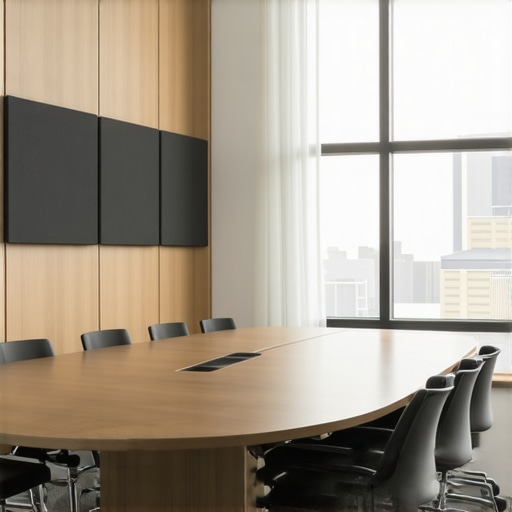 If you are the one facilitating, your job is to remove friction. This extends to the furniture itself. I’ve found that the hidden psychology of circular meeting tables fosters much better collaboration than the traditional ‘head of the table’ power dynamic. If you want how to maximize productivity in your startups conference rooms by 0245 pm, start by rearranging the chairs so everyone feels like an equal contributor. It sounds small, but these spatial cues dictate the energy of the entire hour.
Everyone tells you to check the internet speed and the coffee quality, but in my experience, the biggest deal-killers are the things you can’t see on a spec sheet. We often think a high-end, glass-walled office in a skyscraper signals that our startup has finally ‘arrived,’ but that’s a rookie mistake. In reality, an overly opulent room can actually trigger red flags for savvy investors. When you are looking at 7 things investors look for in your physical workspace, they aren’t looking for gold-plated fixtures; they are looking for capital efficiency. If you’re a pre-revenue startup pitching in a suite that costs more than your monthly burn, you aren’t showing success—you’re showing poor judgment. Have you ever fallen into this trap? Let me know in the comments.
The Counterintuitive Reason Flashy Rooms Can Kill a Deal
The ‘Oops’ factor usually hits when founders prioritize the ‘wow’ factor over the ‘work’ factor. I’ve seen teams spend their entire budget on the truth about those ultra-cheap office memberships just to get a prestigious address, only to find the actual meeting rooms are echoing chambers of distraction. A study by the University of Exeter found that ‘lean’ or overly stark workspaces can actually decrease productivity and focus compared to ‘enriched’ environments. This is why startup success secrets choosing the perfect conference room at 0817 am often involves picking a space that feels lived-in and functional rather than a cold, corporate museum. If the room is too sterile, your potential partner will spend the whole meeting feeling like they can’t put their coffee cup down, which creates a subtle barrier to honest communication.
Does a high-end address actually help you close a seed round?
It depends on who is across the table. For some, it’s about prestige; for others, it’s a distraction. This is why I often argue that why a neutral meeting space leads to more honest feedback. When you aren’t on ‘your’ turf or ‘their’ turf, the power dynamics shift. A neutral coworking hub levels the playing field. 
Stop Letting Visual Noise Sabotage Your Focus
We need to talk about the ‘fishbowl effect.’ Those beautiful glass-walled rooms in modern hubs are a nightmare for high-stakes negotiations because of visual noise. If people are walking by, waving, or even just existing in the hallway, your client’s brain is subconsciously processing those movements. This is a primary reason why privacy is the new luxury in coworking. You need a space where the visual environment is controlled. If you can’t find a room with solid walls, at least position your guest so their back is to the glass. You want their focus on your deck, not the guy in the kitchen struggling with the espresso machine.
The Mid-Afternoon Trap You Didn’t See Coming
If you schedule a high-stakes meeting for 2:00 PM in a room without windows, you are setting yourself up for failure. I’ve written extensively about how to avoid the mid-afternoon slump in a windowless office, and it usually comes down to the lack of natural light affecting circadian rhythms. This is more than just a preference; the real impact of office design on your teams mental health is well-documented. Lack of sunlight increases cortisol and makes people irritable and tired. If you want a ‘yes,’ you need a client who is alert. Always prioritize finding a meeting room with decent natural light for any session lasting longer than sixty minutes. It’s the difference between a high-energy collaboration and a room full of people checking their watches.
I’ve realized that the difference between a founder who struggles and one who scales is often found in their ‘go-bag.’ When I am bouncing between different coworking hubs, I never rely on the built-in microphone of my laptop or a generic webcam that makes me look like I am calling from a submarine. Instead, I carry a dedicated 4K webcam and a high-fidelity portable speakerphone. Even when you are in innovative meeting rooms that boost startup creativity, the hardware provided can be hit or miss. By bringing my own ‘war room’ in a backpack, I ensure a level of consistency that builds trust before I even start my pitch. I personally use the Jabra Speak series because it supports full-duplex audio. According to the technical standards set by the Audio Engineering Society (AES), full-duplex capability is essential for natural-sounding communication because it allows both parties to speak and be heard simultaneously without clipping. Without it, your high-stakes negotiation will feel like a series of awkward walkie-talkie interruptions.
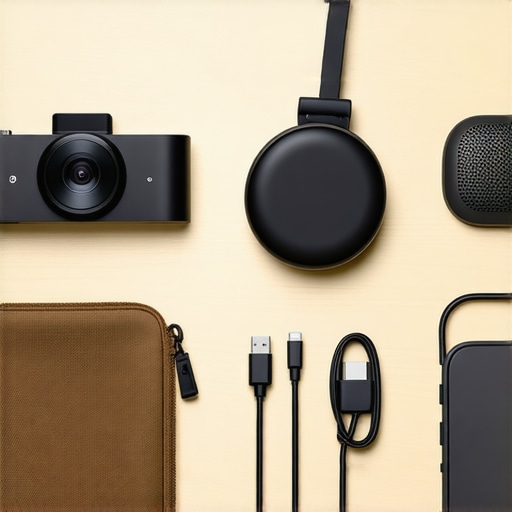
Build a Portable War Room
Beyond just the hardware, the software environment you bring into a room matters just as much. I’ve seen founders lose their rhythm because they were busy managing system updates or notification pop-ups mid-demo. I now use a dedicated ‘Meeting’ profile on my OS that silences everything except the essentials. This is part of the checklist for hosting a flawless hybrid workshop that I developed after a particularly embarrassing Slack notification popped up during a board meeting. It’s not just about the gear; it’s about the digital hygiene of the machine you are plugging into the room’s infrastructure. If you are sharing a floor with other companies, you also need to be mindful of digital security. This is why endpoint protection services matter more when your team is hybrid. You never know who was using that HDMI-to-USB-C adapter before you, or what kind of data-logging might be happening on a shared network.
How do I maintain a professional tech setup as my startup grows?
Maintenance is where most founders fail. They set up a great room and then ignore it for six months until the cables are frayed and the remote is missing. You need a ‘First Monday’ audit where someone—if it’s a small team, that’s you—physically tests every cable, wipes down the camera lenses, and checks the battery levels on any wireless peripherals. As you grow, you’ll need to learn how to scale your office space without breaking the lease, which usually means investing in modular tech that can move from a four-person huddle room to a twelve-person boardroom. I’m already seeing a shift in the industry where static hardware is being replaced by AI-driven spatial sensors that automatically adjust lighting and sound based on where people are sitting. I predict that the future of conference rooms in startup ecosystems will involve fully immersive AR layers, making the physical location of the room almost secondary to the digital environment we project within it.
Stay Ahead of the Tech Decay
Don’t let your professional image rot from the inside out. It is easy to ignore a slightly fuzzy microphone or a flickering screen, but these small friction points aggregate into a general sense of ‘unpolished.’ My advice is to perform a ‘technical stress test’ once a month. Invite a friend or a mentor to a 10-minute video call while you sit in your primary meeting space. Ask them for a brutal assessment of your audio clarity and lighting. If you can’t get your setup to look and sound like a professional broadcast, it’s time to upgrade. Go out this week and buy a high-quality external microphone—it is the single most impactful $150 you can spend on your business today.
The Hard Truths About Scaling Your Physical Presence
I’ve spent a decade navigating different hubs, and the biggest epiphany I had was that a space is only as good as the support team behind it. I used to think I could handle every glitch myself, but I’ve learned that the role of community managers in the modern workspace is actually your secret weapon for a stress-free pitch. Another realization? Physical distance is becoming irrelevant. You might find better focus and lower overhead by exploring why startups are moving to suburban coworking hubs instead of fighting for a downtown suite. Most importantly, stay lean. I always tell new founders why you shouldn’t sign a lease for your first 10 employees, because your needs will change faster than any contract allows.
The Gear and Wisdom I Carry to Every Pitch
My toolkit isn’t just cables; it’s a strategy. I rely on a mix of high-end hardware and a deep understanding of how to choose the perfect conference room for business success. If I’m entering a new space, I immediately look for ways to leverage the existing network; knowing how to get the most value out of your coworking membership means you aren’t just paying for a desk, but for an ecosystem. I also keep a physical backup of my presentation on a dedicated drive because as we discussed, hardware is never 100% reliable.
Go Build Something That Matters
At the end of the day, your vision is what people are buying into. Whether you are in a cutting-edge conference room or a scrappy startup garage, the environment should serve your ideas, not distract from them. Choosing the right meeting rooms in a flexible coworking environment gives you the professional edge without the corporate baggage. Use these tips to eliminate the technical friction, then go out there and make your mark. What was the one technical fail that nearly cost you a deal? Let me know in the comments below!