
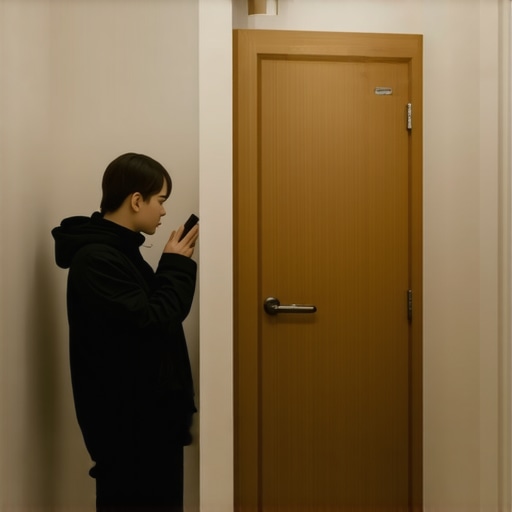
I will never forget the Tuesday morning I lost a five-figure contract because of a echo-y hallway and a very disgruntled neighbor with a heavy-duty stapler. I was doing that classic startup walk—pacing back and forth in the communal corridor, trying to sound like a much bigger company than we actually were. My voice was bouncing off the glass walls, and just as I got to the pricing, someone opened a heavy fire door, which slammed shut with the force of a thousand suns. The investor on the other end literally asked if I was calling from a construction site. I realized then that my flexible approach to office space was actually just an unprofessional mess.
The Day the Hallway Pacing Had to Die
We have all been there. You are in a coworking environment, your desk is in an open-plan area, and your phone starts vibrating. You do not want to disturb your teammates, so you duck out into the hallway. But the hallway isn’t a private office; it is a transit zone. My biggest mistake early on was thinking that any space without a Quiet Zone sign was fair game for a high-stakes negotiation. It is a fast way to ruin your reputation with both your clients and your peers. I learned the hard way that the etiquette of taking private calls is what separates the amateurs from the pros. According to research by the Journal of Environmental Psychology, irrelevant speech is one of the biggest drains on cognitive productivity in shared environments, often reducing work performance by up to 15 percent. By taking my calls in the common thoroughfare, I was not just being a hustler—I was being the office villain who prevented everyone else from getting their deep work done.
Is a Real Phone Booth Actually Worth the Wait?
You might be thinking, But the phone booths are always full, and I have to take this call right now! I hear you. I used to spend twenty minutes circling the floor like a shark just to find a spot. But the truth is, handling a loud phone talker is a nightmare for everyone else, and the quality of your call suffers immensely when you are looking over your shoulder. Have you ever been the person everyone glares at while you are shouting into your AirPods in the hallway? Let me know in the comments—I promise I will not judge, because I have been there too!
Stop Using the Corridor as Your Second Office
We eventually decided to implement a strict no-hallway policy for our startup. If it is not at a desk or in a designated room, the call waits. This shift did not just save our ears; it saved our professional image. We started prioritizing the acoustics hack for crystal-clear client pitches by booking actual spaces instead of relying on luck. When you stop treating the common areas like a private conference suite, you realize that the best business deals actually happen through intentional connection, not accidental eavesdropping. It is about creating a culture where respect and focus are the default, not the exception.
Treating a hallway like an office is like trying to have a romantic dinner in the middle of a marathon track; everyone is moving, everything is loud, and you are just in the way. To stop being the person everyone avoids, you need to transition from the ‘hustle’ of the corridor to the intentionality of a dedicated space. This starts with a hard rule: if a conversation lasts longer than two minutes or involves a dollar sign, it belongs behind a closed door. I remember when we were pivoting our entire tech stack in 2022. I tried to run the scrum at a hot desk because I was too cheap to book a room. By the time we hit the ten-minute mark, three different neighbors had ‘accidently’ bumped my chair, and my lead dev was so distracted by a nearby smoothie blender that we missed a critical security flaw. That afternoon, I realized that the two-pizza rule for booking the right size meeting room isn’t just about food—it is about psychological safety and focus.
The Art of Picking the Right Sized Box for Your Team
Stop booking the 20-person executive boardroom for a 1-on-1 feedback session. It makes you look small and wastes the community’s resources. Conversely, cramming five people into a phone booth is a recipe for a carbon dioxide-induced headache. You need to audit the space before you commit. When I finally started taking our growth seriously, I began using a startup success secrets choosing the perfect conference room checklist. I would walk the floor at 8:00 AM to see which rooms caught the morning sun (which kills visibility on monitors) and which ones were next to the communal kitchen. High-traffic areas mean high-decibel distractions. 
Check Your Adapters Before the Investor Arrives
Nothing kills the momentum of a pitch faster than five minutes of fumbling with a Dongle. I have lived the nightmare of a high-stakes demo where the HDMI cable was frayed and the TV kept flickering to black. Now, I never book a room without verifying the tech stack first. You should always how to find a conference room that actually has working adapters because, in the world of coworking, ‘Plug and Play’ is often just a suggestion. If you are demoing a physical product, remember that the lighting trick that makes your product demo look expensive can be the difference between a ‘maybe’ and a ‘yes’. If the room feels like a hospital wing, bring a small warm-light lamp or adjust the dimmers to create a more premium atmosphere.
Defend Your Deep Work with Better Booking Habits
Your calendar is your defensive shield. If you know you have a sensitive client call, do not wait until ten minutes before to hunt for a spot. The best founders I know book their ‘quiet blocks’ a week in advance. This isn’t just about noise; it is about data security. You cannot how to keep your startups trade secrets safe in a public lounge when your laptop screen is visible to every freelancer walking by with a latte. Before you hit ‘confirm’ on that booking app, take a moment to how to vet a meeting room for acoustic privacy before booking. Knock on the glass. Can you hear the person next door talking about their weekend? If you can hear them, the whole floor can hear your quarterly earnings. Professionalism isn’t just a suit; it is the environment you curate for your business to breathe.
Everyone tells you to book the most expensive, polished-looking suite to impress a potential backer. But here is the contrarian truth I have learned after three failed pitches: the ‘perfect’ room is often the kiss of death for a burgeoning startup. When you sit in a sterile, silent chamber, every awkward silence is magnified, and your startup feels like it is operating in a vacuum rather than at the heart of an industry. I have found that why investors prefer meeting in a high energy hub over a quiet cafe is because it demonstrates ‘proof of life.’ They want to see that you are part of a thriving ecosystem. A study published in the Journal of Consumer Research found that a moderate level of ambient noise—around 70 decibels—actually enhances performance on creative tasks. By isolating your team in a soundproof bunker, you might be accidentally stifling the very innovation you are trying to sell. One major ‘oops’ factor that still bites veteran founders is the psychological drain of the windowless box. We often choose these interior rooms because they are cheaper or ‘more private,’ but without natural light, your team’s circadian rhythm takes a hit, and by 2:00 PM, the energy in the room is non-existent. If you find yourself stuck in one of these bunkers, you need to know 7 ways to make a windowless meeting room feel less like a prison before your team’s morale craters. This is especially true when you are trying to how to maximize productivity in your startups conference rooms by 0245 pm. 
How Do I Stop My High-Stakes Strategy from Leaking Through the Glass?
The biggest mistake people make in coworking spaces is assuming that glass walls equal soundproof walls. This is the ‘Glass-Wall Illusion.’ I once sat next to a fintech team that was discussing their entire acquisition strategy; I could hear every word while I was just trying to eat my lunch in the common area. You must how to vet a meeting room for acoustic privacy before booking by doing a literal ‘shout test.’ Have a team member stand outside while you talk at a normal volume. If they can hear the nuances, so can your competitors. Furthermore, don’t forget that people can read your lips or see your whiteboard through that glass. I always recommend learning how to keep your startups trade secrets safe in a public lounge by using privacy filters on screens and angled whiteboards. Finally, watch out for the ‘marathon trap.’ Booking a space for the whole day sounds productive, but without a strategy on how to survive a 4 hour board meeting without losing focus, you are just paying for a very expensive place to burn out your lead engineers. Have you ever fallen into this trap of picking a room that looked great online but was a total disaster in practice? Let me know in the comments!
Pack Your Own Professionalism Instead of Relying on the House
After years of battling faulty HDMI cables and echoing glass boxes, I stopped relying on the ‘amenities’ list provided by the coworking front desk. If you want to keep your reputation intact, you need a mobile command center. For me, that meant investing in a Jabra Speak 710. Why? Because most built-in laptop microphones are omnidirectional nightmares that pick up the hum of the HVAC more than the tone of your voice. I’ve found that the acoustics hack for crystal-clear client pitches really starts with your own hardware. According to Cisco’s Project Workplace design guidelines, the ideal reverberation time (RT60) for a small meeting room should be between 0.3 and 0.5 seconds. In most glass-walled coworking rooms, that number spikes, making you sound like you’re pitching from a cathedral. Bringing my own speakerphone with built-in echo cancellation saved a $50k partnership last quarter simply because the investor could actually hear my breath pauses.
How do I keep my meeting room strategy from falling apart?
Maintenance isn’t about fixing things when they break; it’s about a weekly audit of your digital and physical footprint. Every Friday, I review our booking logs to see which spaces we actually used. We realized we were overspending on ‘prestige’ suites when a high-top table in the kitchen was where our best brainstorming happened. If you are growing, you need to know when to stop hot desking and move toward a more permanent anchor. I also use a simple Zapier automation that pings my Slack ten minutes before a booking ends. This prevents the awkward ‘door-knock of shame’ from the next group and keeps our team’s focus sharp. You have to how to maximize productivity in your startups conference rooms by 0245 pm by ensuring the room isn’t just a place to sit, but a tool that is calibrated for the specific task at hand.
The Holographic Pivot Is Coming for Your Coworking Space
Looking ahead, the ‘box with a TV’ model is dying. I predict that within the next three years, we will see the rise of spatial audio-integrated rooms as a standard, not a luxury. We are already seeing the early stages of the future of conference rooms in startup ecosystems, where AI-driven noise-masking will create virtual ‘silent bubbles’ even in open-plan areas. This will change the math on whether the move to a dedicated desk is the extra cost worth it, as the technology will make the physical boundaries of a room less relevant than the digital ones. As you scale, remember that why flex space is the ultimate hedge against market volatility is because it allows you to test these new technologies without a ten-year lease hanging over your head. Stop viewing your meeting room as a static expense and start viewing it as a laboratory for your team’s culture. My challenge to you: before your next high-stakes call, download a decibel meter app and do a ‘silence audit’ of your favorite room. You might be surprised at how loud your ‘quiet’ space actually is.
The Hard Truths I Learned While Staring Through Soundproof Glass
After five years in the startup trenches, I’ve realized that the ‘perfect’ setup is a myth, but a functional one is a requirement for growth. First, understand that your team’s energy is a finite resource. If you force them to navigate why boring office furniture is draining your teams creative energy, don’t be surprised when your brainstorming sessions feel flat and uninspired. Second, privacy is a two-way street. It isn’t just about who can hear you; it’s about who you can see. If your room faces a high-traffic lobby, your focus will drift every time someone goes for a refill. Finally, never underestimate the power of a quick walkthrough. I always perform a the 10 minute audit to see if your office space is wasting money by checking the actual utility of the rooms we book versus how much time we spend in them. You will often find that you’re paying for prestige when you really just need a door that closes.
The Gear That Keeps My Pitches From Crashing
I don’t go anywhere without my ‘professionalism kit.’ This includes a dedicated HDMI adapter—because the ‘house’ one is always missing—a portable white noise machine for thin-walled rooms, and a high-quality external microphone. You really need to know how to choose the perfect conference room for business success, and that often means bringing the tech that the venue forgot to maintain. I also swear by a simple decibel meter app to ensure our ‘private’ room isn’t actually a megaphone for the rest of the floor. By bringing your own hardware, you remove the variables that usually lead to a bad first impression.
Build a Culture Where Focus Is the Default
At the end of the day, your startup is more than just a collection of laptops and desks; it is a living ecosystem that needs the right conditions to thrive. Whether you are investigating coworking spaces unlock innovation top meeting rooms of 2025 or just trying to survive your next board meeting, remember that the room you choose is the stage for your company’s story. Invest in the space that respects your team’s time and your client’s attention. Your next big win might just happen in the next conference room you book, provided it has the right vibe, functional acoustics, and a working power outlet. Stop settling for whatever is available and start curating an environment that demands excellence. Have you ever had a high-stakes meeting ruined by a technical glitch or a noisy neighbor in a shared space? Tell me your coworking horror stories in the comments below!