

I remember sitting in a stunning, $10,000-a-month office with a literal indoor waterfall and a kombucha tap that never seemed to work. I felt successful for about ten minutes until I realized my developers were spending three hours a day commuting and our best potential clients wouldn’t trek out to our ‘cool’ industrial district. It was a ghost town. I’d traded accessibility for aesthetics, and it almost killed my first startup. It was a visceral realization that the four walls around us mattered far less than the street address outside. [image_placeholder_1]
The Waterfall That Nearly Drowned My Business
When I was starting out, I thought a ‘tech office’ had to look like a playground. I spent weeks picking out ergonomic beanbags instead of looking at transit maps. But after the initial excitement wore off, the reality set in. We were isolated. Today, I’m helping you avoid that same trap. We are going to break down why the smartest founders are now trading the ‘wow’ factor for the ‘where’ factor. We’ll look at how to stop overpaying for square footage you never use and why your team’s sanity depends on your zip code. My mistake was thinking the environment created the culture, but it’s actually the accessibility that lets the culture breathe.
Is a prime location actually worth the hype?
You might be skeptical. After all, isn’t the future of work remote? I thought so, too, until I saw our collaboration tank. While Slack is great, why your startup needs a physical presence in the city becomes obvious the moment you need a quick huddle or a chance encounter with a partner. I made the mistake of thinking my team would endure a long commute for a ‘cool’ space. They didn’t. According to a study by the University of the West of England, adding just 20 minutes to a commute is as stressful for an employee as taking a 19% pay cut. That’s a hidden cost that no amount of free snacks can fix.
Your Customers Want to See You Not Your Ping-Pong Table
I once lost a potential partner because they couldn’t find parking near our ‘trendy’ converted barn. It was embarrassing. Now, I focus on choosing the perfect conference room for business success in a place people can actually reach. Investors aren’t looking for your arcade cabinet; there are 7 things investors look for in your physical workspace, and accessibility is at the top of the list. Have you ever had a great candidate turn down an offer just because of the office location? It’s a painful wake-up call. We are going to solve that today by refocusing on what truly builds a business: proximity to talent, clients, and meaningful connections.
First, throw away the glossy brochures showing people laughing on beanbags. You need to map the actual transit routes of your core team. I learned this the hard way when our lead engineer started showing up late every day because the subway transfer at our ‘cool’ new spot was a nightmare. Start with the checklist for your first office space search and prioritize hubs where lines intersect. If a potential hire has to switch trains three times to reach you, they will eventually quit. I now advocate for a ‘centrality over coolness’ approach. Think of your office like a battery; it should charge your team’s energy, not drain it before 9 AM. This is why why small satellite offices are beating the mega-headquarters in major cities; they prioritize being near the people, not the ego of the founder.
The 30-Minute Commute Rule
You should treat every minute over a thirty-minute commute as a tax on your company’s productivity. I once tracked our output for a month and found a direct correlation between commute delays and buggy code. If you’re just starting, why you shouldnt sign a lease for your first 10 employees becomes a matter of survival. Flexibility allows you to pivot your location as your hiring pool shifts. I’ve seen startups thrive simply because they moved three blocks closer to a major bus terminal.
Verify the Tech Specs or Face the Consequences
Never trust a community manager when they say the Wi-Fi is ‘blazing fast.’ I once hosted a high-stakes investor call in a space that looked like a million dollars but had the bandwidth of a dial-up modem. The call dropped three times. It was humiliating. Now, I personally how to test the wi-fi speed before you book that venue using a laptop, not just a phone. 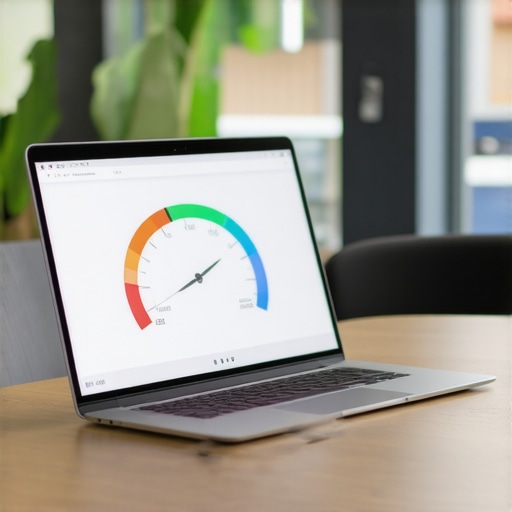 You need to see how the connection holds up when the room is full. Beyond the router, you must how to vet a conference room for client-facing speed and reliability. Check the HDMI cables, the screen lag, and the acoustic dampening. If the room sounds like a tin can, your professional pitch will, too.
The Ghost in the Machine Test
Before you sign anything, spend a ‘workday’ in the space. I once caught a persistent buzzing from a nearby HVAC unit that would have driven my developers insane within a week. You need to know what to do when the office wi-fi goes down mid-pitch in that specific building. Is there a backup? Is the staff responsive? These ‘small’ technical details are the difference between a smooth operation and a chaotic mess.
Stay Mobile While You Scale
Your needs at five employees are vastly different from your needs at twenty-five. I made the mistake of locking into a three-year lease for a space we outgrew in eight months. It’s vital to find how to find an office space that grows with your hiring plan. Look for spaces that offer internal moves. If you can’t upgrade within the same building without a legal headache, keep looking. Agility is the only real advantage a startup has over a corporate giant—don’t trade it for a fixed street address too early.
Moving beyond the simple logistics of a commute, I want to challenge the most common myth in the startup world: that a higher membership tier equals higher productivity. In my experience, the opposite is often true. We often get blinded by the ‘all-inclusive’ tag, but the reality is that why the all-inclusive membership is usually a trap becomes clear when you realize you are subsidizing a rooftop yoga studio you’ll never visit while your developers are struggling with a loud common area. I’ve seen founders drop thousands on premium tiers only to find they still have to fight for a quiet booth.
The Glass Wall Gimmick That Kills Your Focus
Everyone loves the look of a sleek, glass-walled private office. It looks ‘transparent’ and ‘modern’ in the brochures. However, I’ve found that why your startup needs a real door not just a glass wall is a lesson in cognitive load. When your team is constantly distracted by the movement of people in the hallway, their deep-work cycles are shattered. A study by researchers from Harvard Business School revealed that transitioning to open-plan or high-transparency environments can actually decrease face-to-face interaction by nearly 70%, as people retreat into their headphones to find a sense of privacy. Don’t buy into the ‘vibrant’ atmosphere if it means your engineers are constantly wearing noise-canceling earmuffs just to think.

Can the shape of your meeting table actually close a deal faster?
It sounds like a minor detail, but the furniture in your rented suite dictates the power dynamic of every meeting. Most people default to the long rectangular boardroom table, but I’ve seen the hidden psychology of circular meeting tables completely change the energy of a negotiation. Rectangles reinforce hierarchy; circles encourage collaboration. If you are trying to win over a skeptical partner, a neutral, round table removes the ‘us vs. them’ barrier. This is a level of nuance most founders ignore until they wonder why their brainstorms feel so stiff. You need to know how to tell if a coworking space is just a glorified library or if it’s a space actually designed for dynamic movement and human connection.
The Ghost Lease and Other Financial Traps
The ‘oops’ factor usually hits during tax season or when you try to leave. Many founders don’t realize that while they enjoy the flexibility, they haven’t checked if is your coworking membership a tax deductible expense in their specific jurisdiction, especially if they are mixing personal and business use of the ‘club’ amenities. Furthermore, you must how to spot a predatory lease before you sign. Some spaces hide ‘exit fees’ or ‘restoration charges’ for a desk you only sat at for six months. I once spoke to a founder who paid for a year of ‘premium’ access but spent the whole time in how to find quiet zones in a busy urban coworking hub because the main floor was too chaotic. They were essentially paying for a gym membership they only used for the showers. Have you ever fallen into this trap of paying for the ‘image’ instead of the utility? Let me know in the comments. We need to stop chasing the ‘tech-office’ aesthetic and start demanding the true ROI of a premium coworking membership.
I have learned through expensive trial and error that a five-thousand-dollar designer chair means nothing if your video call lags every thirty seconds during a pitch. My ‘secret weapon’ for any shared space now includes a dedicated portable travel router. Why? Because the problem with tech-heavy meeting rooms that nobody knows how to use is that they often rely on congested, shared public Wi-Fi that fails exactly when you need it most. I personally carry a GL.iNet travel router to create my own private subnet; it is the difference between a professional closing and a frozen screen. According to technical documentation from Cisco Systems, maintaining a one-way latency of less than 150 milliseconds is the absolute threshold for viable real-time video collaboration. If your chosen space cannot hit that mark consistently, you are losing money. Beyond just the bit-rate, I have realized that why privacy is the new luxury in coworking is not just about keeping trade secrets; it is about protecting your team from the cognitive drain of constant visual noise. 
How do I maintain my team’s edge in a shared environment?
To keep a growing team functional, you must implement a tech-first audit every quarter. This is not just about clearing out the fridge. It is about understanding how to maximize productivity in your startups conference rooms by 0245 pm when focus naturally begins to dip. We started using a simple tablet-based booking system that integrates directly with our Slack channels, which ended the ‘meeting room wars’ that usually plague teams as they scale from five to fifteen people. You also cannot afford to ignore the invisible risks of shared networks. I found that why endpoint protection services matter more when your team is hybrid is a lesson you want to learn before a data breach, not after. We even started vetting our workshop spaces for technical redundancy; knowing how to host a developer workshop without the lag involves checking the actual port speeds and power outlet distribution before your team arrives. Looking ahead, I predict a massive shift toward AI-managed acoustic environments where ‘smart’ dampening panels adjust in real-time to the room’s occupancy. Until that future arrives, my best advice is to stop relying on the building’s infrastructure. Go out today and invest in a high-gain USB antenna or a portable ring light for your laptop. These small hardware wins build the professional credibility that a communal ping-pong table never could. If you are currently trying to figure out how to prep for a high-stakes board meeting, the first step is to bring your own reliable hardware and never trust the house HDMI cable.
The Hardest Lesson I Learned While Chasing the Perfect Zip Code
Reflecting on my early mistakes, I realized that a space is only as good as the work it facilitates. I spent far too much time worrying about the ‘vibe’ and not enough on why your startup needs a better first impression through actual functionality and reliability. One major lightbulb moment for our growth was why we moved our engineering team to a private suite; we discovered that silence is a competitive advantage in a world of open-office distractions. Don’t be afraid to pivot your physical strategy as your team grows. I’ve seen companies flourish by simply moving closer to their employees’ homes, proving that accessibility beats architecture every time. If your team is struggling to focus, look at the floor plan before you look at the management style.
The Essential Toolkit for Your Next Workspace Pivot
When you are ready to move, don’t go in blind. I always keep the checklist for your first office space search handy to ensure no technical detail or hidden fee is missed. For hardware, I swear by a dedicated GL.iNet travel router to bypass congested public networks. For strategy, I suggest studying how to choose the perfect conference room for business success to ensure your client meetings actually lead to signed contracts. Finally, use a tool like speedtest.net on a laptop—never a phone—to verify that the bandwidth matches the brochure’s promises before you sign any paperwork.
Stop Overthinking the Beanbags and Start Building Your Legacy
Your business is defined by the problems you solve, not the color of your walls or the brand of coffee in the breakroom. While a professional environment matters, remember that the ultimate goal is growth, speed, and human connection. You can find startup success secrets choosing the perfect conference room at 0817 am by looking at your team’s real-world data and feedback rather than chasing the latest tech-office trend. Go build something great, choose a location that supports your team’s sanity, and let your environment be the wind in your sails, not the anchor that holds you back. Have you ever signed a lease only to realize the commute or the Wi-Fi was a total dealbreaker for your team? Let me know in the comments below.