

I remember sitting in my kitchen, sweat dripping down my back, trying to explain my revolutionary SaaS vision to a VC on a tiny 14-inch screen. The Wi-Fi flickered at the exact moment I mentioned my burn rate, my neighbor’s dog started a howling marathon, and I realized in that gut-wrenching moment that I wasn’t just selling a product—I was selling trust. Trust is incredibly hard to transmit over a pixelated Zoom feed. I made the mistake early on of thinking my pitch deck was enough to bridge the digital gap, but I quickly learned that early-stage funding isn’t just about the numbers; it’s about the energy in the room that you simply cannot replicate from your bedroom. That day, I lost the lead investor, and it was entirely because I let the environment dictate my professionalism.
The Invisible Signals You Miss Through a Webcam
Look, I’m not saying you need a ten-year lease in a skyscraper. In fact, I usually tell people why you shouldnt sign a lease for your first 10 employees because agility is your best friend. But there is a specific kind of magic that happens when you sit across from someone. You see the slight lean-in when they’re interested, or the subtle furrow of a brow when a projection doesn’t quite land. When I first started, I thought I was being “lean” by avoiding any physical overhead, but why your startup pitch is falling flat in a coffee shop became painfully obvious after my third “no” in a row. Investors aren’t just betting on your code; they are betting on you as a leader. They want to see how you carry yourself and why your startup needs a physical presence in the city often comes down to accessibility and perceived stability. If you look like you’re running a business from a temporary outpost, they’ll treat your vision like a temporary project. I eventually started booking professional environments for these high-stakes talks, and the shift was immediate. There’s a psychological switch that flips when you walk into one of the top conference rooms designed for real business. You stand taller, your voice carries more weight, and the investor actually focuses on your words rather than the distractions in your background. Research published by the Harvard Business Review suggests that a face-to-face request is 34 times more successful than one sent digitally. When the stakes are your company’s survival, why would you take lower odds?
Is a professional office actually worth the hype in 2025?
I get the skepticism. We’ve been told the future is remote, that the “metaverse” is the new boardroom, and that office leases are relics of the past. But for those of us in the trenches of early-stage fundraising, the “human element” remains the highest-performing asset we have. It’s about creating a “presence” that lasts long after the meeting ends. Investors look for specific markers in your workspace that signal you are a serious contender. Have you ever felt a deal cooling off just because you couldn’t maintain the momentum of an in-person connection? It’s a common hurdle, but one that is surprisingly easy to clear once you change your environment. Today, we are going to talk about how to use physical spaces to your advantage without breaking the bank or losing your soul to a cubicle.
To move from a founder with a laptop to the CEO of a scalable venture, you must audit your professional footprint before the meeting even starts. Think of your environment as the frame for your painting; a masterpiece in a cardboard box still looks like junk. To execute this properly, you have to match the venue to the specific high-stakes objective. If you are doing a quick check-in, a shared lounge is fine. But for the big pitch, you need to understand 7 things investors look for in your physical workspace. It is about more than just having a desk; it is about signaling that you have the resources and the judgment to execute at a high level.
Control the tech so the tech doesn’t control you
I once spent fifteen minutes of a thirty-minute window trying to connect a faulty HDMI dongle that was clearly a relic from 2012. By the time my slides finally appeared, the energy in the room was dead, and the investor was already checking his watch. This is exactly why the problem with tech-heavy meeting rooms that nobody knows how to use is a silent deal-killer. You want invisible technology—the kind that just works the second you plug in. #IMAGE_PLACE_HOLDER_B#
Execute the perfect physical pitch
Before your guests ever walk through the door, you must know how to prep for a high-stakes board meeting by arriving at least twenty minutes early to own the space. Adjust the chairs for optimal eye contact, check the room temperature, and ensure the lighting doesn’t make you look like a ghost on camera for the remote participants.
Silence the world around you
Sound is the most underrated factor in a meeting. During my first seed round, I tried to save fifty dollars by booking a creative nook in an old warehouse. It was freezing, the Wi-Fi was essentially a glorified mobile hotspot, and there was a literal drum kit in the corner. When the investor walked in, his face told me everything: he didn’t think I was serious. I spent more time apologizing for the drafty windows than I did explaining my monthly recurring revenue. Contrast that with my Series A, where I booked a room that leveraged the acoustic secrets of high-end conference rooms to create a cathedral-like silence. I didn’t have to shout or compete with traffic noise. I just had to lead. Finally, always have a contingency plan. Knowing the checklist for a glitch-free hybrid board meeting will save you when a remote partner inevitably has trouble joining. Even something as simple as knowing what to do when the office wi-fi goes down mid-pitch can turn a potential disaster into a demonstration of your poise under pressure.I remember sitting in my kitchen, sweat dripping down my back, trying to explain my revolutionary SaaS vision to a VC on a tiny 14-inch screen. The Wi-Fi flickered at the exact moment I mentioned my burn rate, my neighbor’s dog started a howling marathon, and I realized in that gut-wrenching moment that I wasn’t just selling a product—I was selling trust. Trust is incredibly hard to transmit over a pixelated Zoom feed. I made the mistake early on of thinking my pitch deck was enough to bridge the digital gap, but I quickly learned that early-stage funding isn’t just about the numbers; it’s about the energy in the room that you simply cannot replicate from your bedroom. That day, I lost the lead investor, and it was entirely because I let the environment dictate my professionalism.
The Invisible Signals You Miss Through a Webcam
Look, I’m not saying you need a ten-year lease in a skyscraper. In fact, I usually tell people why you shouldnt sign a lease for your first 10 employees because agility is your best friend. But there is a specific kind of magic that happens when you sit across from someone. You see the slight lean-in when they’re interested, or the subtle furrow of a brow when a projection doesn’t quite land. When I first started, I thought I was being “lean” by avoiding any physical overhead, but why your startup pitch is falling flat in a coffee shop became painfully obvious after my third “no” in a row. Investors aren’t just betting on your code; they are betting on you as a leader. They want to see how you carry yourself and why your startup needs a physical presence in the city often comes down to accessibility and perceived stability. If you look like you’re running a business from a temporary outpost, they’ll treat your vision like a temporary project. I eventually started booking professional environments for these high-stakes talks, and the shift was immediate. There’s a psychological switch that flips when you walk into one of the top conference rooms designed for real business. You stand taller, your voice carries more weight, and the investor actually focuses on your words rather than the distractions in your background. Research published by the Harvard Business Review suggests that a face-to-face request is 34 times more successful than one sent digitally. When the stakes are your company’s survival, why would you take lower odds?
Is a professional office actually worth the hype in 2025?
I get the skepticism. We’ve been told the future is remote, that the “metaverse” is the new boardroom, and that office leases are relics of the past. But for those of us in the trenches of early-stage fundraising, the “human element” remains the highest-performing asset we have. It’s about creating a “presence” that lasts long after the meeting ends. Investors look for specific markers in your workspace that signal you are a serious contender. Have you ever felt a deal cooling off just because you couldn’t maintain the momentum of an in-person connection? It’s a common hurdle, but one that is surprisingly easy to clear once you change your environment. Today, we are going to talk about how to use physical spaces to your advantage without breaking the bank or losing your soul to a cubicle.
To move from a founder with a laptop to the CEO of a scalable venture, you must audit your professional footprint before the meeting even starts. Think of your environment as the frame for your painting; a masterpiece in a cardboard box still looks like junk. To execute this properly, you have to match the venue to the specific high-stakes objective. If you are doing a quick check-in, a shared lounge is fine. But for the big pitch, you need to understand 7 things investors look for in your physical workspace. It is about more than just having a desk; it is about signaling that you have the resources and the judgment to execute at a high level.
Control the tech so the tech doesn’t control you
I once spent fifteen minutes of a thirty-minute window trying to connect a faulty HDMI dongle that was clearly a relic from 2012. By the time my slides finally appeared, the energy in the room was dead, and the investor was already checking his watch. This is exactly why the problem with tech-heavy meeting rooms that nobody knows how to use is a silent deal-killer. You want invisible technology—the kind that just works the second you plug in. #IMAGE_PLACE_HOLDER_B#
Execute the perfect physical pitch
Before your guests ever walk through the door, you must know how to prep for a high-stakes board meeting by arriving at least twenty minutes early to own the space. Adjust the chairs for optimal eye contact, check the room temperature, and ensure the lighting doesn’t make you look like a ghost on camera for the remote participants.
Silence the world around you
Sound is the most underrated factor in a meeting. During my first seed round, I tried to save fifty dollars by booking a creative nook in an old warehouse. It was freezing, the Wi-Fi was essentially a glorified mobile hotspot, and there was a literal drum kit in the corner. When the investor walked in, his face told me everything: he didn’t think I was serious. I spent more time apologizing for the drafty windows than I did explaining my monthly recurring revenue. Contrast that with my Series A, where I booked a room that leveraged the acoustic secrets of high-end conference rooms to create a cathedral-like silence. I didn’t have to shout or compete with traffic noise. I just had to lead. Finally, always have a contingency plan. Knowing the checklist for a glitch-free hybrid board meeting will save you when a remote partner inevitably has trouble joining. Even something as simple as knowing what to do when the office wi-fi goes down mid-pitch can turn a potential disaster into a demonstration of your poise under pressure.
The trap of the creative vibe
The biggest mistake I see now isn’t a lack of effort; it’s the “vibe over value” trap. Many founders believe that a space with neon signs and a cereal bar automatically translates to a high-performance culture. However, the truth about those ultra-cheap office memberships is that they often trade away the very infrastructure you need for deep work. I fell for this early on, signing a deal for a spot with amazing mural art, only to discover too late how to tell if a coworking space is just a glorified library. If the management prioritizes the lobby’s playlist over the reliability of the printer or the density of the Wi-Fi mesh, you aren’t in a workspace; you’re in a very expensive social club.
Is your flexible arrangement actually killing your team’s focus?
A study by Oxford Economics revealed that the ability to focus without interruptions is the single most important factor for employee productivity, yet only 1% of employees claim they can achieve this in a standard open-plan setting. This highlights the downside of hot-desking that nobody talks about: the “cognitive tax” of daily reorganization. When your team has to hunt for a seat or a quiet corner every morning, their creative energy is depleted before they ever open a laptop. True expertise in choosing a space means looking past the surface to see if the environment supports sustained focus.
Why a circular table changes everything
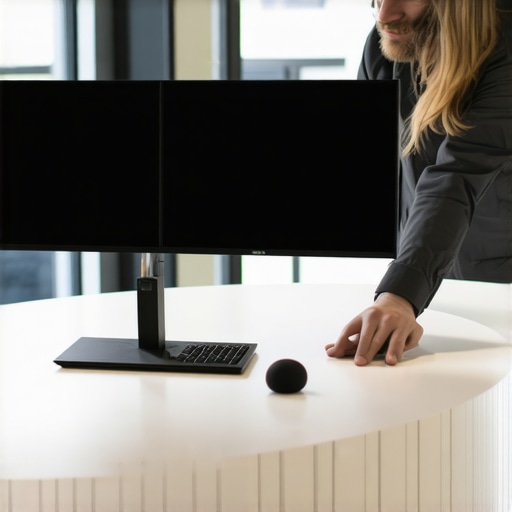
There is an incredible amount of nuance in the physical layout that most beginners ignore. For instance, the hidden psychology of circular meeting tables suggests they foster a sense of equality and collaboration, whereas long rectangular tables naturally reinforce a hierarchy. If you are trying to build a partnership based on trust, the furniture in the room might be doing more heavy lifting than your pitch deck. Furthermore, don’t ignore the role of the people on site. In my journey, I discovered the truth about community managers in coworking spaces: they aren’t just receptionists; they are the gatekeepers of the local ecosystem. Neglecting that relationship is a rookie mistake that can cost you valuable introductions. #IMAGE_PLACE_HOLDER_C#
The invisible ROI of premium spaces
Ultimately, the real impact of office design on your teams mental health is what drives long-term retention. A space with natural light and professional acoustics reduces burnout and signals to your team that their work is valuable. Have you ever fallen into this trap of choosing style over substance? Let me know in the comments.
But even the most perfect circular table can’t save you if your digital bridge is crumbling. I’ve learned that a founder’s true resilience isn’t just in the pitch, but in the toolkit they carry to ensure every interaction is frictionless. I never rely solely on a venue’s built-in microphone anymore. I personally carry a Jabra Speak 710 puck in my bag; it ensures that even in larger rooms, my remote investors hear me as if I’m standing right next to them. This is part of the true ROI of a premium coworking membership—the ability to augment a high-end space with your own reliable tech stack. If you are hosting a product demo in a rented suite, you need to be the master of your domain, which means having your own backup hotspots and HDMI adapters that don’t fail when the pressure is on.
How do I keep the momentum as my team grows?
Maintenance is where most startups fail. They start with high energy in a shared lounge, but as the headcount hits ten or fifteen, they lose that collective focus. This is when we decided to stop playing musical chairs with hot desks and looked at how to scale your office space without breaking the lease. For us, the answer was transitioning into a hybrid model where we utilized innovative meeting rooms that boost startup creativity for deep-work sprints while maintaining a smaller, fixed hub. Eventually, the overhead of managing a physical space became a distraction, which is why we fired our office manager and moved to a managed workspace. By outsourcing the logistics—the coffee, the Wi-Fi maintenance, the security—to the coworking provider, we could spend 100% of our mental bandwidth on our product, not on whether the printer had toner. If you are feeling the squeeze, consider why we moved our engineering team to a private suite; it offers the privacy they need for complex coding while keeping them connected to the energy of the wider hub.
The future is modular, not massive
Looking ahead, the trend is moving toward ‘intelligent’ environments. According to a 2024 report by Gartner, by 2026, 60% of enterprise meeting room technology will be augmented by AI-driven ‘auto-framing’ and ‘speaker tracking’ to bridge the gap between remote and physical attendees. We are moving toward a world where the physical room knows who is speaking and optimizes the acoustics in real-time. This is why the future of conference rooms in startup ecosystems is so exciting; the technology will finally match the speed of our ideas. To stay ahead, you must understand how to maximize productivity in your startups conference rooms today by embracing these hybrid-first tools. Don’t wait for a 10-year lease to catch up to you. Start by auditing your next meeting: arrive early, test your audio from the perspective of the remote participant, and follow the checklist for a glitch-free hybrid board meeting. My challenge to you? For your very next high-stakes call, book a professional room instead of your living room and see if your confidence doesn’t double the moment you shut the door.
Moving from a kitchen-table founder to a serious CEO requires more than just a code update; it requires a mindset shift regarding where and how you work. I spent years thinking I could hack my way through growth with just a high-speed connection and a dream, but the reality is that the physical space you inhabit acts as a silent partner in every deal you close.
The Gut-Punch Realities of My First Desk Rentals
Reflecting on my journey, there are a few hard truths that I wish someone had whispered in my ear before I signed my first membership agreement. First, the atmosphere of a space dictates the speed of your team. If you are in a place where the noise level is constant, you are paying a hidden tax on your output. I learned that the truth about those ultra-cheap office memberships is often found in the lack of privacy and reliable infrastructure. Second, never underestimate the power of a warm introduction from someone who knows the building. Understanding the role of community managers in the modern workspace can be the difference between being a ghost in the hallway and being the founder everyone knows by name. Finally, remember that your environment is your brand. It is exactly why your startup needs a better first impression than a messy bedroom or a crowded cafe can ever provide. You aren’t just buying a desk; you are buying the right to be taken seriously from minute one.
Tools That Actually Save Your Professional Reputation
I don’t leave my home base without a specific set of tools that ensure I remain in control of the room, regardless of the venue’s quirks. I highly recommend keeping the checklist for evaluating a new coworking space on your phone to audit potential meeting sites before you invite a client. For remote-heavy days, I’ve found that choosing the right lighting for your next video pitch is non-negotiable; a portable ring light is now as essential as my laptop. Also, don’t overlook the human element in your local ecosystem. I’ve realized why your local barista is your best networking asset, as they often have the pulse on which startups are moving in and which VC partners are grabbing coffee nearby. These small investments in your personal toolkit transform you from a visitor into a master of the environment.
Your Startup Deserves a Real Room
The transition to a professional setting isn’t about vanity; it’s about giving your vision the respect it deserves. When you step into a space designed for high-performance, you signal to your team, your investors, and yourself that you are playing for keeps. As we look at the future of conference rooms in startup ecosystems, the focus is shifting from simple four-walled boxes to intelligent hubs that facilitate human connection. Don’t let your next big idea get lost in the static of a bad connection or a distracting background. Take the leap, find a space that mirrors your ambition, and watch how the world responds to your new presence. Have you ever noticed a sudden boost in your confidence just by switching from a home office to a professional meeting room? Let me know below.