

I remember the exact moment I realized my ‘modern, transparent’ office was actually a productivity graveyard. I was sitting in our brand-new glass-walled suite, trying to negotiate a pivot with our lead developer, while a group of prospective hires stood just three feet away in the lobby, watching my frantic hand gestures like they were at a zoo. I felt exposed, they felt awkward, and the deal nearly fell apart because I couldn’t find a single square inch of visual privacy. We’ve been sold this lie that ‘transparency’ requires literal glass, but after three years of running a startup, I’ve learned that a solid door is worth more than a thousand aesthetic windows. Today, I’m going to show you why your team is secretly miserable in that fishbowl and how you can reclaim your focus.
Your Office Isn’t an Apple Store and That’s Okay
I made the mistake of thinking that looking like a high-growth tech firm meant having everything on display. I spent a fortune on a glass-heavy floor plan, only to realize that the open-plan office is failing your developers in ways you can’t even see on a balance sheet. When every passerby can see your screen, you don’t do deep work; you do ‘performative work.’ You stay busy enough to look productive, but you never actually enter the flow state. I’ve seen firsthand how the real impact of office design on your teams mental health starts with the simple ability to close a door and breathe. A Harvard study famously found that open-office architectures actually lead to a 70% decrease in face-to-face collaboration because people retreat into their headphones to find the privacy they lack physically.
Is Privacy Actually Worth the Extra Rent?
I get it—you’re worried that solid walls make you look like a 1950s law firm. You want to be approachable. But there is a reason why privacy is the new luxury in coworking and traditional office spaces alike. When we finally moved our engineering team to a private suite with actual drywall, our bug-fix rate skyrocketed. Have you ever felt like you were being watched while trying to solve a complex problem? It’s exhausting. We need to stop equating ‘visibility’ with ‘culture.’ If you can’t have a difficult conversation or a focused deep-dive without the whole office watching the silent movie of your stress, you don’t have a workspace; you have a stage. Have you ever found yourself hiding in a bathroom stall just to get five minutes of actual silence? If so, it’s time we talk about a real solution. Setting the stage for a better layout doesn’t mean building a fortress, but it does mean acknowledging that humans need boundaries to build great things.
Audit Your Square Footage Like a Cloud Bill
Just like you wouldn’t let a legacy server instance run idle for six months, you shouldn’t let expensive real estate go to waste. I realized too late that we were spending 40% of our budget on ‘aesthetic walkways’—those wide open spaces that look great in a brochure but serve zero functional purpose. You need to stop overpaying for square footage you never use and start treating every square inch as a tool for output. When we audited our space, we found that our ‘collaborative lounge’ was only used for naps, while the two tiny phone booths had a waiting list. I once spent forty minutes trying to how to prep for a high stakes board meeting while a cleaning crew was buffing the floors right outside our glass door. It was a disaster. The lesson? If a space doesn’t facilitate a specific task—whether that’s a deep-dive sprint or a closed-door negotiation—it’s just expensive air.
Create a Fortress for Deep Work
The first step to fixing the fishbowl effect is creating ‘Zoned Environments.’ Think of your office like a computer’s RAM: you need high-speed, dedicated lanes for intensive processing. This means physically separating the high-traffic social hubs from the quiet zones. I’ve found that how to find quiet zones in a busy urban coworking hub often comes down to looking for the ‘library rule’ areas where talking is strictly forbidden. In my own office, we moved the coffee machine—the ultimate distraction—to the furthest corner possible and surrounded the engineering desks with acoustic baffles. We didn’t need to rebuild the whole floor, we just needed to stop the sound from traveling. If you’re stuck in a lease, even simple modular dividers can help you the secret to finding quiet corners for high stakes sales calls without needing a contractor.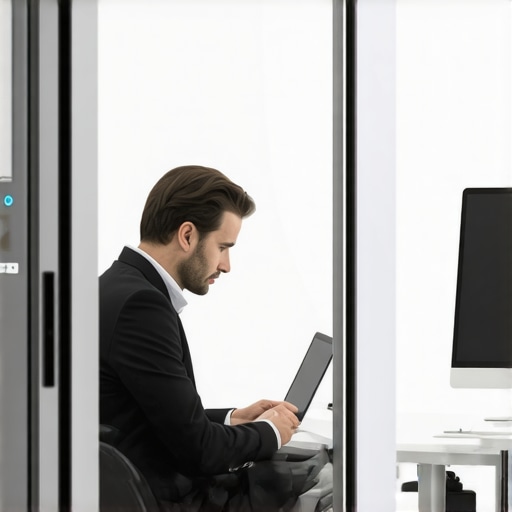
Silence is a Feature Not a Bug
Acoustic privacy is the one thing most founders overlook until it’s too late. You can have the most beautiful walnut desk in the world, but if you can hear your neighbor chewing ice, you aren’t going to ship code. I learned this the hard way during a series of investor pitches; every time a door slammed in the common area, my pitch deck lost its momentum. Understanding the acoustic secrets of high end conference rooms isn’t just for architects; it’s for anyone who needs to keep a secret or close a deal.
Kill the Echo Before it Kills the Deal
If your meeting room sounds like a cavern, you’re losing authority. We eventually realized that why your startup needs a dedicated phone booth for calls is because human psychology links ‘clear sound’ with ‘clear thinking.’ When we added heavy drapes and acoustic clouds to our main meeting space, the vibe changed instantly. People stopped whispering and started speaking with conviction. I remember a specific negotiation where the client was visibly tense because of the ‘zoo effect’—everyone outside was watching us. The moment we pulled the acoustic shades, their body language relaxed and we closed the deal in twenty minutes. You don’t need a massive budget; you need to prioritize the ear over the eye. Focusing on how a room feels and sounds is the fastest way to turn a chaotic startup hub into a professional powerhouse.Everyone tells you that to be a ‘real’ startup, you need a conference room that looks like the bridge of the Starship Enterprise. They insist on 80-inch touchscreens, integrated surround sound, and smart-glass that tints at the touch of a button. But here is the contrarian truth: the more tech you cram into a room, the more likely you are to look like an amateur. I’ve watched million-dollar deals stall because a founder spent twenty minutes trying to find the right HDMI adapter or struggling with a proprietary wireless display app. In my experience, the problem with tech-heavy meeting rooms that nobody knows how to use is that they create a high-stakes friction point exactly when you need to be fluid. If you can’t start your presentation in under thirty seconds, the technology isn’t an asset; it’s a liability. You’ve traded your professional authority for a glitchy UI.
Does Your Meeting Room Technology Actually Cost You Deals?
It’s a sophisticated trap that many founders fall into. We equate ‘expensive hardware’ with ‘professionalism,’ but cognitive load theory suggests otherwise. When your brain is occupied with troubleshooting a ‘smart’ light switch or a lagging video feed, you aren’t focused on the nuance of your investor’s body language or the subtle shifts in their tone. A study published in the Journal of Environmental Psychology highlights that ‘technological complexity’ in workspaces can actually increase cortisol levels before a high-stakes task even begins. This is why why a neutral meeting space leads to more honest feedback; it removes the ego of the ‘high-tech’ environment and focuses on the human connection. I’ve learned that a simple, reliable setup with a standard cable beats a glitchy, futuristic one every single time. 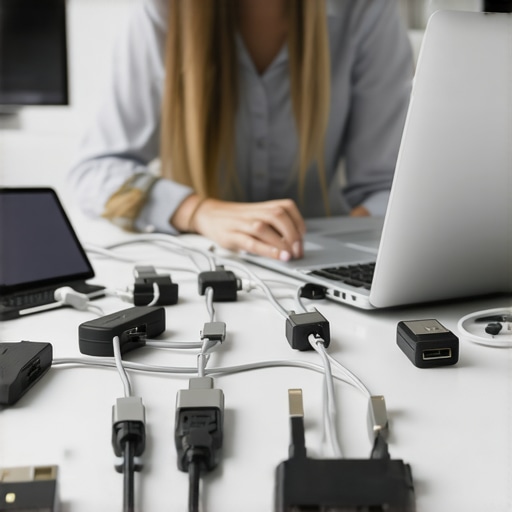 The ‘Oops’ factor often comes disguised as a great deal. Many founders get seduced by the ‘community’ aspect of shared spaces and fall for the ‘All-Inclusive’ sales pitch. But let me be honest: why the all-inclusive membership is usually a trap is because you end up subsidizing the amenities you never use. You’re paying for the kombucha on tap and the rooftop yoga while your team is actually struggling with a spotty Wi-Fi connection and a lack of soundproof zones. Instead of buying into the hype, look for the ‘hidden’ psychology of the space. For example, the hidden psychology of circular meeting tables can do more for your team’s hierarchy-free brainstorming than any five-figure smart-board ever could. Another common mistake is the premature ‘nesting’ instinct. I see teams of three signing two-year agreements for ten-person offices because they ‘plan to scale.’ Don’t do it. The reality is that why you shouldnt sign a lease for your first 10 employees is all about maintaining agility. Your needs, your culture, and your spatial requirements will change three times before you even hire employee number five. Locking yourself into a rigid physical footprint is the fastest way to kill your burn rate. Have you ever fallen into this trap? Let me know in the comments.
Don’t Buy Tech You Can’t Fix with a Restart
I’ve seen founders drop five figures on integrated room systems that require a certified technician just to change the volume. If you can’t troubleshoot it in thirty seconds, it doesn’t belong in your startup. My go-to rig is embarrassingly simple: a high-end portable Jabra speakerphone and a reliable 4K webcam on a tripod. This setup allows me to transform any quiet corner into a professional studio. I use this specific combo because it bypasses the internal audio of most ‘smart’ rooms which are often poorly maintained. When you learn the checklist for a glitch free hybrid board meeting, you realize that portability equals power. I can move my ‘office’ to wherever the light is best or the noise is lowest without being tethered to a static desk.
How do I maintain team focus when we’re all in different pods?
The biggest challenge of the ‘un-office’ is the loss of the peripheral awareness you get in a shared room. To combat this, I rely on a ‘Digital Anchor’—a dedicated iPad in every rented suite that stays locked on our team’s project dashboard. It’s a physical reminder that even if we are spread across a hub, we are working on the same mission. You have to be intentional about how to keep your focus when the coworking hub is packed. For us, that means ‘Red Zone’ hours from 10 AM to 1 PM where communication is for emergencies only and deep work is the law. We also rely heavily on the role of community managers in the modern workspace to act as our air traffic controllers; if a room’s Wi-Fi is acting up or a neighbor is being disruptive, they are the first ones I text, not my CTO. 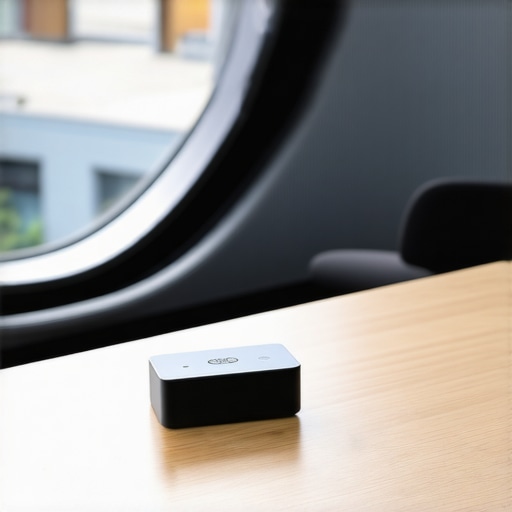
The Future of the Office is Smaller Than You Think
I predict we are heading toward a ‘Hub-and-Spoke’ reality where the 50-person office dies, replaced by five 10-person micro-hubs scattered across the city. This isn’t just a hunch; it’s a response to the specialized environments required for high-level technical work. According to researchers at the Acoustical Society of America, speech intelligibility—and by extension, effective collaboration—suffers dramatically in large, reverberant halls. By shrinking our physical footprint into acoustic-controlled pods, we actually increase our intellectual output. I’m already seeing the rise of AI-driven spatial tools that will soon tell you exactly which desk in a coworking space has the best oxygen levels and lowest decibel counts at any given hour. If you want to stay ahead of the curve, stop looking for more square footage and start looking for higher-quality environments. My challenge to you: next time you have a high-stakes call, skip the main lounge and book a dedicated, soundproof booth. Record the audio, listen back, and tell me you don’t sound significantly more authoritative. It’s the easiest professional upgrade you’ll ever make.
What I Learned After Blowing My Budget on Glass Walls
I spent far too much time worrying about the ‘look’ of my office rather than the output it facilitated. The biggest lightbulb moment was realizing that true collaboration is rarely visible from the lobby. High-performance teams do not need to be seen; they need to be heard—and only by each other. I have found that the true ROI of a premium coworking membership is not in the free beer, but in the access to quiet, secure, and private zones where real strategy happens. If you are looking for a new home for your team, focus on finding a workspace that doesnt feel like a tech prison and prioritize the psychological safety that only a solid door can provide.
My Survival Kit for the Modern Workspace
To keep my sanity and my output high, I rely on a few non-negotiable tools. First, I always keep a copy of Cal Newport’s Deep Work on my desk; it is a constant reminder that my value lies in my focus, not my visibility. Second, I never rely on the built-in tech of a random suite. You have to how to vet a conference room for client facing speed by bringing your own reliable audio—like a portable Jabra speaker—and testing the signal strength before the client arrives. Lastly, I advocate for how to maximize productivity in your startups conference rooms by 0245 pm by scheduling ‘dark hours’ where the office goes silent to let the complex coding and writing tasks take flight.
#IMAGE_PLACEHOLDER_E#
Take Back Your Right to Focus
Your startup is not a stage, and you are not a performer. The next time you are scouting for coworking or meeting rooms, ignore the aesthetic lobby and head straight for the phone booths and the private suites. Check the sound dampening. Test the door handles. Ensure that the space works for your brains, not just your social media feed. Building something great requires a fortress of solitude, even in the middle of a bustling city. Go find your fortress. Have you ever felt like you were ‘performing’ productivity because of your office layout? Let me know your experience in the comments below.