

I remember sitting on the floor of my living room, surrounded by three laptops and two interns who were literally using my coffee table as a desk. We were growing, which was exhilarating, but we were also dangerously close to the edge of our seed funding. In a moment of pure panic, I almost signed a soul-crushing three-year lease just to get us some chairs and a professional atmosphere. I thought that’s what “real” founders did. But looking at the numbers, that lease was a cage. That was my first big mistake—believing that physical permanence equaled professional legitimacy. Instead, I took a gamble on flexibility and discovered that how we cut our office rent in half without losing talent was actually by refusing to rent an office at all. Today, I want to show you exactly how we scaled from three to fifteen people using nothing but day-passes and a bit of strategic planning.
Ditch the Heavy Rent Before It Strangles Your Growth
The traditional office model is a relic of a time when we didn’t have the cloud or high-speed fiber. When I was starting out, I fell for the trap of thinking why your startup needs a real door, not just a glass wall was more about prestige than productivity. I was wrong. Every dollar spent on a security deposit for a space that sits empty on weekends is a dollar not spent on your product or your people. We found that by utilizing day-passes, we could access high-end startup success secrets like choosing the perfect conference room only when we actually needed it for a board meeting or a deep-dive sprint. It turns out, according to a report by Deskmag, flexible workspace demand is projected to grow by 15% annually through 2025 as companies realize the massive ROI of ditching fixed overhead. I realized I was overpaying for square footage I never used, and making the switch was like taking a weight off my chest.
Can a “Real” Company Actually Function on Day-Passes?
I know what you’re thinking because I thought it too: won’t the team feel disconnected? Honestly, it was the opposite. We became more intentional about our time. Instead of the mid-afternoon slump that happens in a stale, windowless office, we chose spaces that kept us energized. If you’ve ever felt that your team’s productivity drops after two PM, you know how much the environment matters. We used day-passes to hop between the best hubs in the city, which kept things fresh and actually acted as a recruiting tool. Have you ever felt like your current office setup is holding your team back rather than helping them thrive? I’d love to hear if you’ve been tempted to sign a long-term lease just because you thought you “had” to. My experience taught me that why you shouldn’t sign a lease for your first 10 employees is the most valuable lesson a solo founder can learn before they start hiring.
The first thing I learned is that not all day-passes are created equal. You cannot just walk into the nearest building with a coworking sign and expect your team to be productive. You need a system. I started using the checklist for your first office space search even though I wasn’t buying—I was just vetting locations for the week. We would book Deep Work Mondays at a quiet library-style hub and Collab Wednesdays at a high-energy space with more open lounges. We learned the hard way that how to get the best desk in a hot desking setup involves arriving twenty minutes before the doors even unlock to secure the cluster of desks near the power outlets and natural light.
Turn Your City Into a Giant Flexible Campus
Operating without a fixed address means your campus is as large as your city’s transit map. We treated different coworking brands like different departments. One was for heavy coding, another for sales calls, and a third for creative brainstorming. This prevented the stagnation of seeing the same four walls every day. To make this work, I had to be ruthless with our schedule. If you do not plan your location based on the task at hand, you are just a group of people wandering around with laptops. We used digital calendars to sync where the ‘office’ would be for the next 48 hours, ensuring everyone knew exactly where to plant their feet.
Use Neutral Ground to Close Your Biggest Deals
Last year, we had a potential Series A lead flying in from San Francisco. My living room was definitely off-limits, and a loud coffee shop would have signaled amateur hour. I spent three hours scouting locations to vet a conference room for client-facing speed and professional acoustics. We ended up in a sleek, glass-walled room on the 40th floor of a downtown hub. Because I understood why your investor pitch needs a neutral meeting room, we looked like a twenty-person operation with a high-end headquarters, even though we only owned that space for exactly four hours. It cost us two hundred dollars instead of a ten-thousand-dollar monthly overhead, and we walked out with a signed term sheet. Using premium meeting rooms on-demand gives you the prestige of a legacy firm without the soul-crushing debt.

Build a Mobile Infrastructure That Never Fails
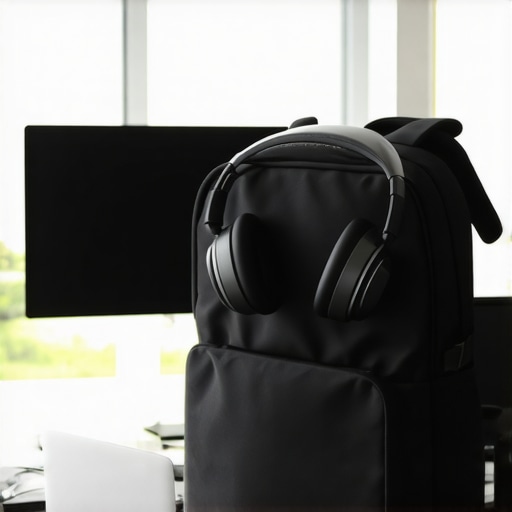
When you are nomadic, tech is your only real lifeline. I have seen founders crumble because they did not know what to do when the office wi-fi goes down mid-pitch. We started carrying our own backup hotspots and invested heavily in the truth about noise-canceling headphones in shared spaces for every developer on the team. It is about building a mobile HQ kit that fits in a backpack. Every team member had a standardized go-bag with extra chargers, privacy screens, and ethernet adapters. If a space got too loud or the air conditioning failed, we did not complain; we just moved to the next hub on our list. This mobility forced us to keep all our data in the cloud and our processes perfectly documented. In the end, the ability to pivot our physical location in thirty minutes made us more resilient than any company tied to a traditional lease.
Most founders treat a conference room like a stage—a place to perform and impress. But after five years of nomadic scaling, I’ve realized that the ‘prestige trap’ is the fastest way to kill a deal. Everyone says you need the glossiest, most central boardroom to look legitimate, but in my experience, those ‘aquariums’ are often the worst places to actually get work done. When you are visible to every passerby in a coworking hub, your team’s psychological safety drops. You stop taking risks in your brainstorming because you’re subconsciously aware of the audience outside. That is why I started looking for why a neutral meeting space leads to more honest feedback; it removes the performance and focuses on the problem.
Stop Paying for the Prestige Trap of Glass Walls
The ‘Oops’ factor I see most often is the obsession with high-tech bells and whistles. I once booked a ‘Premier Innovation Suite’ for a final-round VC pitch, thinking the integrated tablet controls and ceiling-mounted arrays would make us look like the future. Instead, we spent fifteen minutes wrestling with a proprietary dongle while the investors checked their watches. We fell victim to the problem with tech-heavy meeting rooms that nobody knows how to use. Now, I prioritize simplicity over flash. If a room doesn’t have a reliable HDMI backup and a physical whiteboard, I won’t book it. You need to focus on how to prep for a high-stakes board meeting by ensuring the environment is a tool, not a hurdle. Have you ever fallen into this trap where the ‘smart’ tech made you look anything but? Let me know in the comments.

How Do You Pick a Room That Actually Drives Decisions?
It isn’t just about the screen; it’s about the air and the echoes. A common mistake is ignoring the acoustic secrets of high-end conference rooms. If you are in a room with too much glass and hard surfaces, the ‘slap back’ echo makes everyone tired faster because their brains have to work harder to filter out the noise. This is backed by environmental psychology. For instance, a study by researchers at the University of Minnesota found that physical environment, specifically ceiling height, significantly impacts cognitive processing—higher ceilings encourage the kind of abstract, creative thinking essential for a pivot, while lower ceilings are better for the granular detail-work of a contract review. We started using the hidden psychology of circular meeting tables to break down the hierarchy during these sessions, making sure every intern felt empowered to speak as loudly as the CTO.
The Secret to Avoiding the Mid-Pitch Tech Meltdown
If you are looking to vet a conference room for client-facing speed, you need to check the Wi-Fi handoff. Most coworking spaces have great ‘general’ internet, but the moment you move into a shielded conference room, the signal can drop. I’ve seen million-dollar demos fail because the founder didn’t realize why your startup needs a better first impression than a spinning loading icon. We now run a ‘stress test’ ten minutes before every call, ensuring our mobile hotspots are active as a failover. We’ve learned that how to maximize productivity in your startup’s conference rooms often comes down to the things you can’t see, like air filtration and reliable bandwidth, rather than the brand of the chairs.
After three years of jumping between the city’s top hubs, I realized that the secret to staying professional isn’t the mahogany table—it’s the tech in your backpack. I used to rely on whatever equipment the coworking space had lying around, but after one too many pixelated investor calls, I built what I call the ‘Nomadic HQ Kit.’ I don’t just recommend tools; I live by them. For example, I stopped using standard USB-C dongles and switched to a dedicated OWC Thunderbolt Dock. Why? Because most cheap hubs can’t handle the data throughput of a 4K webcam and an ethernet connection simultaneously, leading to the exact lag you’re trying to avoid. If you want to know how to deal with technical glitches during a remote board call, the answer usually starts with your hardware, not the building’s Wi-Fi. We also mandated that every hire gets a high-end pair of cans because the truth about noise-canceling headphones in shared spaces is that they aren’t just for music—they are a psychological signal to the rest of the room that you are ‘off-limits’ for small talk.
Invest in the Invisible Infrastructure That Protects Your Data
As we scaled to fifteen people, our biggest worry wasn’t desk space—it was security. When you are hopping between public networks, you are a target. We treat every coworking connection as compromised. This is why why endpoint protection services matter more when your team is hybrid than when you are behind a corporate firewall. According to the Cisco Hybrid Work Index, nearly 60% of employees are accessing corporate resources from unmanaged networks, which is a nightmare for a growing startup. We use a zero-trust architecture where every device must be verified every single time it connects. It sounds like overkill until you realize that one data breach could cost you your entire Seed round. It is about maintaining that professional edge even when you’re sitting in a lounge chair. I always tell my team that we need to be prepared for anything, whether that means knowing how to handle a server crash from a temporary desk or just having a backup for our backup.
How do I keep a nomadic team from losing their shared culture?
Maintenance isn’t just about software updates; it is about the ‘human’ maintenance of your team. Without a dedicated water cooler, you have to be aggressive about scheduling ‘non-work’ time. We use our saved rent money to host a monthly deep-dive session in a high-end suite, focusing on transforming meeting rooms into collaboration hubs where the goal isn’t a KPI, but a connection. I’ve found that the checklist for a glitch-free hybrid board meeting works just as well for team-building: clear objectives, reliable tech, and a space that doesn’t feel like a sterile hospital room. We also use a shared digital map where everyone drops their ‘favorite’ quiet spots for deep work, which keeps the team feeling like they are part of an exclusive club rather than just remote workers. If you don’t intentionally build these touchpoints, the flexibility of coworking will eventually turn into isolation.
The Future of the Office is a Disappearing Act
I predict that by 2026, we won’t even talk about ‘coworking’ anymore; we will just talk about ‘work.’ The technology in the future of conference rooms in startup ecosystems will likely involve AI-driven environmental controls that adjust the lighting and acoustics based on the specific participants in the room. We are already seeing spaces experiment with spatial computing, where a tiny four-person room can feel like a massive auditorium via AR. My advice? Don’t get too attached to any one physical location. The winners of the next decade will be the founders who can move their entire operation in an afternoon without losing a single beat of productivity. Start by auditing your current ‘mobile’ setup—if you can’t be fully operational within ten minutes of hitting a new desk, you’re still tied to the old world. My challenge to you: Go buy a 10-foot, heavy-duty HDMI cable and a dedicated portable hotspot today. Stop relying on the ‘house’ gear and start bringing your own reliability.
Hard Truths I Learned While Building a Company in Other People’s Offices
I used to think that a long-term lease was a badge of honor, but it is often just a financial anchor. One of the biggest lightbulb moments was realizing that the real impact of office design on your teams mental health is far more significant than the prestige of your street address. We also discovered that the nightmare of trying to host a workshop at a coffee shop isn’t just about the bad Wi-Fi; it is about the loss of professional authority when you cannot control the environment. In a shared space, you have to master the founders guide to networking without the awkwardness to turn a simple desk rental into a strategic advantage. Most importantly, my experience taught me that why your startup needs a real door, not just a glass wall usually comes down to the psychological need for privacy during high-stakes pivots.
The Mobile Founder’s Survival Kit
To stay lean, you need a setup that guarantees consistency no matter which hub you book. First, invest in silence; knowing the truth about noise-canceling headphones in shared spaces is essential for developers and founders alike. Second, keep your brand anchored; why your startup needs a physical presence in the city is about being where the capital and talent are, even if you do not own the floor. Finally, never book a room blind; I never skip the chance to vet a conference room for client-facing speed before a major pitch. I also keep a link handy for the business case for a month-to-month office lease to keep my board focused on growth rather than furniture.
#IMAGE_PLACEHOLDER_E#
Your Team Deserves Agility Over Architecture
The true strength of a company is not found in its bricks and mortar, but in its ability to adapt. By choosing a nomadic model, you are giving your team the power to work in spaces that truly inspire them. Whether you are booking a high-end conference room for a strategic retreat or using day-passes to find the best hub in the city, remember that your startup is an organism that needs to move to survive. Don’t let the prestige trap of a traditional office steal your runway. Have you ever felt like a long-term lease was a trap for your startup? Let me know in the comments below!