

I was sweating through my best button-down shirt, staring at the grain of my kitchen table while a venture capitalist blinked at me. We were sitting in a loud, cramped cafe because I thought my ‘scrappy’ startup vibe was charming. It wasn’t. The espresso machine shrieked every time I mentioned my burn rate, and I could see the investor’s eyes darting toward the door. I lost that deal, and it wasn’t because of my margins; it was because I looked like a kid playing business in a playground. [Image Placeholder]
Your Living Room is Killing Your Credibility
I learned the hard way that why a neutral meeting space leads to more honest feedback is a lesson best learned before the pitch, not after. When you bring an investor into your personal lair or a chaotic public space, you are asking them to ignore the mess and focus on the math. They can’t. Research published in the Harvard Business Review suggests that physical environments act as a ‘silent language,’ where subtle cues about professionality and stability can outweigh the actual words being spoken. I made the mistake of thinking my pitch was enough. It never is. You need to present a better first impression than a pile of mail on your counter or a barista shouting ‘Double Oat Latte’ in the background.
Is a fancy office actually worth the hype?
You might be thinking that investors should only care about the product, not the chair they are sitting in. In an ideal world, sure. But we don’t live there. A neutral, professional setting removes the ‘host-guest’ power struggle and the ‘distracted-by-laundry’ reality of a home office. It provides a level playing field where the focus stays on the deck. The 7 things investors look for in your physical workspace usually start with one question: Do you look like a safe bet? If you are pitching to VCs without a warm introduction, your environment has to work twice as hard to build trust. Have you ever felt that sinking feeling when an investor looks around your temporary setup and you realize you have already lost them? Transitioning from a garage to a professional hub is about more than just square footage; it is about psychological control.
Pick a Room That Does the Heavy Lifting for You
The first step is moving beyond the ‘any room will do’ mindset. Think of your meeting space like a stage set; if the set is falling apart, the audience won’t believe the play. You need to understand how to choose the perfect conference room for business success by looking for a space that balances professional weight with physical comfort. When I first started, I booked a windowless basement room for a Series A follow-up. Within twenty minutes, the lack of air and the harsh yellow glow made us all look like we were being interrogated by the feds. I could see the lead investor literally wilting in his chair. Now, I prioritize how to find a meeting room that actually has natural light because it keeps energy high and reduces that ‘trapped’ feeling.
Check the acoustics or prepare for distractions
Sound is a silent deal-breaker. If the walls are paper-thin, your pitch about proprietary tech will be punctuated by the accounting firm next door arguing about tax returns. You need to understand the acoustic secrets of high-end conference rooms—mainly that thick glass and soft surfaces prevent the dreaded echo. If you can’t hear your own thoughts, neither can they. #IMAGE_PLACE_HOLDER_B#
Kill the Technical Glitches Before They Kill the Pitch
Technology should be the invisible backbone of your presentation, not the star of a tragic comedy. I once spent fifteen minutes of a thirty-minute meeting trying to find an HDMI adapter while three partners from a top-tier firm watched me crawl under a table. It was the most expensive fifteen minutes of my life. That’s why you must learn how to vet a conference room for client-facing speed at least twenty-four hours in advance. Don’t just trust the brochure; physically go there and plug in your laptop.
Avoid the trap of over-engineered tech
Sometimes, high-tech is actually a hindrance. We’ve all seen the problem with tech-heavy meeting rooms that nobody knows how to use. If the room requires a PhD to lower the blinds or switch inputs, you are in danger. Stick to spaces that offer ‘plug-and-play’ simplicity. If you are doing a hybrid call, make sure you have the checklist for a glitch-free hybrid board meeting ready. This includes knowing what to do when the office wi-fi goes down mid-pitch. Always have a mobile hotspot on standby and your deck downloaded locally.
Master your visual presentation
Finally, consider your framing. If you are on a video call, choosing the right lighting for your next video pitch is non-negotiable. You want to be the focus, not a silhouette in front of a bright window. Before you even sit down, how to prep for a high-stakes board meeting involves a full dry run of the equipment. I now carry a ‘pitch kit’ with every possible dongle, a backup mouse, and a printed copy of the deck. It is not paranoid; it is professional.But even with a perfect pitch kit, you can still fail if you ignore the psychological architecture of the room itself.
Stop Falling for the Glass Wall Aesthetic
Everyone tells you that transparency is the key to startup culture, so you book the sleekest glass-walled room in the hub. In my experience, this is a massive tactical error. While it looks ‘Silicon Valley chic,’ research from the Journal of Environmental Psychology has found that ‘visual noise’ and the feeling of being watched—often called the Panopticon effect—actually spikes cortisol levels and kills creative risk-taking. You want an environment where you can fail safely before you succeed publicly. That is why your startup needs a real door, not just a glass wall. If you are discussing a pivot or a sensitive hire, the last thing you need is a neighboring founder judging your facial expressions through the partition. I have seen deals go cold because the lead investor felt like they were in a zoo exhibit rather than a private war room.
Is your coworking membership actually a tax-deductible expense?
This is the question I get from every founder once they move past the ‘scrappy’ phase. The nuance here is crucial. While a dedicated office is generally straightforward, the IRS and other global tax bodies can be picky about ‘hot desking’ vs. ‘private suites.’ Understanding is your coworking membership a tax-deductible expense requires looking at how much of that space is used exclusively for business. It is not just about saving money; it is about professional stability. If you are turning a one-day desk rental into a tax write-off, keep your receipts as clean as your pitch deck. Mistakes here lead to audits that distract you from scaling. 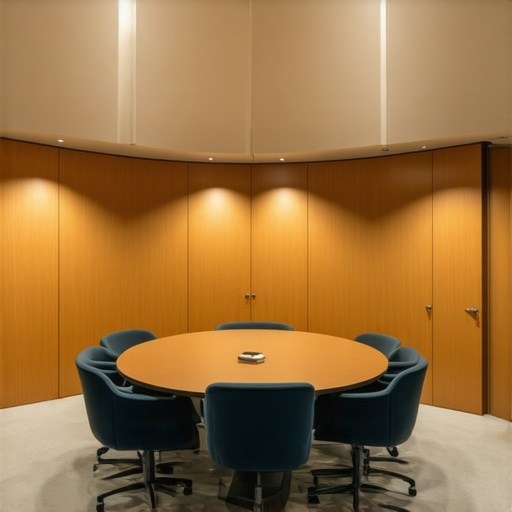
Why the Table Shape Matters More Than the TV Screen
Most founders spend hours testing the 4K monitor and zero seconds looking at the table. This is the ‘Oops’ factor that separates the veterans from the rookies. Rectangular tables enforce a hierarchy—the person at the ‘head’ is the boss. If you are trying to build a partnership, that power dynamic is toxic. That is why I have become obsessed with the hidden psychology of circular meeting tables. A round table signals equality and collaboration. On the flip side, if you are delivering a tough performance review or a high-stakes board report, you might actually want the authority of a rectangle. You also have to watch out for the truth about those ultra-cheap office memberships; they often cram you into spaces with mismatched furniture that subtly undermines your authority. Have you ever fallen into this trap of choosing style over psychological function? Let me know in the comments below. Before you sign anything, look for the ‘tech prison’ vibe. I have learned that finding a workspace that doesn’t feel like a tech prison is about balance. You need transforming meeting rooms into collaboration hubs where the tech stays out of the way. If the room feels like a server closet, your team’s energy will reflect that. Always prioritize the real impact of office design on your team’s mental health over the number of HDMI ports. After all, you are hiring humans, not robots.After I stopped crawling under tables for dongles, I realized that the best tech is the stuff that stays out of your way. I switched our entire setup to a dedicated hardware-software stack because ‘good enough’ is just a slow way to lose a client. I swear by the Logitech Rally Bar for one reason: it actually frames the speaker without making them look like they are in a surveillance video. When you are trying to maximize productivity in your startup’s conference rooms, you cannot afford to have your remote lead engineer feel like a second-class citizen. I also live by the DISCAS standard from AVIXA (the Audiovisual and Integrated Experience Association), which dictates exactly how big your screen needs to be relative to the furthest person in the room. If an investor at the back of the table has to squint to see your projections, you have already failed the clarity test.
How do I keep my meeting tech from rotting over time?
The secret is not just buying the expensive stuff; it is a ‘Sunday Reset’ for your workspace. Every Friday afternoon, my team does a five-minute ‘ping test.’ We check the HDMI leads, ensure the iPad controller is docked, and verify that the firmware has not updated itself into a digital coma. This is essential if you want to avoid handling the noise problem or technical lag when it matters most. 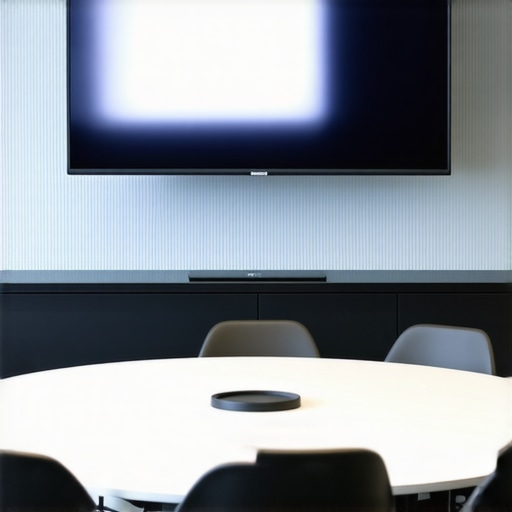 Software is the other half of the battle. I use Robin for room scheduling because it integrates with Slack, preventing those awkward ‘knocks on the glass’ that ruin a flow state. It is how you tell if a coworking space is just a glorified library or a real engine of growth. If the booking system is a paper sheet on the door, run. Looking ahead, I see the future of conference rooms in startup ecosystems moving toward ‘intelligent spatial awareness.’ We are talking about AI that adjusts the lighting based on the mood of the room or the time of day to avoid the mid-afternoon slump. For now, focus on the basics: great sound, a reliable booking tool, and a never-fail backup plan. Try this today: Go into your most-used meeting room and stand at the furthest corner. If you cannot read a 12pt font on the screen, your monitor is too small for your ambitions. Fix it before your next pitch.
The Unspoken Signals That Either Close Your Deal or Kill It
After a decade of pitching, I’ve realized that the room itself is a member of your founding team. If the room is too cold, people get defensive. If it’s too hot, they get sluggish. I now carry a small digital thermometer because the ‘feel’ of the space dictates the energy of the conversation. Another lightbulb moment? Always sit with your back to the most boring wall. You want the investors looking at you, not the distracting street traffic or a flickering hallway light. This is part of the startup success secrets choosing the perfect conference room that most founders overlook until they lose a lead. Position yourself so you can see the entrance without turning your head. It’s a primal comfort thing; you’ll feel more in control. Also, book the room for 15 minutes longer than you need. The stress of ‘running out of time’ is visible in your pupils, and investors can smell that desperation.
The Toolkit That Keeps My Pitches Glitch-Free
To stay sharp, I rely on a few specific tools that have never let me down. For booking and flow, I’ve seen how the true ROI of a premium coworking membership pays for itself in the quality of the on-site support staff alone. I also highly recommend studying the ‘Power of Presence’; it changed how I physically inhabit a boardroom. When it comes to the technical side, having a dedicated ‘pitch bag’ with every possible adapter is my safety net. If you are preparing for a major event, knowing how to host a demo day that investors actually attend starts with the hardware you trust. My personal go-to is a portable Jabra speaker for those moments when the built-in room audio fails—it’s pocket-sized and crystal clear.
Your Next Big Win Starts in the Right Space
Don’t let a cramped table or a flickering light bulb be the reason your vision stays on the drawing board. You’ve put in the work, built the product, and found the courage to ask for backing. Now, give your ideas the stage they deserve. Taking the time to master the secret to making a great first impression on a potential partner through your environment is the final polish on your professional armor. Whether you’re in a high-rise or a local hub, make that conference room work for you, not against you. If you have questions about specific setups, feel free to contact us for advice on finding your perfect fit. Have you ever had a meeting ruined by something as simple as a bad chair or a loud neighbor? Let me know your horror stories in the comments below!