

I sat there staring at the screen, my face turning a shade of bright red I didn’t know I was capable of. A potential investor had just Googled my ‘corporate headquarters’ and found a picture of my messy balcony and a bicycle chained to a rusty fence. It was 2018, and I thought I was being smart by saving a few hundred bucks on rent. In reality, I was practically begging people not to take me seriously. That moment was a wake-up call. I realized that where your mail lands says more about your business than your fancy pitch deck ever could. Whether you are hunting for innovative meeting rooms or just a place to receive a tax form, your address is your first handshake. Today, I’m going to save you from the same embarrassment I faced by breaking down exactly how to avoid the most common traps when picking your professional home base. We’re going to fix your presence so you can stop hiding behind a P.O. Box and start looking like the powerhouse you actually are. Have you ever felt that sinking feeling when a client asks for your office location? [IMAGE_PLACEHOLDER]
Stop letting your zip code sabotage your sales
I fell for the real cost of working from my dining table early on, and it wasn’t just about the distractions. It was about the lack of separation. I mistakenly used my home address for my LLC registration. Not only did I lose my privacy—congratulations, your home is now public record—but I also signaled to the world that I was a ‘hobbyist’ rather than a professional enterprise. Your startup needs a better first impression than a residential zip code can provide. According to the U.S. Small Business Administration (SBA), professional consistency across your registration, website, and physical presence is a key factor in building long-term brand equity and securing credit. I learned the hard way that saving fifty dollars a month on a virtual office meant losing thousands in potential contracts because I looked ‘too small’ to handle the big jobs.
Does anyone really care about a physical building anymore?
You might be thinking that in a world of remote work, nobody cares about a physical building. I thought the same. But the truth is, your startup needs a physical presence in the city to satisfy banks, insurance companies, and even search engine algorithms. If you try to use a UPS store or a standard PO box, Google will often flag your business listing, making you invisible to local searchers. It’s a technical nightmare that most founders don’t see coming until their traffic drops to zero. Making the move from a garage to a professional hub isn’t just about ego; it’s about the logistics of credibility. Don’t let a cheap shortcut become the reason your next big lead decides to keep looking. We need to talk about why your current setup might be holding you back and how to pivot before it costs you another client.
Audit your registration before a lead audits you
The very first thing you need to do is treat your business like a private investigator would. Open a private browser and search for your own business name. If the first thing that pops up is a Google Street View of your garage or a local shipping store with a wall of metal boxes, you have a credibility leak. I once lost a promising partnership because the other founder thought my ‘office’ was a vacant lot next to a gas station. The logic of choosing a flex office over a 5-year lease becomes crystal clear when you realize that for a fraction of the cost, you get a premium address that actually exists on a map. Start by updating your Secretary of State filings. This is the bedrock of your professional identity. Once that is updated, move to your Google Business Profile. If you are worried about the transition, follow the move from garage to office growth roadmap to ensure you don’t miss any digital breadcrumbs that might lead clients back to your kitchen table. 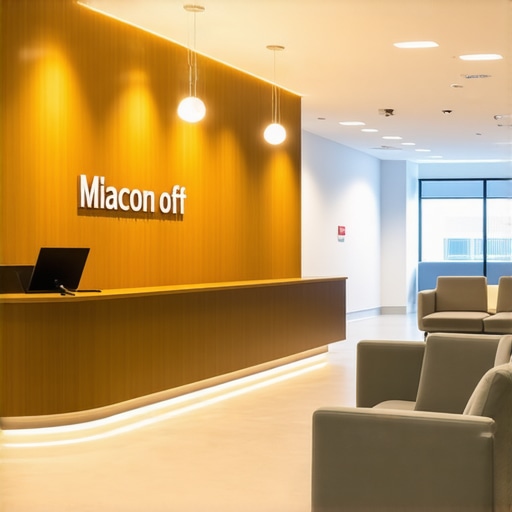
Vet the space for more than just aesthetics
Don’t get blinded by the neon signs and free beer taps. When I was looking for my second location, I toured a place that looked like a tech dream but functioned like a nightmare. It was essentially a ‘glorified library’ where everyone was too afraid to speak, which is useless if you actually need to close deals. You must know how to tell if a coworking space is just a glorified library before you hand over a deposit. Walk the floor during peak hours—usually Tuesday at 10:00 AM. If it is pin-drop silent, you won’t feel comfortable taking a sales call. If it’s a circus, your developers will never find their flow state. I learned to look for ‘zones.’ You want a place that understands why your startup needs a real door, not just a glass wall for those sensitive HR or strategy sessions. Also, keep a sharp eye out for 7 red flags to watch for during a space tour, like outdated equipment or a community manager who doesn’t know the members’ names.
Test the technical backbone of your potential new home
Nothing kills a pitch faster than a spinning loading icon. Before you sign anything, bring your laptop and run a speed test from the farthest corner of the room you’ll be using. You need to know how to test the wi-fi speed before you book that venue or office space because ‘guest Wi-Fi’ is rarely enough for a high-stakes demo. I once had a server crash during a client presentation because the shared bandwidth couldn’t handle the load. Since then, I always ask about redundancy. If the primary fiber line goes down, is there a backup? If you are doing deep work, you might need the truth about noise-canceling headphones in shared spaces: they are a band-aid, not a solution. The real solution is a workspace designed with acoustics in mind. Remember, why investors prefer meeting in professional settings isn’t just about the coffee; it’s about the assurance that the environment won’t fail during the conversation. Make sure the space offers a seamless booking system so you can book a meeting room in under sixty seconds when a last-minute lead calls.Let’s dig deeper into the actual economics of these professional spaces. Most founders are blinded by a simplified ‘all-in’ price tag, assuming it makes their financial planning easier. However, why the all-inclusive membership is usually a trap becomes painfully obvious once you realize you are paying a 30% premium for ‘lifestyle perks’ you are too busy to ever use. Instead, why founders are trading square feet for better network access is the real trend to watch. They aren’t buying a desk; they are buying entry into a high-value ecosystem. I once saw a founder spend two thousand dollars on a private office that felt like a dungeon, when a five hundred dollar dedicated desk in a high-traffic area would have led to three new strategic partnerships. It is all about the true ROI of a premium coworking membership, which should be measured in revenue-generating connections, not square footage.
The ‘flexibility’ trap that catches scaling startups
Then there is the common ‘oops’ factor of flexibility. People hear the word ‘flex’ and assume it means ‘on-demand’ without consequences. I have seen too many friends get burned because they didn’t vet the truth about flexible membership cancellation policies. Some spaces require a sixty-day notice for a supposedly ‘month-to-month’ agreement. That is not flexibility; that is a short-term cage. If your startup is scaling fast, you need to know how to choose an office that supports your scaling speed without locking your limited capital in a legal stalemate. Furthermore, the real cost of a free coffee meeting in these common areas is often your focus. If you are constantly being interrupted by ‘vibrant’ networking while trying to push code, your productivity is being taxed. This is exactly why developers need quiet zones to reach deep flow rather than just a trendy open-plan bench.
Does your office actually need a pool table?
Many founders fall for the ‘Google-effect,’ assuming that asking does your office actually need a pool table is a serious question about building a culture. In reality, it is often a distraction. A study published in the Journal of Environmental Psychology suggests that overly ‘playful’ office environments can actually increase cognitive load and decrease the quality of work for employees performing complex tasks. Your environment should reflect your work, not a playground. This nuance extends to how you gather. I have noticed that why your meeting room layout is killing participation often stems from using traditional, confrontational seating. Transitioning to the hidden psychology of circular meeting tables can fundamentally shift the power balance in a room, encouraging quieter team members to speak up.  When you choose a space, look past the neon signs and analyze the geometry. Have you ever felt that a room was working against you during a pitch? Have you ever fallen into this trap? Let me know in the comments.
Don’t let your tech stack crumble when you scale
Scaling a startup in a shared environment isn’t just about adding more desks; it is about ensuring your infrastructure doesn’t become a bottleneck. In my own experience, I found that why your hybrid team feels disconnected on Mondays often boils down to a lack of shared digital tools that bridge the gap between home and the hub. I personally stopped relying on ‘free’ Wi-Fi passwords and started using a dedicated travel router paired with a YubiKey for hardware-level authentication. I cannot stress enough why endpoint protection services matter more when your team is hybrid and floating between different IP addresses every day. According to research by the International Facility Management Association (IFMA), 70% of high-growth companies now prioritize hardware-level security over simple software solutions when operating in shared environments. If you aren’t protecting your team’s hardware at the source, you are leaving your proprietary data in the hands of the coworking space’s local admin.
How do I maintain team culture in a shared office over time?
Maintaining focus and a unique company identity is the hardest part of long-term coworking. You have to learn how to manage office politics when you share a floor with other startups, which is a skill they don’t teach in business school. I have dealt with everything from ‘fridge raiders’ to dealing with the guy who talks too loud in the common area. The secret is to establish ‘home base’ rituals that happen regardless of which conference room you book that day.  You also need a contingency plan for the inevitable technical hiccups. Knowing how to handle a server crash from a temporary desk is the difference between a minor delay and a total collapse of your development sprint. Consistency comes from your processes, not the walls around you.
Prepare for the rise of the micro-hub
Looking ahead, I predict we are moving away from the era of ‘mega-offices’ and toward a future where why small satellite offices are beating the mega-headquarters becomes the standard for every Series A startup. We are seeing a massive shift where why suburban flex spaces are the new downtown office, allowing teams to live where they work while keeping a premium mailing address. This ‘hub-and-spoke’ model is the ultimate scaling tool. My advanced tip for you today: Before you commit to your next month, run a multi-point stress test on the venue’s infrastructure. Don’t just check the speed once; use a tool like ‘PingPlotter’ to see if there is jitter that might ruin your video calls. Go and how to test the wi-fi speed before you book that venue right now and see if your current space actually delivers what they promised on the brochure.
Hard Truths from Three Years in the Trenches
When I first moved out of the garage, I thought I was just buying a desk. I was wrong. I was buying a reputation. One lesson that hit me hard was the risk of accidental oversharing; you really need to learn how to keep your startups trade secrets in an open office before you accidentally pitch your next big feature to a competitor over the communal microwave. Another realization? Don’t let the shiny coffee machines distract you from the contract. You need to understand why you shouldnt sign a lease for your first 10 employees and instead keep your overhead agile. Lastly, I learned that culture isn’t a poster on a wall—it’s the proximity of your team during high-stakes moments. The physical environment affects your mental health more than any ‘wellness app’ ever could. If your team feels like they are working in a warehouse, their output will reflect that lack of care.
The Toolkit That Saved My Sanity and Sales
To help you navigate this transition, I’ve put together my personal list of essentials. First, look for a space that understands 7 things investors look for in your physical workspace—it’s about more than just the art on the walls, it’s about signaling stability and growth. Second, I swear by a 24/7 keycard; learn how to get the most out of a 24-7 access membership so you aren’t limited by ‘banker hours’ when a global client needs a late-night Zoom. Finally, remember that your startup needs a physical anchor for its remote team to maintain that cultural glue. Without a hub, your team is just a collection of freelancers on a Slack channel.
Build a Legacy Worth More Than Your Lease
Professionalism is a choice you make every morning. Choosing the right environment isn’t about luxury; it’s about giving your vision the respect it deserves. Whether you’re hunting for innovative meeting rooms or a permanent corner office, the goal is to stop being a ‘founder in hiding’ and start being a leader in your community. Your startup is real—it’s time your office reflected that. Every meeting you take in a professional setting is a brick in the foundation of your brand’s future. What’s the number one deal-breaker for you when touring a potential new workspace? Let me know in the comments below!