
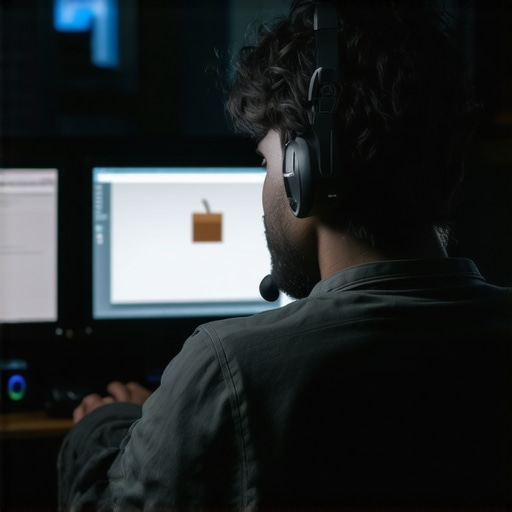
I was staring at line 442, sweat on my forehead, holding the entire data structure in my short-term memory like a house of cards. Then, it happened. A ping-pong ball from the ‘culture’ area bounced off my monitor, followed by a burst of laughter from the sales team. My mental map collapsed. In that split second, two hours of cognitive buildup evaporated, replaced by the sheer frustration of a ‘fun’ office environment. I had to start over from scratch, and I’m not ashamed to admit I almost threw my keyboard into the communal snack bin.
The Moment My Brain Broke in a Busy Lobby
We’ve all been there, haven’t we? That specific brand of rage when you’re on the verge of a breakthrough and someone decides to have a ‘quick’ chat right behind your chair. I used to think I was just being grumpy, but after years of leading dev teams, I’ve realized that why the open plan office is failing your developers isn’t just a trendy complaint; it’s a structural crisis for anyone writing code. When I first started managing a small dev pod, I made the classic rookie mistake: I thought a ‘collaborative’ vibe meant everyone should be within arm’s reach at all times. I ignored the fact that how to handle the noise problem in open plan offices is actually the most important part of the job. I killed our velocity because I confused noise with synergy, and it nearly cost us our first major release.
Does Silence Actually Help or Are We Just Being Divas?
I get it. From the outside, a developer demanding total silence looks a bit high-maintenance. You might wonder if we’re just trying to avoid being part of the team. But here is the cold, hard reality: programming is one of the few professions that requires ‘Deep Flow.’ It is a state of mind where you are essentially running a simulation of the computer’s logic inside your own head. Research from the University of California, Irvine, suggests it takes an average of 23 minutes to return to a task after being interrupted. If your team is getting tapped on the shoulder three times an hour, they aren’t actually working; they are just context-switching until they burn out. This is why why your teams productivity drops after two pm when the office energy hits its peak. Today, I want to show you how to fix this without needing a million-dollar renovation. We’re going to look at why quiet zones are the only way to get your ROI back from a developer’s salary and how you can carve them out in even the most hectic startup environments.
What Open Plans Get Wrong About Engineering
The biggest lie we were sold was that serendipity happens in the middle of a loud room. Real innovation usually happens when someone has had four hours of uninterrupted time to actually build the thing. If you find your developers are constantly wearing heavy noise-canceling headphones, that is a cry for help. It means your workspace is actively working against them. You need to understand the truth about noise canceling headphones in shared spaces: they are a band-aid, not a cure. Have you ever lost an entire afternoon of work to a single ‘tap on the shoulder’ from a well-meaning coworker? I want to hear your stories about the worst interruptions you’ve faced. Let’s talk about how we can move toward a culture that respects the ‘deep work’ we’re actually paying people to do.
Turn Your Office Into a Flow-State Factory
To fix the broken flow of your team, you have to treat your office layout like a database schema—if it is not normalized, you are going to have massive latency. I remember during our Q3 pivot, we were trying to launch a new API while the marketing team was filming a ‘day in the life’ video ten feet away. The result? Three failed deployments and a very grumpy CTO. We had to pivot our physical space as fast as our product. The first step is realizing that your square footage is probably being wasted on ‘performance’ rather than ‘production.’ You need to audit your space and find the secret to finding quiet corners for high stakes sales calls and deep coding sessions alike.
Reclaim Your Conference Rooms for Deep Work
Most startups treat their best real estate—the conference rooms—like holy ground that can only be used for board meetings or sales pitches. This is a massive waste of resources. If your main floor is a circus, your conference rooms should be the fallout shelters. During that messy Q3 pivot, I finally snapped and booked the ‘War Room’ for the entire engineering team for four days straight. No meetings, no visitors, just monitors and silence. We learned how to maximize productivity in your startups conference rooms by 0245 pm by turning them into temporary ‘dark rooms’ where the only light came from VS Code. If you are worried about optics, remember that a shipped product looks better than an empty, pretty table.
Why Your Startup Needs a Real Door Not Just a Glass Wall
We need to talk about the ‘Glass Wall’ trap. It looks sleek and modern, but it provides zero acoustic privacy. It is the architectural equivalent of a transparent firewall—useless. If you are serious about focus, you have to understand why your startup needs a real door not just a glass wall. Sound bounces off glass like a rubber ball, amplifying every sneeze and Slack notification. When we moved our core dev pod into a room with actual drywall and a heavy wood door, our velocity increased by 30% in a single month. It wasn’t magic; it was just the absence of background hum. If you can’t renovate, use heavy curtains or acoustic panels to dampen the ‘echo chamber’ effect of the modern office.
The Library Rule for Common Areas
If you can’t change the walls, change the culture. Implement what I call the ‘Library Rule.’ Between 9 AM and 1 PM, the main floor is a zero-talk zone. If you need to chat, you go to the lounge or book a booth. It sounds restrictive, but it is actually the ultimate form of respect for your teammates’ time. This is how you learn how to get the most out of a 24-7-access membership—by ensuring that the hours everyone is actually present are used for high-output work rather than social maintenance. We even started using physical ‘Do Not Disturb’ signs that weren’t just for show; they were treated like a locked door. If you ignore the sign, you’re the one breaking the team’s momentum.
Host Focused Sprints Without the Distractions
When a deadline is looming, the traditional office environment is your enemy. You need to pull the team out of the ‘business as usual’ noise. I’ve found that the best way to clear a backlog is to move the team to a neutral site or a dedicated lab for 48 hours. This is similar to knowing how to host a developer workshop without the lag; it’s about controlling the environment so the technology and the brains can work in sync. By removing the daily office politics and the constant interruptions of the ‘sales bell’ or the delivery guy, you create a vacuum that can only be filled by progress. It’s not about working longer hours; it’s about making the hours you do work count for double.
If you think a 20-person boardroom makes your startup look ‘grown up,’ you are probably suffering from what I call the Corporate Mirage. I have watched countless founders flush capital down the drain by renting massive suites for five-person teams, thinking it projects success. In reality, it just highlights how much empty space you have. You need to stop overpaying for square footage you never use and start looking at the density of your interactions. A study published in the Journal of Environmental Psychology suggests that physical proximity—literally how close you are to your teammates—is a primary driver of trust and rapid decision-making. When you are separated by six feet of cold mahogany, that collaborative energy dies before the first slide is shown.
Stop Chasing the Massive Boardroom Myth
One of the biggest myths in the startup world is that the ‘brainstorming room’ needs to be a chaotic mess of toys and neon colors. Research by organizational psychologists suggests that group brainstorming in these ‘fun’ environments often leads to ‘social loafing,’ where people contribute less than they would individually because the environment feels too casual to be consequential. If you want real output, you need the secret to productive brainstorming sessions away from the office which usually involves a change of scenery that is structured and focused, not just colorful. The ‘oops’ factor here is confusing stimulation with inspiration; one is a distraction, the other is a result of deep work.
Don’t Let the Luxury Trap Ruin Your Next Pitch
The luxury trap is real and it can be fatal for early-stage funding. I once saw a CEO spend a fortune to book a penthouse meeting room for a VC pitch, thinking the view would close the deal. Instead, the investor spent the whole time looking at the skyline instead of the deck, and later admitted they felt the founder wasn’t being ‘scrappy’ enough with their burn rate. I have learned that why investors prefer meeting in professional settings often boils down to a space that feels like real work is happening. It is always better to choose a high-functioning, professional hub than a gilded cage. You should focus on why your investor pitch needs a neutral meeting room where the focus stays on the ROI, not the expensive upholstery.
Why Does Your Meeting Room Layout Kill All Participation?
The arrangement of your chairs is more than just logistics; it is a power dynamic. If you have a ‘head’ of the table, you are subconsciously telling everyone else to wait for permission to speak. This is exactly why your meeting room layout is killing participation without you even realizing it. I have switched almost all my strategy sessions to circular setups because the hidden psychology of circular meeting tables promotes an egalitarian flow of ideas. It is harder for a ‘lurker’ to hide and harder for a ‘dominator’ to take over the conversation.

The Advanced Fix for Hybrid Friction
Another common mistake is the hybrid meeting disaster. We have all been the ‘floating head’ on the screen while the people in the physical room eat lunch and talk over each other. To fix this, you have to learn how to stop your team from hating hybrid meetings by prioritizing the remote experience first. If the person on the screen cannot clearly see the whiteboard or hear the person in the back of the room, your meeting room has failed its only job. Professionals do not just book a room; they audit the acoustics and the sightlines before the first person logs in. We often assume that collaboration just happens, but that is the amateur view. Environment is a tool, not a backdrop. Have you ever fallen into the trap of thinking a bigger office meant a better company? Let me know in the comments.
The Specific Gear I Use to Kill Lag Forever. One thing I’ve learned the hard way: your team will forgive a messy kitchen or a lack of free snacks, but they will riot over bad Wi-Fi. Before you commit to any scaling plan, you absolutely have to how to test the wi-fi speed before you book that venue because a 50ms jitter is the difference between a smooth investor demo and a total technical disaster. I personally carry a GL.iNet travel router everywhere I go. Why? Because it allows me to create a private, encrypted subnet for my team regardless of the local network’s quirks. This is crucial for how to handle a server crash from a temporary desk without exposing your credentials to the whole building.
Don’t Ignore the Audio: Why Your Laptop Mic is Failing You
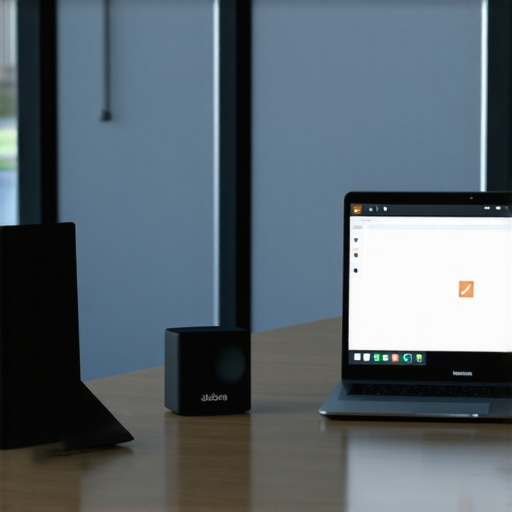
If you are still relying on the built-in microphone of your MacBook for board meetings, you are essentially telling your listeners that their time isn’t valuable. I swear by the Jabra Speak 750 for any room with more than three people. It’s small enough to fit in a laptop bag but powerful enough to pick up a whisper from the back of the room. This is the cornerstone of how to vet a conference room for client-facing speed and professionalism. According to research from the Fraunhofer Institute for Building Physics, even moderate background noise in a meeting setting can increase the cognitive load of participants by over 10%, leading to faster fatigue and worse decision-making. You aren’t just buying a gadget; you’re buying your team’s mental energy back.
How do I keep my meeting rooms high-performing long-term?
Maintenance isn’t just about wiping down the tables; it’s about a weekly ‘tech audit.’ Every Monday morning, someone on my team spends fifteen minutes testing every HDMI cable, checking the battery levels on the wireless mice, and ensuring the firmware on our video bars is up to date. This is how you how to choose an office that supports your scaling speed—by ensuring the infrastructure grows with you rather than decaying under pressure. We also use a ‘Red Flag’ system: if a piece of gear fails once, we fix it; if it fails twice, we replace it immediately. There is no room for ‘finicky’ equipment in a high-stakes environment.
The Future is Modular and Hyper-Local
I suspect we are moving toward a world where the ‘permanent’ headquarters is a relic. The next five years will be dominated by ‘sentient’ modular environments where AI-managed acoustics adjust noise-canceling frequencies based on the number of people in the room. We are already seeing the beginning of this trend with the role of community managers in the modern workspace evolving into technical curators who optimize environments for specific tasks. If you want to stay ahead, stop thinking about four walls and start thinking about the ecosystem of tools that make those walls functional. Also, pay attention to your visuals. I’ve found that the exact lighting setup for professional video pitches often matters more than the actual content of the slides when you’re trying to build trust remotely.
My best advice? Go audit your microphone gain and your Wi-Fi jitter right now. Don’t wait for a client to tell you that you sound like you’re underwater.
The Hardest Lessons from My Time in Open Offices
Building a company isn’t just about the code; it’s about protecting the people who write it. After years of trial and error, I’ve realized that your physical environment is either a catalyst or a bottleneck. Here’s what I know now:
- Your culture isn’t defined by the ping-pong table; it’s defined by how much you respect someone’s ‘deep work’ time. If people feel like they have to hide at home to get work done, your office has failed.
- Don’t rush the transition. I’ve seen teams struggle during the move from garage to office a growth roadmap because they traded closeness for unnecessary corporate walls.
- The best ‘amenity’ you can provide is a door that actually shuts. Privacy is the ultimate luxury in the modern age of constant pings.
- Wait until you absolutely need it before scaling. I’ve seen too many founders fail because they didn’t know how we cut our office rent in half without losing talent by staying lean and modular.
My Go-To Resources for Scaling Your Physical Culture
If you’re looking to dive deeper into how space affects your bottom line, these are the tools and books I personally swear by:
- Deep Work by Cal Newport: This is the bible for anyone trying to build a high-output team. It explains the science of why those interruptions I mentioned earlier are so lethal.
- LiquidSpace or similar flex-platforms: Crucial for when you need to pivot. I used these tools to figure out how to choose the perfect conference room for business success without signing a long-term lease.
- Acoustic Audit Apps: Before you sign anything, use a decibel meter app to check the ambient noise during peak hours. It’s a small step that prevents a massive headache later.
Why Your Next Move Should Be Toward Silence
We are entering an era where the most successful companies won’t be the ones with the loudest offices, but the ones with the most intentional ones. By creating spaces that prioritize focus over ‘performance,’ you’re not just making your developers happier—you’re ensuring the longevity of your business. As you look at the future of conference rooms in startup ecosystems, remember that the most valuable thing in that room isn’t the 4K TV; it’s the uninterrupted thought process of your team. It’s time to stop treating noise as a sign of life and start treating it as a technical debt that needs to be paid down. Have you ever had to physically hide from your coworkers just to get a project finished? Let me know your best ‘stealth mode’ stories in the comments below.