

I remember the Great Bagel War of 2022 like it was yesterday. I had just stepped out of a grueling three-hour session in one of our innovative meeting rooms, and I was starving. I saw a box of fresh bagels in what I thought was the common kitchen. It was not. It belonged to the fintech firm across the hall. The death stares I received for the next week every time I passed their glass door were enough to make me want to work from a park bench. I felt like I had violated some sacred, unwritten treaty. That is the thing about sharing a floor with three or four other ambitious teams—it is not just about sharing the Wi-Fi. It is a delicate dance of territory, ego, and resources. One day you are high-fiving in the lobby; the next, you are passive-aggressively timing how long their intern has been camped out in the only phone booth. I have made every mistake in the book, from accidentally leaving my gear on a shared desk to being that guy who talks too loud on a sales call. Today, I am going to help you skip those awkward hallway encounters and actually make the most of your neighbors. Have you ever felt like you were walking on eggshells just to grab a cup of coffee?
Keep the Peace or Lose Your Focus
When you first move in, you are usually too focused on how to scale your office space to notice the social dynamics. But the reality is that your startup’s culture does not exist in a vacuum. It is constantly bumping up against the company next door. I learned the hard way that ignoring the etiquette of the office fridge can actually damage your brand’s reputation faster than a bad Yelp review. Research from the Harvard Business Review shows that people in shared environments report levels of thriving that are nearly a point higher on a seven-point scale than those in traditional offices—but only when the community vibe is right. If you are constantly battling over who gets the best sunlight or dealing with the perpetual talker at the next desk, that thriving quickly turns into surviving.
Is Sharing a Floor Actually More Trouble Than Its Worth?
I get it. You are paying for a professional environment, and sometimes it feels like a chaotic dorm room. You start wondering if you should have just stuck to a private suite or stayed in your garage. But I promise you, the networking potential and the lower overhead are worth the occasional stolen yogurt. The trick is leaning on the role of community managers to mediate the big stuff while you handle the small stuff with grace. My early mistake was trying to win every interaction. I wanted the best seats and the first pick of the meeting rooms. I did not realize that in a shared ecosystem, if your neighbors lose, you eventually lose too. We are going to look at how to set boundaries that stick, without looking like the office grinch.The first thing you need to realize is that a shared floor is like a high-speed highway; if you do not know the merge rules, you are going to cause a pile-up. You have to treat your neighbors like collaborators, not competitors for the microwave.
Stop the Meeting Room Hunger Games
If you want to avoid the awkward knock on the glass while your client is mid-sentence, you need a system that goes beyond the booking app. I started a five-minute buffer rule for my team. We book ten minutes extra and leave five minutes early. It sounds like wasted money, but it is actually insurance against making a bad impression. One time, I rushed into a room for a high-stakes VC call, only to find the previous team had left the HDMI cable tangled and the whiteboard covered in their Q4 secrets. It was a disaster. Now, we treat the room like a campsite: leave it better than you found it. Before you host your next big session, look at how to choose the perfect conference room for business success to ensure the tech actually matches your needs. Also, always run through the checklist for a glitch-free hybrid board meeting before the guests arrive. 
Protect Your Data From the Neighbors
You also need to think about the invisible walls. In a shared hub, your Wi-Fi signal is basically a public broadcast. I learned this the hard way when a neighboring intern accidentally AirPlayed their Spotify to our TV during a sensitive demo. This is why endpoint protection services matter more when your team is hybrid or sharing a router. You are not just protecting files; you are protecting your professional image. Physical privacy follows the same logic. If you are discussing payroll, understanding why your startup needs a dedicated phone booth for calls becomes painfully obvious the second a stranger walks by with a latte while you are reading off salary numbers.
Ditch the DIY Conflict Resolution
When a conflict happens—and it will—do not go to war. I once had a dispute over a reserved parking spot that did not exist. Instead of leaving a passive-aggressive note on their windshield, I sat down with our community lead. I quickly learned the truth about community managers in coworking spaces: they are your best diplomats. They can handle the friction so you can focus on code. They are also the ones who can help you secure the quiet zones when you need to how to prep for a high-stakes board meeting. Realizing that why privacy is the new luxury in coworking helps you communicate your needs to them effectively without sounding like the office grinch.
Leave Your Desk Better Than You Found It
It is not just about the meeting rooms. Your daily presence sends a signal. If your team is constantly spilling over into the common walkways, you are signaling that you do not respect the ecosystem. I once tried to hold a strategy session in the lounge because our private suite felt cramped. Within twenty minutes, three other founders joined in, thinking it was an open brainstorming session. I lost my competitive edge because I did not respect the boundary of the room. Now, we use the common areas for light tasks and use how to maximize productivity in your startups conference rooms by 0245 pm to keep our high-level work where it belongs.Let’s dig deeper into what most founders get wrong. Everyone says you need the flashiest setup to impress investors, but in my experience, the “Latency Tax” of over-engineered spaces is a silent killer. We’ve all seen it: a brilliant founder spends the first ten minutes of a crucial pitch wrestling with a proprietary tablet just to share their screen. This is the problem with tech-heavy meeting rooms that nobody knows how to use. It breaks your momentum and makes you look technologically illiterate, regardless of your actual skills. If you want to close a deal, simplicity is your best friend. A reliable, high-speed connection and why your seed round pitch needs a professional backdrop matter far more than a voice-activated espresso machine. 
Stop Letting High-Tech Features Slow You Down
Beyond the gadgets, there is a nuance most people miss: the geometry of your environment dictates the power dynamic in the room.
Can a Circular Table Actually Kill Your Deal?
While modern “collaboration hubs” love round tables because they feel inclusive, they can be a strategic nightmare for hard negotiations. According to the hidden psychology of circular meeting tables, a round setup suggests total equality and a lack of hierarchy. That sounds great in a brainstorm, but it is devastating when you need to lead a structured presentation or close a sale. For those high-stakes moments, a rectangular table provides a clear “head” of the table, allowing you to anchor the room’s attention and maintain authority. This is why the acoustic secrets of high-end conference rooms are often built around traditional layouts that favor a single speaker. Research from the Journal of Environmental Psychology suggests that defined physical spaces and clear boundaries actually increase a sense of psychological safety and focus, whereas ultra-transparent glass environments often trigger “performative” behavior where people are too distracted by being watched to be truly honest.
Why Glass Walls Are Often a Liability
This leads to the biggest “oops” factor I see: confusing aesthetic openness with actual collaboration. Many startups think they need that “fishbowl” aesthetic to look modern, but they eventually realize why privacy is the new luxury in coworking. If your neighbors can see your facial expressions during a difficult board meeting or a tense payroll discussion, you have lost your tactical advantage. You are not just there to look busy; you are there to build a competitive business. Furthermore, the noise levels in these “open” designs are often counterproductive. I have seen teams attempt to sync up at peak hours, only to be drowned out by the communal kitchen bustle, which is why 10 am is the worst time for a team sync if you are in a high-traffic zone. I have seen countless teams get so caught up in the “vibe” of the lobby that they forget why your startup pitch is falling flat in a coffee shop—it is because they lack the professional gravitas that only a controlled, private environment provides. If you are struggling with distractions, look into the acoustic fix for echoey conference rooms to reclaim your team’s focus. Have you ever fallen into this trap of choosing style over substance? Let me know in the comments.
I have spent far too many hours acting as an accidental IT guy because a dongle went missing or a booking app crashed. If you are serious about growth, you need to transition from the ‘scrappy startup’ phase to the ‘operational excellence’ phase. This starts with the software you use to manage your presence. I personally refuse to use any coworking hub that does not offer a robust digital interface for its members. Manual spreadsheets for room bookings are a death sentence for productivity; they lead to the very ‘Meeting Room Hunger Games’ I mentioned earlier. I use a specific integration between Google Calendar and our office management software that ensures my team never has to guess if a space is free. It is about removing friction before it even happens. When you are looking for your next spot, keep the checklist for your first office space search handy to ensure these digital amenities are already baked into the lease.
Ditch the Manual Spreadsheet Nightmare
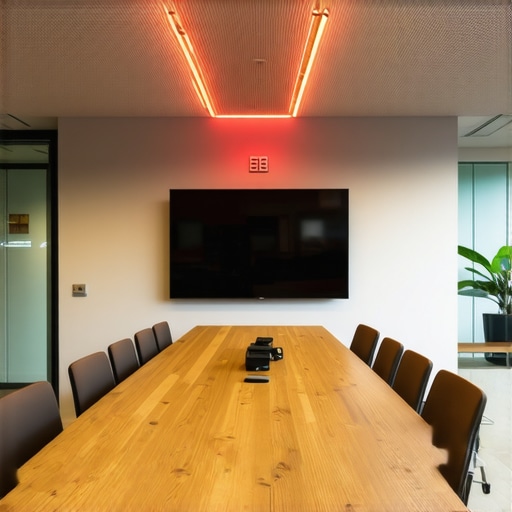
The biggest tool in my arsenal isn’t a fancy AI bot; it is a physical status light outside our most-used room. It turns red when a meeting is in progress and green when it is empty. It sounds simple, but it has saved us from dozens of interrupted pitches. I also recommend sticking to universal hardware. We use the Logitech Rally system because it works with every laptop my team brings in. According to the AVIXA (Audiovisual and Integrated Experience Association) standards for ‘Display Image Size for 2D Content,’ if your screen is too small for the furthest person in the room, you are wasting your time. I see so many founders ignore these technical basics only to wonder why their remote hires feel disconnected. If you want to stay effective, you must know how to maximize productivity in your startups conference rooms by 0245 pm before the afternoon slump hits your energy levels.
How do I maintain a productive workspace over time?
Sustainability in a shared environment comes down to a ‘leave no trace’ policy that actually has teeth. Every Friday, I do a quick sweep of our area. If we have outgrown the ‘hot desk’ lifestyle, I am the first to suggest how to scale your office space without breaking the lease. Sometimes that means adding a few private desks; other times, it means realizing why we moved our engineering team to a private suite to protect their focus. You have to be willing to audit your space needs every quarter. If you feel the walls closing in, it is already too late. Looking ahead, I predict that the future of conference rooms in startup ecosystems will involve spatial audio and AR-ready whiteboards that bridge the gap between physical and digital presence perfectly. My best advice? Treat your workspace like a product—iterate on it, gather feedback from your team, and don’t be afraid to pivot to a new layout if the current one is killing your flow. Try this today: Audit your last five meetings and ask your team if the physical environment helped or hindered the outcome. You might be surprised by the answer.
The Survival Secrets of a Coworking Veteran
Sharing a floor is as much about social intelligence as it is about business strategy. Over the years, I’ve realized that reputation is your team’s strongest asset. If you are known as the firm that cleans the whiteboard and offers a spare charger, people will go out of their way to help you when your Wi-Fi fails mid-pitch. I also learned that the role of community managers isn’t just about handing out keys; they are the gatekeepers of the ecosystem’s peace and your first line of defense against distractions. Don’t wait for a conflict to introduce yourself. A quick hello in the kitchen can turn a potential noise complaint into a collaborative partnership. You should always aim to how to get the most value out of your coworking membership by building these bridges long before you need a favor.
The Toolkit for a Frictionless Workspace
I don’t believe in over-complicating things, but there are a few non-negotiables for my team. We always keep the checklist for your first office space search handy whenever we look at expansion options to ensure we don’t repeat old mistakes. For our day-to-day, we rely on universal AV setups that don’t require a degree in engineering to operate. If you want to avoid the mid-day dip, I highly recommend reading up on how to maximize productivity in your startups conference rooms by 0245 pm. It’s a game-changer for keeping the energy high during back-to-back sessions. My personal favorite resource is the ‘Acoustic Secrets’ guide because it explains why some rooms just feel “better” for deep work, allowing us to choose spaces that actually boost our output rather than draining it.
Design a Future That Your Team Loves
At the end of the day, your office—or even just your dedicated desk—is the launchpad for your dreams. Whether you are transforming meeting rooms into collaboration hubs or just trying to navigate your first month in a shared hub, remember that the environment should serve your goals, not the other way around. Don’t be afraid to take up space, set firm boundaries, and invest in the physical comfort of your team. The right meeting rooms and the right neighbors can turn a struggling startup into a market leader. Go out there and build the culture your business deserves, one respectful interaction at a time. What is the one “unwritten rule” of your current office that every newcomer should know? Share your best office etiquette stories in the comments below!