
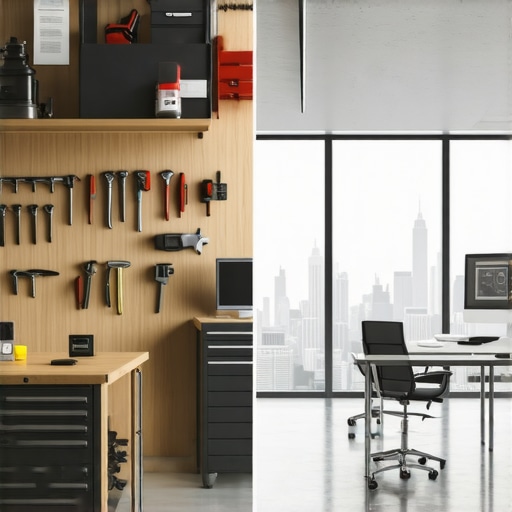
I’ll never forget the sound of my neighbor’s leaf blower interrupting a high-stakes pitch call. I was hunched over a card table in my garage, sweating because the insulation was non-existent, trying to convince a partner that we were a “top-tier” operation. It was a joke. The moment I had to explain why there was a stack of old recyclables in the background of my Zoom call, I knew the DIY dream was hitting a hard wall. Moving your operation out of the house isn’t just about ego; it’s about survival and creating a space where actual growth happens.
Stop Pretending the Kitchen Table is a Boardroom
We all love the myth of the “garage startup,” but the reality is messy, distracting, and honestly, a bit unprofessional when you’re trying to close six-figure deals. My biggest mistake early on? I waited far too long to make the move from a garage to a professional hub because I was terrified of the overhead. I thought I was being “lean,” but I was actually just being small-time. I once missed out on a key partnership because the guy didn’t think we were “stable” enough. It stung, but it was the wake-up call I needed to stop treating my business like a hobby.
Is a dedicated workspace actually worth the hype?
You’re probably worried about the “rent trap.” I get it. Every dollar spent on a desk is a dollar not spent on development or marketing. But there’s a massive psychological shift that happens when you walk through a real door. Research shows that physical workspace quality directly impacts team cohesion; in fact, a study by the Harvard Business Review suggests that face-to-face interactions are the most important predictor of a team’s success. You just don’t get that same energy over a Slack channel while you’re wearing pajama bottoms.
The Growing Pains You Can’t Ignore
When you reach five or six employees, the “distributed” model starts to fray at the edges. I found that choosing an office that supports your scaling speed is much better than grabbing the first cheap lease you find. I once signed a three-year lease for a windowless basement that we outgrew in eight months. It was a legal nightmare to get out of. Instead, you need to look for startup success secrets like flexible memberships that grow with you. Have you hit that point yet where you’re embarrassed to give out your “business address” because it’s a PO Box? Tell me if you’ve been there, because that was my exact turning point. We’re going to map out how to avoid the “glorified library” trap and find a place where you actually get work done.
Don’t Buy More Square Footage Than You Actually Need
The biggest trap for a growing team is signing a long-term lease based on who you think you’ll be in two years. I fell for this early on. I signed for ten desks when there were only three of us, thinking the energy of empty chairs would somehow manifest as motivation. It didn’t; it just bled our runway dry while we sat in a cavernous, lonely room. Instead, you need to stop overpaying for square footage you never use and focus on flexibility. Think of your physical workspace like cloud computing—pay for what you use today, with the ability to scale up your “RAM” or desk count tomorrow as your hiring plan actually materializes.
The Difference Between a Tech Hub and a Library
Not all shared spaces are created equal, and choosing the wrong vibe can kill your momentum. Some spots are basically quiet zones where you’ll get shushed for answering a phone call or having a quick brainstorm with a developer. That is a productivity killer for a high-growth, high-communication startup. You have to learn how to tell if a coworking space is just a glorified library before you drop a deposit. Look for dedicated “phone booths” and designated loud zones where the hum of business is encouraged. If the community manager looks annoyed when people actually talk to each other, run the other way.
Audit Your Infrastructure Before You Commit
You can have the coolest ergonomic chairs and a designer lobby, but if the internet drops the moment three people join a video call, the space is worthless.  I learned this the hard way during a critical demo day. We were showing off a low-latency tool to a potential lead, and the “premium” Wi-Fi lagged so hard they thought our software was broken. It was humiliating. Now, I never sign a contract or a membership agreement without knowing how to test the wi-fi speed before you book that venue. Don’t just take the manager’s word for it; bring your laptop, run a speed test during peak hours, and check for signal dead zones in the corners.
Plan for the Worst-Case Scenario
Infrastructure isn’t just about speed; it’s about redundancy. What happens when the main router fries right before your quarterly review? Or when the HDMI cable in the main suite is missing ten minutes before a board meeting? You need to know how to handle technical glitches during a remote board call before they happen. Always carry a dongle kit and have a personal backup hotspot ready. A professional environment doesn’t eliminate problems; it just gives you better tools and a more stable environment to solve them quickly.
Treat Your Conference Room Like a Stage
When you finally bring a client or an investor in, the room isn’t just a place to sit; it’s a physical manifestation of your brand’s professionalism. If the table is sticky, the lighting is flickering, or the chairs are mismatched, that’s exactly what they’ll remember. I once lost a potential partnership because the “conference room” I booked was basically a closet with a glass door next to a noisy breakroom. The smell of burnt popcorn and the sound of a microwave beeping ruined my entire pitch. That taught me to how to vet a conference room for client-facing speed and aesthetics. Also, pay attention to the geometry of the room. Believe it or not, why your meeting room layout is killing participation is a real psychological issue—circular tables invite collaboration and shared energy, while long rectangles often create a rigid hierarchy that can stifle the very innovation you’re trying to showcase.
Stop Chasing the Ping Pong Table Illusion
Everyone talks about the ‘culture’ of a startup like it’s defined by the craft beer on tap or the arcade games in the lobby. I’m here to tell you that’s a distraction. When you’re in the trenches, those things are just overhead that slows you down. Before you sign that lease, you need to be honest: does your office actually need a pool table? In my experience, most founders use these perks to mask a lack of fundamental workflow. I fell for the ‘all-inclusive’ pitch once, only to realize that why the all-inclusive membership is usually a trap is because you’re essentially subsidizing a gym and a rooftop garden that your engineers are too busy to ever visit. Focus on what moves the needle: ergonomic chairs, silent zones, and lightning-fast infrastructure.
Why the Open Plan Office is Secretly Killing Your Code
There is a massive common belief that tearing down walls creates ‘synergy.’ It doesn’t. For any role that requires deep work, like software engineering or data analysis, the open plan is a disaster. It is exactly why the open plan office is failing your developers. They aren’t collaborating more; they are just wearing bigger noise-canceling headphones to drown out the marketing team’s sales calls. A study published in the British Journal of Psychology found that noise in open-plan offices can reduce cognitive performance by up to 66%. If you want your team to actually ship product, you need to prioritize silence over ‘vibes.’
Does Your Physical Address Really Matter to VCs?
I get asked this by every first-time founder. The short answer? Yes, but not for the reason you think. It’s not about the prestige of the zip code; it’s about signaling stability and operational maturity. There are 7 things investors look for in your physical workspace, and ‘coolness’ is usually at the bottom of the list. They want to see that you’ve created an environment where talent can stay focused. If you’re pitching a high-stakes deal, having a professional base shows you’ve moved past the ‘hobbyist’ phase and are ready to manage real capital.
Trade Your Glass Walls for Real Security
The modern aesthetic loves glass, but glass doesn’t offer privacy. If you’re discussing IP, scaling strategies, or fundraising, you need more than a transparent box. This is why why privacy is the new luxury in coworking. I’ve seen sensitive data leaked simply because a competitor in the same building walked past a glass wall and saw a whiteboard filled with a new product roadmap.  You have to master how to keep your startups trade secrets in an open office, which often means realizing that why your startup needs a real door not just a glass wall is a matter of corporate security, not just status. Have you ever fallen into the trap of choosing aesthetics over actual privacy? Let me know in the comments below.
Stop Relying on Luck and Build a Real Tech Stack
Once you’ve moved past the card-table-in-the-garage phase, the battle shifts from space to stability. I’ve realized that a professional environment is only as good as the tools that sustain it. If you’re still using your laptop’s built-in webcam for six-figure pitches, you’re essentially showing up to a black-tie event in flip-flops. I personally swear by a dedicated hardware kit that travels with me to every booking. I never go into a high-stakes meeting without my own lighting rig; knowing the exact lighting setup for professional video pitches can be the difference between looking like a basement dweller and a venture-backed founder. I also carry a portable Wi-Fi 6 router to create my own private subnet, because relying on shared ‘Guest’ networks is a security gamble I’m no longer willing to take.
How do I maintain workspace sanity over a three-year growth spurt?
Maintenance isn’t just about cleaning the whiteboard; it’s about managing the social and technical debt that accumulates as you scale. As your team grows, the friction of shared environments increases. You’ll find yourself needing to navigate how to manage office politics when you share a floor with other startups while keeping your own culture intact. Long-term results come from setting boundaries early. We implemented a ‘silent Wednesday’ rule where no one is allowed to book the common area for calls, forcing everyone into the private booths to preserve the deep-work environment. It’s a simple tool, but it prevents the burnout that usually happens when a startup tries to grow in a chaotic, loud space.
Why I Spend More on My Network Security Than My Desk
If you are operating in a hybrid or coworking capacity, your biggest long-term risk is data leakage. According to the U.S. General Services Administration (GSA) P-100 facilities standards, acoustic privacy is one of the most frequently failed metrics in modern office design. This is why I advocate for ‘acoustic fencing’ technology—software that uses AI to strip out background noise—before you ever hop on a call. Without it, you’re just one loud neighbor away from a disaster. You need to proactively learn how to stop your team from hating hybrid meetings by investing in high-quality omnidirectional microphones that actually pick up everyone in the room, not just the person closest to the laptop.
Looking Ahead to the Era of Modular Offices
I predict that the ‘fixed office’ is a dying breed. Within the next five years, we will see a shift toward hyper-modular environments where walls move based on real-time occupancy data. We are already seeing the first signs of the future of conference rooms in startup ecosystems, where AI sensors adjust lighting and CO2 levels to keep participants awake during long sessions. The winners won’t be the companies with the longest leases, but the ones with the most agile infrastructure. My advice? Try this: Next time you book a space, run a full technical audit using a packet sniffer to see how many devices are competing for bandwidth. If it’s over 50, that’s your cue to find a more exclusive tier of service.
Lessons Bought With Real Blood and Missed Deadlines
The most expensive mistake I ever made wasn’t a bad hire or a failed marketing campaign; it was staying in the ‘garage phase’ for six months too long. I stayed because I was addicted to the zero-dollar overhead, but I ignored the hidden costs of broken focus and lost credibility. When we finally moved our engineering team to a private suite, we realized that four walls and a door weren’t a luxury—they were a catalyst. Privacy is often the first thing founders sacrifice, yet it’s the one thing that allows your team to stop performing and start producing. I’ve also come to realize that endpoint protection services matter more when your team is hybrid than the quality of the espresso machine. Security is the foundation of professionalism; without it, you’re just a group of people sharing a Wi-Fi password.
The Toolkit That Actually Moves the Needle
If you’re serious about the transition, you need to stop looking at amenities and start looking at utility. I swear by a few specific ‘hacks’ to make shared spaces work: First, master the schedule by learning how to get the most out of a 24-7 access membership—utilizing the ‘off-peak’ hours for high-intensity deep work can give you a competitive edge. Second, understand why your startup needs a better first impression; sometimes that means booking a premium room just for the thirty minutes a client is in the building. Finally, always have a ‘grab-bag’ of adapters, backup hotspots, and your own high-end webcam to ensure technical parity regardless of the venue’s age.
Build a Space That Matches Your Ambition
Transitioning from a solo founder at a kitchen table to a leader in a professional hub is the ultimate test of your commitment to growth. It’s about more than just finding a desk; it’s about signaling to your team, your investors, and yourself that you are ready for the next level. When you maximize productivity in your startups conference rooms, you aren’t just holding meetings; you’re building a culture of excellence. Don’t be afraid of the overhead—be afraid of staying small. The most innovative meeting rooms that boost startup creativity are the ones where your team feels empowered to take risks and speak freely. Have you hit the ‘garage wall’ yet, or are you still finding ways to make the home office work for your scaling team? Let me know your biggest workspace hurdle below.