

I was sitting in my car at 6:45 PM on a Tuesday, staring at the glowing logo of our startup on the office window, and I felt a pit in my stomach. Inside, our office manager was finishing up a day of organizing a kitchen that nobody used and waiting for packages that could have been sent to a locker. My team? They were all at home, or at a local cafe, or in innovative meeting rooms across the city. I was spending $15,000 a month on a ‘home base’ that felt more like a museum. I realized then that I wasn’t running a tech company; I was running a high-end storage unit with a full-time curator. That was the day I decided to fire our office manager—not because they weren’t great, but because the role itself had become a relic of a pre-hybrid world. We didn’t need a gatekeeper for an empty gate; we needed a way to be mobile, lean, and actually collaborative.
The Day I Realized Our Lease Was a Security Blanket
I made a massive mistake early on by equates ‘office’ with ‘legitimacy.’ I thought if we had a dedicated receptionist and a mahogany-clad lobby, investors would take us more seriously. Instead, I just burned through our seed round faster. I spent more time discussing the brand of sparkling water in the fridge with our office manager than I did discussing our product roadmap. It was a distraction. When we finally made the leap to a flex-only model, we realized that your startup doesn’t need a dedicated receptionist yet to be professional. In fact, our clients were more impressed when we met them in high-energy, professional hubs than in our quiet, lonely suite. The shift wasn’t just about saving money; it was about survival. According to a recent McKinsey Global Institute report, office occupancy has stabilized at levels 30% lower than pre-pandemic norms, proving that the traditional ‘command and control’ center is fading. We were just late to the party. Have you ever looked at your monthly rent check and wondered if you’re just paying for a very expensive ego boost?
Is ditching the front desk actually a recipe for chaos?
The biggest fear I had—and maybe you do too—was the logistics. I worried about who would sign for the legal docs or how we would handle package deliveries without a permanent front desk. It turns out, there’s an app or a service for all of that now. By moving into a shared ecosystem, we inherited a professional infrastructure without the overhead. We started scaling a hybrid team without a corporate HQ, and suddenly, my time (and my budget) opened up. We stopped managing plumbing and started managing people. If you’re on the fence, let me tell you: the ‘chaos’ of not having an office manager is nothing compared to the ‘chaos’ of a high burn rate. We even found that the move to a dedicated desk in a coworking space gave our core team more focus than our private office ever did. We even moved our quarterly reviews to a neutral offsite to keep things fresh. This was the first step in a complete culture overhaul that I can’t wait to break down for you.
Stop Paying for Empty Chairs and Cold Coffee
The first step in my ‘office divorce’ was a brutal line-item audit. I looked at our expenses and realized we were paying $400 a month just for a premium water service and another $200 for ‘office supplies’ that mostly consisted of high-end pens that walked out the door in pockets. To start your own lean transition, you need to learn how to save money on office amenities your team doesn’t use. We treated the office like a security blanket, but in reality, it was a heavy anchor. I sat down with my co-founder and we categorized every ‘essential’ task the office manager handled. It turned out 80% of those tasks were automated or could be outsourced for a fraction of the cost. If you are still paying for a lease just because you think you ‘should’ have one, you are burning fuel that could be spent on product development or customer acquisition.
Solve the Package Problem Without a Receptionist
The biggest hurdle for me was the simple stuff: who signs for the mail? I felt like we needed a gatekeeper for our physical existence. We didn’t. We switched to a digital mail service and realized how to handle package deliveries without a permanent front desk staff is actually a solved problem. This also allowed us to maintain a premium business address without the five-figure lease, keeping our brand looking sharp while our overhead plummeted. We found that the logistics of a ghost office are actually easier to manage than the logistics of a physical one because everything is tracked digitally by default. No more hunting for a missing FedEx envelope in a pile of junk mail; I get a notification on my phone and decide whether to have it scanned or forwarded.
The Smell Test for High-Stakes Meetings
Once we went mobile, we had to get serious about where we actually did work. You can’t just ‘hot desk’ forever and expect high-level output. I learned the hard way that the truth about hot desking is that it is great for emails but terrible for deep work. When we needed to ship code, we booked a dedicated space. I remember my first board meeting after the downsizing; I tried to save money by booking a tiny corner spot. Within ten minutes, three of us were sweating, and my CTO had his laptop on his knees because the table was the size of a pizza box. I learned then that the two-pizza rule for booking the right size meeting room is non-negotiable. You need a space that fits the gravity of the conversation. If it is a strategy session, you need the difference between a standard meeting room and a real war room to be clear. You also have to become an expert on the environment. I now have a mental checklist to how to pick a meeting room that doesn’t smell like old carpet before I ever invite a client.  Everyone tells you that a conference room is just four walls and a table, but that is the first lie of the corporate real estate industry. If you think the most expensive room in the building is the best one, you are likely falling for what I call the ‘Vibe Trap.’ I have seen founders spend $200 an hour on a glass-walled suite only to have their pitch ruined because they didn’t know why your conference room needs better technology and fewer cables. In the high-stakes world of seed rounds, a five-minute delay while you hunt for an HDMI-to-USB-C adapter isn’t just a technical glitch; it is a signal that you aren’t prepared for the big leagues.
Can the height of the ceiling actually change how your team thinks?
This isn’t just ‘interior design’ fluff; it is science. Research published in the Journal of Consumer Research suggests that ceiling height significantly affects cognitive processing styles. High ceilings—typically 10 feet or more—encourage ‘relational’ and ‘abstract’ thinking, which is exactly what you need for brainstorming. Low ceilings, conversely, foster ‘item-specific’ and ‘concrete’ focus, making them ideal for detailed coding sprints or budget reviews. This is precisely why your team is more creative in a room with high ceilings. If you are trying to pivot your product strategy in a basement with seven-foot clearances, you are literally fighting your own brain’s architecture.  One of the biggest ‘oops’ factors I have encountered is neglecting the ‘Acoustic Leak.’ We once held a confidential strategy session in a ‘premium’ hub, only to realize halfway through that the neighboring startup could hear every word of our new pricing model. Now, I never book a space without knowing how to perform the acoustics test every conference room should pass. Soundproofing is expensive, so many coworking spaces cut corners. If you can hear the coffee machine outside, your investors can hear your internal doubts. Remember, why your pitch deck won’t save you from a noisy meeting space—the distraction of background noise creates a ‘cognitive load’ that makes it harder for people to say ‘yes’ to your ideas. Don’t forget the hidden technical drains. You might think your burn rate is high because of salaries, but the hidden drag of slow office wi-fi can cost a team of five people hours of collective productivity every single week. When you are learning how to choose the perfect conference room for business success, prioritize the upload speed over the view. Finally, consider the environment’s softer elements; we found the surprising impact of office plants on team morale was the cheapest way to keep the energy up during an eight-hour session. Have you ever fallen into the trap of booking a room that looked great on Instagram but failed in reality? Let me know in the comments.I realized that being mobile doesn’t mean being ‘lite.’ It means being more prepared than the guy with the 10-year lease. My ‘office’ now lives in a Pelican case and a cloud-based dashboard. The first thing I learned is that you cannot rely on a coworking space to have every adapter known to man. I now carry a dedicated Thunderbolt 4 dock. Why? Because the hidden drag of slow office wi-fi is only half the battle; the other half is the friction of connecting to local peripherals. If you are serious, you need to understand that why a basic warranty won’t save your startup from a hardware disaster is especially true when you do not have an IT closet to raid for spares. I have even seen some high-end hubs that stock extra surface pro chargers for members, which is the kind of detail I look for now.
The tech stack that replaced my office manager
I used to think I needed a person to handle the ‘vibe’ and the ‘stuff.’ Now, I use a combination of digital logistics and physical preparedness. I recommend a ‘Founder Go-Kit’ that includes a portable SSD for local backups and a travel-sized white-noise machine for those days when the hub gets a bit too lively. This isn’t just about survival; it is about maintaining a professional standard that matches your ambitions.
How can I keep our culture from evaporating in a shared space?
Culture isn’t a ping-pong table; it is a cadence. We use a ‘Hub-and-Spoke’ model. Monday and Friday are remote, but Tuesday through Thursday we anchor at a specific coworking brand. We had to learn how to build a company culture when half the team is remote by being intentional about ‘collision hours.’ It is about more than just working near each other; it is about choosing spaces that unlock networking opportunities in top coworking environments so your team feels part of something bigger than just their Jira tickets. We also learned how to maximize productivity in your startups conference rooms by 0245 pm by scheduling our highest-energy brainstorming for the mid-afternoon slump, using the change of scenery as a physiological reset. 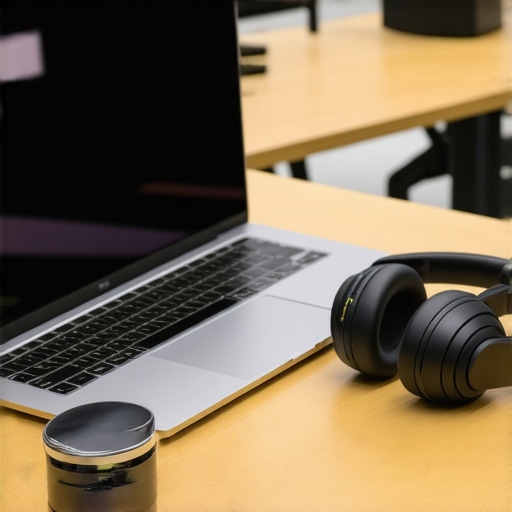
Infrastructure is the only real luxury
According to the Wi-Fi Alliance, the implementation of the IEEE 802.11ax (Wi-Fi 6) standard was specifically designed for the high-density environments we live in now. If your coworking space is still running on older 802.11ac protocols, your team is fighting for ‘airtime’ with every other laptop in the room. I predict that the future of conference rooms in startup ecosystems will move toward ‘Cellular-First’ backup systems as standard. We are moving toward a world where the ‘office’ is a software-defined layer on top of physical geography. My advice? Don’t just pick a space for the coffee. Pick it for the infrastructure. Run a ‘Shadow Day’ where you work exclusively from a mobile kit in a new hub to find your technical blind spots before a client does. This practice alone saved us from a disastrous pitch when a local fiber line was cut; because we had already vetted the 5G signal strength in our backup ‘war room,’ we didn’t miss a beat.
The Hard Truths of Trading a Lease for a Membership Card
Walking away from a dedicated office felt like admitting defeat at first, but it was actually the ultimate power move for our bottom line. One lesson I learned the hard way is that you have to learn how to manage office politics in a space you dont own. You aren’t the king of the castle anymore; you’re a high-performing guest, and that requires a different kind of social intelligence. Another lightbulb moment was realizing that the lack of a physical lobby didn’t hurt our credibility—but our inability to find a quiet spot for a high-stakes call certainly did. If you’re coming from a humble beginning, knowing how to transition your team from a garage to a real office doesn’t always mean signing a five-year lease; sometimes it means signing a month-to-month agreement in a professional hub that already has the lights on and the coffee brewing.
I also discovered that physical visibility for your brand still matters, even without a logo on the front door. When we hosted our first community talk, we had to be incredibly specific about directions to ensure a professional arrival experience. You should learn how to pick an event venue that your guests can actually find without needing a personal escort at the front desk. Finally, stop thinking of coworking as a temporary fix for a ‘real’ office. For us, the role of flex space in a modern business scaling strategy became our primary competitive advantage, allowing us to pivot capital into hiring top-tier talent instead of paying for carpet cleaning and lightbulb replacements.
My Tactical Kit for the Modern Nomad Founder
If you’re going to embrace the mobile model, you need a toolkit that replaces the infrastructure you left behind. First, I recommend a high-quality digital mail service like Anytime Mailbox; it’s the only reliable way to replace a physical receptionist for document handling. Second, I swear by the ‘Double-Bag’ system: one backpack for your daily tech and a secondary, slim ‘meeting kit’ that lives in your car, containing every possible HDMI and USB-C adapter. I also personally trust the ‘Oura’ ring or similar trackers to monitor my own stress levels; without a fixed office, the lines between work and life can blur, and you need data to know when to unplug. Lastly, I always keep a copy of ‘The Lean Startup’ by Eric Ries in my bag; it serves as a constant reminder that every dollar spent on a fancy executive chair is a dollar stolen from your customer acquisition budget.
Your Leaner More Agile Future Awaits
Ditching the office manager and the traditional lease was the scariest decision I made that year, but it was also the most liberating for our culture. It forced us to stop playing ‘house’ and start building a business that moves the needle. By utilizing a startup mindset and leveraging the best meeting rooms and coworking environments, you aren’t just saving money—you’re buying agility. When you book that next conference room, remember that you’re there to build a legacy, not a library. You have the tools, the technology, and now the strategy to thrive without the heavy anchor of traditional real estate. Have you ever felt like your office was more for show than for actual work? Let me know your experience in the comments below.