

The espresso machine was screaming. I was huddled in a corner of a local cafe, trying to explain my startup’s burn rate to a skeptical investor over Zoom. My laptop battery was at 4%, the Wi-Fi was flickering like a dying lightbulb, and the person at the next table was loudly discussing their weekend plans. It was a mess. I looked unprofessional, felt frazzled, and worst of all, I was losing money while trying to save it. That was the day I realized my ‘scrappy’ nomad strategy was actually a bottleneck. I thought I was being a genius by avoiding a monthly lease, but I was really just paying a ‘distraction tax’ every single day.
Stop Hunting for an Outlet Every Morning
For the first six months of my business, I was a hot-desk loyalist. I loved the idea of total freedom. But freedom turned into a 20-minute daily ritual of hunting for a seat near a power outlet and praying the person next to me wasn’t a loud talker. When I finally bit the bullet and moved to a dedicated desk, everything changed. Today, I’m going to help you figure out if that extra $100 or $200 a month is a luxury or a necessity for your growth. We will look at the real-world ROI of having a ‘home base’ and why ditching the basement or the local coffee shop is often the first step toward scaling.
Is the premium price just for a fancy nameplate?
I used to think dedicated desks were for people with more ego than sense. Why pay more for the exact same four legs and a tabletop? My mistake was thinking about the physical furniture rather than the mental headspace. I learned the hard way why your pitch failed in that noisy coffee shop—it’s about the environment, not just the wood and metal. A study from the University of Sydney suggests that the lack of privacy and the constant noise of open, transient spaces can decrease productivity by up to 15%. When you do the math, that’s over an hour of wasted time every single day. Have you ever spent more time looking for a place to work than actually working?
Your Brain Craves a Familiar Routine
There is a massive psychological advantage to knowing exactly where your monitors are and where your favorite pen is located. When you have a dedicated spot, you skip the ‘setup’ phase of the morning and dive straight into deep work. It’s a key part of how to pick a membership tier that scales with your team effectively. You aren’t just buying a desk; you’re buying a ritual. Since making the switch, my output hasn’t just increased; my stress has plummeted because I’m no longer fighting for territory in a crowded room. We’re going to dive into the specific math of how this shift pays for itself in the next section.
Move Your Gear Once and Forget About It
The first thing you need to do is audit your ‘carry-in, carry-out’ friction. If you are spending fifteen minutes every morning unpacking a laptop, mouse, keyboard, and headphones, you are flushing hours of billable time down the drain every month. When I made the move, I stopped thinking about the desk as furniture and started seeing it as a hard-drive for my physical workflow. I left my ergonomic vertical mouse and a second monitor permanently stationed. This transition is the most vital part of how to transition your team from a garage to a real office successfully. By having my gear ready to go, my ‘start-to-work’ time dropped from twenty minutes to roughly thirty seconds.
Test the Tech Before You Trust the Tech
Don’t assume that because you’re paying for a desk, the internet is bulletproof. On my first day at a dedicated spot in downtown Austin, I tried to upload a massive client video file and watched the progress bar crawl for three hours. I learned that day about the hidden drag of slow office wi-fi on your burn rate. Now, my first step is always a speed test at 9:00 AM and 2:00 PM to see how the bandwidth holds up when the space is full. If the upload speed drops below 20Mbps, that desk isn’t a growth tool; it’s a liability.
Use Conference Rooms for Battles, Not Just Meetings
A dedicated desk is your trench, but the conference room is your war room. I remember a specific Tuesday when I was pitching a legacy brand. In my coffee shop days, I would have been praying the espresso machine didn’t hiss during my closing statement. Instead, I booked a glass-walled suite. I realized then that why your pitch deck won’t save you from a noisy meeting space is because silence is a signal of status. If a client hears chaos in the background, they assume your business is chaotic. I now treat every high-stakes call as an event that requires a controlled environment. This is the difference between a standard meeting room and a real war room—one is for talking, the other is for winning.

Vet the Walls for Acoustic Secrets
Before you book that fancy room with the mahogany table, do the ‘clap test.’ Walk into the center of the room and clap your hands loudly. If you hear a sharp echo, your voice is going to sound like you’re calling from a bathroom on a Zoom call. I once lost a consulting lead because the echo was so bad they couldn’t distinguish my ‘fifteen percent’ from ‘fifty percent.’ You must how to vet a meeting room for acoustic privacy before booking to ensure your professional image isn’t ruined by poor architecture. Check for acoustic panels or heavy curtains; these aren’t just decorations, they are audio filters for your brand. It is also wise to run the acoustics test every conference room should pass before you sign any long-term membership that includes meeting credits.
Turn Your Neighbors Into Your New Advisory Board
The final step in execution isn’t about the desk at all; it’s about the person sitting three feet away. When you have a dedicated spot, you aren’t a stranger; you’re a regular. I once spent three weeks struggling with a Python script for an automation tool. One afternoon, the guy at the desk next to me—who I’d only traded nods with—saw my frustrated face, offered a suggestion, and fixed the bug in ten minutes. That’s the real value when you unlock networking opportunities in top coworking environments. You aren’t just paying for wood and a chair; you are paying for proximity to experts who can solve your problems over a 5-minute coffee break.
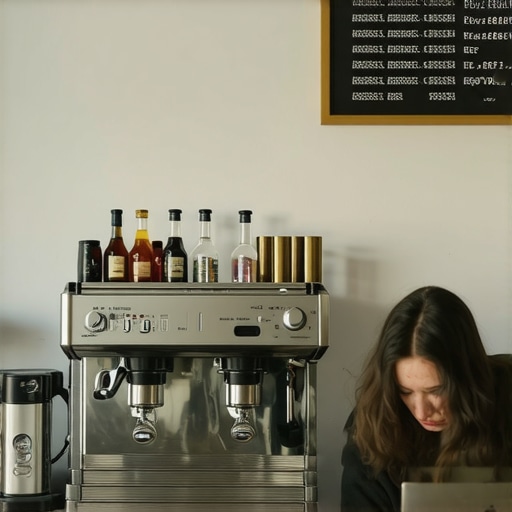
The mistake I see most founders make is thinking that a coworking space is just a real estate transaction. It’s not. It’s an operational hedge. Most beginners get blinded by the ‘perks’—the beer on tap, the fancy espresso machines, and the rooftop yoga. But here’s the truth: the more ‘free’ stuff a space offers, the less they are usually investing in the infrastructure that actually makes you money. It’s what I call the ‘free coffee fallacy.’ I’ve realized that the truth about free perks you never actually use is that they often mask a lack of technical support or poor acoustic privacy. I once chose a space for its gorgeous mid-century modern lounge, only to find out the Wi-Fi dropped every time someone used the microwave in the communal kitchen.
Stop Paying for the Ping Pong Table
Common wisdom says you should look for the biggest desk for the lowest price. I disagree. In my experience, a smaller desk in a high-density ‘startup hub’ is worth ten times more than a spacious corner office in a ghost town. But wait—there’s a massive trap. Have you ever fallen into the mistake of signing a long-term lease before your team was even at a stable headcount? It’s a classic ‘oops’ moment that can kill a company before it starts. I’ve seen startups nearly go under because they were locked into a five-year commitment while their revenue was still fluctuating monthly. This is why your first office shouldn’t be a 5-year commitment; flexibility is your greatest competitive advantage in the early days.
Are you buying square footage or just a culture you’ll never use?
You need to look past the mural on the wall and the designer chairs. A 2018 Harvard study found that open-plan offices can actually decrease face-to-face interaction by 70%, as people put on headphones to reclaim their privacy. If you see everyone in a space wearing heavy noise-canceling headphones like they’re in a sensory deprivation tank, you aren’t in a ‘collaboration hub’—you’re in a library with louder furniture. You have to learn how to spot a toxic coworking vibe in under five minutes before you sign that membership contract. Look for people actually talking to each other in the common areas, not just staring blankly at screens.
The Hidden Cost of Meeting Room Hoarding
Another nuance people miss is the ‘meeting room hoarding’ phenomenon. In poorly managed spaces, the conference rooms are always booked by the same two companies, leaving you to host your board meetings in the hallway or a noisy lobby. When vetting a space, don’t just look at the rooms; ask about the booking credits and the fair-use policy. It’s about creative coworking: transforming meeting rooms into collaboration hubs rather than just letting them sit idle or get monopolized by a single large tenant. You also need to know how to handle high-stakes board meetings in a shared building to ensure your proprietary data doesn’t end up being overhead by the competition next door. Have you ever fallen into this trap where you paid for credits you could never actually redeem? Let me know in the comments.
Once you’ve escaped the isolation of your basement and secured that dedicated desk, the real challenge begins: maintaining that peak performance without letting the environment wear you down. I learned very quickly that the difference between a founder who burns out and one who scales is their kit. You need to build a mobile command center that doesn’t break under pressure. I never step into a shared space without my Jabra Evolve2 series headset. According to Jabra’s technical specifications, their digital hybrid Active Noise Cancellation (ANC) leverages a specific chipset to suppress up to 30dB of ambient noise. In a room full of energetic entrepreneurs, that 30dB reduction is the difference between deep work and a massive headache. This is how I personally manage noise complaints in a shared workspace—I simply make the noise irrelevant to my ears.
Build a Mobile Command Center That Doesnt Break
Your gear needs to be as flexible as your membership. I switched to a 100W GaN (Gallium Nitride) multi-port charger because it’s roughly half the size of a standard brick but can juice my laptop and tablet simultaneously. This eliminates the ‘cable nest’ that usually clutters a shared desk. When I move to a glass-walled suite for a call, I know why your conference room needs better technology and fewer cables—it’s about eliminating the friction of the transition. If you are fumbling with a bulky power brick while trying to impress a client, you’ve already lost. I also keep a portable SSD with a 20Gbps transfer speed. Why? Because you shouldn’t rely on the cloud for everything when you’re on a shared connection. It keeps your files local, fast, and secure.
How do I maintain a professional edge while scaling in a shared space?
Maintenance isn’t just about your laptop; it’s about your reputation within the building. I’ve seen people lose their ‘good neighbor’ status by being the person who leaves a mess in the kitchen or hoards the good chairs. To keep your workflow from stalling, you need to audit your physical presence once a week. I clear my desk every Friday afternoon. It’s a mental reset that helps me realize how to maximize productivity in your startups conference rooms by 0245 pm the following Monday. If your ‘base’ looks like a disaster zone, your output will likely follow suit. Maintaining that edge means being the person who uses the space better than everyone else, not just the one who pays the most for it.

Prepare for the Era of Autonomous Workspaces
I’m predicting that within the next three years, we won’t even use apps to book desks. We are moving toward ‘spatial intelligence’ where your environment adapts to you. Imagine walking into a booth and the lighting instantly shifts to your preferred Kelvin temperature while your laptop syncs to the local monitor via ultra-wideband. I think the future of conference rooms in startup ecosystems will be defined by this kind of zero-touch interaction. We’re already seeing the first wave of this with smart-scheduling panels that glow red or green based on real-time occupancy sensors. It makes the transition from a solo sprint to a team huddle completely seamless. My advice? Start adopting these modular habits now. Try this today: Swap one of your bulky desktop peripherals for a high-performance portable alternative. If it saves you even three minutes of setup time every morning, it will pay for itself within a single month of focused work.
The Harsh Reality of My First Six Months Solo
Looking back, I realize my biggest mistake wasn’t a bad hire or a failed marketing campaign; it was thinking I could build a world-class company from a wobbly cafe table. I spent so much energy trying to be ‘lean’ that I forgot to be ‘effective.’ One of the most vital things I learned was the logistics of moving your startup to a professional space isn’t just about moving boxes; it’s about shifting your mindset from a freelancer to a founder. You also have to be vigilant; I eventually learned how to spot a bad coworking community before joining by simply observing how members treat the common areas. If the kitchen is a disaster, the management usually isn’t paying attention to the Wi-Fi or the acoustics either.
The Toolkit I Use to Stay Productive Anywhere
To keep my focus sharp, I’ve curated a very specific set of tools that turn any dedicated desk into a high-performance hub. First, never skip the technical due diligence. I always research how to vet a space for high-speed fiber before you sign the contract because a pretty view won’t help you during a 4K product demo. Secondly, I advocate for simplicity in your setup. I’ve realized why your conference room needs better technology and fewer cables—it’s because complexity creates friction, and friction kills creativity. My portable SSD and noise-canceling setup are non-negotiable parts of my daily kit.
Stop Acting Small and Claim Your Space
The transition from a home office or a coffee shop to a professional coworking environment is the clearest signal you can send to yourself—and your clients—that your business is real. It’s about more than just having access to meeting rooms; it’s about putting yourself in the path of opportunity. As you grow, you’ll need to understand how to pick a membership that scales with your team’s size so you aren’t paying for air you don’t breathe or square footage you don’t use. Your startup deserves an environment that matches its ambition. Stop paying the ‘distraction tax’ and start investing in a space that actually works as hard as you do.
Have you ever struggled to maintain your professional image while working from a noisy home or a crowded public space? Let me know your biggest workspace hurdle in the comments below.