

I was three years into my startup when I realized that ‘remote-first’ was slowly becoming ‘remote-lost.’ I had hired five brilliant people across three time zones, and while our Slack channels were buzzing, our actual progress felt like it was stuck in digital molasses. My lightbulb moment—or rather, my ‘shame moment’—happened in a crowded Starbucks bathroom. I was trying to change into a blazer for a client pitch while balancing my laptop on a wobbly toilet paper dispenser. We were ‘scaling,’ I told myself. In reality, I was just failing to provide the structure my team needed. I made the classic mistake of thinking that because we didn’t have a 10-year lease, we didn’t need a strategy for physical presence. Today, I’m going to show you how to navigate the messy logistics of growing your headcount without a corporate anchor. We’ll solve the mystery of keeping a culture together when your employees are scattered across the map. [image-placeholder]
Is a virtual-only setup actually worth the hype?
I’ll be the first to admit it: I used to preach the gospel of ‘work from anywhere’ until I realized why your hybrid team feels disconnected on Mondays specifically. The lack of a shared rhythm is a productivity killer. According to a 2023 study by Microsoft, 43% of remote employees feel entirely disconnected from their company culture. It turns out that digital tools alone aren’t the magic bullet we hoped for. I early on tried to hire three senior devs without a single in-person onboarding session, and the result was a disjointed mess that cost us two months of dev time.
The messy reality of the No-Office dream
You don’t need a skyscraper with your name on it, but you do need a plan for when the ‘work from home’ novelty wears off. I eventually learned why your startup needs a physical anchor for its remote team, even if that anchor is just a cluster of hot desks once a week. The logistics of scaling mean you have to stop thinking about square footage and start thinking about access. You need to know how to pick a membership tier that scales with your team so you aren’t paying for empty chairs but still have a place to huddle when the deadline looms. Have you ever felt like your team is just a collection of avatars rather than a real crew? I’d love to hear how you’re handling that ‘digital ghosting’ vibe in the comments.
Audit Your Real Usage Before You Sign
Scaling doesn’t mean jumping from a $0 garage to a $5,000 monthly lease. It starts with a clear growth roadmap. I spent months paying for a ‘small office’ that we only used for three hours on Thursdays, which was nothing more than a vanity expense. Instead, evaluate how to pick a membership tier that scales with your team by starting with day passes for your core members. This allows you to feel out the culture of a space before committing your runway to it. If you’re coming from your kitchen table, you need to understand that the move from garage to office is more about professionalizing your routine than just changing your GPS coordinates.
Stop Paying for Square Footage You Never Use
I used to think we needed one desk per employee, but I was wrong. In a hybrid setup, your ‘office’ is a resource, not a permanent residence. You should prioritize why membership flexibility is more important than square footage. If three of your team members are deep-flow developers who only come in for sprints, don’t pay for their empty seats daily. Use that budget for a high-quality war room for intense planning sessions instead of a row of lonely cubicles. I once rented a massive suite for my first six hires, and the echo was so depressing it actually lowered morale. We moved to a flex-membership model, and suddenly the team felt energized because we were in the heart of the action.

Design for Function Over Aesthetics
A pretty room doesn’t equal a productive one. I learned this the hard way during a product demo where the lighting was so poor our prototype looked like a blob of grey plastic on the camera. You have to understand why your meeting room layout is killing participation. If people are staring at the back of each other’s heads or squinting at a tiny screen, they’ll check out in five minutes. When you’re vetting a space, look for innovative meeting rooms that boost startup creativity—these usually have modular furniture and plenty of wall space for brainstorming.
How to Handle Sensitive Talks Without an Audience
One of the messiest mistakes I ever made was trying to have a difficult performance review in a ‘private’ glass-walled office that wasn’t soundproof. Half the floor heard my lead dev getting a reality check. Learn how to handle a sensitive HR meeting in a shared space by booking an interior room with real walls, not just decorative partitions. If you’re doing an investor pitch, don’t risk it in a cafe. You need a neutral, professional setting because why your pitch failed in that noisy coffee shop usually comes down to the background distractions, not the deck itself.
Don’t Sign Until You Test the Fiber
Nothing kills a ‘remote-first’ culture faster than a lagging Zoom call during a high-stakes board meeting. Before you move in, you must vet a space for high-speed fiber yourself. I once moved our entire dev team to a ’boutique’ hub only to find out their Wi-Fi topped out at 10Mbps when more than five people were online. We lost two days of deployment time. Always remember why your home wi-fi is failing your zoom presentations—you’re looking for a professional grade redundancy that your residential router simply can’t provide.
Let’s dig deeper into the psychology of the space because most founders treat a meeting room like a utility—similar to electricity or water. That’s the first mistake. Most people think a ‘conference room’ is just a box with a table. In reality, the environment dictates the behavior of everyone inside it. If you put a team in a sterile, white-walled room for a creative session, you’ll get sterile, white-walled ideas. You need to understand why your meeting room needs to be more than just a table if you want to foster actual collaboration.
Does your team actually need a dedicated war room?
One of the biggest ‘oops’ moments I’ve seen involves the classic glass-wall aesthetic. It looks great on a website, but it can be a nightmare for deep work and psychological safety. I eventually learned that why your startup needs a real door not just a glass wall isn’t about secrecy—it’s about focus. A study by the Harvard Business School found that open-plan layouts and transparent walls actually decreased face-to-face interaction by nearly 70%, as people feel ‘observed’ and retreat into their digital shells. If you’re discussing a pivot or a sensitive failure, you don’t want a curious intern from another company watching your team’s facial expressions. 
Stop falling for the aesthetic glass trap
Beyond just the walls, there is the massive ‘Meeting Room’ versus ‘War Room’ debate. If you’re just checking in on tasks, a standard room is fine. However, if you’re launching a product, you need to know the difference between a standard meeting room and a real war room. A war room allows for ‘persistent’ thinking—meaning you can leave your notes on the walls. One of my most expensive traps was trying to do a three-day sprint in a room I had to clear out every evening. We lost hours just rebuilding our mental map each morning. Learning how to maximize productivity in your startups conference rooms means choosing a space that respects the continuity of your work.
How to stop your team from hating hybrid meetings
Then there’s the issue of ‘ghosting’—not by employees, but by your own schedule. It is incredibly easy to overspend on resources you don’t need. I finally figured out how to save money on office amenities your team doesn’t use by auditing our weekly flow. We were paying for a premium coffee package and extra lounge access for a team that actually just wanted a quiet corner and high-speed internet. Furthermore, if you don’t have the right AV setup, your remote members will feel like second-class citizens. You must address how to stop your team from hating hybrid meetings by ensuring the room layout doesn’t isolate the people on the screen. If the camera is at a weird angle, why your meeting room layout is killing participation becomes obvious very quickly. Have you ever fallen into this trap of paying for a ‘cool’ space that actually hindered your work? Let me know in the comments.
I stopped relying on the ‘built-in’ tech that comes with most budget rooms after a disastrous investor call where I sounded like I was underwater. If you want to look like a professional outfit, you need a ‘go-bag’ of portable hardware. I never head to a shared space without my Jabra Speak 710. It is a puck-sized speakerphone that handles echo cancellation better than any $5,000 built-in system I’ve encountered. This is my secret weapon for how to deal with technical glitches during a remote board call. When the house system fails, I just plug in my own gear and the meeting continues without a hitch.
The hardware that actually saves your Zoom calls
Lighting is the next hurdle most founders ignore. Those overhead fluorescent office lights make everyone look tired and untrustworthy. I carry a small Lume Cube LED panel that clips right onto my laptop. It’s a game changer when you need the exact lighting setup for professional video pitches without carrying a full studio. Beyond the gear, you have to be vigilant about the infrastructure. I’ve made it a habit to vet a space for high-speed fiber every few months, even in my favorite hubs, because a new tenant moving in next door can eat up the bandwidth you used to rely on. 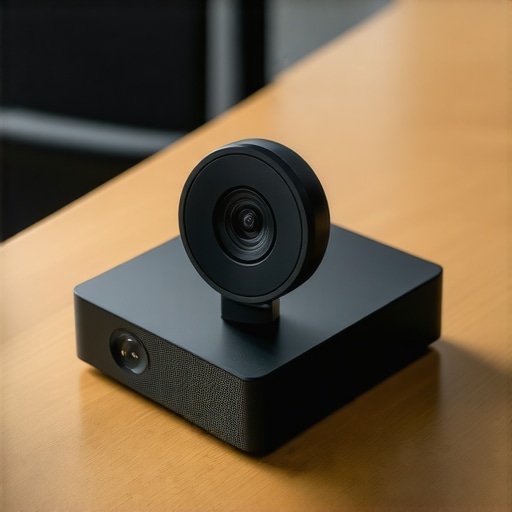
How do I keep my hybrid setup running smoothly over time?
Maintenance isn’t just about cables; it’s about the ritual. Every Friday afternoon, I perform a ‘room audit’ of our recurring bookings. I check if we actually used the time we paid for. This habit is how I mastered the logic of choosing a flex office over a 5-year lease—by staying lean and mean. If a specific room layout is causing friction, we pivot immediately. According to a 2024 technical whitepaper from Cisco, 98% of meetings now include at least one remote participant, which means your room is no longer just a physical space; it’s a broadcast studio. If the spatial audio isn’t calibrated, your remote team will suffer from ‘listener fatigue’ within twenty minutes.
Why small hubs are winning the office war
Looking ahead, I predict the ‘Mega HQ’ is officially a relic. We are entering the era of the ‘Micro-Hub.’ I’m already seeing why small satellite offices are beating the mega-headquarters in terms of both talent retention and cost efficiency. Founders are realizing that the future of conference rooms in startup ecosystems is about proximity to where people live, not a central prestigious zip code. It’s much easier to how to pick an office that fits your startups growth pace when you are dealing with flexible satellite memberships rather than a rigid downtown contract. If you haven’t yet, I challenge you to audit your last three hybrid meetings: did the tech help or hinder? If it hindered, it’s time to build your own portable gear kit.
What Most Founders Forget When Trading the Garage for a Real Hub
Reflecting on my journey, I’ve realized that the physical environment is less about where you sit and more about how you think. First, don’t ignore the administrative basics. I learned the hard way about the errors to avoid when choosing a business mailing address; using a personal home address for legal filings can lead to messy privacy issues as you grow. Second, the energy of a room is infectious. I found that the hidden benefits of a diverse desk neighbor—like a random chat with a fintech founder—often solved my coding bottlenecks faster than a search engine could. Finally, remember that how to transition your team from a garage to a real office requires a cultural shift; you’re moving from survival mode to a professional, scalable rhythm. #IMAGE_PLACEHOLDER_E#
The Non-Negotiable Kit for a Scaling Team
I never walk into a potential new space without a specific set of criteria. I always use the exact checklist for vetting a high stakes board room to ensure the technical infrastructure won’t fail when a major investment is on the line. I also prioritize biological needs; you must learn how to vet a potential office space for natural light because a windowless environment kills team motivation by mid-afternoon. For actual brainstorming sessions, we focus on creative coworking transforming meeting rooms into collaboration hubs, which means looking for modular spaces that adapt to your workflow rather than forcing you to adapt to a rigid layout. My trust-but-verify tool is a simple speed-test app to check the fiber redundancy before I ever sign a flexible membership deal.
It’s Time to Give Your Team a Professional Pulse
Moving out of the digital-only ether is a massive step, but it is the only way to solidify your company’s identity. When you finally find that perfect conference room or a corner of a hub that feels like home, your team will stop being a set of avatars and start being a cohesive unit. You don’t need a ten-year commitment to be professional; you just need the right space for your current stage of growth. Have you ever had a make-or-break moment when trying to move your team into a professional office space? Let me know in the comments below!