
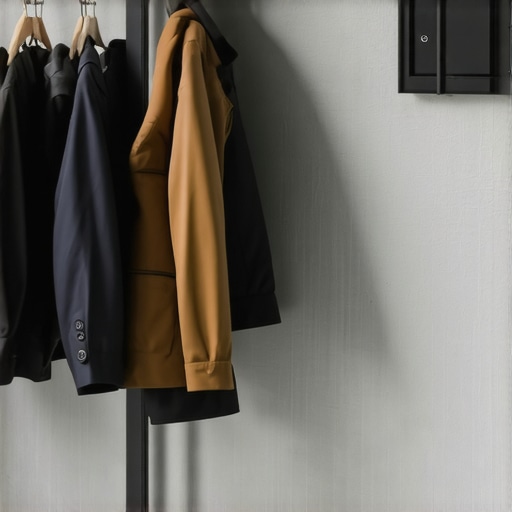
It was a rainy Tuesday morning in November, and my startup team was crammed into our brand-new, modern flex office. We had just graduated from working in my living room, and morale should have been sky-high. Instead, the vibe was incredibly tense. I looked around the room and realized why: every single ergonomic chair had a soaking-wet wool coat draped over the back. Muddy jackets were piled on top of expensive laptops, and someone’s dripping umbrella was slowly forming a puddle right next to the main power strip. That was the exact moment I realized that ignoring the basic physical needs of a team—like a simple, dedicated spot to hang their coats—is a recipe for low-grade daily misery.
The Invisible Clutter That Is Quietly Draining Your Team’s Focus
When you are trying to survive the chaotic early days of building a business, things like coat racks and coat hooks feel incredibly trivial. You are focused on finding the perfect conference room for your startup, securing funding, and keeping the servers running. But physical clutter leads directly to mental clutter. In fact, a landmark study by researchers at Princeton University Neuroscience Institute found that constant visual stimuli in your environment—like messy piles of coats and bags—significantly limits your brain’s ability to focus and process information. When we don’t give our teams a physical anchor to shed their outside gear, we are forcing them to work in a chaotic, disorganized visual field all day long.
Is a simple coat rack actually worth worrying about?
You might be thinking, “Come on, are we really blaming team productivity issues on where people put their jackets?” I used to think the exact same way. Early on, I made the mistake of thinking that as long as we had high-speed internet and great coffee, the physical layout of the room didn’t matter. But the truth is, a workspace that lacks basic storage feels temporary and inhospitable. When people have to drape their heavy winter coats over their knees or pile them in the corner of a shared collaboration hub, it sends a subtle signal that they don’t truly belong in the space. Investing in basic, thoughtful office infrastructure shows your team that you respect their comfort and their daily transition into the work environment.
Today, we are going to look at how small, physical adjustments to your office layout can drastically improve team culture, reduce daily friction, and make your space feel like a professional home rather than a temporary campsite. Have you ever walked into a meeting room and felt instantly annoyed by the lack of space for your personal belongings? Let me know in the comments below. Let’s dive into how we can fix this common office blunder once and for all.
Map Out the Entry Flow Before You Buy Anything
Before you run to an office supply store and buy whatever metal stand is on sale, you need to analyze the natural traffic flow of your space. Think of your entry zone like a staging area at a busy airport. When your team arrives in the morning, they are carrying a heavy load: winter coats, laptop bags, lunch containers, and steaming coffee cups. If the very first thing they encounter is a cramped hallway with no place to set down their bags, they will carry all that baggage directly to their desks, instantly cluttering up their workspace.
My wake-up call happened during our second winter in our new office. I bought two beautiful, minimal wooden coat trees and placed them right next to the entrance door. Within three days, both had tipped over under the weight of wet puffers, and the wall behind them was covered in black scuffs. It was a complete mess because I hadn’t calculated the sheer weight of winter gear for a team of eight. I realized that a flimsy residential stand is the fastest way to make a professional space look amateur. After that disaster, we anchored heavy-duty utility pipes directly to the studs. It wasn’t ‘designer’ furniture, but it held 150 pounds of wet wool without budging a millimeter, proving that utility must always come before aesthetics when you are scaling from a garage to multiple desks.
Ditch the Single Coat Tree for Wall-Mounted Utility Rails
Standard coat trees have a tiny footprint, which makes them highly unstable. Instead, utilize your wall space by installing heavy-duty horizontal utility rails. Mount them at two different heights: a high rail for long trench coats and a lower rail for bags, backpacks, and shorter jackets. This simple division immediately doubles your storage capacity without taking up valuable floor space. If you are operating in a shared space, this layout keeps personal items off the floor and prevents the entryway from looking like a chaotic discount clothing rack.

Designate a Wet-Zone Anchor Away from the Tech
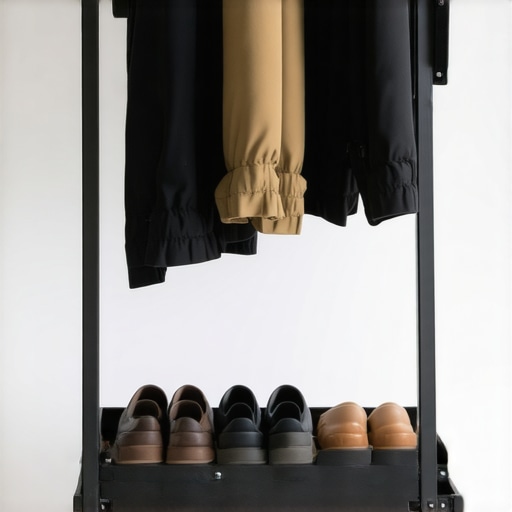
The biggest threat to expensive electronics in a modern workspace is standing water. You must establish a strict boundary between where wet gear lives and where people work. Position your coat rails and a heavy-duty, deep-grooved shoe tray at least six feet away from the nearest desk or power outlet. If your team is transition-routing from the entrance to a shared collaboration hub, they need a clear path to drop off their dripping umbrellas and muddy boots before they even think about opening a laptop. This physical separation acts as a mental buffer, helping your team transition from the chaotic commute to a focused work mindset.
Establish the Clear Desk Rule for Shared Areas
Once you provide the physical infrastructure, you must back it up with a cultural standard. Introduce a simple policy: desks are for active work, not for storing outerwear or empty gym bags. This is especially crucial if your team relies on hot desking or shared setups. If you want to know how to maintain a professional environment without policing your team, you have to make the storage option the easiest choice. When the coat rail is closer, sturdier, and more convenient than the back of an ergonomic chair, people will use it naturally. This small shift dramatically improves the visual clutter in your main working zones and ensures your team stays focused on execution rather than managing their personal belongings.
When we talk about optimizing workspaces, most management consultants will point you toward expensive software or complex workflow templates. They tell you to redesign your daily stand-ups or restructure your slack channels. But in my experience, the biggest blockers to team focus are rarely digital. They are physical. If you want to build a high-performance culture, you have to look at the invisible friction points that drain your team’s mental energy before they even sit down to code or write copy.
The False Promise of Minimalist Aesthetics
Everyone in the modern startup scene is obsessed with the minimalist aesthetic. We are told that clean lines, bare concrete walls, and open-concept layouts are the key to unlocking creativity. But there is a massive hidden trap here that nobody talks about. In our rush to build beautiful, photo-ready spaces, we strip away the practical infrastructure that humans actually need to function. A room with beautiful glass walls and no hooks, shelves, or storage bins is not a workspace; it is a museum gallery. When you force real people to work in a museum, they feel like temporary intruders rather than permanent contributors.
This aesthetic-first mentality leads directly to what I call the clutter cascade. Because there is no dedicated home for physical items, your team starts improvising. Backpacks pile up under desks, creating trip hazards. Wet coats get draped over expensive ergonomic chairs, ruining the fabric and making the office smell like damp wool. Important reference materials get stacked in random corners of your shared collaboration hub, turning beautiful meeting areas into chaotic storage closets. It is a classic case of form over function, and it is quietly killing your team’s daily focus.
Why does physical clutter destroy our mental bandwidth?
To understand why this is such a critical issue, we have to look at how the human brain processes visual information. A landmark study published by the Journal of Neuroscience reveals that multiple stimuli present in the visual field at the same time compete for neural representation. In simple terms: every single piece of visual clutter in your office—the stray laptop charger, the pile of jackets, the empty coffee mug—is actively fighting for your brain’s limited processing power. When your team is surrounded by physical chaos, their brains are working overtime just to filter out the background noise, leaving them with less cognitive energy for high-level problem solving and creative execution.
The Infrastructure Trap That Starves Your Team of Energy
The most common mistake founders make is treating physical office storage as an afterthought. We spend weeks vetting internet speeds and arguing over whether to invest in ergonomic furniture for our seed round, but we buy the cheapest plastic coat hooks we can find at the supermarket. This is a massive strategic error. Your office infrastructure is a physical manifestation of your respect for your team’s time and comfort. When you skimp on the basic tools they use to transition into the workday, you are sending a subtle but clear signal that their daily experience does not matter.
I fell into this exact trap during our first winter in our own space. I assumed that because we were a small team, we could just get by with a couple of cheap floor stands. I did not realize that a single wet winter coat weighs nearly twice as much as a dry one, or that three people trying to hang heavy parkas on a flimsy rack at 9:00 AM would inevitably tip the whole thing over. It was a minor daily annoyance that slowly built up into a shared sense of frustration. Once we invested in heavy-duty, wall-mounted steel rails that could easily support the weight of our entire team’s winter gear, the morning transition became seamless, and the overall mood in the office improved dramatically.
How do you build a workspace that supports deep work?
If you want to design a space that actively supports deep focus, you must establish clear physical boundaries. This is especially true if you are operating in a flexible or shared environment where space is at a premium. First, separate the entry zone from the working zone. Ensure that all outer gear, bags, and umbrellas are shed before your team members reach their desks. Second, create a strict cultural standard around shared spaces. If you are using communal areas, enforce a clear-desk policy to ensure that the next team can step into a clean, distraction-free environment. Have you ever fallen into this trap of prioritizing aesthetics over actual utility? Let me know in the comments below.
When we shifted away from a reactive mindset, we realized that managing our physical footprint was just as critical as managing our code deployment pipeline. The physical layout of our office space isn’t just about desk chairs and tables; it is the underlying platform that supports our entire operational workflow. If your team is constantly fighting their physical environment, they aren’t focusing on the actual work that drives your business forward. To prevent this infrastructure drag, we had to build a deliberate, long-term system that runs on autopilot.
How do I maintain physical workspace infrastructure over time?
The secret to keeping a workspace functioning smoothly as you scale is treating physical maintenance like a software sprint. In our team, we instituted a monthly 10-minute physical audit. We inspect the heavy-duty wall rails, check the rubber seals on the wet-zone shoe trays, and verify that the cables in our meeting areas aren’t fraying. If you want to see if your own office setup is costing you more than it should, I highly recommend running the 10-minute audit to see if your office space is wasting money. This simple cadence catches small physical points of friction before they snowball into cultural frustrations.
The Professional Tools that Keep Our Workspace Seamless
Rather than relying on consumer-grade organizing products, we upgraded to industrial-strength solutions that can withstand the daily wear and tear of a growing team. Specifically, we bypassed standard home-store options and installed heavy-duty steel pipe fittings from Hollaender Manufacturing. These structural slip-on fittings are designed for industrial handrails, meaning they can easily support hundreds of pounds of heavy winter coats and gear without sagging. We paired these rails with commercial-grade, open-loop polypropylene wet mats, which allow moisture to drain through to a lower collection tray, keeping the surface dry and clean.
For organizing our digital-to-physical handoff, we use physical NFC-tagged stickers placed right next to our storage zones. When a team member taps their phone against the entryway tag, it automatically mutes their personal notifications and logs them into our shared communication channel. It is a seamless, tactile way to transition from the chaotic commute to a focused, productive state. This kind of integration is crucial, especially when you are making the move that helped us scale from a garage to 20 desks.
The Future of Smart Physical Workspaces
Looking ahead, the line between our physical environments and our digital tools will continue to blur. I predict we will soon see smart, load-sensing coat racks and storage systems integrated directly into office management dashboards. Imagine an entryway system that automatically alerts the cleaning crew when wet-gear trays have reached capacity, or a meeting room that adjusts its ventilation based on the real-time weight of coats hung in the corner. Until those smart systems become standard, the best thing you can do is invest in rugged, reliable physical infrastructure today.
My challenge for you this week is to stop ignoring the small physical annoyances in your workspace. Walk into your office tomorrow morning with fresh eyes, identify the single biggest visual clutter point, and solve it with a heavy-duty, permanent solution instead of a temporary fix.
When we look at high-performing workspaces, it is easy to focus on high-speed fiber lines or high-end coffee machines. But real operational success lies in mitigating the tiny, invisible friction points that drain cognitive energy. Your physical space is a direct reflection of how you value your team’s everyday comfort and mental bandwidth. By resolving the physical chaos of wet jackets and scattered gear, you set a standard of clarity and intentionality that translates directly into the quality of your work.
The Hardest Lessons We Learned While Scaling Our Team Physical Layout
Our journey from a cramped living room to a bustling office taught us that physical logistics will make or break your team’s culture. Here are the core realizations that shifted our entire perspective:
- Infrastructure dictates behavior, not policy: If you do not provide an obvious, sturdy place for personal items, people will default to the easiest surface available. Your physical environment must make the right behavior the most convenient choice.
- Visual noise is a silent productivity drain: We discovered that cleaning up the physical clutter around our shared desks immediately lowered the collective stress levels of our engineers and designers.
- Small details signal professional maturity: Taking the time to build a robust physical transition zone showed our early hires that we were building a permanent home, a critical step when the checklist for moving your startup into its first real office is otherwise overwhelming.
The Simple Tools We Trust to Keep Our Space Functioning
You do not need an enterprise-level budget to keep your workspace seamless and productive. These are the practical, real-world solutions we rely on every day:
- Hollaender Manufacturing Slip-On Fittings: We bypassed flimsy residential furniture for industrial-grade aluminum pipes. They are virtually indestructible and can hold hundreds of pounds of winter gear without sagging.
- Commercial Open-Loop Polypropylene Wet Mats: Excellent for keeping standing water away from our main traffic paths and protecting the office flooring from muddy boots.
- Physical NFC Tags for Cognitive Transitions: A simple tap program on a custom wall sticker that helps our team silence their mobile notifications and transition from their morning commute to a focused head-space.
Building Your Own Permanent Foundation for Success
As you scale your venture, remember that every physical object in your workspace is either helping your team focus or actively distracting them. Do not let beautiful, minimalist design trends trick you into stripping away the practical tools your humans need to perform. Investing in heavy-duty utility solutions is not just an office management task; it is a strategic investment in your collective mental energy.
By building a deliberate, organized physical layout, you create a space where deep focus is the default state and operational friction becomes a thing of the past. If you want to dive deeper into optimizing your office setup, check out why boring office furniture is draining your teams creative energy.
Have you ever struggled to keep your startup’s shared areas clean and distraction-free during the wet winter months? Let me know in the comments below!