

I’ll never forget the morning I sat on a milk crate, balancing my laptop on a stack of moving boxes, trying to look professional for a Zoom call with a major investor. It was a disaster. My dog was barking at a delivery guy, and the lighting made me look like I was broadcasting from a bunker. That was the day I realized that “scrappy” had officially turned into “unprofessional.” I wasn’t just struggling with my Wi-Fi; I was struggling with my identity as a founder. If you’ve been feeling like your business is stuck in second gear because you’re still working from your couch, I’m here to tell you it’s time for a change. Today, we’re going to walk through the exact steps you need to take to move your startup into its first real home without breaking the bank or losing your mind.
Stop Bootstrapping Your Credibility Away
Transitioning is about more than just finding a desk and a chair. It’s about the mental shift that happens when you walk into a dedicated space designed for growth. I made the mistake of thinking any old office would do, but ditching the basement and embracing the psychology of a professional workspace changed everything for my team. We went from being a group of freelancers to a real company. The logistics of moving your startup to a professional space can be daunting, but the alternative is far worse. You’re likely already paying the hidden costs of running a startup from your garage in the form of lost focus and missed opportunities. According to research published in the Harvard Business Review, face-to-face communication is 34 times more effective than digital communication, which is why physical collaboration still beats video calls for startups looking to scale quickly.
Is a real office actually worth the monthly burn?
I get it. Every dollar counts, and you’re watching your runway like a hawk. But have you ever lost a potential hire because they didn’t take your “kitchen-table company” seriously? Or tried to host a VIP demo only to have the power flicker? Transitioning your team from a garage to a real office is a puzzle, but once the pieces fit, your productivity will soar. I once booked a room that looked great online but ended up being as quiet as a construction site. That’s why you need the exact checklist for vetting a high-stakes board room before you commit to any space. [image-placeholder]
Get the Right Fit Before You Sign Anything
Finding a space is easy; finding the right space is where most founders fail. You need to look for more than just a lease length. You need a community, reliable tech, and a vibe that matches your brand. If you don’t vet the acoustics or the natural light, you’ll be looking for a sub-lease within six months. Let’s dive into the specifics of what you need to check before you move a single box.
Run a Speed Test Before You Bring Your Team
The absolute first thing I do when I walk into a potential new space isn’t check out the espresso machine—it’s running a speed test. I learned this the hard way after moving a team of five into a boutique space that looked like a Pinterest board but had the bandwidth of a dial-up modem. We spent two weeks tethered to our phones because we didn’t vet the space for high-speed fiber before we signed the contract. You need to understand the hidden drag of slow office wi-fi on your burn rate. If your developers are sitting idle for ten minutes every time they push code, you’re flushing money down the toilet. Check the router placement and ask about the dedicated bandwidth for private offices to ensure your workflow stays uninterrupted.
Stop Hosting Clients in the Kitchen
I used to think a quiet corner of a local coffee shop was ‘good enough’ for a discovery call until a barista shouted an order right as I was closing a $50k deal. The prospect literally asked if I was at a Starbucks. That was the last time I risked my reputation on a public space. You need a dedicated area where you can control the environment. When you’re evaluating rooms, the acoustics test every conference room should pass is simple: have someone stand outside the closed door and talk at a normal volume while you’re inside. If you can hear every word, your trade secrets aren’t safe, and you need to keep looking for a space with better insulation. 
Your Pitch Needs a Professional Backdrop
Your laptop screen is fine for internal Slack updates, but why your pitch deck looks better on a forty-inch screen than a laptop is all about the psychological weight of the presentation. When I finally moved my startup into a dedicated hub, I noticed that investors stopped looking at their phones and started looking at the data. It signals that you have the infrastructure to handle their capital. Look for spaces that prioritize better technology and fewer cables. If you spend fifteen minutes of an hour-long meeting looking for a dongle or trying to sync a display, you’ve already lost the room’s energy and your professional edge.
Don’t Sign a Five Year Lease Today
The biggest mistake I see early-stage founders make is overcommitting to square footage they don’t need. You might be three people today and fifteen by Christmas, or you might realize you need to pivot to a fully remote model. This is why your first office shouldnt be a 5-year commitment. Flexibility is your only hedge against an uncertain market. I always recommend that startups pick a membership tier that scales with your team. We started with two hot desks, moved to a dedicated desk, and eventually into a private suite. Each jump felt like a level-up without the crushing weight of a traditional long-term commercial lease. If the space manager won’t let you scale up or down as needed, walk away and find a partner that actually understands the volatility of the startup lifecycle.Most founders believe that the flashiest room with the most buttons is the best place to close a high-stakes deal. In my experience, that is a total lie. I have seen more deals die because of a faulty ‘smart table’ or a confusing remote control than I have seen closed because of one. The real magic happens when you understand the difference between a standard meeting room and a real war room. A war room is not about the mahogany; it is about momentum. You need a space that encourages raw, unfiltered collaboration, not just polite nodding in a swivel chair. If you are focused on building a boardroom that doesn’t feel like a hospital, you are already miles ahead of your competitors who are still stuck in sterile, white-walled boxes that sap every ounce of creative energy from the team. 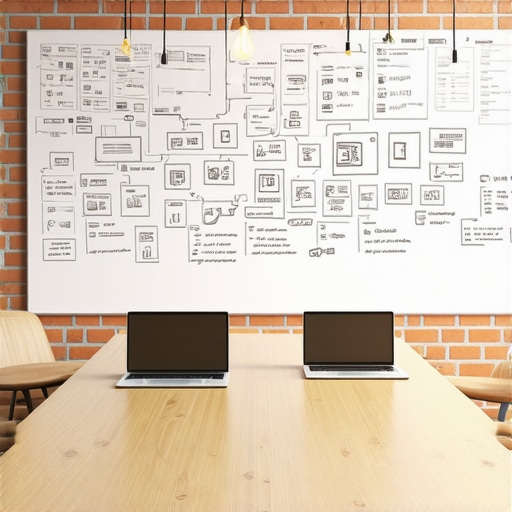
The Fishbowl Trap That Kills Confidentiality
Here is the ‘oops’ factor that almost nobody talks about: the Fishbowl Effect. We have all been sold on the idea that glass walls represent transparency and a modern, open culture. However, for a growing startup, privacy is your most valuable currency. I once sat in a sensitive strategy session where I could see a rival team through the glass, literally reading their whiteboard from across the hall. It was a massive security oversight. Before you book your next session, you must know how to vet a meeting room for acoustic privacy before booking. If passersby can see your facial expressions or, worse, your financial projections, you have lost control of the narrative. This is why the truth about free perks you never actually use often includes those fancy but functionally useless ‘observation’ lounges that prioritize style over security.
Can a glass-walled office actually destroy your team’s focus?
It is a sophisticated question that most founders ignore until it is too late. According to a study published by the University of Arizona, the ‘open’ nature of modern glass-walled workspaces can lead to a 15% decrease in productivity because of visual distractions and the subconscious feeling of being watched—a phenomenon known as the Hawthorne Effect. This is a nuance that beginners ignore in favor of ‘cool’ aesthetics. You need to master how to handle high-stakes board meetings in a shared building without sacrificing the deep focus your team needs to execute. Have you ever fallen into this trap where the ‘cool’ office vibe actually hindered your work? Let me know in the comments.
So, how do we actually keep the engine running once we have found the space? I have seen teams spend ten thousand dollars on a designer conference table only to realize they cannot run a decent hybrid call because the microphone is four feet away from the person speaking. I personally swear by the Meeting Owl Pro for our smaller breakout sessions. It is not just about the 360-degree camera; it is about eliminating that awkward ‘bowling alley’ view of a long table that makes remote employees feel like second-class citizens. You need to understand why your conference room needs better technology and fewer cables to keep the creative momentum going during a pivot. I have also learned that scaling is not just about adding more bodies to the room; it is about physical endurance. You might think you are saving money by using whatever plastic chairs the coworking space provides in the common area, but the exact chair you need for a 12-hour coding sprint is a direct investment in your team’s spinal health and focus. According to technical research from Cisco’s 2024 Hybrid Work Report, spatial audio and high-fidelity video can reduce ‘meeting fatigue’ by up to 20% by lowering the cognitive load required to process digital conversations. If you are not optimizing for these technical nuances, you are accidentally draining your team’s energy before lunch.

Stop Treating Your Office Like a Static Asset
The most successful founders I know treat their workspace like their software: it is a product that needs constant iteration. We started with two hot desks and a dream, but we had to learn how to pick a membership that scales with your teams size before we hit our Series A. If you stay in a space that is too small, your culture suffocates; if you stay in one that is too big, your burn rate explodes. This is where the role of flex space in a modern business scaling strategy becomes your secret weapon. It allows you to breathe. You also have to navigate the social side of things. Learning how to manage office politics in a space you dont own is a skill in itself. Whether it is the ‘kitchen wars’ or the competition for the best phone booths, your ability to play nice with other startups while maintaining your own identity is what makes a coworking environment thrive.
How do I maintain professional standards as we scale?
Maintenance is about consistency, not just a one-time setup. I recommend a monthly ‘tech audit’ where you test every HDMI cable, every puck mic, and every booking software integration. We use a simple Airtable base to track room usage and hardware health. Looking toward the future, I predict we will see a massive shift toward ‘AI-augmented meeting pods’ that automatically adjust acoustics and lighting based on the sentiment of the room. It sounds like science fiction, but the hardware is already being tested in major tech hubs. My challenge to you is simple: go run a ‘silence test’ in your most-used meeting room tomorrow afternoon. If you can hear the startup next door pitching their crypto-app, it is time to upgrade your environment. Do not let a thin wall be the reason you lose your competitive edge.
The Hard Truths About Finding Your First Real Office
Reflecting on my journey, I wish someone had told me that the “perfect” office is a moving target. First, never underestimate the power of the communal kitchen. I found my most reliable contractor over a shared bag of espresso beans; it is truly the best place to find your next CTO or partner. Second, silence isn’t always golden. A space that is too quiet feels like a library, not a launchpad. You need a mix of energy and focus. Lastly, the physical environment dictates your culture more than any Slack channel ever could. Your brand needs a physical touchpoint because it makes the mission feel real to your employees and investors alike.
The Startup Survival Kit for Professional Spaces
To keep things running smoothly, I recommend three specific resources. First, Airtable is my secret weapon for managing room bookings and hardware logs so we never walk into a meeting with a dead remote. Second, if you are worried about the atmosphere, learn how to spot a toxic coworking vibe in under five minutes before you sign any paperwork. Third, check out the future of conference rooms in startup ecosystems to stay ahead of the design trends that keep teams productive. These tools and insights have saved me thousands in wasted rent and lost productivity.
Your New Headquarters Awaits
Moving out of the garage is a rite of passage for every growing startup. It is the moment you stop playing at business and start building an institution. It can be intimidating to sign that first membership agreement, but the clarity and momentum you gain will far outweigh the initial nerves. You have built something worth protecting and growing; give it the space it deserves to flourish. Have you ever felt like your home office was holding back your business growth? Let me know your story in the comments below!