

I still remember the sweat prickling my neck back in 2019 when my kitchen table officially became a war zone. My toddler was using a whisk as a drumstick, the neighbor was power-sawing something mysterious, and I had a potential lead on the line who sounded like they expected a Fortune 500 boardroom. I panicked. I scrambled to learn how to book a meeting room in under sixty seconds and fled the house like it was on fire. I got the room, I got the quiet, but I made a massive mistake: I treated that space like a vending machine. I walked in, used the Wi-Fi, and vanished without making eye contact with a single human soul. I won the meeting but lost the chance to belong. Today, I want to show you how to stop being a ghost in these spaces and start using that single hour to audition for a partnership that can scale your business.
Stop treating your meeting room like a vending machine
When you are drowning in the chaos of a home office, it is easy to view a rental as just a utility. You pay your money, you get your four walls, and you leave. But that transactional mindset is exactly why your pitch failed in that noisy coffee shop or why you feel so isolated. You are missing the bigger picture. Every time you step into a professional hub, you are surrounded by resources that aren’t listed on the invoice. Early on, I ignored the person at the front desk and bypassed the coffee machine because I was ‘too busy.’ I didn’t realize that why your startup needs a community manager more than a lobby is because those people are the gatekeepers to your next big break. My failure to engage meant I was stuck constantly recalculating the real cost of working from your dining table instead of growing.
Does one hour of rent actually lead to anything bigger?
You might be skeptical. You’re thinking, ‘I’m just here because the Wi-Fi at home died; I don’t need a long-term commitment.’ I get it. I’ve been there. But here is a surprising fact: according to research published in the Harvard Business Review, workers in coworking environments report levels of thriving that are significantly higher than those in traditional offices, largely because they feel part of a social movement. When you treat that hour as a trial run for a partnership, you open doors to networking, better rates, and a professional anchor that a home office simply cannot provide. Have you ever felt like a total stranger in a space where you just spent your hard-earned money? That feeling is a signal that you are leaving value on the table. We’re going to fix that by changing how you walk through that front door.
Verify the speed before the client joins the call
You cannot afford to assume the internet works just because there is a router on the wall. I learned this the hard way in 2021. I was pitching a subscription model to a skeptical investor from a beautiful loft space. Three minutes in, my screen froze, making me look like a buffering glitch rather than a CEO. The deal died right there. Now, my first rule is to arrive ten minutes early and how to test the wi-fi speed before you book that venue to ensure 4K streaming is actually possible. If the upload speed is crawling, I don’t start the meeting; I find a different corner or ask for a hardline connection. You should also how to vet a conference room for client-facing speed before you ever invite a high-value guest. Treat the technical infrastructure like the foundation of a house; if it is shaky, the whole pitch will collapse.
The reception desk is your first marketing touchpoint
Stop walking past the front desk like the staff are invisible. These people are the curators of the ecosystem you just joined. When I finally stopped being a ‘ghost,’ I started introducing myself to the community manager. I’d say, ‘Hi, I’m hosting a potential partner today, what’s the best way for them to find me?’ Suddenly, I wasn’t just a guy in Room 3B; I was a resident. This matters because why your startup needs a community manager more than a lobby is about social proof. If a receptionist greets your guest by name and points them toward you with a smile, you look established, even if your ‘headquarters’ is currently a shared desk. It’s about signaling that you are part of something larger than a laptop and a coffee. This is one reason why investors prefer meeting in professional settings-2 over a noisy, anonymous cafe.

Avoid the fishbowl effect during sensitive talks
Not all meeting rooms are created equal. I once booked a stunning glass-walled cube for a sensitive HR discussion. Halfway through, I realized the entire floor was watching my colleague break down in tears. It was a disaster of privacy. I failed to realize that why your startup needs a real door not just a glass wall is a lesson in psychology, not just aesthetics. For high-stakes moments, you need a room that offers visual and acoustic security. Beyond privacy, think about the energy of the room. You’d be surprised by why your meeting room layout is killing participation—if you’re at the head of a long, cold table, you’re creating a hierarchy that stifles collaboration. For creative sessions, I now look for soft seating or circular tables. If I’m doing a video call, I obsess over the exact lighting setup for professional video pitches because looking like you’re in a basement kills your authority. This attention to detail is why your next big hire cares about your office location; they want to see that you respect the work enough to provide a functional, professional environment.
Most gurus tell you to look for the shiniest office with the most amenities, but I’ve learned that the ‘more is better’ philosophy is a fast track to a drained bank account. I used to think the ‘all-inclusive’ tag meant I was getting a steal, but the reality is that why the all-inclusive membership is usually a trap often comes down to paying for premium coffee and gym access you’ll never actually use during a high-stakes sprint. In my experience, founders get blinded by the aesthetic and forget to audit the utility. It is much better to prioritize agility; in fact, why membership flexibility is more important than square footage is a lesson I had to learn by burning through a six-month deposit on a space that didn’t scale with my team. Stop buying the lifestyle and start buying the specific environment your current task demands.
Stop falling for the kombucha and ping-pong table distraction
The biggest myth in the startup world is that a ‘cool’ office breeds innovation. It doesn’t. Research from the MIT Media Lab, specifically led by expert Ben Waber, suggests that ‘active collisions’ and the density of meaningful interactions are what drive productivity, not the availability of a beanbag chair. If you are choosing a space based on the lobby decor, you are making a beginner mistake. You should be looking at the ‘bones’ of the operation. I’ve seen teams stop overpaying for square footage you never use simply by realizing that they only needed a high-functioning meeting room twice a week, not a dedicated suite. Have you ever fallen into this trap? Let me know in the comments.
Why are you still letting bad acoustics sabotage your remote board calls?
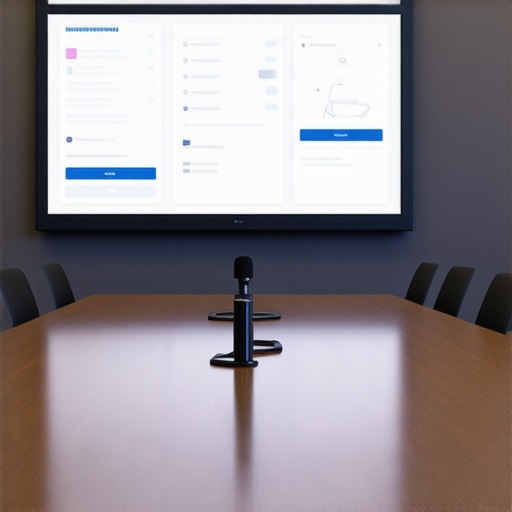
An advanced mistake I see constantly—and one I’m guilty of—is ignoring the ‘audio-visual footprint’ of a room. You check the Wi-Fi, sure, but do you check the echo? I once lost a consulting contract because the room I booked had high ceilings and glass walls that turned my voice into a garbled mess on the other end. Now, I always look for the acoustic fix for echoey conference rooms before I sign off on a booking. If the room sounds like a cathedral, your professionalism takes a hit. Beyond the sound, you have to be ready for the inevitable: how to deal with technical glitches during a remote board call is a skill every founder needs. I now carry a backup hotspot and a dedicated microphone because relying on the house hardware is a gamble I’m no longer willing to take.
The hidden danger of visibility during a strategic pivot
We love the ‘openness’ of modern hubs, but there is a massive trap here: the loss of intellectual property. When you are sketching out a new feature or a sensitive payroll change, those glass-walled rooms are a liability. I’ve walked past rooms and seen entire five-year plans written on whiteboards in plain view of competitors. You must learn how to keep your startups trade secrets in an open office by choosing ‘blackout’ rooms or using privacy filters. It’s not just about being paranoid; it’s about professional hygiene. If you’re planning something big, like a product reveal, you need the checklist for a glitch-free product launch event, which includes a room with total visual and data security. The ‘oops’ factor usually happens when we prioritize the view of the city over the security of our data. Don’t let a beautiful sunset be the reason your pitch deck gets leaked.
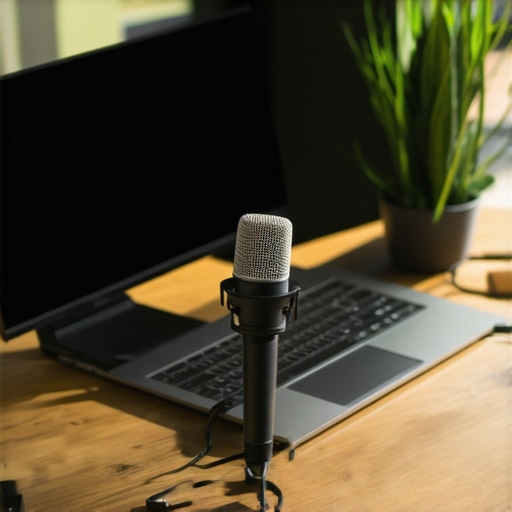
Maintaining that initial surge of professional energy requires more than just a credit card on file; it takes a literal toolkit. Once I stopped being a nomad and started thinking like a tenant, my gear changed. I no longer rely on the built-in webcam or the scratchy table microphone provided by the venue. I carry a Shure MV7 and a dedicated lighting ring in my bag. Why? Because as sound expert Julian Treasure famously noted in his research on acoustics, sound affects us physiologically, psychologically, and behaviorally. If your audio is thin and echoing, your client is subconsciously working harder to understand you, which leads to fatigue and a ‘no’ on the deal. Bringing your own gear ensures that no matter how the room is designed, your output remains elite. This level of preparation is also why I stopped worrying about the logistics of moving your startup to a professional space-2; when you own your tech stack, every room becomes your headquarters instantly.
Pack your own tech bag to bypass house equipment failure
The smartest move I ever made was creating a ‘meeting kit’ that lives in my car. It includes a 15-foot ethernet cable, a high-gain Wi-Fi adapter, and a portable power bank. Relying on a venue’s shared resources is a gamble that eventually fails. I’ve seen founders lose their minds because a ‘smart TV’ wouldn’t sync with their laptop. By bringing my own adapters and a backup hotspot, I eliminate 90% of the friction. This allows me to focus on how to keep your focus when the coworking hub is packed, rather than fighting with a HDMI cable. When you have your own reliable setup, you can confidently scale. We actually documented how we scaled our team using day passes only by ensuring every new hire had this exact same kit. It turned our fragmented remote team into a mobile strike force that could win a pitch from any zip code.
How can I keep my startup’s professional edge as the team grows?
Scaling is where most founders trip. You start with a desk, move to a four-person office, and suddenly you’re looking at a five-year lease that feels like a noose. The secret to maintaining a professional edge is staying lean for longer than you think you should. I’m a huge advocate for the modular approach. Instead of a massive central office, we use high-end conference rooms for the heavy lifting. This strategy is central to how to pick an office that fits your startups growth pace-2. You don’t need 2,000 square feet of empty desks; you need access to the best boardroom in the city for three hours a week. This keeps your overhead low while your public-facing image remains high-status. It also forces you to be intentional about your ‘physical’ time, ensuring that when the team is together, they are actually collaborating rather than just sitting in parallel silence.
The future belongs to the modular meeting room
Looking ahead, the trend is moving toward ‘intelligent’ environments. I predict that by 2026, the best spaces won’t just offer four walls, but AI-driven acoustics that automatically dampen background noise based on the number of people in the room. We are already seeing the future of conference rooms in startup ecosystems shifting toward these high-utility, short-term hubs. The era of the dusty, static corporate office is dying. In its place, we are getting dynamic spaces that adjust to our specific needs of the hour. My advice? Don’t wait for the technology to catch up. Start treating your next booking like a high-performance studio today. Go buy a dedicated portable microphone before your next big call and watch how the room—and your client—responds to the clarity.
The High Price of Staying a Ghost in the Lobby
I used to think solitude was my superpower, but it was actually my ceiling. The moment I started seeing every rental as a potential community, my business changed. You might find your next collaborator just by being present; it’s about the hidden benefits of a diverse desk neighbor. I’ve learned that simply showing up consistently in the same hub builds a layer of trust that no email sequence ever could. Don’t underestimate the psychological shift of a ‘real’ space. There are startup success secrets-choosing the perfect conference room at 0817-am that no home office can mimic, mainly because a professional environment forces you to play at a higher level. When you are in a space designed for growth, you stop thinking like a freelancer and start acting like a CEO.
The Gear That Keeps My Professional Image Intact
My “go-bag” is my insurance policy against the unpredictable. Beyond the high-end microphone I mentioned earlier, I recommend looking into how to maximize productivity in your startups conference rooms by 0245-pm to understand the flow of your meetings and what technical gaps you need to fill personally. I also rely on deep-dive resources like the Harvard Business Review guide to flexible work and curated lists of innovative meeting rooms that boost startup creativity. These aren’t just rooms; they are instruments for your business. I personally trust tools like a GL.iNet travel router for a secure, private Wi-Fi layer and a portable 4K webcam because the house hardware rarely captures the nuances of a high-stakes pitch.
#IMAGE_PLACEHOLDER_E#
Your Future Headquarters is Wherever You Choose to Lead
Transitioning from the dining table is a rite of passage every founder must navigate. If you are ready to take that step and leave the domestic distractions behind, read the move from a garage to a professional hub-a survival guide. The right meeting room is more than just four walls and a table; it’s the place where your ideas become reality and where your team finds its rhythm. By choosing coworking spaces unlock innovation top meeting rooms of 2025 at 1123-am, you are placing your startup in the slipstream of success. Have you ever felt that booking a professional space changed the way you presented your ideas to a client? Let me know in the comments below.