

I will never forget the sound of that industrial blender. It was 2022, and I was squeezed into a corner booth at a local cafe, trying to close the biggest deal of my life. I had my slides ready, my suit was pressed, and my laptop was barely clinging to the public Wi-Fi. Just as I reached the most critical part of my pitch, the barista started a double-batch of frozen lattes. The noise was deafening. My potential client looked confused, then annoyed, and finally, he just checked his watch. I knew right then that I’d lost him. It wasn’t the product that failed; it was the atmosphere. Today, I am going to show you why that “free” coffee shop table is actually the most expensive seat you will ever sit in and how a dedicated environment can save your next big deal.
Stop Letting Ambient Noise Kill Your Credibility
We’ve all been there. You think you’re being smart and saving on overhead by using a cafe as your unofficial headquarters. But let me tell you from my own mistakes: the free table is a lie. Between the erratic Wi-Fi and the constant clinking of porcelain, you aren’t actually working; you’re just surviving. I spent months thinking my hustle was enough to overcome a bad environment, but I was wrong. It wasn’t until I looked at the real cost of a free coffee meeting that I understood why my conversion rates were plummeting. Your environment speaks for you before you even open your mouth.
When you choose a professional setting, you aren’t just buying a desk; you’re buying the right to be heard without competition from a steamer wand. Many of my fellow founders are finally ditching coffee shops for sensitive client calls because they realized that professionalism isn’t optional when you’re asking for serious investment. I used to feel guilty about the extra expense, but then I realized that losing one major deal pays for a year of membership in a premium space.
Is a Private Meeting Room Really Worth the Monthly Cost?
I hear this all the time from skeptics: “But I can just wear noise-canceling headphones!” Sure, you can hear them, but can they hear the toddler screaming at the table next to you? According to research from the University of California, Irvine, it takes more than 23 minutes to refocus after a single distraction. In a public cafe, you’re resetting that clock dozens of times an hour. This is exactly why investors prefer meeting in professional spaces—they know your focus is your most valuable asset. It’s about creating a container for serious work.
If you’ve ever tried to host a workshop at a coffee shop, you know the soul-crushing feeling of realizing there aren’t enough outlets for your team. It’s embarrassing and entirely avoidable. By shifting to a dedicated hub, you signal to your clients and yourself that your business is a real entity, not just a hobby powered by caffeine. Have you ever had a high-stakes pitch completely derailed by something outside your control in a public space? Tell me your worst horror story in the comments. Next, we’re going to dive into the specific features you should look for in a workspace to ensure your next pitch lands perfectly.
Pick a Space That Actually Fits Your Team Size
Transitioning from a chaotic cafe to a structured environment isn’t just about spending money; it’s about tactical positioning. The first thing I do now, before even looking at the coffee menu, is look at the layout. You wouldn’t wear a tuxedo to a backyard BBQ, and you shouldn’t bring a 10-person team into a four-person pod. I once made the mistake of cramming my developers into a tiny ‘innovation booth’ because it was cheaper, and by lunch, two of them were ready to quit because of the lack of air. You have to pick a membership that scales with your teams size rather than forcing a fit that creates friction.
Check the Wi-Fi Before You Send the Invite
Nothing kills a high-stakes demo faster than a spinning loading icon. We’ve all felt that cold sweat. I remember sitting in a beautiful mid-century modern office, about to show a live dashboard to a VC, when the connection dropped. The space looked like a million bucks, but the backbone was built on home-grade routers. Now, I always test the wi-fi speed before you book that venue. Think of the internet connection as the oxygen of your business—if it’s thin, your pitch will eventually suffocate. In my experience, if a community manager can’t tell you the upload and download speeds immediately, keep walking.

Why Your Investor Pitch Needs a Neutral Meeting Room
There is a psychological shift that happens when you step onto neutral ground. If you meet at your house, you’re a hobbyist. If you meet at their massive headquarters, you’re an underdog. But why your investor pitch needs a neutral meeting room is simple: it levels the playing field. I’ve found that why a neutral meeting space leads to more honest feedback is because neither party feels the need to perform for their ‘home crowd.’ It’s just two professionals solving a problem. This is the same reason why serious founders are moving away from the ‘garage’ myth; the hidden costs of running a startup from your garage are usually paid in lost reputation and slow execution.
Master the Technical Basics for Every Presentation
Once you have the room, you need to own the hardware. Don’t assume the HDMI cable will work or that the dongle you brought will fit their specific monitor. I carry a ‘survival kit’ now because of a 2023 disaster where I spent twenty minutes of a thirty-minute meeting trying to get a projector to recognize my laptop. Beyond the cables, you need to master the exact lighting setup for professional video pitches if you’re doing a hybrid call. Shadows on your face make you look tired or shifty—bright, even light makes you look energized and prepared. It’s a small detail, but when you are competing with a hundred other startups, the small details are the only things that stick.
Let’s dig deeper into the psychology of the ‘startup perk.’ Everyone tells you that you need the beer taps and the ping-pong tables to attract top-tier talent. But in my experience, the opposite is true. Serious founders are finally realizing that why the all-inclusive membership is usually a trap. You are often paying a premium for lifestyle fluff when you should be paying for operational efficiency. I’ve seen teams get more work done in a focused, quiet environment than in a ‘fun’ office where no one can find a silent corner to actually think. Have you ever fallen into this trap? Let me know in the comments.
Can Your Workspace Layout Actually Prevent Effective Collaboration?
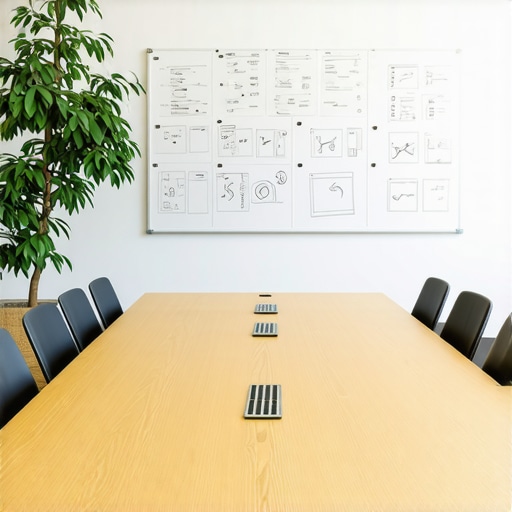
It’s a common myth that more open space equals more innovation. However, a study by Gensler found that the most effective workplaces prioritize deep focus over constant ‘planned’ collisions. When you are looking for a hub, you need to ask: why your meeting room layout is killing participation? If everyone is facing a giant screen and nobody is facing each other, you aren’t having a meeting; you’re just watching a movie together. In my most productive sessions, we moved away from the ‘theatre style’ setup and opted for modular tables that allowed for eye contact and rapid whiteboarding.
The Danger of Signing a Lease for a Team You Haven’t Hired Yet
One of the biggest ‘oops’ factors I see with first-time founders is the rush to secure a five-year traditional lease. They want a home they can grow into, but they end up paying for empty desks for eighteen months. This is exactly why you shouldn’t sign a lease for your first 10 employees. Your team’s needs will change faster than your business model. I’ve watched brilliant startups burn through their seed funding just to keep the lights on in an office that was 70% empty. Instead, smart operators are starting to stop overpaying for square footage you never use by leveraging flex spaces that grow with their headcount.
Why Your Startup Needs a Real Door Not Just a Glass Wall
The aesthetic of the modern office is dominated by glass, but for a startup, this is a privacy nightmare. While it looks sleek in photos, why your startup needs a real door not just a glass wall becomes obvious the moment you need to have a difficult HR conversation or discuss a sensitive acquisition. People feel watched in glass boxes, and that feeling of surveillance kills the psychological safety required for radical honesty. If you can’t have a messy, unfiltered brainstorming session without the whole floor watching you, you are in a ‘tech prison,’ not a workspace. I always tell my peers to check the truth about shared office noise levels and visual privacy before signing any long-term agreement. The ‘open’ office shouldn’t mean ‘exposed.’ Next, we’ll look at how to actually vet these spaces before you put down a deposit.
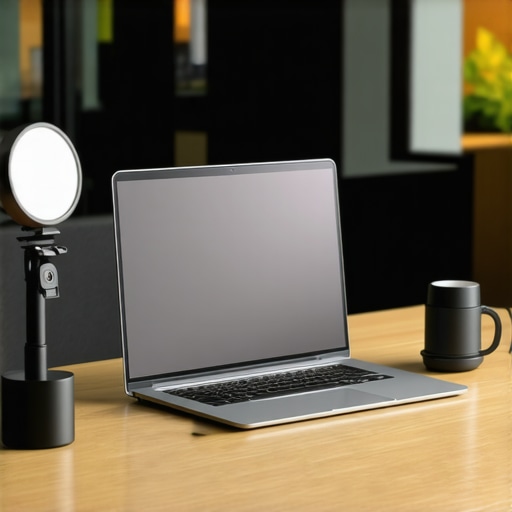
Once you’ve escaped the ‘tech prison’ of glass-walled boxes, the real work of maintenance begins. I’ve seen so many founders secure a beautiful space only to let their productivity wither because they didn’t bring the right tools. You can’t rely on the space providing everything. I keep a dedicated ‘Go-Bag’ that lives in my trunk, containing an Elgato Key Light Mini and a proper directional mic. Why? Because the exact lighting setup for professional video pitches is rarely what’s provided by default in a standard meeting room. These tools ensure that whether I’m in a high-end hub or a last-minute satellite office, I look like I’m in a permanent studio.
How do I keep my team from feeling like nomads?
Scaling a team across flexible locations can feel like you’re losing the ‘soul’ of your company. To fight this, I’ve started treating our community manager as a vital part of our HR strategy. I’ve realized that why your startup needs a community manager more than a lobby is because they are the glue that connects your remote employees to a physical culture. If you don’t have a central anchor, your team starts to drift. This is why we’ve shifted toward why suburban flex spaces are the new downtown office—they offer shorter commutes and more consistent ‘neighborhood’ vibes that keep the team grounded.
Security is the silent killer of startup success in shared environments. I use a hardware VPN—specifically a GL.iNet travel router—to create a private bubble for my team’s devices. According to the Wi-Fi Alliance, even WPA3 networks in public settings can leave you vulnerable if you aren’t managing your own endpoint traffic. You absolutely must understand why endpoint protection services matter more when your team is hybrid. I’ve watched a competitor lose three months of dev work because they were lazy with their local file sharing on a ‘trusted’ coworking Wi-Fi. Learning how to keep your startups trade secrets in an open office isn’t just about privacy screens; it’s about a digital-first mindset for a physical world.
Looking ahead, I predict we are moving toward ‘hyper-localized hubs’ where the the future of conference rooms in startup ecosystems will involve integrated AR for seamless hybrid whiteboarding. We are already seeing prototypes that make ‘Zoom fatigue’ a thing of the past. To stay ahead, you need to be vetting your current spaces for more than just free snacks. Start by learning how to spot a bad coworking community before joining so you don’t get stuck in a dying ecosystem. My best advice? Tomorrow morning, before your first call, take five minutes to test the wi-fi speed before you book that venue or start your session—it’s the simplest way to prevent a digital disaster.
Hard Truths I Learned While Scaling
Looking back at that loud cafe in 2022, I realize the “grind” isn’t about suffering through bad acoustics; it is about making strategic choices that protect your mental energy. First, never underestimate the power of “incidental networking.” I have found that the hidden value of the casual coffee machine chat often leads to more partnerships than any formal mixer I have ever attended. Second, your team needs a basecamp. Even if you are “remote-first,” the moment you realize why your startup needs a physical anchor for its remote team is the moment your company culture starts to solidify. Lastly, the true ROI of a premium coworking membership isn’t just the desk; it is the fact that you stop playing defense against your environment and start playing offense with your time.
The Gear I Carry to Every Meeting Room
I do not leave my presentation quality to chance anymore. I always carry a hardware VPN because I understand why endpoint protection services matter more when your team is hybrid and working on shared networks. For those high-stakes calls, I never rely on overhead fluorescent tubes; I have mastered the exact lighting setup for professional video pitches using a portable LED panel. Also, if you are planning a big reveal, always run through the checklist for a glitch-free product launch event before you invite a single guest. These tools turn any generic meeting rooms into your personal command center.
#IMAGE_PLACEHOLDER_E#
Your Next Big Win Starts with a Real Door
It is time to stop playing small in noisy corners and start claiming the professional space your business deserves. Whether it is a private office or a strategically booked conference room, your environment should be a tailwind, not a headwind. By choosing a coworking environment that actually supports your workflow, you are telling the world—and your team—that your mission is here to stay. Don’t let a bad atmosphere be the reason your next startup idea stays on the drawing board. Have you ever felt like your workspace was actually holding your team back from its full potential? Share your experience in the comments below.