
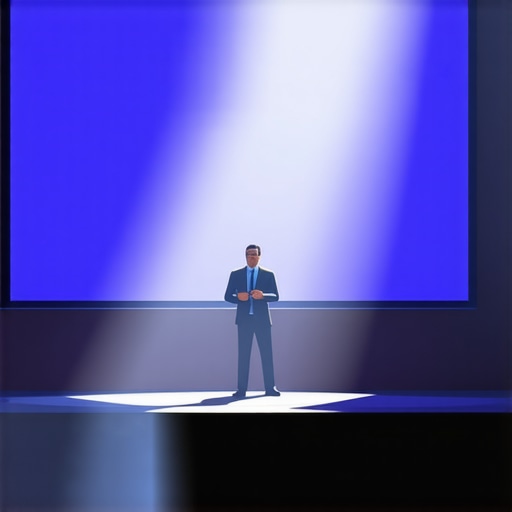
It was a mishap that felt all too familiar—a presentation in a sleek coworking space, confident in my material but feeling unexpectedly nervous. As I clicked to my slide on growth strategies, I noticed my face was barely visible, shadows creeping across my features. My voice wavered, and I could sense the subtle disconnect. That moment hit me hard: maybe it wasn’t the content, but the lighting that sabotaged my pitch.
Why Your Lighting Might Be Sabotaging Your Startup Pitch
Sometimes, our biggest hurdles aren’t what we expect. I learned early on that good lighting isn’t just about aesthetics; it’s about clarity, professionalism, and connection. When your audience can’t see you clearly, they tune out — even if your ideas are brilliant. Strangely enough, a study from Harvard Business Review indicates that presentation quality, including lighting, can influence persuasion as much as the message itself. If your pitch feels strong but your lighting is poor, you might be losing more than you realize.
Have you ever faced a situation where your pitch or video call went south, not because of your words, but because of how you looked on screen? That’s exactly what I want to help you fix.
Will Better Lighting Turn Your Startup’s Fate Around?
Early in my journey, I made a crucial mistake—ignoring the environment I was in. I thought, “As long as I have my slides and a good script, the room doesn’t matter.” Wrong. The environment, especially lighting, can completely change the perception. Even with a compelling narrative, a poorly lit room can cast doubt, make you appear unprepared, or worse, unprofessional.
So, if you’re serious about elevating your startup’s image and closing deals confidently, mastering your lighting is non-negotiable. Let’s explore how to do just that, step by step.
Set Your Stage Before the Meeting Begins
Start by arriving early to your coworking space and assess the lighting environment. Aim for a space with abundant natural light or consistent overhead lighting. Use desk lamps or portable LED panels to fill in shadows on your face, ensuring your expressions are clear and engaging. In my own experience, bringing a compact adjustable light helped me turn a dim corner into a professional-looking spot, instantly boosting my confidence and audience engagement.
Choose the Right Equipment to Shine Bright
Invest in a quality ring light or panel light that offers adjustable brightness and color temperature. Warm tones (around 3,000K) tend to feel inviting, while cooler tones (around 5,500K) mimic daylight and enhance clarity. When preparing for a crucial pitch, I used a portable LED light, which I positioned directly in front of me to eliminate shadows and create a balanced, professional appearance. This simple step made my face pop on camera and subtly conveyed professionalism.
Position Yourself Strategically
Place your light source at eye level, slightly angled to avoid harsh shadows under your chin or nose. Think of it like framing a portrait; the goal is to highlight your features without flattening or distorting your face. During a last-minute pitch, I rearranged a coworking lounge’s movable lamp, positioning it just right for a natural glow. The result was a genuine, vibrant appearance that made my message resonate more effectively.
Shape Your Environment for Impact
Pay attention to your background and surroundings. Use a neutral or tidy backdrop to avoid distractions. If the space has a cluttered wall or harsh shadows, consider hanging a fabric or using a portable screen to soften the background. I once used a throw blanket over a bookshelf, which complemented my lighting setup, creating a cohesive visual tone and boosting my authority during virtual investor meetings.
Manage Known Challenges In-Advance
Recognize common issues such as backlighting from windows or uneven light distribution. Close blinds or curtains to prevent unwanted light contrasts. Use reflectors or white foam boards opposite your main light source to bounce light onto your face evenly—like natural reflection from a lake brightening a boat under the sun. When I faced a bright window behind me, I set up a reflective board, instantly leveling my face’s illumination and removing distracting shadows.
Practice Makes Perfect with Technical Tests
Before your actual pitch, do a quick camera test to evaluate lighting. Record a short clip, review it, and adjust your setup accordingly. This step saved me from surprising shadows or unflattering glare during high-stakes presentations. Many coworking spaces either lack proper lighting or have inconsistent setups, so taking control ensures your appearance aligns with your professionalism. For more insights on choosing the right space, visit this guide.
Many entrepreneurs assume that renting a well-rated conference room or choosing a trendy coworking space automatically ensures smooth meetings and productive collaborations. However, the common misconception is that location and aesthetics are enough. In reality, the subtle nuances of how a space influences interactions are often overlooked, leading to missed opportunities and failed impressions. For example, a recent study from Harvard Business Review emphasizes that environmental cues, including room acoustics and layout, significantly impact decision-making and team dynamics.
A frequent mistake startups make is investing heavily in flashy spaces without paying attention to functional details like soundproofing or lighting, which can hamper communication and focus. Some assume that all meeting rooms are interchangeable, but spaces with poor acoustics or inadequate privacy can create friction, reduce trust, and diminish creativity. It’s crucial to evaluate whether a space truly supports your team’s collaborative goals rather than settling for convenience or visual appeal alone.
Ever noticed how a small echo or background noise during a crucial pitch can derail your message? That’s a classic example of neglecting the room’s acoustic design. Choosing spaces that optimize sound quality—not just size or decor—can make a real difference. Likewise, the myth that every coworking area fosters innovation is misleading; specific environments foster better brainstorming, depending on layout and amenities. You might want to explore [the future of conference rooms in startup ecosystems](https://coworkingcentral.com/the-future-of-conference-rooms-in-startup-ecosystems) to see how design influences productivity.
Another advanced nuance is the importance of space flexibility. In high-growth startups, static rooms become quickly outdated. Spaces that adapt—offering movable furniture, varied breakout zones, and tech-ready setups—can accommodate evolving team needs. Ignoring this flexibility often results in wasted investments and awkward transitions as your team scales. According to experts in workspace optimization, the ability to customize your environment boosts morale and efficiency.
A common ‘oops’ involves underestimating the value of incidental interactions—what some call serendipitous meetings. Spaces designed with open, communal areas adjacent to private rooms encourage spontaneous conversations, fostering innovation. Conversely, isolated rooms might hinder such vital exchanges. If you’re curious about the latest trends, check out [top meeting rooms of 2025](https://coworkingcentral.com/coworking-spaces-unlock-innovation-top-meeting-rooms-of-2025-at-1123-am), which highlight how spatial design directly impacts startup success.
Finally, always consider technical integrations—smart tech, reliable Wi-Fi, and presentation tools—most spaces overlook these essentials. An environment lacking seamless connectivity can severely disrupt a crucial pitch or collaboration session. It’s not just about comfort; it’s about operational readiness. For more on maximizing these elements, visit [how to choose the perfect conference room](https://coworkingcentral.com/how-to-choose-the-perfect-conference-room-for-business-success).
In summary, understanding the nuanced impact of physical environment factors can elevate your startup’s meetings from mundane to transformative. Don’t fall for the trap of superficial space choices—delve deeper, test meticulously, and prioritize functionality over flash. Have you ever fallen into this trap? Let me know in the comments.Maintaining a productive and professional environment in your startup’s coworking space or conference room requires deliberate effort and the right tools. Personally, I swear by a few key pieces of equipment that have transformed the way I manage my spaces and meetings. First, investing in a high-quality portable LED panel light, like the Elgato Key Light, was a game-changer for me. Its adjustable brightness and color temperature allowed me to instantly improve my video calls, making my appearance more consistent and professional, regardless of natural lighting conditions. Incorporating such lighting solutions not only elevates your on-screen presence but also boosts your confidence during crucial pitches. Secondly, I rely heavily on scheduling and room management software, such as Doodle or Google Calendar, integrated with your workspace’s booking system. These tools help prevent double bookings and ensure that your conference rooms are always ready when needed. They also provide analytics on usage patterns, highlighting which spaces are most effective for different types of meetings. I learned that regularly analyzing this data enables long-term optimization of your layout and resource allocation. When scaling your operations, consider smart room management systems like Robin or Teem, which automate check-in processes and provide real-time occupancy data. These technologies future-proof your workspace, making it adaptable as your team and meeting demands grow. Looking ahead, the trend points toward integrating IoT devices and AI-driven analytics to enhance space utilization and energy efficiency further. For example, smart sensors could automatically adjust lighting and climate control based on room occupancy, reducing costs while maintaining comfort. To stay ahead, I recommend trying out a comprehensive room management system that combines occupancy sensors with analytics. This investment not only keeps your meeting spaces running smoothly but also positions your startup as an innovative, forward-thinking brand. Want to explore more about the future of workspace technology? Visit this insightful article. Remember, a well-maintained space is key to sustaining long-term relationships and inspiring your team. Regularly review your equipment and processes, adapt as your needs evolve, and don’t hesitate to seek expert support when scaling up your operations. For tailored solutions or further assistance, reach out through our contact page. Keep your environment optimized, and your startup will thank you for it.
Lessons I Wish I Could Rewind
One of my most glaring mistakes was neglecting the importance of environment even after mastering my pitch content. I learned that no matter how compelling your message, poor lighting can undermine your authority and make you appear unprepared. That realization hit me when a confident presentation looked lackluster because I was in a dim, shadowy corner.
Another lightbulb moment came when I underestimated the power of simple tech upgrades. Investing in a quality ring light transformed my video presence overnight, proving that equipment quality truly impacts perception. It’s easy to think environmental factors are minor, but they can be game-changers in high-stakes startup meetings.
Lastly, I learned that space flexibility and background management aren’t just optional — they’re essential. A cluttered or inconsistent background can distract your audience, regardless of your delivery. Strategically softening or decluttering your environment creates a professional atmosphere that earns trust and attention.
Tools That Elevate My Startup Spaces
My go-to tech is the Elgato Key Light because it offers customizable brightness and warmth, perfect for adjusting your appearance on the fly. It helped me maintain consistent, professional lighting during pitches, even in less-than-ideal spaces. For managing room bookings and ensuring seamless meetings, I rely on [smart room management systems](https://coworkingcentral.com/how-to-maximize-productivity-in-your-startups-conference-rooms-by-0245-pm) like Robin. They make scheduling easy and prevent last-minute surprises.
For background management, I use simple tools like portable fabric screens and reflective foam boards. These inexpensive solutions soften space visuals and eliminate distracting shadows. Understanding how environment tools work together to create the right ambiance is crucial, especially as your startup scales and needs more adaptable spaces.
Looking toward the future, integrating IoT sensors for lighting and climate control promises even greater control and efficiency. Imagine your environment adjusting automatically as team sizes grow or meetings shift — that’s the next frontier. I recommend exploring these innovations early; they can become core assets in your growth strategy.
Your Next Step in Perfecting the Startup Environment
Remember, every detail counts when creating an environment that fosters confidence and professionalism. Your startup’s success isn’t just about ideas — it’s also about how you present and manage your spaces. Taking the time to optimize lighting and environment is a subtle investment that pays off in every investor pitch, team meeting, or client demo.
Have you ever overlooked how your surroundings impact your message? Drop a comment below—I’d love to hear your experiences and tips on creating the perfect environment for startup success.