

I remember walking into my first downtown hub at 9:15 AM, full of caffeine and ambition. I expected a sleek workstation; instead, I found a sea of ‘Occupied’ signs and a single, wobbly stool near the noisy espresso machine. My back ached for three days, and my output for that week was pathetic. It was a rookie error that cost me a full day of deep work. That is the harsh reality of the modern office: if you do not have a plan, you are stuck with the leftovers. I have spent years trial-and-erroring my way through different floors—from high-energy startup incubators to quiet, library-like suites. I once spent an entire week sitting in what I thought was the ‘power spot’ only to realize the Wi-Fi dropped every time someone used the microwave. Talk about a productivity killer! Since then, I have developed a mental checklist that ensures I never end up on a beanbag chair again. Today, I am pulling back the curtain on how I transformed from a desk-less nomad into the person who always seems to have the prime real estate. We are going to master the layout and finally understand how to get the best desk in a hot-desking setup without breaking the unwritten rules of the floor. Tell me, have you ever arrived at 10 AM only to find the only available ‘desk’ is a cramped spot at the kitchen counter? It feels like failing before you even start, right?
Stop Fighting for Scraps and Claim Your Zone
In those early months, I made a massive mistake: I assumed everyone followed the same logic I did. I would leave my jacket on a chair and wander off for a two-hour lunch, thinking my presence was ‘felt.’ I was the ‘jacket guy’ everyone hated. Mastering the social contract is just as important as showing up early. You need to weigh the pros and cons of fixed desks versus hot-desking before you commit to a routine. I used to think I was being flexible, but I was actually just being unprepared. Have you ever faced that awkward moment where you realize you have accidentally ‘stolen’ someone’s unofficial favorite spot? It is a networking nightmare. I learned that lesson the hard way, and now I prioritize clarity over territoriality. Knowing the etiquette of leaving your gear on a shared desk is your first step toward becoming a respected regular rather than a temporary nuisance.
Is Any Seat Actually Better Than Another?
There is a common skepticism that a desk is just a desk. If you have your laptop and a pair of solid noise-canceling headphones, why does it matter if you are by the window or tucked away under a flickering fluorescent bulb? But the data suggests your environment is doing more heavy lifting than you realize. A landmark study published by the Harvard Business Review revealed that physical proximity to ‘productive’ coworkers can increase your individual output by up to 15%. This means your ‘lucky’ seat by the window is not just about the view; it is about the social contagion of focus. When you know how to keep your focus when the coworking hub is packed, you are not just surviving the day; you are actively optimizing your brain’s performance. We are going to look at why that corner nook is worth the 8 AM arrival time and how to spot it before anyone else does.
Hunt the Perimeter and Map the Power Outlets
Treat your first hour in a new space like a military reconnaissance mission. Most rookies walk through the front door and take the first empty seat they see. That is how you end up in the ‘splash zone’ of the coffee machine. Instead, walk the entire perimeter. You are looking for ‘anchor points’—desks that have a wall at their back or are shielded by a structural pillar. This reduces visual distractions and gives you a psychological sense of security. Last March, I ignored this rule and sat in the dead center of an open-plan floor. I felt like a goldfish in a bowl. Every person walking to the restroom or the kitchen passed within three feet of my monitor. By noon, my focus was shredded. I learned that the best spots are often tucked away in corners where foot traffic naturally thins out. While you are at it, check the hardware. Do not assume every floor box works. I once spent twenty minutes setting up my external monitors only to realize the outlet was dead. Now, I carry a small phone charger to test power before I even unpack my laptop. 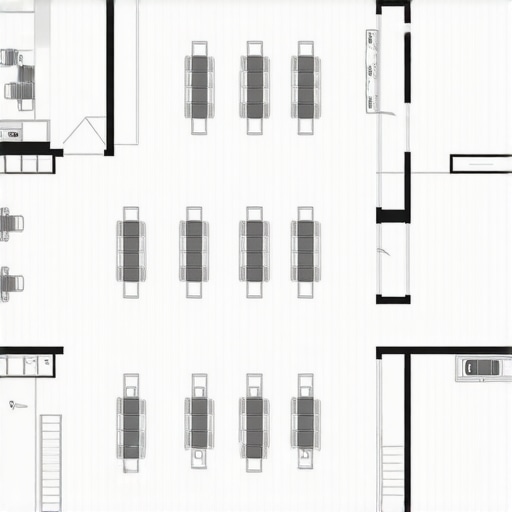
Befriend the Community Manager Before You Need a Favor
The most underrated asset in any startup hub is not the high-speed fiber or the free beer; it is the person sitting at the front desk. Understating the role of community managers in the modern workspace can change your entire experience. These individuals know which desks are chronically cold, which ones have the fastest hardwired ports, and which members are likely to spend three hours on a loud sales call. I make it a point to learn their names on day one. A few months ago, this habit saved my skin. The hub was overbooked for a local tech event, and every hot-desk was taken. Because I had built a rapport with the manager, they ‘found’ an unlisted desk in a private suite that was vacant for the day. If you are struggling to break the ice, remember that why your local barista is your best networking asset applies here too—kindness and a genuine interest in the space go a long way toward getting the ‘inside track’ on the best seating.
Silence the Chaos Without Looking Like a Recluse
Even in the best spots, noise is the ultimate productivity killer. You need a tiered strategy for managing sound. If you find yourself in the middle of a high-energy zone, do not just suffer in silence. Knowing how to handle the noise problem in open-plan offices is about more than just buying the most expensive headphones. Use ‘visual signaling.’ When my noise-canceling cans are on, it is a signal to my floor-mates that I am in deep work. However, if the decibel level hits a breaking point, I move. I have a ‘backup list’ of quiet zones—usually the far corners of the lounge or secondary floors. I once tried to power through a brainstorm session next to a team celebrating a seed round. I failed miserably. Now, I scout the quietest corners for those high-stakes tasks and save the social areas for low-intensity admin work.
Spot the Glare Before Your Screen Becomes a Mirror
Natural light is a double-edged sword. We all want to be near the windows, but direct sunlight will turn your high-end Retina display into an expensive mirror. I once spent an entire morning squinting and shifting my chair every fifteen minutes because I failed to anticipate the sun’s path. It was a physical and mental drain. When you are finding a meeting room with decent natural light, or even just a desk, look for north-facing windows or those with high-quality diffusion blinds. Before you commit to a long-term spot, use a quick app to check the orientation. If you are booking a space for a specific high-stakes call, you must how to test the wi-fi speed before you book that venue and the light quality at the specific time of your appointment. Consistency is the goal; if you have to fight your environment, you cannot fight for your startup’s success.
The ‘Fishbowl’ Trap and Other Modern Meeting Blunders
Most people assume that a glass-walled conference room in the center of the lobby is the ultimate sign of a ‘transparent’ startup culture. It looks great in the brochures, right? But here is the nuance: humans are biologically wired to feel exposed when they can be seen from all sides. I have seen high-stakes negotiations fall apart because the participants felt like they were on display for the entire floor. This is why you need to understand why your startup needs a real door, not just a glass wall. If your team feels like they are being watched, they will stick to safe, ‘performative’ ideas instead of the radical honesty required to fix a failing product.
Does your meeting room layout kill genuine participation?
We often focus on the tech—the 4K screens and the omnidirectional mics—but why your meeting room layout is killing participation usually comes down to the table itself. A fascinating study by the Journal of Consumer Research highlighted that the physical shape of a meeting space fundamentally alters how information is processed. Circular arrangements promote a sense of ‘togetherness’ and collective brainstorming, whereas the classic long rectangular boardroom table reinforces a hierarchy that can silence junior developers. If you are trying to innovate, stop sitting in a line. This is a common ‘oops’ factor: founders book a traditional boardroom for a creative sprint, then wonder why the junior hires stayed silent. Knowing the hidden psychology of circular meeting tables can be the difference between a stale update and a breakthrough.
Avoid the High-Tech Friction That Slows Down Your Pitch
There is a dangerous myth that ‘more tech equals more professional.’ I have watched founders lose their momentum because they spent ten minutes wrestling with a proprietary ‘smart’ tablet just to lower the blinds. In reality, the problem with tech-heavy meeting rooms that nobody knows how to use is that they introduce cognitive friction at the exact moment you need to be fluid. When you are prepping, you should how to vet a conference room for client-facing speed by ensuring the ‘basics’—like a standard HDMI cable—are the primary option, not a backup. 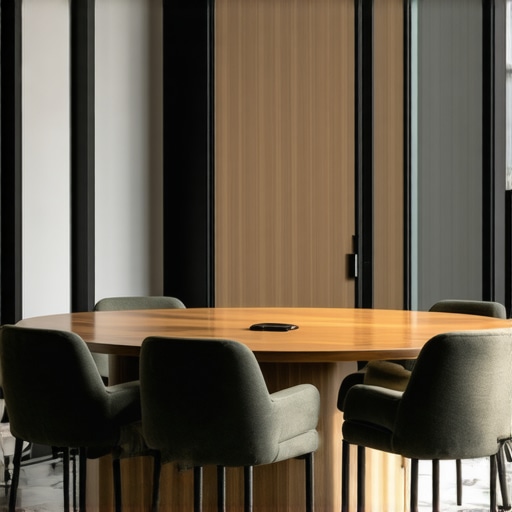
What happens when your ‘professional’ venue fails the vibe check?
I once brought a potential lead to a luxury hotel lobby, thinking it would impress them. Instead, we spent the whole time shouting over a jazz trio. It was a disaster. I learned then that why you should stop taking clients to hotel lobbies is about control. A neutral, dedicated workspace allows you to manage the lighting, the acoustics, and the interruptions. Before you sign your next booking, ask yourself if the ‘amenities’ are actually distractions. Have you ever fallen into this trap? Let me know in the comments. Whether it was a room with no ventilation or a ‘smart’ TV that refused to sync, these details are what separate the veterans from the rookies. It pays to understand the future of conference rooms in startup ecosystems, where flexibility and psychological comfort are finally outweighing the need for expensive, unused square footage.Once you have mastered the art of finding the right corner, the challenge shifts from survival to sustainability. Maintaining that peak performance over months, not just days, requires a curated ‘mobile stack’ that you treat with religious care. I learned this the hard way when my generic charging cable frayed during a final investor pitch. Now, I never travel without a braided, high-wattage USB-C cable and a portable 100W battery bank. It sounds like overkill until the hub’s power grid blinks. I also track my expenses meticulously because most founders forget to check is your coworking membership a tax deductible expense at the end of the year. This transition from a temporary visitor to a savvy regular is what separates the hobbyists from the heavy hitters.
Your tech kit is only as strong as your weakest cable
Personal experience has taught me that hardware failure is the only thing that can truly stop a momentum train. I use a specific Pelican-style hard case for my peripherals—mouse, mechanical keyboard, and a portable monitor. Why? Because the ‘soft’ bags I used in 2022 resulted in two cracked screens. Beyond the physical, I’ve had to become my own IT department. According to the IEEE 802.11 standard documentation, signal interference in dense environments is the primary cause of latency, not just raw speed. This is why you must how to test the wi-fi speed before you book that venue using a tool like Ookla or Wi-Fi Analyzer to check for channel congestion. If the 5GHz band is crowded, I move to a different floor. 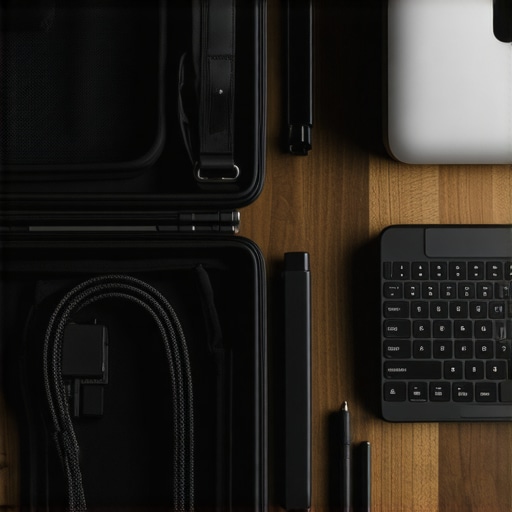
Stop relying on the hub for your digital safety
We often focus on the physical desk, but your digital ‘seat’ is even more vulnerable. Public Wi-Fi is a playground for packet sniffing. I never log on without a dedicated hardware firewall or at least a robust VPN that supports WireGuard protocols. Understanding why endpoint protection services matter more when your team is hybrid became a priority after a colleague had their credentials scraped in a ‘premium’ lounge. To stay productive, I also recommend a ‘deep work’ timer. I use a physical Hexagon timer because it creates a psychological boundary that software apps just can’t replicate. When that timer is ticking on my desk, my floor-mates know I am off-limits. If you find yourself working late frequently, you should learn how to get the most out of a 24-7 access membership to ensure you aren’t paying for hours you never use.
How do I keep the culture alive as we grow out of hot-desks?
As your startup gains traction, you will inevitably hit the ‘scaling wall.’ You can’t run a ten-person engineering team from a set of scattered hot-desks without losing the collective thread. I’ve seen teams try to force it, and it always leads to a breakdown in communication. This is why we moved our engineering team to a private suite while keeping our sales team in the common area. It provided the necessary ‘silence’ for coding while maintaining the ‘energy’ for closing deals. My prediction for the next five years? We will see a massive rise in ‘smart’ occupancy sensors that adjust lighting and temperature based on your personal profile before you even sit down. To prepare, focus on how to find an office space that grows with your hiring plan rather than just looking at next month’s burn rate. If you haven’t audited your ‘kit’ in the last six months, start there—swap out one flimsy cable or unreliable app today and see how much cognitive load it clears.
The Brutal Lessons I Learned While Scaling My First Team
Looking back at my first year in a shared hub, the biggest hurdle wasn’t the code or the sales; it was the friction of our surroundings. I realized that a professional environment is a direct extension of your brand’s integrity. When you’re ready to jump from a solo founder to a leader, you have to stop thinking about the ‘cheapest seat’ and start looking for strategic advantages. I’ve seen teams implode because they didn’t realize how to choose a space that mirrors their ambition. A desk isn’t just wood and metal; it’s the physical boundary of your focus. If you treat your workspace like an afterthought, your product will eventually reflect that same lack of intentionality. Always remember that investors judge your operational maturity by the environment you choose to host them in.
Gear Up With the Gear That Actually Matters
If you want to move fast without breaking your spirit, you need a setup that is both mobile and invincible. My current ‘battle station’ is built on three pillars: Redundancy, Privacy, and Ergonomics. First, never rely on a single cable; keep a high-quality backup in your bag at all times to prevent a mid-pitch disaster. Second, treat your digital security as a non-negotiable—I always double-check how my data is being shielded on shared networks using a dedicated hardware firewall. Finally, don’t forget the financial side of your growth; it is incredibly easy to convert your daily overhead into a smart tax advantage if you keep the right records. Use tools like a braided USB-C cable and a high-wattage battery bank to ensure that no matter where you sit, the quality of your work remains elite.
#IMAGE_PLACEHOLDER_E#
Stop Settling for the Wobbly Stool and Claim Your Future
The journey from a cluttered kitchen table to a sleek, high-energy startup hub is a rite of passage for every entrepreneur. It’s okay to start small, but it’s a mistake to stay small in your habits. By mastering the layout, the tech, and the social dynamics of your coworking space, you are building the discipline required for the next stage of your business. You don’t need the most expensive office in the city, but you do need an environment that respects your time and your talent. Go out there, find your corner, and build something that lasts. Mastering your startup success starts with the very next desk you choose. What’s the one thing in your current workspace that drives you crazy, or the one ‘hack’ that saved your productivity? Let me know in the comments below!