
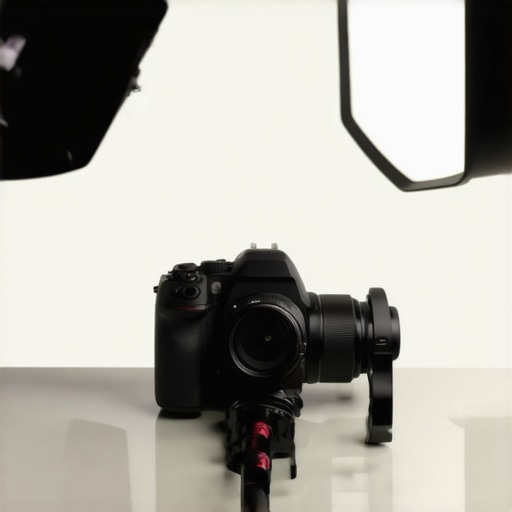
I was three minutes into the most important investor pitch of my life when I caught a glimpse of my own video feed. I didn’t look like a confident founder; I looked like a grainy silhouette in a witness protection interview. I was sitting in one of those gorgeous, glass-walled conference rooms in the city, but the harsh overhead fluorescent lights and the massive window behind me turned my face into a dark, muddy blur. It was embarrassing. Despite my polished deck, I could tell the VCs were struggling to connect with me because they literally couldn’t see my eyes. That failure taught me a hard lesson: in the world of remote fundraising, your lighting is your first impression.
Stop Looking Like a Shadow in Your Own Pitch
That disastrous afternoon sent me down a rabbit hole of lumens, color temperatures, and portable gear. Most of us think that if we find a space with a view, we are set. But finding a meeting room with decent natural light is only half the battle; controlling that light is where the magic happens. I used to make the mistake of thinking my laptop’s built-in webcam could compensate for a dark room. It can’t. It just adds digital noise that makes you look unprofessional. Today, I want to walk you through the exact three-point lighting setup I now carry in my backpack, ensuring that whether you are in a crowded hub or a private suite, you look like a pro. Why your startup needs a better first impression starts with the visual quality of your calls. Have you ever joined a meeting and immediately felt that the person on the other end was ‘playing in the big leagues’ just because their video was crisp and well-lit? That is the goal here.
Can’t I just use the lamp on my desk?
You might be skeptical. After all, you’re a founder, not a cinematographer. But the reality is that poor lighting triggers a subconscious bias. A study by the University of Texas at Austin found that higher-quality video increases a speaker’s perceived competence and trustworthiness. When you look like you’re calling from a basement, it’s harder to convince someone to trust you with a million-dollar check. I learned the hard way that even why investors prefer meeting in professional spaces often comes down to the control those environments offer over your presentation. If you’ve ever struggled with a flickering bulb or a weird yellow tint during a call, you know exactly what I’m talking about. Have you ever had a tech glitch or a lighting fail right as you were getting to the ‘ask’ in your pitch? It’s a gut-punch, but it’s entirely avoidable. We are going to fix your key light, your fill light, and that tricky backlighting once and for all, so you can stop worrying about the shadows and start focusing on your vision.
Master the Geometry of Your Professional Video Setup
To look like a leader, you have to stop relying on the luck of the room’s architecture. When I’m prepping for a call, the first thing I do is locate the ‘Key Light.’ This is your primary source of illumination. In most glass-walled hubs, your temptation is to face the window, but that often leads to overexposure. Instead, I position my portable LED panel about 45 degrees to my left or right, slightly above eye level. This creates a natural depth on the face that makes you look more three-dimensional and engaging. I remember a specific Series A follow-up where I was stuck in a windowless ‘phone booth’ that felt like a closet. By using my portable key light instead of the yellow overhead bulb, I managed to maintain a professional glow that masked the fact I was basically in a broom cupboard. Finding a workspace that doesn’t feel like a tech prison starts with how you manipulate the environment you are given.
Erase Harsh Shadows with a Quick Fill
If you only use one light, the side of your face away from the source will look like a noir film. That is where the ‘Fill Light’ comes in. This light should be softer and placed on the opposite side of your Key Light. You don’t even need an expensive second lamp; a large white notebook or a piece of foam board propped up can bounce enough light back onto your face to soften those shadows. This is a crucial part of how you how to prep for a high stakes board meeting. I once used a white takeout menu to bounce light during a high-stakes call when my second battery died. It worked perfectly. The goal is balance; you want to be seen clearly without looking like you’re under a spotlight in a police interrogation.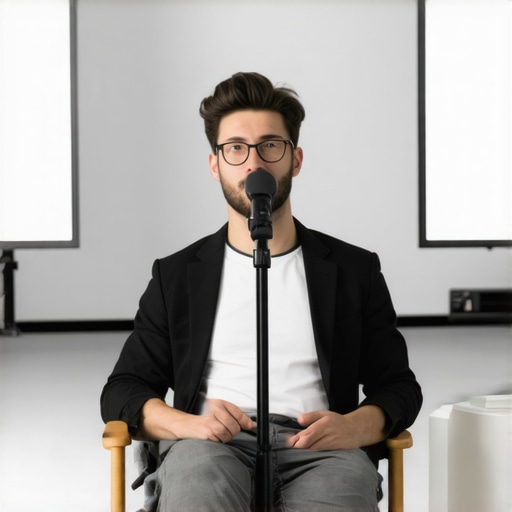
Pop Out from the Background with a Separation Light
The biggest mistake founders make in high-end spaces is ‘blending’ into the expensive furniture. If you have dark hair and the room has a dark wall, you’ll look like a floating head. This is why why your investor pitch needs a neutral meeting room that allows for some depth. Use a third light—a ‘Hair Light’—placed behind you and off to the side, aimed at the back of your head or shoulders. This creates a thin rim of light that separates you from the background. It adds a level of cinematic quality that screams ‘competence’ before you even open your mouth. Even if you are just choosing the perfect conference room for a quick sync, being mindful of the wall color behind you can change the entire vibe of the meeting.
Check Your Tech Before the Camera Rolls
Lighting is useless if your stream is stuttering. Always arrive ten minutes early to run a speed test and a camera check. You need to know how to deal with technical glitches during a remote board call before they happen. I’ve had moments where the room’s smart-glass decided to tint right in the middle of my deck, throwing my color balance into a tailspin. By having my own controlled lighting rig, I didn’t have to scramble to fix the room’s settings while trying to explain my CAC-to-LTV ratio. This level of preparation shows investors that you are in control of your surroundings, which implies you are in control of your business.I’m going to go against the grain here: stop obsessing over windows. While everyone is busy finding a meeting room with decent natural light, they’re usually ignoring the variable that actually kills deals: lighting consistency. Natural light is a fickle partner. I’ve seen founders start a call in a beautiful golden-hour glow only for a cloud to pass by, plunging them into a blue-tinted gloom that makes them look like they’re broadcasting from a submarine. Professional environments are about control, not luck.
The Dangerous Allure of the Glass-Walled Fishbowl
The biggest “oops” factor in modern coworking is the obsession with glass. We think it looks “startup-y” and transparent, but from an expert perspective, it’s a functional nightmare. Glass is an acoustic mirror. Without proper treatment, your voice bounces around like a pinball, making you sound thin and distant to the person on the other end. Moreover, there is a massive privacy risk. If you are discussing sensitive terms, you don’t want the team in the next pod reading your whiteboard or seeing your financial projections through the wall. This is why your startup needs a real door, not just a glass wall whenever possible. If you’re stuck in a fishbowl, you need to understand the acoustic secrets of high-end conference rooms, such as utilizing soft furnishings or portable acoustic panels to dampen the echo. 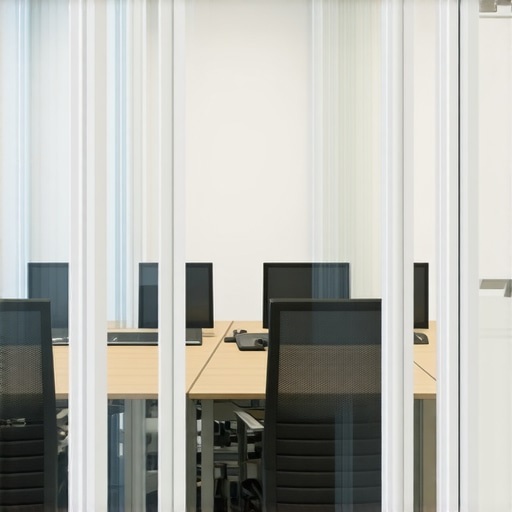
Is Your Room Layout Silencing Your Team?
Beyond the tech, the physical geometry of the room dictates the power dynamic. Many founders don’t realize that why your meeting room layout is killing participation often comes down to the “head of the table” effect. In high-stakes negotiations, a long rectangular table reinforces hierarchy, which can stifle the creative input you need from your engineers or designers. If you’re hosting a strategy session, look for rooms with circular or modular setups that encourage a collaborative flow. A study from Cornell University highlights that even moderate background noise and visual distractions in these open-feel spaces can increase cortisol levels and reduce task performance by 66%, proving that “vibes” should never come at the expense of cognitive focus. Before you sign any membership, you have to know how to vet a conference room for client-facing speed. Don’t be fooled by the “lobby trap”—the phenomenon where the espresso bar and the velvet couches look like a million bucks, but the actual meeting rooms are cramped, poorly ventilated, and have terrible Wi-Fi. It’s a classic sign of the truth about those ultra-cheap office memberships. They spend the budget on the facade and cut corners on the infrastructure that actually helps you scale. Have you ever fallen into this trap? Let me know in the comments.
Set a Standard Before Your Team Goes Rogue
It’s one thing for you to look like a pro; it’s another for your entire team to represent the brand consistently. As we scaled, I noticed our sales calls were losing their edge because everyone was dialing in from different chaotic environments. I learned that you have to learn how to find an office space that grows with your hiring plan, which includes vetting the lighting in potential suites before you commit to a long-term membership. Eventually, why we moved our engineering team to a private suite came down to the fact that we needed a controlled environment where we could preset our gear once and leave it. If you are serious about your startup’s image, stop treating your setup as an afterthought and start treating it as your most important sales tool. I’ve seen teams lose deals worth six figures because the lead engineer sounded like he was underwater and the CEO was just a silhouette against a bright window.
How do I keep my gear running through constant travel?
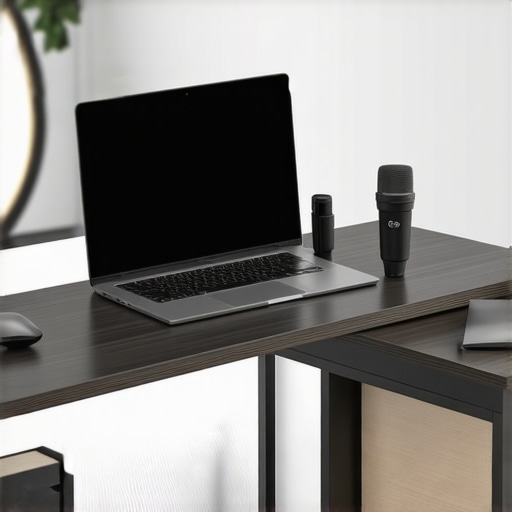
Maintaining a high-quality video presence while bouncing between hubs is a logistical challenge. I keep a dedicated ‘Go-Bag’ that never gets unpacked except for meetings. It contains an Elgato Key Light Air because of its slim profile and a Shure MV7 for broadcast-quality audio that handles echo better than any laptop mic. For the visual side, I strictly adhere to the IES (Illuminating Engineering Society) G-1-16 guidelines for video conferencing, which suggest a minimum of 30 to 50 footcandles of vertical illuminance on the face. This technical standard is my north star; if I can’t hit those numbers with my portable rig, I don’t take the call from that room. This is why I always take the time to how to test the wi-fi speed before you book that venue and check the lux levels with a simple phone app before I start my pitch. One thing people overlook is cable management; I only use Thunderbolt 4 cables to ensure there’s zero latency between my 4K sensor and the laptop.
The Future of Smart Walls and AI Lighting
I’m betting that the next decade of coworking won’t just be about better chairs, but about ‘smart’ environments that do the heavy lifting for you. We are already seeing the early stages of electrochromic glass that can shift from transparent to opaque with a single tap on a smartphone, but the real game-changer will be AI-driven lighting integrated directly into the room’s ceiling. Imagine a meeting room that recognizes you’ve started a high-stakes call and automatically adjusts the overhead LEDs to act as a softbox while dimming the background to create natural bokeh. Until then, you need to rely on the checklist for a glitch-free hybrid board meeting to ensure you aren’t fighting your tech while trying to win over a partner. My advice? Spend the extra $100 on a high-CRI (Color Rendering Index) light panel today. CRI measures how accurately a light source reveals true colors; a panel with a CRI of 95+ makes you look healthy and alert rather than grey and tired. Go ahead and download a light meter app right now and test your current desk—if your lux is under 200, you are essentially invisible to your investors.
Lessons from the Shadows of My Early Pitches
I used to think that as long as my code was clean, my lighting didn’t matter. I was wrong. The most painful lesson I learned is that visual static creates cognitive load for the investor. If they are straining to see your expressions, they aren’t fully hearing your pitch. I also realized that consistency beats perfection every single time. It is better to have a slightly dimmer, stable setup than a brilliant one that flickers because you’re pushing the limits of the room’s circuit. Also, don’t underestimate the vibe check. When you show up with a professional rig, you aren’t just a founder; you’re a leader who respects the time and attention of the audience. This is exactly why investors prefer meeting in professional settings where these variables can be managed. I’ve found that the best founders don’t just pitch; they orchestrate an experience.
The Gear That Never Leaves My Backpack
Building a mobile kit changed my life. I don’t go into a pitch without my Elgato Key Light Air because it integrates with my phone, allowing me to adjust brightness without looking away from the camera. I also swear by the Shure MV7 microphone; it has a voice isolation feature that blocks out the espresso machine noise in the background. For those of you wondering how to maximize productivity in your startups conference rooms, having a ready-to-go kit for every employee is the fastest shortcut to a professional brand. Finally, I use a simple app called Lux Light Meter to verify that my face is hitting the right levels before I even click join. It takes the guesswork out of the secret to finding quiet corners for high-stakes sales calls. I trust these tools because they have survived the wear and tear of three different cities in one month.
#IMAGE_PLACEHOLDER_E#
Step into the Light and Take the Win
Your vision deserves to be seen clearly. Whether you are in a high-rise private office or a bustling collaborative hub, the effort you put into your presentation reflects the effort you put into your company. Don’t let a poorly placed window or a flickering fluorescent bulb be the reason a partner hesitates. Take control of your environment, lean on the role of community managers in the modern workspace to find the best spots, and focus on landing that deal. You have the tools, the knowledge, and the vision—now go show them exactly who you are in the best light possible. Have you ever had a lighting fail or a tech glitch right as you were about to close a deal? Let me know in the comments below.