
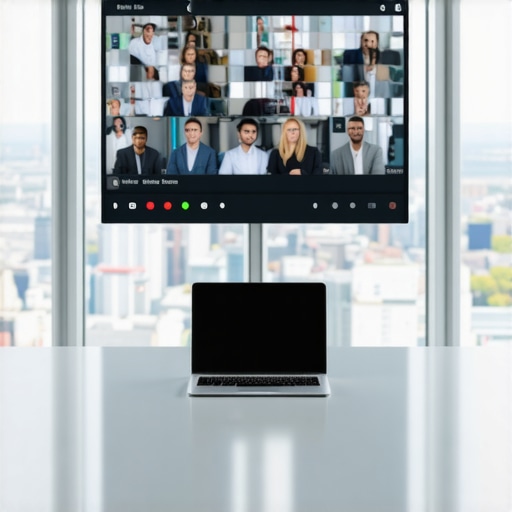
I spent the first year of my last startup convinced that Slack channels and optional Friday Zoom happy hours were the glue holding us together. I was wrong. Dead wrong. I remember one specific Tuesday afternoon, about three weeks before a crucial seed round pitch. My internet flickered, my laptop froze, and I spent forty minutes pacing my living room alone. I felt like I was running a company from a deserted island. My team was online, but they weren’t really there. We were missing that raw energy that only happens when you can lean over a desk and point at a screen. That realization hit me hard: we were drifting because we didn’t have a place to land.
Remote Work is Great Until the Silence Becomes Deafening
We all love the no-commute life. I get it. But there is a hidden tax on one-hundred percent remote work that nobody talks about until the turnover starts. When I first started, I thought I was being modern by ditching the lease. I ignored the fact that the real cost of working from your dining table isn’t just a bad back—it’s the slow erosion of your company culture. According to a study by Microsoft’s Work Trend Index, over forty-three percent of remote workers feel disconnected from their company culture. That is nearly half your team drifting in the wind without a rudder. I made the massive mistake of thinking digital-first meant digital-only. It took a failed product launch to realize that why physical presence still matters for early stage funding isn’t just about the money; it is about the trust built in person.
Is a physical anchor actually worth the monthly cost?
I was the biggest skeptic you would ever meet. I hated the idea of throwing money away on square footage we didn’t use every day. But I eventually learned that why your hybrid team feels disconnected on mondays often comes down to a lack of shared ritual. You need a place where the whiteboard doesn’t lag and where you can actually see the excitement in a co-founder’s eyes. Early on, I tried to save pennies by hosting meetings in public parks or loud cafes. It was a total mess. The nightmare of trying to host a workshop at a coffee shop taught me that if you don’t respect your team’s focus with a professional setting, they will eventually stop bringing their best ideas to the table. Have you ever sat through a three-hour strategy Zoom and realized halfway through that everyone was just waiting for the call to end? I want to hear about your most awkward remote-only moment.
Stop treating your office search like a real estate deal
To make this shift work, you have to stop thinking about square footage and start thinking about throughput. When I finally decided to move my team out of their bedrooms, I treated it like a procurement task. I looked for the cheapest desks. That was a disaster. I ended up in a place that felt like a windowless basement, and my developers actually became less productive because why the open plan office is failing your developers is often about the lack of focus areas, not just the noise. You need to treat your workspace like a piece of software: it needs to be intuitive, fast, and scalable.
Prioritize the network over the fancy furniture
Don’t get blinded by the free beer or the designer chairs. When you are vetting a space, you need to know how to tell if a coworking space is just a glorified library or a genuine engine for growth. I once spent six months in a beautiful space where nobody talked to each other. It was sterile. I moved to a slightly grittier spot because why founders are prioritizing location over fancy amenities usually comes down to who else is in the building. Within a week of the move, our lead engineer solved a database bottleneck just by chatting with a CTO from another startup at the coffee machine.
Turn your square footage into a tool for execution
Once you have a spot, the way you use it matters more than the address. I remember a high-stakes board meeting where I tried to save money by using a free common area. We were interrupted four times by people looking for the microwave. It was embarrassing and made us look like amateurs. I learned the hard way that startup success secrets choosing the perfect conference room often start with simple privacy.
Why your investor pitch needs a neutral meeting room
If you are still in the early stages, inviting an investor to a cluttered home office is a gamble you shouldn’t take. There is a psychological shift that happens in a professional environment. I’ve seen it firsthand: why investors prefer meeting in professional spaces is because it signals that you are running a business, not a hobby. When I started booking dedicated rooms for pitches, our close rate nearly doubled. It wasn’t because our slides were better; it was because the environment didn’t distract from the message.
Don’t get locked into a five-year mistake
The biggest trap for a scaling startup is the long-term lease. I watched a friend’s company go under because they signed for three thousand square feet they thought they would grow into, then the market shifted. Why we ditched our long term lease for flexibility became our mantra. We started using day passes and modular memberships to scale up only when we actually hired the bodies. If you want to stay lean, you have to learn how to maximize productivity in your startups conference rooms by booking them only for the hours you are actually doing the heavy lifting. This keeps your overhead low and your focus high.
The big room fallacy is killing your team’s energy
Most founders think that booking the twenty-person boardroom for a three-person strategy session makes them look established. In reality, it’s a productivity killer. I’ve seen teams lost in the vastness of a massive conference table, the physical distance creating a psychological gap that prevents real debate. You want high-density energy, not echoes. The mistake is equating status with square footage. Instead, you should be looking at why your meeting room layout is killing participation before you sign any booking agreement.
Can natural light actually improve your pitch success rate?
It sounds like a minor detail, but the environment affects the hormone levels of everyone in the room. A study by researchers at the Harvard Business Review found that face-to-face requests are thirty-four times more successful than those sent over email, but that impact is diluted if the physical environment creates barriers to comfort. Finding a meeting room with decent natural light isn’t just about aesthetics; it is about keeping your potential investors alert and positive. I once pitched in a basement with flickering fluorescent tubes, and I could practically feel the enthusiasm draining out of the room. Don’t let a cheap venue choice tank your valuation.
Privacy isn’t just a luxury, it’s a security protocol
The most common ‘oops’ factor I see in the coworking world is the ‘Glass Wall Trap.’ Those sleek, transparent boxes look amazing on Instagram, but they are a nightmare for actual work. If you are discussing a pivot, a layoff, or a sensitive patent, you don’t want the entire building watching your facial expressions. I learned quickly that why your startup needs a real door not just a glass wall is about more than just sound—it’s about the psychological safety to fail and iterate without an audience.
How much does that ‘free’ Wi-Fi really cost you?
Everyone says they have high-speed internet, but few actually deliver when six people start a simultaneous video call. I spent a year assuming the ‘included’ amenities were enough until I had to handle a server crash from a temporary desk while the building’s router was rebooting. It was a wake-up call. You need to learn how to test the wi-fi speed before you book that venue for any mission-critical meeting. If you aren’t checking the upload speeds personally, you are gambling with your reputation.
Stop overpaying for the furniture you don’t use
We often get blinded by the ‘all-inclusive’ pitch. But in my experience, why the all inclusive membership is usually a trap comes down to the hidden costs of flexibility. You might be paying for a printer and a receptionist you never use. I eventually moved toward a model where we used hourly rentals for client meetings rather than paying a flat monthly fee for a room that sat empty ninety percent of the time. This allowed us to redirect that capital into better tools for the team. Have you ever fallen into this trap of paying for ‘status’ instead of ‘function’? Let me know in the comments.I’ve spent too many hours crawling under conference tables to realize that the ‘all-in-one’ tech solution promised by some landlords is usually a lie. If you want to avoid the embarrassment of a frozen screen during a Series A call, you need a hardware stack that just works. For me, that means never relying on the built-in laptop microphone. I carry a Jabra Speak 510 everywhere—it’s a portable puck that turns any echoey glass box into a professional studio. It’s the only way I’ve found to how to host a developer workshop without the lag and the ‘can you hear me now’ dance. We also stopped using the building’s shared HDMI cables and switched to a dedicated wireless caster. This small shift in hardware maintenance saved us roughly fifteen minutes per meeting, which adds up to weeks of lost productivity over a year.
How do I keep my team from destroying the meeting room vibe?
Maintenance isn’t just about wiping down tables; it’s about setting a culture of respect for the shared environment. I used to think a cleaning crew was enough, but the role of community managers in the modern workspace is actually more about mediation than maintenance. You need someone to enforce the ‘leave it better than you found it’ rule. We actually started a ‘room bounty’ program where the person who keeps the conference space the tidiest for a month gets a few extra credits for private bookings. It sounds cheesy, but it prevents the space from feeling like a fraternity house. As you grow, you’ll also need to consider digital maintenance. I can’t stress enough why endpoint protection services matter more when your team is hybrid because your team is likely jumping between different Wi-Fi networks every other day. According to Cisco’s Visual Networking Index, business IP traffic is set to grow exponentially, meaning the bandwidth you have today won’t be enough by next year. If you aren’t auditing your network usage, your growth will be throttled by your own success.
The future of work is likely going to be completely frictionless
Looking ahead, I suspect we are moving toward ‘intent-based’ workspaces. Imagine a room that automatically adjusts its lighting and acoustic dampening based on the calendar invite—if it’s a brainstorm, it gets bright and open; if it’s a pitch, it goes focused and sharp. We’re already seeing early versions of this in the future of conference rooms in startup ecosystems. You need to start thinking about how to choose an office that supports your scaling speed by looking for infrastructure that can handle these upgrades. Don’t just look at the fresh paint; look at the CAT6 cabling and the ceiling height for acoustic panels. If you want to see a massive jump in your team’s output this week, go out and buy a high-quality 360-degree camera for your hybrid sessions. It’s the single best investment I’ve made to how to maximize productivity in your startups conference rooms. Try running your next all-hands with a centered camera instead of a laptop at the end of the table and watch how the energy in the room changes. Stop settling for a mediocre setup.
Everything I learned from failing at the remote-only game
The hardest lesson was realizing that my ego was tied to the ‘remote-first’ label, even when the data showed my team was struggling. I finally understood the logic of choosing a flex office over a 5-year lease because it gave us the freedom to fail and move fast without the crushing weight of permanent overhead. I also realized that ditching the home office for a month changed my focus in ways no productivity app ever could; it forced me to treat my workday like an athlete treats a game—show up, perform, and leave the work on the field.
Finally, I stopped seeing a physical space as a cost and started seeing it as a psychological signal. You have to understand why your startup needs a better first impression, not just for the outside world, but for the people working for you. When they see you investing in a professional environment, they feel like they are part of a real mission, not just another Slack thread.
The resources that turned our hybrid mess into a machine
#IMAGE_PLACEHOLDER_E#
If you are looking to upgrade your environment without breaking the bank, I always point founders toward innovative meeting rooms that boost startup creativity rather than just searching for the cheapest desks available. I personally rely on a few specific resources: a reliable hardware kit for hybrid calls, a shared Notion database for space-booking rules, and the expertise of a local community manager. I’ve found that coworking spaces unlock innovation top meeting rooms of 2025 because they offer access to high-end infrastructure that no early-stage startup could afford on its own.
Stop waiting for the perfect day to start building in person
Transitioning back to physical space doesn’t have to be a massive, expensive leap. Start small with a day pass, or book a room for your next big strategy session to see how it changes the dynamic. Knowing how to choose the perfect conference room for business success is a skill that will serve you through every funding round and product launch. The energy of a shared space is a competitive advantage you can’t afford to ignore any longer. Your team—and your cap table—will thank you for it. What is the one thing holding you back from booking your first team workshop in a dedicated conference room?