

I sat there, knuckles white, staring at the bumper of a delivery truck for forty minutes. I was five miles from my “prestigious” downtown office, yet I might as well have been on the moon. My startup was supposed to be lean and agile, but here I was, wasting my best mental energy before the first conference room session even started. When I finally walked through those glass doors, I realized my team was just as frayed as I was. We were paying for the zip code, but it was costing us our sanity. That morning was my breaking point. I realized the downtown dream was actually a logistical nightmare, and it was time to find a better way to work.
Why I Finally Quit the Skyscraper Rat Race
I once thought that signing a long-term lease for my first ten employees in a downtown high-rise was the ultimate sign of success. In reality, it was a heavy anchor. We were trapped in a static environment while our needs changed weekly. I have seen so many founders make this same bet, assuming a central hub is the only way to build a real company. But lately, founders are ditching corporate cubicles for community-driven spaces that sit much closer to where their employees actually live. It is not just about the shorter commute; it is about the quality of the work you do when you actually arrive. According to a study by IWG, 77% of employees say a workplace closer to home is a must-have for their next job move, a shift that is making suburban hubs more than just a convenience—they are a talent retention strategy. Have you felt that same sinking feeling while staring at your office rent bill, wondering what you are actually paying for?
Is suburban flex space actually worth the hype?
You might worry that a suburban hub feels a bit too much like a quiet library or a strip mall. I get it. I had the same fear. I thought we would lose that high-stakes energy that comes with being in the thick of the city. However, small satellite offices are beating the mega-headquarters because they offer something downtown usually lacks: deep focus without the urban noise. My biggest early blunder was booking a high-stakes board meeting in a trendy downtown cafe because our office was under renovation. The nightmare of trying to host a workshop at a coffee shop is real—the espresso machine drowned out our pitch, and the Wi-Fi died three minutes in. That was the moment I realized we needed a professional physical anchor for our remote team that didn’t involve a ninety-minute drive. Today, we are going to break down how to transition your team to a suburban flex model without losing your professional edge.
Stop paying for a zip code that kills your productivity
Think of your office like a laptop battery. In the city, you’re running 15 background apps—commutes, noise, and astronomical rent—that drain your team before they even open their primary software. Switching to a suburban model is like clearing that cache. The logic of choosing a flex office over a 5-year lease is about reclaiming that wasted energy and putting it back into your product. It’s the difference between starting the day at 20% battery or 100%.
Run a 48-hour stress test before you sign
Don’t trust the glossy brochure or the free espresso promise. I once moved my team into a space that looked like a Pinterest board, but the Wi-Fi was shared with a neighboring call center. We couldn’t even load a Trello board during peak hours. It was a disaster that cost us a week of development time. Now, I always test the wi-fi speed before you book that venue. Bring three team members, run a heavy video call, and try to push code at 10:00 AM on a Tuesday. If it lags then, it will fail during your most important client demo.
Kill the noise before it kills your focus
Suburban hubs can be eerily quiet or surprisingly chaotic if the layout is poor. You need to know how to handle the noise problem in open plan offices before the first complaint hits your desk. I started carrying a decibel meter app during tours. If the ambient hum in the deep work zone is over 60dB, your engineers will never find their flow. Since developers need quiet zones to reach deep flow, prioritize spaces that offer dedicated phone booths or library-style rules for their desks.
Stop over-buying square footage
The biggest mistake founders make is trying to replicate their downtown footprint in the suburbs. You don’t need a dedicated desk for every employee every single day. Stop overpaying for square footage you never use and adopt a Hub and Spoke model. Keep a small, permanent footprint for your core hardware and server needs, then learn how we scaled our team using day passes only to handle all-hands days. It keeps your overhead lean while giving everyone the space they need when they actually need it.
Turn your conference room into a secret weapon
When you finally bring the remote team together, the environment dictates the outcome of the session. Why your meeting room layout is killing participation usually comes down to the long board table syndrome, where the person at the head dominates. I’ve found that using circular meeting tables levels the playing field for junior devs. Look for innovative meeting rooms that boost startup creativity with standing desks and whiteboards. Finally, make sure you know how to book a meeting room in under sixty seconds—if the booking system is a clunky legacy portal, your team will just stop using the space entirely.
The truth is, most founders obsess over the wrong details when picking a suburban meeting hub. We assume ‘high-tech’ equals ‘high-productivity,’ but real expertise lies in knowing what a space should remove rather than what it adds. For instance, everyone loves the aesthetic of glass-walled conference rooms; they look sleek, modern, and symbolize transparency. But in my experience, they are a primary focus killer. Research from the University of Arizona suggests that while open environments aim for transparency, the resulting lack of acoustic and visual privacy can significantly spike cortisol levels among employees. When your team is trying to solve a complex architectural bug and every passerby makes eye contact, you lose the psychological safety needed for radical candor. This is why your startup needs a real door, not just a glass wall.
Avoid the ‘all-inclusive’ membership trap
Beyond the physical walls, there is a common ‘oops’ factor that sinks many startup budgets: the lure of the amenity-heavy contract. I call this the ‘Beer Tap Mirage.’ Why the all-inclusive membership is usually a trap comes down to the hidden trade-offs. Many spaces spend their operational budget on designer furniture and free snacks while neglecting the technical backbone of your business. I have seen teams sign leases for beautiful suites only to realize too late that they cannot keep your startups trade secrets in an open office because the ventilation system carries every whisper from the next room. You must learn how to vet a conference room for client-facing speed by testing the physical security and soundproofing, rather than just the brand of coffee in the lounge.
Is your meeting room layout actually sabotaging your team?
It is not just about where you meet, but how the room forces you to interact. A common myth is that a larger table signifies a more important meeting. However, why your meeting room layout is killing participation often stems from the physical distance between participants. If you are a three-person team in a twelve-person boardroom, the physical gap creates a psychological barrier. This is also why why a neutral meeting space leads to more honest feedback; it strips away the ‘boss at the head of the table’ hierarchy. If you are managing a distributed workforce, you also need to focus on how to stop your team from hating hybrid meetings by ensuring the audio-visual setup does not treat remote participants like second-class citizens.
Put the infrastructure before the aesthetic
When touring potential spaces, look past the Pinterest-worthy decor. Instead, focus on the functional elements that actually drive revenue. Are you finding a meeting room with decent natural light to keep energy high during six-hour sprints? Is the room positioned away from high-traffic corridors? For those critical moments, remember why your investor pitch needs a neutral meeting room that reflects professionalism without the distractions of a loud common area. Before you commit, ask yourself if the space supports the specific flow of your work, or if it just looks like the office you think you are ‘supposed’ to have. Have you ever fallen into this trap? Let me know in the comments.I have spent way too much time shouting ‘Can you hear me now?’ into a hollow plastic puck on a mahogany table. To fix this, I invested in a Jabra Speak 710 kit. Why? Because you can daisy-chain two of them together via Bluetooth, ensuring every voice—even the quietest intern—is heard clearly by the remote team. This is the first step in learning how to stop your team from hating hybrid meetings. When you rely on the built-in microphone of a budget laptop, you aren’t just sounding cheap; you are creating cognitive load for your listeners. The Cisco Hybrid Work Index highlights that high-quality audio is the single most important factor in reducing virtual meeting fatigue. If you want to know how to maximize productivity in your startups conference rooms by 0245 pm, look at your hardware before you look at your agenda. I also carry a portable Wi-Fi 6 router. It sounds paranoid until you realize how to deal with technical glitches during a remote board call by having a private, encrypted back-up. Remember, why endpoint protection services matter more when your team is hybrid is a lesson you do not want to learn during a security breach.
How do I keep the momentum going as we scale?
The suburban hub model works until your team hits a certain size, then the logistics get messy again. I found that moving from simple day-passes to a dedicated team suite within a flex space was the sweet spot. This allows us to maintain a culture while learning how to choose an office that supports your scaling speed. We use software like Skedda for internal room booking so there is never a squatting war over the best conference room. 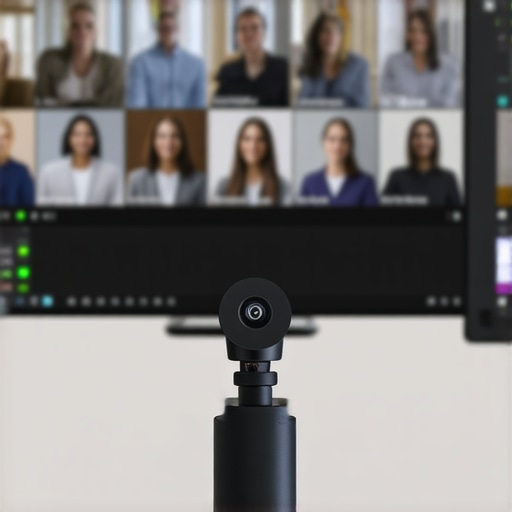 Looking ahead, I predict the future of conference rooms in startup ecosystems will move toward spatial audio and AR-integrated whiteboards. We won’t just be looking at a flat screen; we will feel like we are sitting in a circle. It sounds like sci-fi, but innovative meeting rooms that boost startup creativity are already experimenting with haptic feedback to signal when a remote participant wants to speak. My advanced tip for you? Run a silence audit next Tuesday. If the ambient noise in your focus zone regularly peaks above 50dB, your team is losing 20 percent of their output to distraction. Go into your next booking and test the audio quality from the perspective of a remote attendee before the meeting starts. You will be shocked at what you have been forcing them to hear.
Three Hard Truths I Discovered While Ditching My Downtown Lease
Reflecting on my journey from the high-rise to the neighborhood hub, I realized that the loudest voice in the room is usually the one you should ignore. Here are a few lessons I learned the hard way:
- Infrastructure beats aesthetics every single time. Don’t be fooled by the mid-century modern furniture or the neon signs. I realized late that the truth about shared office noise levels is often hidden behind acoustic panels that don’t actually work. If you can hear the team next door celebrating a sale while you’re debugging, the space is a liability.
- Culture is a garden, not a building. You have to learn how to spot a bad coworking community before joining because a toxic or overly social environment can be just as distracting as a noisy downtown street.
- The Monday connection gap is real. I noticed why your hybrid team feels disconnected on mondays usually comes down to the lack of a shared physical ritual. We fixed this by making our suburban hub the mandatory ‘anchor’ for our Monday morning kickoffs, turning the space into a culture-builder rather than just a desk.
My Personal Arsenal for a Seamless Transition
Transitioning your team requires more than just a new address; it requires the right tools to bridge the gap between remote flexibility and office focus. Here is what I keep in my bag:
First, the Jabra Speak 710 is non-negotiable. High-quality audio is the only way to ensure your remote hires don’t feel like second-class citizens during a brainstorm. Second, we use Skedda to streamline logistics. I had to teach my team how to book a meeting room in under sixty seconds to prevent ‘room squatting’ from becoming a source of friction. Finally, I always keep a copy of startup success secrets choosing the perfect conference room at 0817 am as a physical checklist for whenever we scout new satellite locations. It ensures we never miss a technical requirement in the rush of a tour.
#IMAGE_PLACEHOLDER_E#
Take Back Your Time and Your Talent
Moving to a suburban hub isn’t a retreat; it is a strategic pivot that recognizes your most valuable asset is your team’s mental energy. By ditching the commute and the downtown noise, you aren’t just saving on rent—you are investing in deep work. Now that you know how to maximize productivity in your startups conference rooms by 0245 pm, you have the blueprint to build a more agile, focused, and human-centric company. The future of work isn’t in a skyscraper; it’s right around the corner from where you live.
Have you ever found a hidden suburban gem that actually boosted your team’s output more than a downtown office? Let me know your experience in the comments below!