
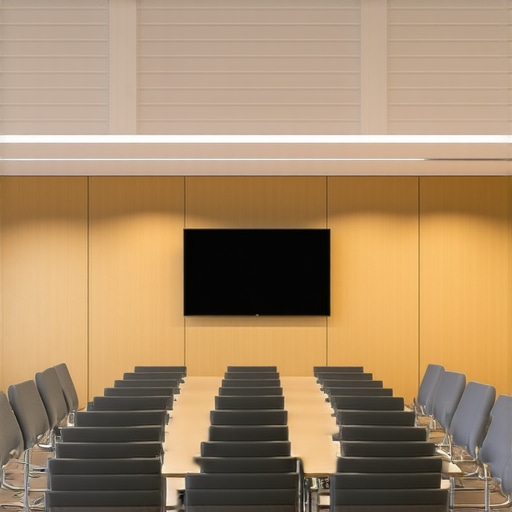
I remember my first big pitch for my startup. I had booked this gorgeous, glass-walled conference room in a high-end coworking space, thinking the sleek aesthetic would impress the investors. I walked in, clicked my pen, and said, “Thanks for joining me today.” My own voice bounced off the floor and hit me in the face like a physical object. The room sounded like a subterranean cavern. Every time a VC asked a question, I had to lean halfway across the table because the reverb was washing out their words. It was a disaster. I realized right then that you can have the best pitch deck in the world, but if your environment sounds like a high school gymnasium, you lose authority instantly. I’m going to help you avoid that specific brand of professional embarrassment by showing you exactly how to kill that hollow sound without gutting your budget. [IMAGE_PLACEHOLDER]
Stop Letting Your Walls Talk Back to You
We spend thousands on branding and high-speed Wi-Fi, yet we often ignore the very air we’re speaking into. Echoes aren’t just an annoyance; they are productivity killers that drive up listener fatigue. When your voice bounces around a room, the listener’s brain has to work twice as hard to filter out the noise from the actual signal. I learned this the hard way after a potential partner told me later they struggled to stay engaged during my presentation because of the harsh audio. If you’ve ever felt that specific headache creeping in after a long meeting, your meeting room layout is killing participation more than your boring slides are. My biggest blunder early on? I thought soundproofing meant buying heavy doors. It doesn’t. Soundproofing keeps noise out, but acoustic treatment keeps your voice from sounding like it is inside a tin can.
Is a Quiet Room Really Worth the Investment?
You might be skeptical. Is it really worth the effort to hang panels or lay down rugs? The data says yes. Poor office acoustics can reduce speech intelligibility by an alarming margin. According to research published by the National Institutes of Health, environments with high reverberation times significantly increase stress levels and lower cognitive performance in task-oriented settings. When you vet a conference room for client-facing speed, the sound quality should be at the top of your checklist alongside the upload speeds. Have you ever had to apologize for the hollow sound during a high-stakes call? It is a common struggle, but it is one we can fix today. We’re going to look past the truth about shared office noise levels and focus on the practical, tactile changes that make your voice sound rich, clear, and—most importantly—professional.
Soften the Floor to Catch the Bounce
The first move is simple: look down. If you see polished concrete, tile, or hardwood, you have found the primary culprit. Sound waves hit hard floors like a tennis ball hitting pavement; they bounce back with almost the same energy. To fix this, you need mass and texture. In my early days, I once dragged a heavy, plush rug from my apartment into a rented suite an hour before a board meeting. I felt like a crazy person carrying a rolled-up carpet through a lobby, but the transformation was immediate. The room stopped sounding like a locker room and started sounding like a professional studio. If you are operating in a shared space, the exact way to ask for a quiet room without being rude often involves asking the manager if you can bring in temporary soft furnishings for a high-stakes call. Thick rugs are your best friend here because they absorb the downward energy of your voice before it can reflect back toward your microphone. 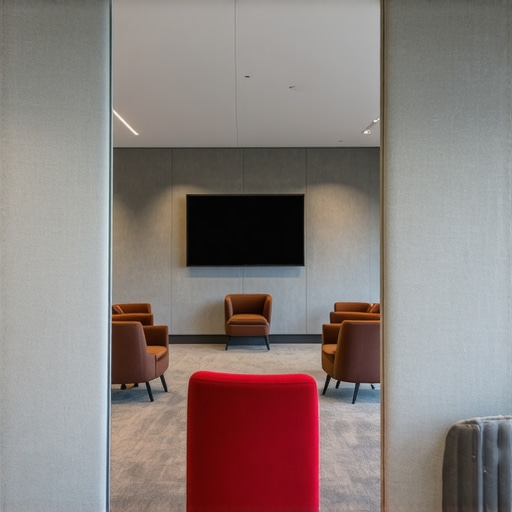
Kill the Parallel Wall Echo
Parallel walls are a nightmare for acoustics because they create something called a ‘flutter echo.’ This is that metallic ringing sound you hear when you clap your hands in an empty room. To break this up, you do not need to cover every inch of the wall in foam. You just need to break the line of sight between flat surfaces. I remember trying to record a product demo in a room that was basically a glass box. I ended up propping up several open suitcases and draping my winter coat over a whiteboard. It looked like a disaster, but the audio was crisp. For a more permanent fix, look at acoustic panels or even heavy bookshelves. Because why your startup needs a better first impression often comes down to the details, investing in a few fabric-wrapped panels can make the difference between looking like a garage operation and a serious contender.
Furniture Is Your Secret Weapon
You do not always need specialized gear. Objects with irregular shapes are excellent at diffusing sound. Think about bookcases, sofas, or even large plants. In a particularly echo-heavy room, I once moved a large, fabric-covered sectional into the corner where the walls met. It acted as a natural bass trap, soaking up those low-frequency rumbles that make voices sound muddy. When why your investor pitch needs a neutral meeting room becomes the focus, ensuring that room is filled with soft-surfaced furniture will keep the conversation focused on your numbers rather than the distracting reverb.
Master the Distance to the Mic
Even in a bad room, you can cheat the system by manipulating physics. The closer you are to the microphone, the more the ‘direct signal’ (your voice) overpowers the ‘reflected signal’ (the echo). In that glass-walled disaster I mentioned earlier, I eventually moved my laptop onto a stack of books so the mic was inches from my mouth. It cut out about 60% of the perceived echo. If you are doing this for video, combine this with the exact lighting setup for professional video pitches to ensure you look as clear as you sound. Remember that the truth about shared office noise levels is that you cannot control the building, but you can control the three feet of air directly in front of your face.Most founders are obsessed with the ‘vibe.’ They want the exposed brick, the industrial lighting, and the glass-enclosed fishbowl. But here is the contrarian truth: the flashier the room, the more likely it is to undermine your credibility. When you aim for a better first impression, you should be looking for invisible quality, not visual noise. I’ve seen million-dollar deals stall because a founder spent too much time showing off the view and not enough time checking if the Wi-Fi could handle a live demo. If you’re still finding a workspace that doesn’t feel like a tech prison, remember that high-end finishes often hide low-end utility. 
Does the Shape of Your Table Influence the Closing Rate?
It sounds like pseudoscience, but the geometry of your meeting space dictates the power dynamics of the room. A rectangular table reinforces hierarchy—perfect for a performance review, but lethal for a collaborative brainstorm. If you want to transform meeting rooms into collaboration hubs, you need to understand the hidden psychology of circular meeting tables. Circles remove the ‘head of the table’ syndrome, which can be the difference between a silent team and a breakthrough. However, an advanced mistake I often see is using a circular table for a VC pitch. In those moments, you want to be the focal point, and a round setup can make you look like just another participant rather than the leader of the company.
The Dangerous Lure of the Glass-Walled Fishbowl
We have all been tempted by those sleek glass boxes. They look great in brochures, but they are a security nightmare. When you are discussing cap tables or keeping your startup’s trade secrets in an open office, a glass wall is essentially an invitation for prying eyes. Furthermore, environmental psychologists at the University of Exeter found that ‘lean’ workspaces—those designed to be minimalist and transparent—actually decrease productivity by up to 15% compared to ‘enriched’ spaces where employees have more control over their privacy. This is why your startup needs a real door, not just a glass wall. You are not there to be watched; you are there to work.
Focus on Human Flow Over Visual Perfection
The biggest ‘oops’ factor in modern office design is prioritizing the look over the human experience. I once walked into a room so ‘minimalist’ it didn’t even have a place to set a coffee cup without staining a white marble surface. Everyone was so tense about the furniture that no one actually talked about the product. To maximize productivity in your startup’s conference rooms, the environment should be a background character, not the lead actor. You need to prep for a high-stakes board meeting by ensuring the room serves the objective, not the other way around. If the chairs are too uncomfortable to sit in for an hour, your investors will be looking at their watches instead of your slides. Have you ever fallen into this trap? Let me know in the comments.I eventually learned that fixing a room once isn’t enough. You have to treat your meeting environment like a piece of software that needs regular updates. My current toolkit isn’t just about foam; it’s about precision. I swear by the NIOSH Sound Level Meter app. It’s a free, high-accuracy tool developed by the CDC that allows me to objectively measure the noise floor of any space. If I’m seeing a consistent reading above 50 dBA, I know I need to maximize productivity by either adding more soft goods or finding a new room entirely. When I’m on the road, I also carry a portable Scarlett 2i2 interface paired with a Shure SM7B. Yes, it’s a lot of gear to haul, but the psychological edge you get when your voice sounds like a late-night radio host during a pitch is undeniable. You can stop your team from hating hybrid meetings simply by being the person who actually sounds clear. 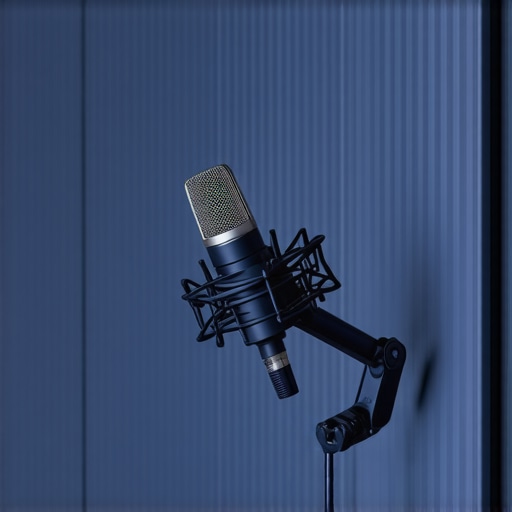
Ditch the Laptop Mic for a Dynamic Alternative
Most people use condenser microphones—the kind built into your MacBook or high-end webcams. These are designed to be sensitive, which is exactly what you do not want in a coworking space. They pick up the hum of the HVAC, the muffled laughter from the hallway, and the echo of your own voice. I switched to a dynamic microphone because they have better ‘off-axis rejection.’ In plain English, they ignore everything that isn’t two inches from the capsule. This technical choice is how I manage to manage office politics when the startup next door is having a literal party; my mic simply doesn’t hear them. According to the Acoustical Society of America, reducing background noise levels by just 10 decibels can significantly improve speech recognition and lower listener fatigue for remote participants.
How do I keep the acoustics sharp as the team grows?
As you scale, your needs change. That cozy two-person nook won’t work for a six-person strategy session. I’ve found that the best way to maintain quality is to create an ‘Acoustic Standard Operating Procedure.’ Every time we move to a new space or choose an office that supports our scaling speed, we do a basic audio check. We look for ‘RT60’—the technical standard for the time it takes for a sound to decay by 60 decibels. For a professional meeting room, you’re aiming for 0.5 to 0.7 seconds. If it’s longer than a second, the room is too ‘live’ and needs more treatment.
The Next Frontier of Silent Startup Spaces
I predict we’re moving toward a world where physical acoustic treatment is secondary to AI-driven isolation. We’re already seeing this with tools like Krisp and NVIDIA Broadcast, which use neural networks to strip out non-voice frequencies. However, even the best AI cannot fix ‘boxiness’—that hollow tone caused by poor room physics. Looking at the future of conference rooms in startup ecosystems, I expect to see more ‘modular pods’ that are pre-certified for audio quality, moving away from the expensive custom build-outs of the past. If you want to stay ahead, stop obsessing over the wallpaper and start caring about the reverberation. My advanced tip for you this week: Download a frequency generator app and play a low-end tone in your room. If you find a ‘dead spot’ or a corner where the sound vibrates the walls, that’s exactly where you should place your first acoustic panel. Go try it now—your ears and your investors will thank you.
The Invisible Power Shift You’ll Feel in the Room
When you finally kill the echo, something strange happens to the power dynamic. You stop repeating yourself, and people start leaning in. I’ve realized that clear audio is a form of respect for your listener’s time. If you’re still struggling with the truth about shared office noise levels, remember that noise isn’t just a nuisance—it’s a barrier to entry for your ideas. The hardest lesson I learned is that ‘good enough’ audio actually signals a lack of preparation. When you sound professional, you are treated as a professional. This shift in perception is one of those startup success secrets that no one talks about because it’s invisible until it’s gone. [IMAGE_PLACEHOLDER]
The Tools I Keep in My Bag for Every Big Pitch
I don’t leave my audio quality to chance anymore. Beyond the heavy rugs and furniture hacks, I rely on a specific stack of gear that ensures I can maximize productivity in your startup’s conference rooms no matter the location. My ‘go-bag’ includes the Focusrite Scarlett for clean gain and the Krisp AI app to act as a final safety net for background hum. I also keep a few foldable fabric dividers in the trunk of my car for those times I have to use a glass-walled room. These tools allow me to control the environment rather than being a victim of it. If you’re tired of the ‘fishbowl’ effect, understanding the hidden psychology of circular meeting tables combined with a decent dynamic mic will make you the most impressive person in the virtual or physical room.
Build a Space That Earns Respect Before You Even Speak
Your environment is the silent partner in every deal you sign. You aren’t just renting four walls; you are curating an experience that either builds trust or erodes it. Don’t be afraid to move the furniture, bring in the rugs, or ask for the quietest corner of the building. When you take ownership of your physical space, you take ownership of your brand’s future. Stop settling for hollow sound and start demanding clarity. What is the one thing in your current office that drives you crazy during a high-stakes call? Let me know in the comments below.