

I was sweating. Not because of the pitch—I knew the numbers inside out—but because a group of energetic freelancers was having a mid-day yoga session right outside the glass door of our supposedly ‘executive’ suite. My lead investor kept glancing at a guy in a downward dog while I was trying to explain our Q3 burn rate. It was a disaster. I realized then that the real cost of working from your dining table or an unvetted shared space isn’t just about ergonomics; it’s about the transition to a space that actually commands respect. If you are handling high-stakes board meetings in a shared building, you are playing with fire if you don’t control the environment. Today, I’m going to pull back the curtain on how to navigate these shared spaces without losing your professional edge.
Your Reputation is Worth More Than a Cheap Room Rental
When I first started out, I made the classic rookie mistake of thinking a ‘conference room’ was just a table and some chairs. I booked the cheapest option in a trendy downtown hub, thinking I was being scrappy. Instead, I learned the hard way that investors prefer meeting in professional settings that don’t smell like communal burnt toast. You need to look for specific markers of quality before you sign that booking agreement. A study published in the Journal of Environmental Psychology indicates that ambient noise and ‘visual clutter’ in an office setting can increase cortisol levels by up to 20%, which is the last thing you want when you’re asking for a major bridge loan. You need a war room, not a fishbowl. This is why understanding the difference between a standard meeting room and a real war room is the first thing you should investigate.
Is a Shared Building Actually Professional Enough for a Board?
I get it. You’re worried that the board will think you’re ‘playing house’ because you don’t have a ten-year lease on a skyscraper. But here’s the secret: they don’t care about the lease. They care about the results and the focus. I’ve found that using the exact checklist for vetting a high-stakes board room can make a shared space feel more exclusive than a private office. Before we dive into the logistics, I have to ask: Have you ever had a multi-million dollar conversation drowned out by a nearby espresso machine? It’s a gut-wrenching feeling. To avoid that, you have to prioritize the boring stuff. For instance, the acoustics test every conference room should pass is non-negotiable. If you can hear the person in the next room complaining about their Slack notifications, your board can hear them too. Your pitch needs gravitas. I remember seeing a founder try to show a complex financial model on a 13-inch laptop because the room’s HDMI cable was frayed. It was painful. Trust me, why your pitch deck looks better on a forty-inch screen than a laptop becomes very clear the moment you see an investor squinting at a spreadsheet. We are going to fix these pitfalls right now.
Master the Technical Logistics of Your War Room
I once walked into a ‘premium’ boardroom only to find the Wi-Fi password was written on a cocktail napkin and the signal strength was abysmal. I spent twenty minutes of an hour-long investor call staring at a spinning wheel while my potential lead partner checked his watch. I realized then that professional aesthetics are a lie if the infrastructure is crumbling. Now, I never trust a space without a physical tech check. First, you must learn how to vet a space for high-speed fiber before you sign the contract. It isn’t just about download speeds; it’s about the jitter and latency that make or break a video presentation. If you’re hosting a hybrid meeting, why your conference room needs better technology and fewer cables becomes obvious when you are physically tripping over wires while trying to gesture at a crucial growth chart. Check every port yourself forty minutes before the board arrives.
Ditch the Wi-Fi for a Hardwired Connection
Back in 2021, I was pitching a fintech play in a trendy glass-walled box. Five minutes into the deck, the ‘smart’ TV decided to run a mandatory firmware update because the local network was unstable. I had no backup. The investor just sat there in silence while I fumbled with a dongle that didn’t fit. That embarrassment taught me that the ‘smart’ part of a meeting room is the founder who brings an Ethernet adapter. Relying on shared guest Wi-Fi is a rookie move that signals you haven’t prepared for failure.
Kill the Echo Before It Kills the Deal
Privacy isn’t a luxury; it’s a legal and professional requirement when you’re discussing cap tables or sensitive burn rates. I’ve seen founders lose their composure because they were distracted by a laugh track coming from the communal kitchen next door. This is where the acoustic fix for echoey conference rooms matters. If the walls are paper-thin, your competitors or even just curious freelancers are hearing your intellectual property. This is exactly why we stopped using coffee shops for sensitive client calls and moved to dedicated, sound-dampened hubs. Use the ‘whisper test’: walk five feet outside the closed door while a colleague speaks at a normal volume. If you can understand the words, the room is a liability, not an asset. 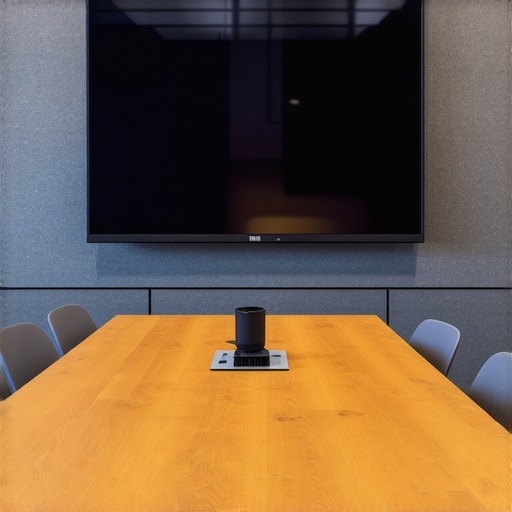
Control the Visual Narrative Behind Your Chair
You want the focus on your vision, not the stack of discarded pizza boxes visible through a glass wall. I once pitched to a partner who couldn’t stop looking at a flickering fluorescent light behind my head; it completely killed the momentum of my pitch. You need to stop letting bad lighting ruin your video calls by ensuring the primary light source is in front of you, creating a professional glow rather than a silhouette. Audit the ‘visual noise’—check for distracting posters, messy whiteboards, or high-traffic hallways that can be seen by remote participants. When I finally mastered the exact lighting setup for professional video pitches, our close rate for remote investors jumped significantly because I looked like a leader in control of his environment.
Protect Your Intellectual Property from Prying Eyes
Shared buildings are ecosystems, and while networking is great for growth, the boardroom must be a fortress. You need to know how to keep your startups trade secrets in an open office environment. This means vetting the on-site staff’s discretion and ensuring your digital screen isn’t visible to every person walking to the espresso machine. I once saw a founder leave their entire Q4 hiring plan on a whiteboard in a shared room after a session. Don’t be that founder. Use the room’s physical layout to shield your data from casual observation. The transition to a space that respects this level of detail is part of the logistics of moving your startup to a professional space that truly separates the hobbyists from the serious CEOs.
Most founders obsess over the wrong details. They think the ultimate conference room is the one with the most bells and whistles—the bean bags, the neon signs, and the unlimited nitro cold brew. But I’ve learned that a ‘cool’ vibe is often a mask for poor professional standards. The biggest myth in the startup world is that your office needs to look like a playground to attract talent or impress investors. In reality, the true cost of free coffee in popular coworking hubs is often a lack of actual focused work. If your ‘war room’ is right next to the ping-pong table, you’ve already lost the battle for attention and gravitas.
Why a Trendy Lobby Might Be Killing Your Closing Rate
Here is a contrarian take: a building that is ‘too startup-y’ can actually damage your credibility with institutional investors. When a VC walks through a lobby filled with people in hoodies playing video games, they aren’t thinking about how ‘innovative’ you are; they are calculating the risk of your team getting distracted. This is why why the right neighborhood matters more than the desk itself. You want a space that signals stability, not just a temporary stop-gap. A study published by the Harvard Business Review suggests that physical environments significantly influence professional judgment, where ‘disorderly’ environments can lead to a perception of higher financial risk. If your shared building feels like a frat house, that perception will bleed into your pitch, no matter how clean your spreadsheets are.
Does the neighboring startup’s culture impact your board’s confidence?
It absolutely does. I call this the ‘osmosis of unprofessionalism.’ If you are hosting a high-stakes meeting and the team in the next room is having a loud celebration, it reflects poorly on your choice of venue. You need to learn how to spot a toxic coworking vibe in under five minutes before you commit to a long-term membership. Look for the ‘whisper-to-shout’ ratio in common areas. If the building staff can’t maintain a professional decorum in the hallways, they won’t be able to protect the sanctity of your boardroom when it matters most.

One of the biggest ‘oops’ factors I see is founders booking based on square footage rather than room geometry. A massive room with a hollow table can actually stifle conversation and make a small team look insignificant. I’ve seen why your meeting room layout is killing participation firsthand; if people are seated too far apart, the energy dies. You want a space that feels full and high-energy, not a cavernous hall that echoes your every word. This is why why membership flexibility is more important than square footage; you need the ability to swap a 20-person room for an intimate 6-person ‘war room’ depending on the audience. Have you ever fallen into the trap of picking a room that was ‘too big’ just to look successful? Let me know in the comments.
I’ve stopped gambling on the ‘included’ amenities of shared buildings. Now, I carry a ‘Boardroom Go-Bag’ that ensures my environment is bulletproof regardless of the facility’s age. If you want to how to maximize productivity in your startups conference rooms by 0245 pm, you cannot rely on the 720p webcam bolted to the wall. I personally use a Logitech Brio 4K paired with a Lume Cube Edge light because, according to the Cisco Webex Room Design Guide, you need at least 500 lux of light on a participant’s face to maintain professional clarity and avoid video ‘noise’ that distracts investors. I also never travel without an Elgato Stream Deck; having physical buttons for ‘Mute’ and ‘Screen Share’ prevents those awkward three-second fumbles that kill the momentum of a high-stakes pitch. This level of technical autonomy is what separates the serious contenders from the ‘just happy to be here’ crowd.
Pack Your Own Reliability Instead of Relying on Luck
The biggest mistake I see is a founder entering a room and spending the first ten minutes trying to sync with the local hardware. That is time you are paying for—and time your board is losing. When you manage the logistics of scaling a hybrid team without a corporate hq 2, your ‘office’ is wherever you plug in your laptop. I’ve found that a dedicated Thunderbolt dock is a lifesaver; one cable connects my peripherals, power, and that sweet, reliable Ethernet. It’s about creating a repeatable environment. This is exactly how we maintained our edge while moving between three different cities last year. 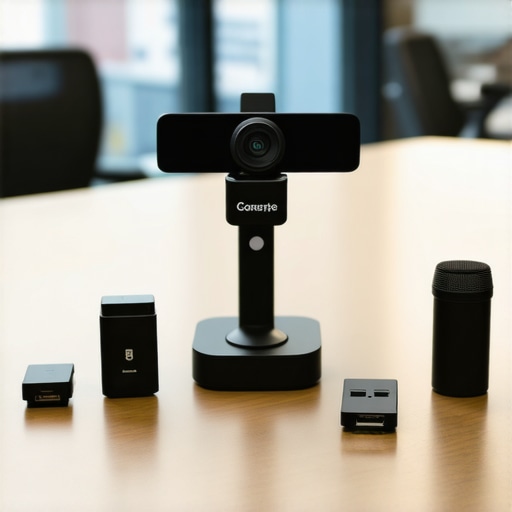
How can I maintain professional standards as my team grows?
Scaling doesn’t mean you need to buy a building; it means you need to how to pick a membership tier that scales with your team. As we grew from three to fifteen people, I realized that our internal culture was starting to fray because we were always hunting for space. If you don’t have a consistent ‘home base’ for your weekly sprints, why your hybrid team is still failing at internal communication 2 becomes a very expensive problem to solve. You have to move beyond on-demand booking and look for ‘dedicated’ conference credits that allow your team to establish a routine. Routine is the bedrock of professional discipline.
Looking toward the horizon, I predict we are moving into the era of ‘Spatial-First’ rooms. We are already seeing prototypes of meeting spaces with integrated AR overlays that allow remote board members to appear as if they are sitting in the empty chairs at your physical table. This is the logical evolution of the future of conference rooms in startup ecosystems. The technology will soon make ‘where’ you are irrelevant, but ‘how’ you present yourself will become even more critical. My advice? Start building your personal tech stack today so you aren’t learning the ropes when the stakes are ten times higher. Pick up a high-quality external microphone this week and notice how much more authority your voice carries in your next remote board session.
Hard Truths from the Founder Who Failed Twenty Board Meetings Before Getting It Right
After years of pivots, I realized that the subtle psychological cues of your environment speak louder than your pitch deck. If you are still wondering about startup success secrets for choosing the perfect conference room, remember that it is about total control. One hard truth: if you cannot control the thermostat, you cannot control the room’s energy. I have seen investors check out simply because a room was two degrees too warm, inducing a post-lunch lethargy that no amount of data could overcome. Furthermore, why your meeting room needs to be more than just a table becomes painfully obvious when you are scrambling for a working dry-erase marker while your lead investor waits. These small points of friction signal a lack of operational excellence.
My Battle-Tested Kit for Turning Any Shared Box into a High-Stakes Boardroom
I stopped leaving my professional reputation to the building manager’s included equipment long ago. My personal toolkit, which I carry to every high-stakes session, includes a high-gain directional microphone and a portable privacy screen for my laptop. When you finally decide to transition your team from a garage to a real office, you must bring your own layer of reliability. I also recommend keeping a physical tech-check card in your laptop bag; running through a three-minute hardware verification before the first board member walks in will save you more stress than any meditation app ever could. I personally trust high-end portable webcams over built-in monitors because the angle of your gaze during a pitch can subconsciously dictate whether you look like a peer or a subordinate.
#IMAGE_PLACE_HOLDER_E#
Your Vision Deserves a Space That Does Not Get in the Way
You are building something significant, and the path from a scrappy startup to a market leader is paved with intentional choices. Don’t let a poorly chosen conference room or a distracting neighbor be the reason a partner says not today. Many of the most successful founders are choosing memberships over long-term leases specifically because it allows them to upgrade their environment as their reputation grows. Your environment is the physical manifestation of your company’s standards. Build it with the same care you used for your codebase. What’s the one technical glitch or environmental distraction that almost cost you a deal in a shared space? Let me know in the comments.