

I remember sitting in my garage in the dead of winter, breath fogging up the screen of my laptop as I tried to explain a complex API architecture to a potential investor. Between the spotty Wi-Fi and the distinct sound of my neighbor’s leaf blower, I felt like a total amateur. I thought I was being lean and smart, but I was actually suffocating my company. That afternoon, after my third dropped call, I realized that the vacuum of my own home wasn’t just lonely—it was a growth killer. I was making every mistake in the book because I didn’t have anyone to tell me otherwise. Moving into a shared environment wasn’t just about getting a desk; it was about the friction of ideas that only happens when you are physically close to people fighting the same battles. Today, I want to show you exactly how proximity to other founders can shave months off your development cycle and why you should probably stop hiding in your basement.
Stop Building Your Business in a Vacuum
Early in my journey, I fell for the ‘lone wolf’ myth. I genuinely believed that if I just put my head down and worked harder than everyone else, the results would come. I was wrong. I spent three weeks trying to solve a payment gateway bug that the guy sitting across from me at a communal table eventually solved in five minutes over a lukewarm espresso. That’s the reality of the cluster effect. When you are near other startups, the ambient knowledge you soak up is staggering. You learn the hidden costs of running a startup from your garage the hard way, or you can learn them through a casual chat by the printer. I made the massive mistake of thinking I was saving money by staying isolated, but I was actually losing time—the only resource I couldn’t replenish. Research from the Harvard Business Review suggests that firms located in industry clusters show higher rates of innovation and productivity because of this ‘knowledge spillover.’ It’s not just magic; it’s proximity. You start trading square feet for better network access, and suddenly, the path to your next milestone looks a lot less blurry.
Does the person at the next desk actually change your ROI?
You might be skeptical. You might think that other people are just a distraction or a threat to your focus. I used to think the same until I saw my neighbor land a partnership simply because he was in the right place to overhear a conversation about a specific vendor need. That’s not ‘luck’; that’s being in the arena. When you see another team pivot and succeed, or watch them fail because they ignored a specific red flag, you gain an education that no textbook can provide. It’s about finding those hidden benefits of a diverse desk neighbor who sees your problem through a completely different lens. Have you ever felt like you were spinning your wheels on a problem that someone else has definitely already solved? We’ve all been there. We are going to break down how to leverage these nearby resources without losing your mind or your privacy.
Master the transition from isolation to impact
To move beyond the ‘lone wolf’ plateau, you need a system for integrating into a high-density environment. It starts with an honest audit of your current output versus your potential. I spent years thinking my slow progress was due to a lack of capital, but it was actually a lack of feedback loops. When you are alone, your bad ideas have room to breathe and grow. In a shared space, a simple comment from a peer can kill a bad feature before you waste $10k on it. This is the move from garage to office a growth roadmap that most founders ignore because they are too focused on the monthly rent instead of the cost of stagnation.
Audit your current speed of execution
First, look at how long it takes you to solve a non-core technical problem. If you are a fintech founder spending four hours debugging a CSS issue, you are failing. In a coworking environment, that CSS issue is solved by the dev at the next table in exchange for a cup of coffee. I once spent an entire weekend trying to figure out why my lead gen form was dropping 40% of traffic. On Monday, I moved my laptop to a communal long table, and a UX designer pointed out a broken submit button on mobile in thirty seconds. That is the efficiency of proximity. You aren’t just paying for a desk; you are paying for the reduction of your ‘stupid time.’ You need to be finding a workspace that doesn’t feel like a tech prison, but rather a place where people actually interact and solve problems together.
Trade your living room for a professional anchor
 Physical location dictates your psychological state. When your bedroom is also your boardroom, the lines blur and your productivity suffers. Your startup needs more than just a Wi-Fi connection; it needs a physical presence that signals to your team and your investors that you are serious. I found that why your startup needs a physical anchor for its remote team becomes obvious the moment you try to coordinate a product launch from a Slack channel. People need a place to congregate, even if it’s only twice a week. It creates a sense of permanence. When I finally stopped working from my dining table, my average daily output nearly doubled because my brain associated the new space with high-intensity work, not laundry and snacks.
Stop losing deals to background noise
One of my most embarrassing moments happened in 2019. I was pitching a $50k pilot program to a regional director while sitting in a local cafe. Halfway through my slide deck, the barista started the loudest industrial blender I’ve ever heard. I had to shout my projections over the sound of a strawberry smoothie being pulverized. I didn’t get the deal. The director told me later that if I couldn’t manage my environment, he didn’t trust me to manage his data. That’s why your investor pitch needs a neutral meeting room. You need a controlled environment where the focus remains on your value proposition, not the chaos around you. Learning how to choose the perfect conference room for business success is a tactical skill every founder needs to master. You look for soundproofing, reliable tech, and a layout that encourages collaboration.
Engineer your own lucky breaks
Networking isn’t about attending awkward mixers; it’s about the ‘hallway effect.’ You can’t force a breakthrough, but you can increase the surface area for it to happen. I started making it a point to stand by the espresso machine for ten minutes every afternoon. It felt unproductive at first, but the hidden value of the casual coffee machine chat resulted in my first three beta testers and a referral to a high-end IP lawyer. You should also be looking for the secret to finding quiet corners for high-stakes sales calls within these spaces, so you can jump from a casual chat to a closed deal without losing your momentum. It’s about being in the flow of information without letting it drown your deep work.Let’s dig deeper into the mechanics of where the real work happens. Most founders treat conference rooms as an afterthought—a place you book when you have a guest. But in my experience, the wrong room layout is a silent killer of momentum.
Flashy furniture won’t close your seed round
I’ve seen teams spend thousands on memberships because the lounge looked like a five-star hotel, only to find that the actual meeting spaces were echoey boxes with spotty Wi-Fi. It’s a classic ‘oops’ factor: prioritizing the lobby over the utility of the workspace. If you can’t have a private conversation without the entire floor hearing you, you aren’t in a professional environment; you’re in a glorified library. This is why learning how to vet a conference room for client-facing speed is more important than checking if they have cold brew on tap. You need to ensure the space is optimized for high-stakes calls, which means looking for the acoustic fix for echoey conference rooms before you sign anything.
How do you stop your meeting room from becoming a productivity sinkhole?
The biggest mistake I see advanced teams make is assuming that more space equals better collaboration. In reality, a massive 20-person boardroom for a 4-person standup creates a psychological distance that stifles honest feedback. Research from the University of Michigan’s Taubman College indicates that spatial proximity and visual boundaries significantly impact how much information is actually shared among team members. When a room is too big, participation drops. This is why why your meeting room layout is killing participation is a topic you need to master. You want huddle spaces—tight, tech-heavy environments that force high-intensity interaction. 
Avoid the glass aquarium trap
There is a prevailing myth that transparency, usually in the form of glass walls everywhere, fosters a healthy culture. For a startup, it often does the opposite. If your developers feel like they are in a fishbowl, they won’t reach deep flow. Furthermore, how to keep your startups trade secrets in an open office becomes nearly impossible when your growth charts or proprietary code are visible to every competitor walking past your glass door. You need to be looking at the future of conference rooms in startup ecosystems, which involves modular privacy and on-demand opacity. Have you ever fallen into the trap of picking a space just because it looked cool on Instagram? Let me know in the comments. We need to stop valuing the aesthetic of work over the actual output. Focus on the infrastructure—the Wi-Fi, the soundproofing, and the layout—and the ROI will follow.
Build a toolkit that survives the scaling phase
Infrastructure is more than just four walls; it is the hidden nervous system of your operation. When I moved from my garage to a professional hub, I realized that my personal laptop and a pair of consumer-grade headphones weren’t going to cut it anymore. I had to build a stack that could withstand the chaos of a shared floor. My first major investment wasn’t more furniture; it was a dedicated Krisp subscription and an Elgato Stream Deck specifically for Zoom macros. Why? Because being able to kill my mic and camera with a physical button while navigating how to manage office politics when you share a floor with other startups is a lifesaver. You need tools that remove the friction of the ‘physical-to-digital’ bridge. If you are still fumbling with Bluetooth settings every time you enter a shared space, you are burning cognitive load that belongs to your product. Working in high-density environments requires a new level of technical discipline, especially when why your hybrid team is still failing at internal communication 2 often comes down to the quality of the hardware in the room.
How do I maintain team momentum as we grow out of our first space?
Sustainability in a startup isn’t just about cash flow; it’s about energy management. As your team grows, the ‘open desk’ novelty wears off and the need for structured access increases. This is where I see most founders stumble. They wait until everyone is frustrated by lack of space to act. I recommend implementing a ‘sixty-second booking rule.’ If your team cannot how to book a meeting room in under sixty seconds, they will stop meeting, and your internal culture will begin to rot. We use an automated tablet-based system that syncs with our shared calendar, ensuring that no one has to play the awkward ‘is this room taken?’ game. This level of organization is essential for the checklist for a glitch-free product launch event because it removes the environmental variables that cause last-minute stress. 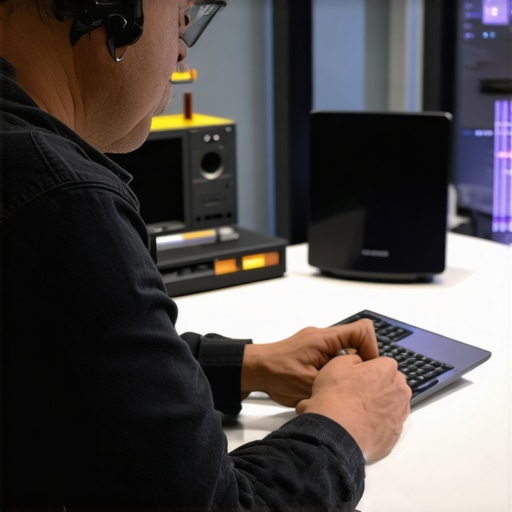
Invest in the hidden tech that visitors never see
I’ve become a bit of a nerd regarding high-density wireless deployments. Most coworking spaces claim to have great Wi-Fi, but as soon as ten people start a video call at once, the packet loss is staggering. I started carrying my own travel router to create a sub-network for our team’s internal devices. According to technical documentation from Ubiquiti Networks, managing airtime fairness in high-density environments is the only way to ensure low latency for VoIP applications. If you aren’t checking these specs, you aren’t really in control of your office. You need to be proactive about how to pick a membership that scales with your teams size by asking about the backhaul capacity of the building, not just the speed test result on a quiet Tuesday morning. Looking ahead, I predict a massive shift toward AI-driven spatial management—rooms that automatically adjust lighting, acoustics, and even air filtration based on the number of bodies in the space. We are moving toward the future of conference rooms in startup ecosystems where the room itself is an active participant in the meeting. My advice? Stop looking at the wallpaper and start looking at the router. Try this today: Audit your team’s most frequent ‘minor’ tech frustrations—like a jittery mouse or a slow-loading calendar—and fix them immediately. These micro-frictions are the silent killers of a high-growth culture.
The Real Truth About Startup Proximity
Reflecting on those early years, I realized that my biggest hurdle wasn’t a lack of talent or a poor product; it was the friction-less vacuum of my own home. When everything is comfortable and quiet, your growth stalls. You need the chaos of others to sharpen your edge. I learned the hard way that the real cost of a free coffee meeting isn’t the price of the latte, but the mental energy spent fighting for a stable connection and a quiet corner. I also spent way too much time worrying about things that didn’t matter, while ignoring major risks like how to spot a predatory lease before you sign your first real commitment. Another major ‘lightbulb moment’ was accepting that noise isn’t always an enemy. Once I figured out how to handle the noise problem in open plan offices, I stopped seeing the hubbub as a distraction and started seeing it as the heartbeat of a working economy. You don’t want total silence; you want the right kind of energy surrounding you.
My Go-To Stack for Professional Presence
If you want to move fast, your environment needs to keep up with you. I don’t trust any space that hasn’t figured out its tech stack. For my own team, I rely on a few specific resources to maintain our speed. First, I always vet a community by checking their onboarding flow; you should know how to spot a bad coworking community before joining by how they handle your first tour. For day-to-day operations, I prioritize efficiency above all else. This means having a system where you know how to book a meeting room in under sixty seconds without needing a manual. I also keep a close eye on industry trends through deep dives into the future of conference rooms in startup ecosystems so I can anticipate what my team will need next. I trust these resources because they focus on utility and execution rather than just aesthetics.
Take the Leap from Garage to Growth
Leaving the safety of your garage is scary, but it is the only way to transform from a ‘guy with an idea’ into a founder with a company. The physical transition is a psychological milestone that changes how you view your own potential. By choosing a space that challenges you and surrounds you with higher-level thinkers, you are essentially buying a shortcut to your own evolution. Start by uncovering startup success secrets choosing the perfect conference room and build your presence from there. The world is too competitive to stay hidden in the dark. Step into the arena, find your tribe, and let the proximity to excellence pull you toward your goals. Have you ever felt that your current workspace is actually holding your team back from its full potential? Let me know in the comments below.