

I spent three months staring at the most beautiful ergonomic chair I’ve ever owned, tucked away in a sterile office park three miles from the nearest coffee shop. I had the ‘perfect’ setup—dual monitors, adjustable height, and a plant that actually lived. But my startup was dying. I was isolated, out of the loop, and frankly, bored to tears. It was my first major founder mistake: I prioritized the furniture over the ecosystem. I soon learned that why founders are prioritizing location over fancy amenities isn’t just a trend; it’s a survival strategy. Today, I am going to show you how to stop looking at the four walls of your office and start looking at the blocks surrounding it to fuel your growth.
The Ghost Town Effect Kills Innovation
If you are tucked away in a quiet corner of the suburbs, you are missing the ‘collisions’ that happen in a bustling tech hub. I used to think I could just ‘Zoom’ my way into a network. I was wrong. Research from the MIT Human Dynamics Lab shows that physical proximity is the single greatest predictor of collaboration frequency; you are significantly more likely to communicate and innovate with those in your immediate physical vicinity. Being in the right neighborhood means your lunch break is a networking event and your commute is a chance to spot the next big trend. I realized that why founders are trading square feet for better network access is the only way to stay relevant in a fast-moving market.
Is a Premium Address Just a Vanity Metric?
You might be thinking that you cannot afford downtown prices just for a ‘vibe.’ I get it. I used to think the real cost of a desk in the heart of downtown was a waste of precious seed money. However, when you factor in the ease of finding your first ten customers simply by walking to a nearby meetup, the ROI changes instantly. Have you ever felt like you were working in a vacuum, despite having a great office setup? If so, you are likely in the wrong ZIP code.
Access to Talent and Capital Happens on the Sidewalk
In the early days of my second venture, I traded a 2,000-square-foot private warehouse for three tiny desks in a crowded coworking space in the city’s tech district. My team initially hated the lack of personal space. Then, they met our first lead developer at the communal coffee machine and our first angel investor in the elevator. This is the reality of the modern startup ecosystem; the ‘where’ is far more important than the ‘what.’ When you choose a location, you aren’t just buying a place to sit; you are buying an all-access pass to the people who will help you scale.
Audit Your Three-Block Radius Before You Sign
I used to think the office floor plan was everything. It isn’t. Your business actually lives in the surrounding streets, not just within your four walls. Before you commit to a membership, spend a Tuesday morning in the nearest coffee shop. If you don’t overhear at least one conversation about a deployment, a seed round, or a bug fix, you are likely in the wrong place. This is where how to use local events to find your next co-founder becomes a daily reality rather than a chore. If the local ecosystem doesn’t breathe your industry, you will be swimming upstream for talent. I once signed a year-long lease in a ‘luxury’ building only to realize the nearest tech meetup was a 40-minute train ride away. That mistake cost me months of networking momentum and several key introductions that I had to fight twice as hard to get later.
Stop Renting Square Footage and Start Buying Access
Commitment is the enemy of a pre-revenue startup. Instead of a heavy lease, consider the logic of choosing a flex office over a 5-year lease. I have seen countless teams burn through their runway just to have their logo on a glass door. We eventually learned how we scaled our team using day passes only during our first major growth spurt. It allowed us to be where the action was—literally sitting next to potential partners—without the overhead of an empty office on Fridays. When you pay for a desk in a hub, you are actually paying for a filter that keeps you surrounded by people who are just as hungry as you are. This environment naturally encourages you to unlock networking opportunities in top coworking environments simply by being present for the morning coffee rush.
The High-Stakes Art of Choosing Your War Room
When you finally get that VC or a key partner to visit, the lobby aesthetics won’t save a bad meeting. The conference room environment is your stage. I vividly remember a pitch where the Wi-Fi cut out just as I was showing the live dashboard. I looked like an amateur because I hadn’t vetted the infrastructure. Now, I always learn how to test the wi-fi speed before you book that venue. You should also ensure you are in a space that respects the sensitivity of your data; understanding why your sales calls need a private phone booth is a lesson you do not want to learn while a competitor is sitting at the next table. Beyond privacy, you can how to maximize productivity in your startups conference rooms by 0245 pm by picking rooms with natural light and integrated hardware that doesn’t require a degree in IT to operate. Success in these moments is about removing friction so your ideas can take center stage.Most founders fall for the ‘perk’ trap. They see a neon sign and a ping-pong table and think, ‘This is where the magic happens.’ But I’ll let you in on a secret: why the all-inclusive membership is usually a trap is because you’re often paying for distractions rather than delivery. I’ve seen teams trade their seed funding for a weekly happy hour while their actual output plummeted because they couldn’t find a quiet corner to think. Research from the University of Sydney confirmed this reality, revealing that lack of sound privacy is the single biggest frustration for office workers, far outweighing any benefit of a ‘fun’ atmosphere. If you can’t hear yourself think, you certainly can’t innovate.
How do you know if your conference room layout is actually killing your participation?
It’s not just about having a table and chairs. The nuance most people miss is how the physical environment dictates the power dynamics of a meeting. If you’re in a long, narrow room with a ‘head’ of the table, you’ve already signaled a hierarchy that silences your junior developers. I learned that why your meeting room layout is killing participation the hard way during a major product pivot—the most important feedback came from the person sitting in the corner because they felt ‘outside’ the circle. You need circular or modular setups that invite contribution, not a boardroom that feels like a deposition. The ‘Oops’ factor often comes down to the illusion of privacy. I once watched a founder lose a key hire because they tried to how to handle a sensitive hr meeting in a shared space with glass walls that weren’t frosted. Everyone on the floor saw the candidate get visibly upset. It was a disaster for company morale and the founder’s reputation. This is exactly why your sales calls need a private phone booth—not just for the noise, but for the psychological safety of the conversation. Beyond the walls, there is the social friction of shared environments. You have to learn how to manage office politics when you share a floor with other startups. It’s easy to accidentally leak your roadmap when your ‘neighbor’ is actually a competitor’s early employee. When we talk about technical infrastructure, most people just check the Wi-Fi speed and call it a day. That’s a beginner move. The real pros look for redundancy. What happens when the main fiber line is cut? This is a core part of the logic of choosing a flex office over a 5-year lease; you are outsourcing your IT risk. I now check for the truth about shared office noise levels and tech redundancy before I even look at the coffee brand. Don’t let a ‘vibe’ mask a lack of basic utility. Have you ever fallen into this trap of prioritizing aesthetics over actual operational privacy? Let me know in the comments.I have reached a point where I don’t leave my house for a coworking session without what I call my ‘digital go-bag.’ After years of trial and error, I realized that relying on the communal infrastructure is a gamble I’m no longer willing to take. I personally carry a GL.iNet travel router to create a private hardware-level firewall for my team. It’s one thing to know how to test the wi-fi speed before you book that venue, but it is quite another to ensure that your packets aren’t being sniffed by the guy in the hoodie two tables over. This is a non-negotiable for me because how to keep your startups trade secrets in an open office starts with your own hardware, not just a pinky-promise from the community manager.
Pack a Digital Go-Bag for Every Desk
Beyond the router, my maintenance strategy includes a dedicated endpoint protection suite. I’ve seen too many founders think a standard antivirus is enough, but why endpoint protection services matter more when your team is hybrid becomes painfully clear the moment a team member connects to an unsecured printer in the lounge. For the technical among you, I recommend using a tool like NetSpot to perform a quick site survey of your frequent spots. According to technical documentation from the Wi-Fi Alliance, maintaining a Signal-to-Noise Ratio (SNR) of at least 25dB is the baseline for stable, high-bandwidth video calls. If the hub’s corner office is sitting at 15dB, I move. You have to be proactive about your environment; knowing how to handle a server crash from a temporary desk is great, but preventing it through better signal awareness is better.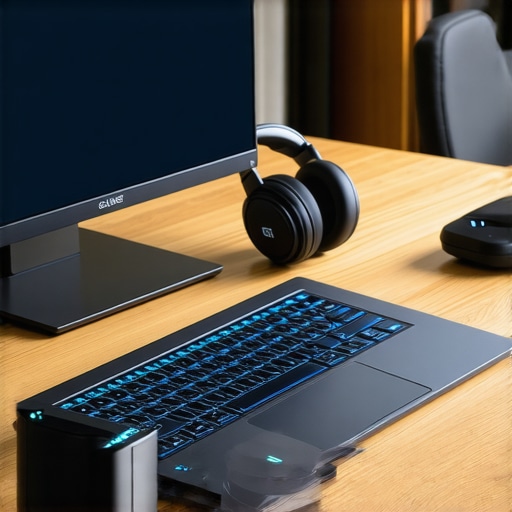
Don’t Let Open Air Kill Your Deep Work
Maintenance isn’t just about the tech; it’s about your team’s mental bandwidth. I’ve found that my developers lose about 20% of their output when we’re in a high-traffic zone without proper gear. We now treat high-end ANC (Active Noise Canceling) headphones as a required company expense. However, the truth about noise canceling headphones in shared spaces is that they only solve half the problem. You still need to manage the visual distractions. We use a ‘status light’ system—a small LED on the back of the laptop—to signal when someone is in ‘Deep Flow.’ This prevents the accidental tap on the shoulder that destroys a morning’s worth of code. If you find yourself constantly interrupted, you might find why suburban flex spaces are the new downtown office appealing, as they often offer a slower, more focused pace compared to the frantic energy of a city center hub.
How do I keep my operational edge over the long term?
The secret to long-term success in a flex environment is regular auditing. Every quarter, I sit down and look at our usage versus our cost. I’ve often found that why your home wi-fi is failing your zoom presentations isn’t the only reason to stay in the hub; it’s the access to high-end hardware. But if we aren’t using the podcast studio or the heavy-duty printers, I renegotiate. I also keep a ‘failure log’ for every meeting. If we experience lag, I note it. This data helps us know how to deal with technical glitches during a remote board call by having a backup 5G hotspot ready to go before the client even notices a stutter. Looking ahead, I predict the future of conference rooms in startup ecosystems will involve integrated ‘Edge’ computing, where the space itself provides dedicated local processing power for your AI models, reducing your reliance on the cloud entirely. I strongly encourage you to try my travel router tip next week—once you see the difference in your team’s local file transfer speeds, you’ll never go back to public SSID life.
Three Realities of Shared Spaces You Won’t Find in the Brochure
The biggest mistake I ever made wasn’t picking the wrong chair; it was picking the wrong culture. You have to learn how to spot a bad coworking community before joining because the people around you will either pull you up or drain your energy. I’ve realized that the ‘cool’ factor of a space usually fades in three weeks, but the access to a high-quality network lasts a lifetime. You should always prioritize how to choose an office that supports your scaling speed over the physical square footage. Finally, remember that your environment is a tool, not a home; if it stops serving your growth, be ready to move overnight.
The Stack That Powers Our Flexible Office Life
I don’t go anywhere without my GL.iNet travel router and a subscription to NetSpot. These aren’t just gadgets; they are my insurance policy. I also highly recommend the book ‘Deep Work’ by Cal Newport—it will help you understand why developers need quiet zones to reach deep flow even in the middle of a chaotic hub. For high-stakes moments, I rely on why a neutral meeting space leads to more honest feedback to keep my ego out of the room and the data at the forefront. This mental and physical toolkit is what separates the founders who burn out from those who build legacies.
Stop Overthinking the Lease and Start Doing
Your startup doesn’t need a monument; it needs momentum. The walls around you should be a catalyst for collisions, not a cage for your capital. By focusing on the future of conference rooms in startup ecosystems and staying mobile, you give your team the agility they need to pivot when the market shifts. It’s about startup success secrets choosing the perfect conference room at 0817 am and finding that rhythm where your environment matches your ambition. Go find your war room, set up your gear, and start building.
Have you ever had a specific ‘red flag’ moment while touring a potential office space? Let me know in the comments below.