

I’ll never forget the cold sweat I felt while sitting in a beautiful, sun-drenched collaboration hub with a glass wall that looked directly onto the communal espresso machine. I had to let someone go. It was a small team, a tight-knit startup, and the news was heavy. Just as the conversation reached its most delicate point, a delivery person started banging on the glass to ask where the mailroom was. It was mortifying. My employee felt exposed, I felt unprofessional, and the whole cool coworking vibe suddenly felt like a trap. If you have ever felt like you are living in a fishbowl while trying to manage a human crisis, you know exactly what I am talking about. Handling sensitive HR matters in a shared environment is a high-wire act where the safety net is often made of thin air. Most of us jump into these spaces for the energy and the networking, but we rarely think about the vulnerability required for real management.
Stop Trying to Hide in Plain Sight
The biggest mistake I made early on was assuming that a quiet corner or a tucked-away booth in the lounge would suffice for high-stakes performance reviews. It doesn’t. When we moved our operations from a garage to a professional hub, I learned the hard way that why your startup needs a real door not just a glass wall is more than just a design preference—it is a legal and emotional necessity for your people. Privacy isn’t just about what people can hear; it is about what they can see. If your team sees a colleague walking out of a glass room in tears, the rumor mill starts before you even finish your notes. I once tried to save twenty bucks by using a communal table for a sensitive chat and ended up spending the next week doing damage control for the entire team’s morale. Don’t be like me. You need to understand how to keep your startups trade secrets in an open office while protecting the dignity of your employees.
Can you actually keep things private in a glass box?
You might be skeptical. After all, if the walls are transparent and the acoustic dampening is questionable, how do you protect a person’s vulnerability? I used to think it was impossible without a traditional corporate lease. But I’ve realized that why a neutral meeting space leads to more honest feedback is the secret sauce for these tough days. It’s not just about the physical walls; it’s about the psychological boundary you create. According to research published by the Harvard Business Review, the lack of visual and acoustic privacy in modern offices can actually lead to a 70% decrease in face-to-face interaction because people are terrified of being overheard during sensitive moments. This is why we have to be intentional. We aren’t just looking for a room; we are looking for a sanctuary. Have you ever had a sensitive meeting get interrupted by a neighbor, or had your heart sink because you realized the room wasn’t as soundproof as the brochure claimed? Share your most awkward coworking HR moment in the comments—I promise I won’t judge, because I’ve likely done worse. We’re going to solve that today by looking at how to vet your space and schedule these moments so you can keep your dignity intact. The nightmare of trying to host a workshop at a coffee shop is nothing compared to a leaked HR detail, so let’s get into the practical steps for securing your space.
Secure Your Perimeter Before the Conversation Begins
Handling a firing or a disciplinary talk is like performing surgery; you need a sterile, controlled environment. You cannot just wing it in a space where the barista is shouting names for oat milk lattes every thirty seconds. My biggest hurdle was learning that not all meeting rooms are created equal. You have to how to vet a conference room for client-facing speed and sound leakage before you ever invite an employee inside. I remember one specific Tuesday where I thought I was being discreet by booking a small ‘huddle room.’ Ten minutes in, I realized I could hear the guy next door pitching his crypto startup through the drywall. I had to pause a deeply personal conversation because the acoustic privacy was a joke. Since then, I’ve made it a rule to physically walk into the room, close the door, and have a colleague stand outside to see if they can make out my words.
Test the Walls Before You Trust the Room
Soundproofing is the silent killer of HR integrity. If you are in a shared space, you must learn the exact way to ask for a quiet room without being rude to the community manager. Some rooms are designed for brainstorming and have open ceilings, while others are built for high-stakes calls. You want the latter. Look for rooms with heavy doors and acoustic panels. If you can’t find one, you are better off rescheduling than risking a breach of confidentiality. I once tried to talk a lead developer through a difficult personal leave request while sitting near a thin glass partition. Every time a stranger walked by, his eyes darted to them, and I could see his walls going up. It felt less like a support meeting and more like an interrogation in a shopping mall. 
Skip the Peak Hours to Protect Employee Dignity
Timing is your best friend when you don’t have a private office building. I’ve found that how to maximize productivity in your startups conference rooms by 0245 pm often involves scheduling the hardest conversations when the lobby is the emptiest. Don’t do HR at 9:00 AM when everyone is hovering around the coffee machine, and definitely don’t do it right before the Friday happy hour. I made the mistake of letting a team member go right as the ‘Free Pizza Friday’ crowd was gathering outside the door. Walking him out through a sea of cheering, hungry coworkers was one of the most gut-wrenching things I’ve ever had to do. Now, I aim for the ‘lulls’—usually mid-morning or late afternoon on a Tuesday or Wednesday. You also need to know how to handle the noise problem in open plan offices by using white noise machines or choosing rooms furthest from the communal kitchen. Controlling the environment isn’t just about acoustics; it’s about the path your employee takes to leave the room. If they have to walk a gauntlet of desks to get to the exit while they are visibly upset, you have failed as a leader. Always map out a ‘discreet exit’ strategy.Most people think that privacy in a startup hub is a binary state: either you have a room or you don’t. But after a decade of managing teams in these environments, I’ve realized that the ‘closed door’ is often a false sense of security. Everyone says that as long as the acoustics are solid, you’re safe, but in my experience, the visual cues of a meeting are what actually trigger the office rumor mill. We obsess over soundproofing while ignoring the fact that everyone in the lounge can see the exact moment a high-performer’s shoulders slump or a manager starts gesturing with intensity.
The Furniture Trap That Sabotages Your Strategy
One of the biggest mistakes I see founders make is ignoring the internal geography of the room. I used to believe that any professional setting would do, but I’ve learned that the hidden psychology of circular meeting tables can be the difference between a defensive argument and a productive breakthrough. When you sit directly across from an employee at a narrow rectangular table, you are creating an ‘adversarial’ alignment. It’s you versus them. It’s the same reason why your meeting room layout is killing participation during standard brainstorms—the physical barriers create mental ones. I once had to deliver a tough performance PIP in a room with a massive, heavy table, and the distance between us felt like a canyon. It made a difficult conversation feel cold and bureaucratic.
Does the Shape of Your Table Influence the Final Outcome?
You might be surprised to learn that environmental design is more than just ‘vibes.’ According to research from the University of British Columbia, being in a circular environment actually increases a person’s need to belong and reduces their defensiveness. This is a game-changer for HR. If you want a person to feel supported even during a correction, you need to understand how to choose the perfect conference room for business success by looking for ‘soft’ layouts. 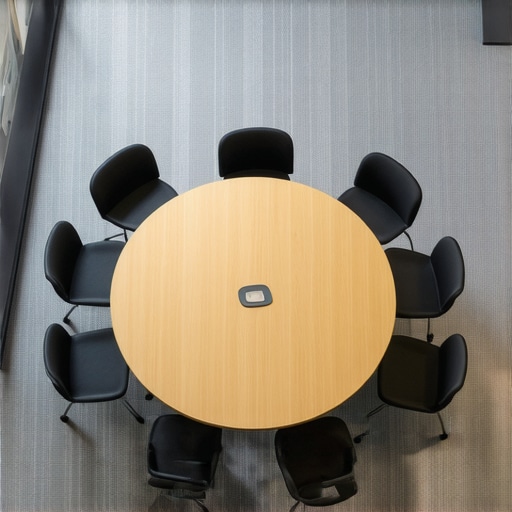
The Frosting Trap and Other Visual Leaks
Here is the ‘oops’ factor most managers miss: the frosting on the glass. Most coworking spaces use a frosted strip that covers the middle third of the glass. While this prevents a passerby from reading your laptop screen, it does absolutely nothing to hide ‘leg language’ or the passing of a box of tissues. I’ve seen teams realize a colleague was being fired simply because they saw the HR manager’s posture from the hallway. To avoid this, you need to be strategic about how to maximize productivity in your startups conference rooms by 0245 pm by selecting the rooms tucked behind corners. Don’t just book for the Wi-Fi speed; book for the blind spots. I once thought I was being clever by booking a room with high-end tech, but it was right next to the elevator bank. Every time the doors opened, we were the center of attention. Have you ever fallen into this trap of thinking a room was private just because it had a door? Let me know in the comments—I’d love to hear how you handled the ‘fishbowl’ effect.
The ‘fishbowl’ problem isn’t just about the physical space—it’s about the digital and cultural friction that ruins your flow. Once you realize the glass is a liability, you have to shift your focus to the systems that keep your secrets safe. I’ve found that the real magic happens when you stop relying on the luck of a quiet hallway and start engineering your environment. For me, that meant moving past the basic amenities and looking at the infrastructure that supports a growing team. Transitions like the move from a garage to a professional hub a survival guide taught me that the tools you use to manage your space are just as important as the space itself.
Kill the Calendar Chaos Before It Kills Your Culture
Stop playing Slack-tag for the huddle room. There is nothing that signals ‘something is wrong’ to a team more than a manager frantically checking every door handle in the lobby with a somber-looking employee in tow. I personally use integrated booking apps that sync directly with my calendar because you need to know how to book a meeting room in under sixty seconds without making it look like a covert operation. If you are scaling, you also need to lean on the role of community managers in the modern workspace. These people are your best allies; I’ve often pulled my community manager aside and said, ‘I need a room where no one will walk past for the next hour,’ and they’ve moved mountains to make it happen.
Invest in Tech That Actually Muffles the Drama
Physical walls are only half the battle. If you’re serious about privacy, you need to think about active sound management. I’ve started bringing a portable white noise machine to high-stakes meetings. It sounds like a small thing, but according to research from the Journal of the Acoustical Society of America, specifically regarding the ‘Speech Privacy Index,’ increasing the background ambient noise is the only way to ensure that even if someone is leaning against the door, they can’t decipher the syllables being spoken. It’s more effective than the truth about noise-canceling headphones in shared spaces because it protects the room, not just your ears. This is how you prevent a disciplinary talk from becoming public knowledge. 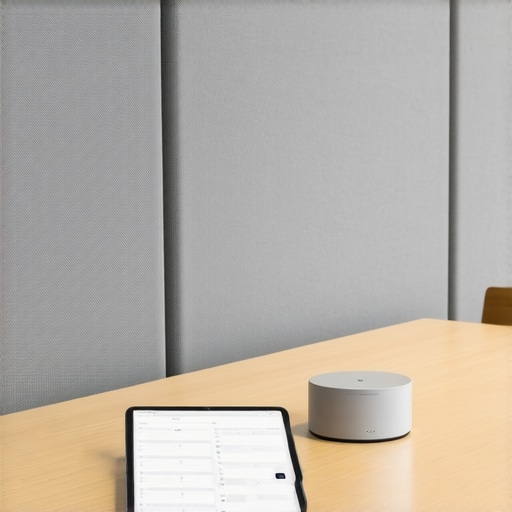
How do I keep the lid on things while my headcount explodes?
Scaling brings a whole new set of headaches. When you have five employees, you can whisper; when you have fifty, you need a strategy. You have to learn how to stop your team from hating hybrid meetings by ensuring that those joining remotely feel just as secure in the conversation as those in the room. I predict that the future of conference rooms in startup ecosystems will involve automated ‘privacy glass’ that frosts over the moment a meeting is marked ‘confidential’ in the system. For now, we have to be the architects of our own boundaries. Don’t be afraid to use the checklist for a glitch-free product launch event even for internal HR—prep the tech, test the audio, and secure the perimeter. I want you to try one thing this week: perform a ‘sound audit’ on your favorite meeting room. Have a friend talk at a normal volume inside while you stand in the hallway. If you can hear their words, that room is for brainstorming, not for HR. Protect your people by being honest about the limits of your space.
Looking back at my years in the startup trenches, I have realized that the ‘open’ nature of coworking is its biggest strength and its most dangerous flaw for a leader. If you don’t take control of the environment, the environment will take control of your team’s culture. Here is what I have learned through trial and error.
The Hardest HR Truths I Learned Behind Glass Walls
First, never underestimate the power of the ‘exit walk.’ I once had an employee walk past the entire lunch crowd after a difficult PIP meeting, and it destroyed his confidence. Always pick a room near a side exit or one that doesn’t require a parade through the kitchen. Second, your community manager knows more than you think. If you treat them well, they become your unofficial security detail, keeping the hallways clear or redirecting tours when things get heavy. This is why startup success secrets choosing the perfect conference room at 0817 am often starts with a quick, honest chat at the front desk. Finally, silence isn’t just the absence of noise; it’s the presence of trust. If a room feels ‘leaky’ or public, the conversation will stay shallow and unproductive.
The Privacy Toolkit I Swear By
I never walk into a high-stakes meeting without my portable white noise machine. While many founders think they can just rely on the truth about noise canceling headphones in shared spaces, those only protect your own focus, not the actual privacy of the person you are speaking to. I also highly recommend studying how to choose the perfect conference room for business success to understand how physical furniture affects the tone of a reprimand versus a reward. Finally, always have a ‘neutral’ space available for the truly hard days; I have found that why investors prefer meeting in professional settings 2 applies to your internal team as well; it signals that you respect the gravity of the human life sitting across from you.
Leading with Empathy in an Open World
Navigating the complexities of human resources within a shared ecosystem requires more than just a mobile booking app; it requires a commitment to the psychological safety of your staff. As we move into an era where the office is increasingly fluid and boundaries are blurred, the way we protect these sensitive moments will define our leadership character more than any mission statement. Your choice of room is a direct reflection of how much you value the people building your dream. Have you ever had a private conversation accidentally overheard in a shared workspace? Let me know your story in the comments below!