
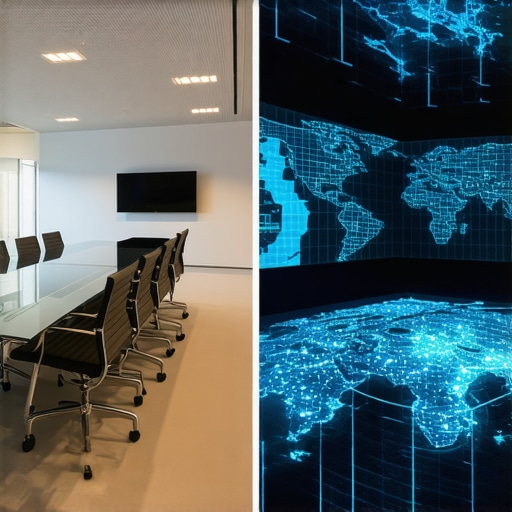
I spent three hours last Tuesday staring at a blank whiteboard in a room that cost fifty dollars an hour, and I realized something painful. My team wasn’t “war-rooming.” We were just having a very expensive coffee break without the caffeine. I’d booked one of those perfect conference rooms for business success, expecting the environment to do the heavy lifting for us. It didn’t. The lighting was too soft, the chairs were too comfortable, and the walls were too clean. We weren’t there to relax; we were there to survive a market shift. I once thought that a high-end table and a 4K monitor were all I needed to solve our user retention crisis. I was wrong. I spent four days in a glass-walled box, feeling like a goldfish while the rest of the coworking space watched us fail. That was my phase of using standard spaces for high-stakes problems, and it was a disaster. Today, I’m going to show you why your current setup is probably holding your team back and how to build a space that actually generates results.
Stop Mistaking Fancy Furniture for Strategic Momentum
The biggest lie we tell ourselves is that a “professional” space equals a productive one. It doesn’t. A standard meeting room is designed for hospitality—it’s where you take clients you want to impress or where you have those HR chats you’d rather forget. But when the stakes are high, you don’t need hospitality; you need a cockpit. I learned this the hard way when I realized why your meeting room layout is killing participation. We were all sitting too far apart, looking at a screen instead of each other. A real war room, or an “obeya” as the Japanese lean-manufacturing gurus call it, is a visual nerve center. It’s messy. It’s persistent. It stays exactly as you left it until the problem is solved. If you’re constantly packing up your post-it notes because the next group is coming in at 2 PM, you don’t have a war room. You have a rental.
Does a War Room Really Make a Difference for Small Teams?
You might be thinking that this sounds like overkill for a three-person startup. I thought so too, until we started losing time because we had to “re-align” every single morning. A study by the Journal of Corporate Real Estate suggests that dedicated collaborative spaces designed for project-specific tasks can boost decision-making speed by nearly 30%. That’s the difference between beating a competitor to market and being a footnote. I made the mistake of thinking why your startup needs a real door didn’t apply to us, but the psychological safety of a private, dedicated space is where the real breakthroughs happen. Have you ever felt like you were just “playing office” instead of actually getting things done? I’d love to hear if your current meeting space feels more like a lounge or a laboratory.
My Most Expensive Mistake Was Choosing Aesthetics Over Action
Early on, I prioritized “cool” over “functional.” I wanted the space that looked best on Instagram. But choosing the right environment isn’t about the color of the rugs. It’s about whether you can leave your data on the walls overnight. In our early days, I wasted thousands on premium rooms that didn’t let us pin anything to the walls. We spent 20 minutes of every hour just setting up and tearing down. It was a productivity nightmare. A war room is about removing the friction of getting started. It’s about walking into a room and being immediately surrounded by the current state of your project.
Build a Space That Remembers What You Did
If you have to pack up your thoughts into a backpack at the end of every hour, your team is losing its collective memory. A true war room functions as an external brain. When I was trying to pivot our lead-gen strategy in 2023, we made the mistake of booking a different room every day. We spent the first twenty minutes of every session just trying to remember where we left off. You need a persistent environment where the data stays on the walls. This is why many founders are realizing the logic of choosing a flex office over a 5-year lease; it allows you to negotiate for dedicated project rooms that don’t get reset by the cleaning crew every night. You aren’t just looking for a table; you are transforming meeting rooms into collaboration hubs where the physical environment stores your progress.
Ditch the Digital Screens for a Wall of Chaos
We’ve become obsessed with HDMI cables and 4K monitors, but screens are inherently exclusionary. Only one person can hold the ‘mouse’ at a time. In a real war room, everyone has a marker. I remember a session where we were stuck on a pricing model for three days. The breakthrough didn’t come from a spreadsheet; it came when our lead dev literally drew a giant ‘X’ over our current plan on a floor-to-ceiling whiteboard. You need innovative meeting rooms that boost startup creativity by offering analog surfaces. Physical artifacts—post-it notes, printed wireframes, and hand-drawn charts—allow for a ‘spatial’ understanding of the problem that a 13-inch laptop screen simply can’t provide. This shift is exactly why founders are moving back to physical brainstorming sessions after years of digital fatigue.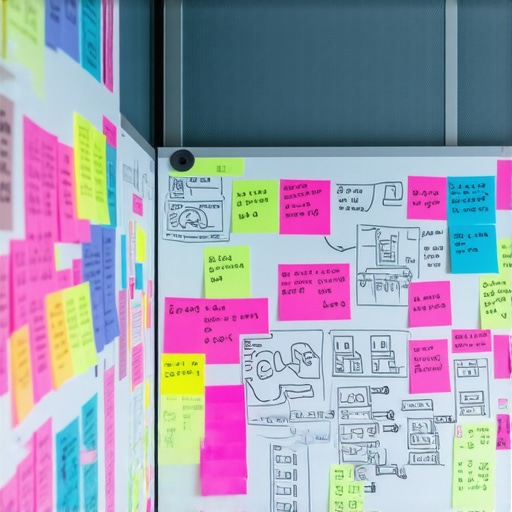
The Cockpit Layout Beats the Boardroom Every Time
Stop sitting at a long, rectangular table like you’re at a state dinner. If you’re more than six feet away from the person you’re talking to, the energy dies. I once rented a massive ‘executive’ suite in downtown San Francisco because I thought it would make us feel like a real company. It was a disaster. We were shouting across a mahogany canyon, and the psychological distance made us polite instead of honest. We eventually moved into a tiny, cramped ‘pod’ where we were practically elbow-to-elbow. The intensity immediately spiked. To maximize productivity in your startups conference rooms, you need a tight circle. You want to be able to reach out and point at a piece of data without standing up. This proximity creates a ‘cockpit’ effect where everyone is equally responsible for the flight path. If you are preparing for a high-stakes pitch, remember why investors prefer meeting in professional settings: it’s not for the fancy lobby, it’s because those spaces are built to facilitate the kind of intense, focused communication that a coffee shop destroys.Everyone tells you to find a ‘flexible’ space when you’re scaling. But in my experience, flexibility is often a trap. We’ve been conditioned to believe that a room should be a blank canvas that can morph from a zen yoga studio to a high-stakes pitch deck review in ten minutes. This is a lie. When a space tries to do everything, it ends up being a mediocre environment for anything. I’ve seen teams flounder because they prioritized a space that ‘looked right’ over one that functioned correctly. Let’s dig deeper into the nuances of what actually makes a room work. You need to understand why your meeting room needs to be more than just a table. It’s not about the surface area; it’s about the psychological permission the room gives your team to be messy, honest, and aggressive with their goals. Have you ever fallen into the trap of booking a room because it had ‘nice vibes’ only to realize forty minutes in that you couldn’t actually get any work done? Let me know in the comments.
Stop Overpaying for Corporate Aesthetics That Stifle Grit
The biggest ‘oops’ factor I see with first-time founders is over-investing in what I call the ‘Venture Capitalist Aesthetic.’ They want the Herman Miller chairs and the marble-topped desks. They think this projects success. In reality, it often creates a stiff, formal atmosphere where people are afraid to spill coffee or move the furniture. A productive startup environment should feel like a workshop, not a museum. When I was scouting locations, I learned to look for 7 red flags to watch for during a space tour, and top of that list was ‘perfection.’ If a space is too curated, it won’t survive the chaos of a real pivot.
Is Your Glass-Walled Fishbowl Leaking Your Trade Secrets?
One of the most common myths in modern coworking is that glass walls foster ‘transparency.’ While they look great in architectural magazines, they are a nightmare for deep work and sensitive strategy. Research published in the Harvard Business Review suggests that when employees feel constantly ‘on display’ or monitored—even subconsciously by passersby in a glass-walled office—their willingness to engage in high-risk creative experimentation drops significantly. They default to ‘performance’ rather than ‘problem-solving.’ This is exactly why your startup needs a real door. Beyond the psychological impact, there is the literal risk of intellectual property theft. If I can see your Trello board from the hallway, so can your competitor who happens to be sitting three desks away. 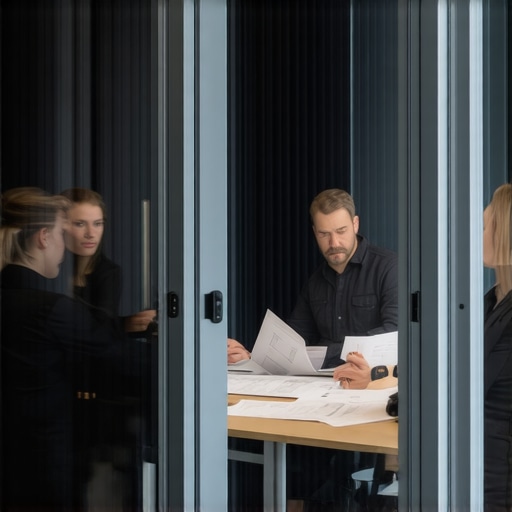
Sound Privacy is More Important Than Fiber Speed
You can have a gigabit connection, but if your neighbor’s sales call is bleeding through the drywall, your strategy session is dead in the water. I once spent an entire afternoon trying to solve a retention bug while listening to a life coach in the next room explain ‘energy healing’ to a client. It was impossible to focus. Most people ignore the decibel level when they sign a membership, but you need to prioritize the acoustic fix for echoey conference rooms before you move in. You have to be proactive about how to keep your startups trade secrets in an open office, which often means choosing the windowless, ugly room with thick walls over the scenic view with paper-thin partitions. Real work happens in the quiet corners, not the social hubs.Once you have addressed the sound issues, you have to look at the gear that actually survives a six-month sprint. I stopped buying the cheapest markers from the local supply store years ago. If you are serious about visual thinking, you need Neuland markers. They are refillable, they do not smell like a chemical factory, and the wedge nib allows you to write titles that people can actually read from the back of the room. This sounds like a small detail, but when you are in hour six of a pivot, these small ergonomic wins keep the momentum alive. You need to maximize productivity in your startups conference rooms by treating your tools like a professional chef treats their knives. I also stopped relying on the ‘smart boards’ that most coworking spaces brag about. They almost always have a thirty-second lag that kills the flow of a brainstorm. Instead, I bring a portable rolling whiteboard or use static-charge sheets that turn any wall into a workspace. It is about being able to achieve creative coworking by transforming meeting rooms into hubs regardless of what the building provides. According to Edward T. Hall’s research on Proxemics in his book The Hidden Dimension, ‘socio-fugal’ spaces which discourage interaction are the default in corporate design. You have to actively fight this by pulling the chairs in and literally clearing the ‘dead zone’ in the center of the room.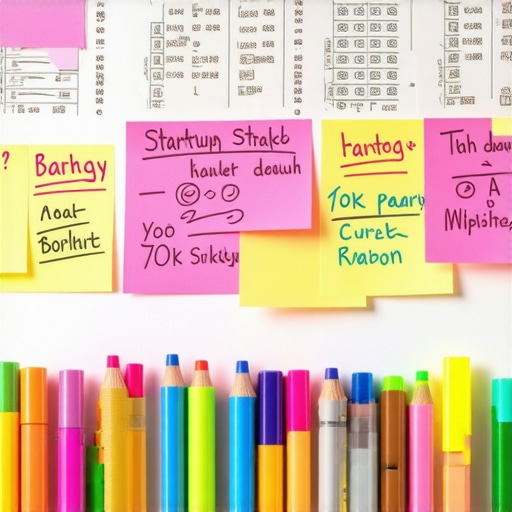
How do I keep our war room from turning into a storage closet?
The biggest danger to a dedicated space is not a bad layout; it is entropy. After three weeks, the post-it notes start to curl and fall off. The half-empty cans multiply. To maintain a high-performance environment, you need a ‘Room Captain.’ This is not a janitor; it is someone responsible for ensuring the data on the walls is still relevant. We have a rule: if a chart has not been updated in seven days, it gets archived. This keeps the space feeling like a living organism rather than a dusty archive. It is part of the checklist for a glitch-free product launch event—you need a clean cockpit to execute. When you are scaling, you will eventually face the choice of how to pick an office that fits your startups growth pace. Do not just look at the floor plan. Look at the maintenance culture. Does the staff actually keep the top meeting rooms of 2025 in peak condition, or are the HDMI cables always frayed? I have found that learning how to manage noise complaints in a shared workspace becomes a daily ritual if you do not set boundaries early. Looking ahead, I suspect the future of conference rooms in startup ecosystems will move away from fixed monitors entirely. We are heading toward spatial computing overlays where the room is just a physical anchor for a persistent digital layer. But until that is seamless, stick to the markers and the walls. Go to your meeting room right now and move every chair three feet closer to the board. Watch what happens to the energy.
Lessons I Paid for with My Own Burn Rate
First, I learned that a ‘clean desk policy’ is the enemy of a breakthrough. If you have to wipe your whiteboards every evening, you are deleting your team’s short-term memory. Second, if you aren’t sweating a little, the room is probably too big. High-stakes decisions require ‘cockpit’ intensity, not ‘ballroom’ comfort. I realized that startup success secrets often come down to how much permission your physical space gives you to be messy and honest. If the walls are too white and the glass is too clear, your team will subconsciously play it safe to avoid looking ‘unprofessional’ to the rest of the coworking space. Real innovation is rarely polite. #IMAGE_PLACE_HOLDER_E#
The Gear That Survives a Six-Month Pivot
For the spatial logic behind these rooms, I highly recommend Edward T. Hall’s The Hidden Dimension. It changed how I view human distance and how the proximity of a desk can trigger either fight-or-flight or deep collaboration. For practical gear, I swear by 3M Post-it Super Sticky notes; generic brands will fall off the wall the moment the AC kicks in, taking your logic flows with them. When you are ready to move beyond a single room, research how to choose an office that supports your scaling speed so you aren’t cramped in six months. Also, look for a building with a human touch; that is why your startup needs a community manager more than a lobby. They are the ones who will protect your war room from being double-booked when your team is in the middle of a sprint.
Build Your Nerve Center and Win
Your workspace is more than just a line item on your spreadsheet; it is the physical container for your company’s ambition. Stop settling for generic boxes and start building a cockpit that reflects the intensity of your goals. As you look into unlocking networking opportunities in top coworking environments, remember that the most valuable connection is the one between your team and the problem you are solving. Go make something messy, honest, and great. What is the biggest ‘productivity killer’ in your current meeting rooms? Let me know in the comments below.