

I was sitting in one of those sleek conference rooms that looked like a million bucks but sounded like a garage band rehearsal. I had a potential investor on Zoom, leaning in to hear my vision for the company. Suddenly, the communal kitchen blender roared to life. My “professional” atmosphere vanished instantly. I’ve been there—juggling a high-stakes call while someone is having a heated debate about crypto three feet away. It’s frustrating, embarrassing, and honestly, it can kill your momentum. We’re going to fix that today. I’m going to show you how to manage the chaos without becoming the office pariah. [IMAGE_PLACEHOLDER]
The Day My Pitch Was Drowned Out by a Blender
Early in my startup journey, I made a massive mistake. I assumed that because I was paying for a “professional” desk, everyone else would naturally respect my need for silence. I didn’t realize the truth about shared office noise levels until it was too late. I spent months being the grumpy “shusher,” leaving passive-aggressive notes by the coffee machine. It didn’t work. In fact, it just made people avoid me. The real lightbulb moment happened when I realized that noise management isn’t about policing others; it’s about setting boundaries and choosing the right environment for the task at hand. If you’ve ever felt like your brain was melting because of a loud neighbor, you aren’t alone. Have you ever had a crucial meeting ruined by background noise?
The High Price of Working in a Construction Zone
We often ignore it, but the constant hum of a packed coworking hub actually drains your cognitive battery. Research from the University of Sydney suggests that nearly 50% of workers in open-plan layouts find noise to be the single biggest drain on their productivity. It’s not just “annoying”—it’s expensive. When you lose focus, it takes an average of 23 minutes to get back into a deep flow state. That’s why dealing with the guy who talks too loud isn’t just about etiquette; it’s about protecting your bottom line.
Is Quiet Even Possible in a Startup Environment?
You might be thinking that silence is a luxury reserved for the Fortune 500 with their soundproofed suites. I used to think the same. I thought I was stuck with the noise until I could afford a 5-year lease on a private floor. But that’s a myth. You don’t need to move out to find peace. By learning the exact way to ask for a quiet room without being rude, you can reclaim your focus without burning bridges. Today, I’m peeling back the curtain on the strategies that actually work to keep the decibels down and your output up.
Stop Picking Your Desk Based on the View
When you walk into a coworking space, the instinct is to head for the window. We all want the natural light, but the window is often the loudest spot in the room. Sound bounces off glass and carries street noise directly into your microphone. If you want to get actual work done, you need to scout for acoustic shadows. I learned this the hard way when I tried to how to handle a server crash from a temporary desk in the middle of a high-traffic lounge. I was so distracted by the constant foot traffic that it took me twice as long to fix the bug. Now, I look for corners with soft surfaces—couches, curtains, or even wall-mounted acoustic panels—to dampen the reverb. This is why many why developers need quiet zones to reach deep flow; the physical environment dictates the mental output.
Build a Digital Fortress Around Your Focus
You cannot control the person next to you, but you can control what your ears hear. High-end noise-canceling tech isn’t a luxury; it’s an essential business expense. However, hardware is only half the battle. You have to understand the truth about noise-canceling headphones in shared spaces: they are great for low-frequency hums but struggle with sharp, sudden voices. I pair my headphones with a white noise app set to ‘brown noise’—a deeper, bassier frequency that masks human speech much better than the standard static. This combination creates a psychological ‘do not disturb’ sign that most coworkers instinctively respect. If you’re still getting interrupted, it might be time to realize why your startup needs a real door not just a glass wall. Glass looks modern, but it does nothing to stop the sound of a neighboring team’s high-fives.

Vetting the Venue Like a Pro
Before you host a client or a potential backer, you must do a dry run. I once invited a VC to a space that looked great on Instagram but turned out to be an echo chamber. Every time someone dropped a spoon in the kitchen, it sounded like a gunshot on the recording. I should have checked how to vet a conference room for client-facing speed and acoustics before the meeting. Now, I always walk into a room and do the ‘clap test’—if the echo lasts more than a half-second, I’m not booking it. If you’re stuck with a noisy room, look for the acoustic fix for echoey conference rooms like adding portable foam tiles or even just strategically placing a few heavy coats on the chairs to absorb the sound.
Master the Art of the Tactical Room Booking
Don’t wait until five minutes before your call to find a spot. The best spaces disappear early. If you know you have a high-stakes pitch, why your investor pitch needs a neutral meeting room becomes very clear when you see the difference in conversion rates. You need a space that says ‘we are established,’ not ‘we are barely surviving.’ Use the facility’s app to learn how to book a meeting room in under sixty seconds so you can pivot if the common area gets too rowdy. I make it a rule to book a private pod for at least two hours a day during my most cognitive-heavy tasks. It’s a small price to pay for the sheer volume of work you can crush when the world is on mute.
I see it every week: a founder signs a premium contract because the space has a fancy espresso machine and a rooftop terrace. But three months in, they realize they’ve spent more time fighting for a quiet corner than actually scaling. Here is the hard truth that most sales reps won’t tell you: why the all-inclusive membership is usually a trap. You aren’t paying for community; you’re often subsidizing the overhead of amenities you’ll use twice a year. If you want to grow, you need to stop overpaying for square footage you never use and focus on what actually moves the needle: connectivity and acoustic privacy. Have you ever fallen into this trap? Let me know in the comments.
Your Office Perks Are Actually Killing Productivity
Everyone says that ‘collaboration’ is the soul of a startup, but the industry has weaponized that word to sell open-plan seating. In my experience, the ‘serendipitous encounter’ at the beer tap is a myth compared to the damage done by constant interruptions. A landmark study published by the Royal Society B found that moving to an open-plan office doesn’t actually spark more conversation—it drives people to wear headphones and send more emails to avoid eye contact. This is exactly why the open-plan office is failing your developers. They aren’t being antisocial; they are protecting the deep work required to build your product. 
Can You Really Keep a Secret Behind a Glass Wall?
This is a sophisticated concern I get from founders handling sensitive IP. We love the aesthetic of transparency, but how to keep your startups trade secrets in an open office becomes a nightmare when your competitor’s lead engineer is sitting two desks away. If you are discussing patent filings or HR issues, a glass-walled ‘private’ office is an illusion of security. I always recommend finding a space where why your startup needs a real door not just a glass wall is a priority. Visual privacy is just as important as acoustic privacy—if someone can see your whiteboard, they can see your roadmap.
Avoid the Predatory Lease Lockdown
The most dangerous mistake I see is a founder signing a long-term lease in a moment of optimism. The startup world moves too fast for five-year commitments. You should be looking for the logic of choosing a flex office over a 5-year lease. I’ve seen teams outgrow their space in six months and get crushed by exit fees. Instead, focus on how to pick a membership that scales with your teams size dynamically. Your environment should be a tool that serves your growth, not an anchor that holds it back. Before you sign anything, how to spot a predatory lease before you sign should be your top priority. Remember, the ‘vibe’ of the lobby won’t matter if you can’t afford to keep the lights on because of a bad contract.
The Digital Survival Kit for High-Stakes Founders
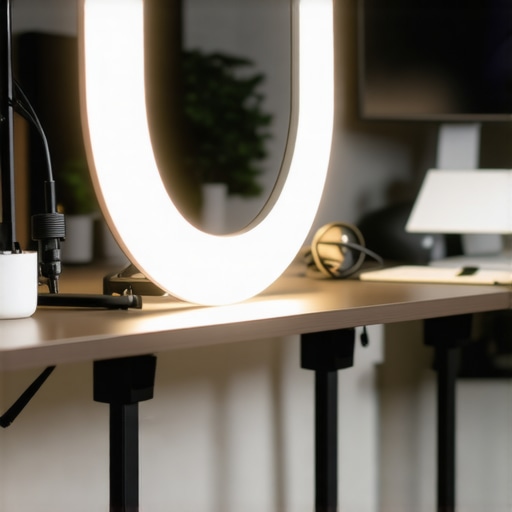
It’s one thing to survive a day in a shared office; it’s another to keep your edge as you scale from a solo founder to a team of ten. I’ve seen too many startups get comfortable in the honeymoon phase of a new space, only to see their productivity crater once the novelty of the rooftop terrace wears off. To keep things running smoothly, you need a toolkit that moves with you. I personally never step into a meeting without my Elgato Key Light Mini. Even in a windowless room, I can mimic the perfect glow of a corner office, which is part of the exact lighting setup for professional video pitches that I recommend to everyone. I also use Krisp.ai religiously. It’s an AI-driven noise-canceling layer that filters out the sound of the communal dishwasher or your neighbor’s loud phone call in real-time. According to technical documentation from Shure, human speech is one of the hardest frequencies to mask, but this software manages to create a digital cone of silence around your microphone.
Don’t Let Your Growth Outpace Your Lease
As you start hiring, the math changes. You can’t just keep adding hot desks and hope for the best. You have to learn how to choose an office that supports your scaling speed without locking yourself into a financial death trap. When we grew from three to eight people, we stopped using the open lounge entirely. We moved into a dedicated suite but kept the membership so we could still unlock networking opportunities in top coworking environments during our downtime. It’s about balance. You need the private door for the hard work, but you still want why proximity to other startups accelerates your growth to stay relevant in your niche.
How do I keep my team from burning out in a shared space?
Maintenance isn’t just about the furniture; it’s about the mental overhead of your staff. I’ve found that the best way to keep a team happy is to actively encourage them to use the amenities you’re already paying for. If they feel guilty for taking a break, they’ll burn out. Remind them why high-quality coffee is more than just a perk—it’s a chance to step away from the screen. We make it a rule that our most intense brainstorming happens in innovative meeting rooms that boost startup creativity rather than at our desks. This physical separation between ‘execution’ and ‘ideation’ is the secret to long-term output. I also keep a close eye on the facility’s calendar to ensure we’re learning how to maximize productivity in your startups conference rooms by scheduling our deep work during the space’s quietest hours.
The Future of Your Professional Footprint
Looking ahead, the ‘office’ is becoming a fluid concept. I predict we are moving toward a ‘hub-and-spoke’ model where startups won’t have one central headquarters, but rather a network of high-end meeting access points. We are already seeing the future of conference rooms in startup ecosystems focus on integrated VR and ‘holoportation’ technology. To stay ahead, you need to be agile. Stop thinking about square footage and start thinking about access. My advanced tip for you this week: download an AI noise-canceling app today and use it on your next call. The difference in how investors perceive your professionalism when they can’t hear the ‘world’ around you is worth every penny. It’s the easiest way to upgrade your brand without moving a single piece of furniture.
What Nobody Tells You About Survival in a Startup Hub
I’ve spent thousands of hours in these environments, and if there’s one thing I’ve learned, it’s that proximity doesn’t equal progress. You can sit next to a unicorn founder for six months and never learn a thing if you’re both wearing noise-canceling headphones. The biggest trap is thinking that the ‘vibe’ will fix your business. It won’t. You need to be intentional about how to spot a bad coworking community before joining because a toxic or overly loud culture will drain your resources faster than a bad marketing spend. Real networking happens when you step away from the desk, but real work only happens when you protect your environment.
Another hard-earned truth? Don’t be afraid to be ‘the quiet one.’ The founders who are constantly socializing in the lounge are often the ones whose revenue is flatlining. I’ve learned to treat the common area as a transition zone, not a primary workspace. If you aren’t careful, you’ll find out the hard way why your pitch failed in that noisy coffee shop or shared lounge—it’s because you didn’t respect the psychological weight of a professional setting. Protecting your focus is an act of leadership, not an act of antisocial behavior.
Tools That Keep My Sanity Intact
To stay sharp, I rely on a very specific ‘digital and physical stack’ that goes beyond just a laptop. First, I always advocate for why your brand needs a physical touchpoint even in a digital world 2; having a consistent, professional meeting room gives your startup a level of gravity that Zoom calls from a messy bedroom simply cannot match. Here are the three tools I never work without:
- Krisp.ai: This is my secret weapon for every high-stakes call. It uses AI to strip away the sound of sirens, barking dogs, or the inevitable coworking espresso machine in real-time.
- A Dedicated ‘Deep Work’ Playlist: Not just any music, but binaural beats or brown noise. It creates a Pavlovian response—when the sound starts, my phone goes into a drawer.
- Portable Acoustic Panels: If you’re in a glass-walled office, bringing a few small, portable sound-absorbing pads can drastically improve your audio quality during crucial board recordings.
Build a Fortress for Your Focus
At the end of the day, your environment is a reflection of your priorities. If you are serious about scaling, you have to stop treating your workspace as an afterthought. Whether you are making the move from a garage to a professional hub a survival guide or upgrading from a hot desk to a private suite, remember that you are buying back your time and your cognitive energy. Professional coworking spaces and conference rooms are tools; learn to use them with the same precision you use for your product development. Don’t let the noise of the world drown out the vision in your head. You’ve got the strategies now—go out there and build something that lasts. Have you ever had a specific ‘noise nightmare’ that forced you to change how you work? Let me know in the comments below!