
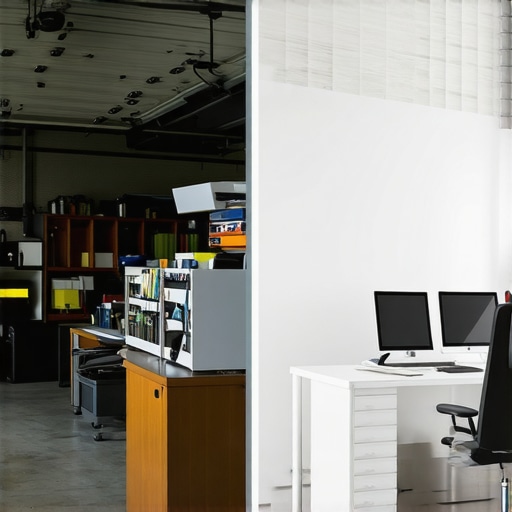
The smell of old cardboard and damp concrete. That was my “headquarters” for eighteen months. I thought I was being the ultimate scrappy founder, but then I had to host a potential lead on Zoom while my neighbor started his lawnmower three feet from my “desk”—which, let’s be honest, was just a plywood sheet on two sawhorses. My pitch was perfect, but my background noise was a disaster. I didn’t get the deal. I’ve realized since then that the cost of a bad first impression is way higher than any monthly membership fee. Today, I’m going to share the unfiltered truth about making the jump from a cold garage to a professional environment. We’ll cover how to find the right space, why your team’s productivity might actually double, and the mistakes I made so you don’t have to. Have you ever felt like your environment was the only thing standing between you and being seen as a “real” company?
Why High Ceilings and Real Desks Changed My Brain Chemistry
For a long time, I treated a “real office” as a reward for success, rather than a tool to achieve it. I was stuck in a cycle of ditching the basement only in my mind, while my body stayed hunched over a laptop in a windowless room. The shift happened when I finally realized that my environment was dictating my output. Research from the Harvard Business Review suggests that the physical environment is one of the top three drivers of employee engagement and performance. When I finally followed the checklist for moving your startup into its first real office, everything changed. It wasn’t just the faster internet; it was the psychological permission to be a professional. No more hiding the fact that I was working next to a lawnmower.
Is a Flex Office Actually Worth the Monthly Hit to Your Burn Rate?
It’s the question that kept me up at night. I was terrified of adding a fixed cost when our revenue was still a total rollercoaster. My biggest early mistake? I prioritized “cheap” over “functional.” I almost signed a lease for a windowless storage unit because it was two hundred dollars less than a vibrant flex space. I didn’t realize that how to transition your team from a garage to a real office successfully involves more than just a floor and four walls; it’s about the culture you’re building. If you pick a space that feels like a hospital, your team will act like they’re in one. [IMAGE_PLACEHOLDER]
The Day I Realized My Scrappiness Was Just Professional Self-Sabotage
It’s easy to romanticize the “garage startup” phase. We’ve all seen the vintage photos of tech giants starting in a shed. But what they don’t tell you is how quickly that environment becomes a drag once you have a team of more than two people. Scaling from a solo act to a group requires infrastructure. I remember trying to host our first board meeting at a local coffee shop—it was loud, the table was sticky, and our “confidential” growth projections were visible to everyone waiting for a latte. That was the moment I stopped looking at the truth about membership perks as fluff and started seeing them as necessities for survival. Setting the stage for growth means moving into a space that can actually handle the weight of your ambitions.
Stop Guessing and Start Vetting Your Next Hub
Moving out of the garage isn’t just about escaping the lawnmower; it is a logistical maneuver that requires the same precision as your product roadmap. I used to think a desk was just a desk until I spent three days working out of a space that smelled like a locker room. Now, I recommend a strict vetting process. Don’t just look at the photos online. You need to use a day pass to test your next potential office before you ever commit. This is the only way to check the actual Wi-Fi speed under load and see if the community matches your energy. While you’re there, look for the red flags. You can usually spot a toxic coworking vibe in under five minutes by watching how members interact in the kitchen or if the staff is actually helpful. If the environment feels like a library where everyone is afraid to speak, your collaborative startup culture will die on the vine.
Turn Your Meetings into Sales Machines
Once you have the right building, the conference room becomes your most powerful closing tool. In my garage days, I took an investor call on a laptop with a grainy webcam. Contrast that with my first meeting in a dedicated suite where I realized why your pitch deck looks better on a forty-inch screen than a laptop. It changes the power dynamic. However, don’t assume every room is equal. I once walked into a high-stakes meeting only to realize I didn’t have the right HDMI dongle. It was embarrassing. You need to know how to find a conference room that actually has working adapters and integrated tech. Treat your booking like a mission-critical operation. I eventually developed the exact checklist for vetting a high-stakes board room, which includes testing the mic and speakers twenty minutes before the guest arrives. If you skip this, you’re just waiting for why your pitch fails in a noisy lobby to become your reality. 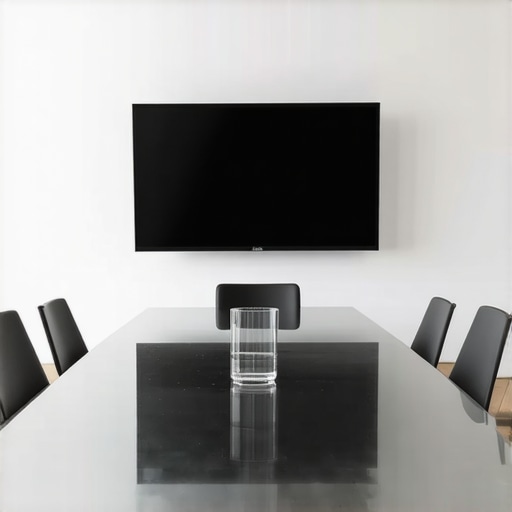
Build a Headquarters Without the Five-Year Handcuffs
The biggest trap for a growing startup is signing a long-term commercial lease. In the tech world, eighteen months is an eternity. This is where the role of flex space in a modern business scaling strategy becomes your hedge against uncertainty. You can scale from three desks to twenty in a weekend without hiring a contractor. When we made our first big jump, the logistics of moving your startup to a professional space felt daunting until I realized I didn’t have to buy furniture. Focus on how to pick a membership tier that scales with your team so you aren’t paying for empty square footage. While you’re growing, use the prestige of the building to your advantage. You can get a premium business address without the five-figure lease, which helps with credibility when you’re dealing with enterprise clients.
The Acoustic Edge in Client Communication
I learned the hard way that open-plan offices are great for energy but terrible for privacy. I remember trying to explain a pivot to a client while a nearby team was celebrating a birthday with a literal brass band. That was the day I researched the acoustics hack for crystal clear client pitches. You need to identify the “war rooms” in your building. There is a massive difference between a standard meeting room and a real war room—mainly the soundproofing and the layout. When you bring new people on board, make sure the art of the perfect office tour for your latest new hires includes showing them where they can go for deep work versus where they can take a loud call. Setting these boundaries early prevents the friction that usually kills startup productivity.It is time to dismantle the most pervasive myth in the startup world: the idea that an open-plan office is the ultimate catalyst for collaboration. Most founders believe that knocking down walls and placing everyone in a shared lounge creates a hotbed of innovation. In my experience, and backed by research from the University of Exeter which suggests that employees in ‘enriched’ spaces where they have autonomy are 32% more productive, the ‘accidental collisions’ of open offices are often just constant interruptions. When you are learning how to manage noise complaints in a shared workspace, you quickly realize the problem isn’t the people; it is the lack of physical boundaries. True innovation requires the ability to switch between intense social interaction and deep, solitary focus—a balance most ‘modern’ offices get wrong.
The High-Tech Mirage and the Acoustic Blind Spot
The biggest ‘oops’ factor I see from veteran founders is over-investing in visual tech while ignoring the audio environment. You might book a room because it has a stunning 80-inch 4K display, but why your pitch deck won’t save you from a noisy meeting space is simple: if an investor can hear a barista grinding beans through the drywall, your professional authority evaporates. Before you sign any membership, you must know how to vet a meeting room for acoustic privacy before booking. I always use the acoustics test every conference room should pass: have a colleague stand outside the door and read a document at a normal volume. If you can make out the words from the hallway, that room is a liability for high-stakes negotiations. 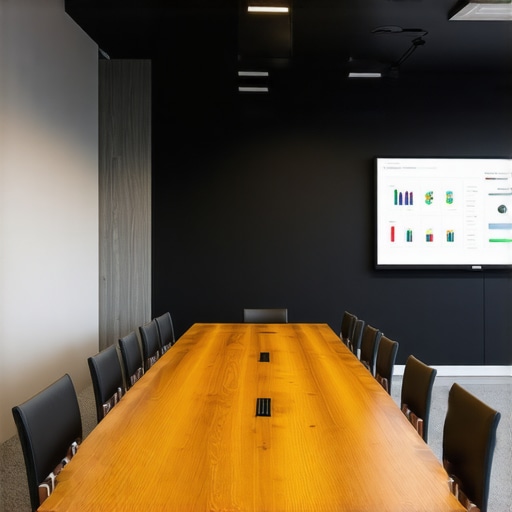
Why a War Room Beats a Standard Conference Table Every Time
Many founders treat all meeting spaces as interchangeable, which is a major tactical error. You shouldn’t brainstorm your product roadmap in the same room where you host a VIP investor lunch. There is a profound difference between a standard meeting room and a real war room. A war room is designed for long-haul sessions with integrated whiteboards and enough power outlets for every device, whereas a standard room is just a table and chairs. When you are transforming meeting rooms into collaboration hubs, you need to prioritize the psychology of the space. In a period of high economic uncertainty, understanding why flex space is the ultimate hedge against market volatility allows you to swap these rooms as your needs change without the anchor of a traditional lease.
Can Your Choice of Meeting Room Actually Increase Your Funding Odds?
It sounds like a stretch, but environmental psychology proves that physical surroundings directly impact cognitive performance. A report by the World Green Building Council highlights that improved air quality and access to natural light can lead to a double-digit increase in cognitive scores. This is exactly why your team is more creative in a room with high ceilings and better ventilation. When you bring an investor into a space that feels airy and professional, you aren’t just selling your slides; you are selling the biological reality of a high-performing team. Have you ever fallen into the trap of choosing a ‘pretty’ office that lacked the basic infrastructure to actually get work done? Let me know in the comments.
I stopped caring about mahogany desks and started caring about mAh. When you are running a lean team, the ‘maintenance’ of your professional image doesn’t happen in the boardroom—it happens in the prep. I eventually realized that even the best flex space is only as good as the tools you bring into it. For instance, I’ve seen more deals die because of a dead tablet than a bad pitch. It is exactly why our private office suites stock extra surface pro chargers for members; because in the heat of a sprint, nobody has time to hunt for a cable. Maintaining that edge means being obsessed with the details that your team takes for granted. I stopped asking if the coffee was free and started asking about the chair’s lumbar support. I finally understood why ergonomic furniture is the best investment for your seed round—because a developer with a sore back is a developer who is looking for the exit.
Stop Obsessing Over Square Footage and Start Mastering Your Stack
The biggest hurdle in long-term scaling isn’t the cost of the desk; it is the friction of the environment. I used to spend twenty minutes every morning just ‘setting up.’ Now, I advocate for a zero-friction setup. This means finding a provider that understands why membership flexibility is more important than square footage. You need to be able to pivot your physical layout as fast as you pivot your product. If you’re stuck in a rigid lease, you’re dead. I also had to get aggressive about managing noise complaints in an open plan office before they spiraled into team resentment. Sound expert Julian Treasure notes that we are 66% less productive when exposed to distracting noise, so I invested in high-end noise-canceling kits for everyone. It wasn’t a luxury; it was a recovery of lost hours.

How do I maintain this professional edge without a full-time office manager?
The secret is offloading the ‘physical’ mental load to the space itself. I choose hubs that handle the logistics—everything from the Wi-Fi mesh maintenance to the printer ink—so I can focus on the burn rate. Looking ahead, I predict we are moving toward a ‘Micro-Hub’ model. The future of the office is closer to home than you think, with hyper-local, high-tech satellites replacing the centralized corporate monolith. We won’t be commuting to downtown; we’ll be walking to a professional pod three blocks away. This allows you to keep your team distributed but unified by a high standard of infrastructure. If you want to take your professional game to the next level today, stop using your laptop’s built-in mic for client calls. Go buy a dedicated cardioid USB microphone, plug it in at your coworking desk, and watch how much more ‘expensive’ you sound to your clients. It’s a $100 fix for a $10,000 problem.
The Brutal Truths I Learned While Leaving the Garage Behind
Stepping out of the scrappy comfort zone was the single most terrifying move I made. I have realized that scrappiness eventually turns into a ceiling if you do not evolve. First, never underestimate the power of environment on your team’s psyche; learning how to transition your team from a garage to a real office is as much about emotional management as it is about moving boxes. Second, watch out for the free trap. I spent months in a space that offered free beer but had terrible internet, which is the true cost of free coffee in popular coworking hubs—you pay for it in lost productivity. Finally, treat your privacy like a capital asset. You cannot have a million-dollar conversation in a ten-cent environment, so always know how to handle high-stakes board meetings in a shared building without leaking your roadmap to the competition.
The Resources I Use to Keep the Momentum High
I did not figure this out on my own. I relied on a few key pillars to ensure I was not just burning cash. I started with a rigorous audit—specifically the checklist for moving your startup into its first real office—to ensure I was not missing the small stuff like insurance or visitor parking. I also stopped buying cheap warehouse chairs and realized why ergonomic furniture is the best investment for your seed round; a healthy team stays longer and works harder. For the actual pitch moments, I followed startup success secrets for choosing the perfect conference room to make sure the physical environment reflected our valuation, not our current bank balance.
Your Legacy Starts Where the Noise Ends
The garage was a great chapter, but it is not the whole book. By professionalizing your workspace, you are signaling to your team, your investors, and yourself that you are ready for the big leagues. We are entering an era where the future of the office is closer to home than you think, focusing on hyper-local quality over massive centralized hubs. Take the leap, invest in a space that respects your ambition, and watch how the world starts to treat your startup differently. Have you ever stayed in the garage phase for too long out of fear of the overhead? Let me know in the comments below.